
Moving bees and apiary commodities
Conditions of entry
Beekeepers looking to move bee and apiary commodities into South Australia (including SA-registered beekeepers re-entering the state) must have permission from the Chief Inspector of Stock and comply with the entry conditions.
South Australia will accept permit applications for bee colonies, queens, and other apiary products and commodities from all Australian states and territories.
Bees, bee colonies and apiary commodities that are managed for varroa mite in line with the seasonal control thresholds are permitted – see Requirements for the Control or Eradication of Diseases of Bees (South Australian Government Gazette no. 32, 11 June 2026, pp. 1599–1601, PDF).
We assess all applications individually.
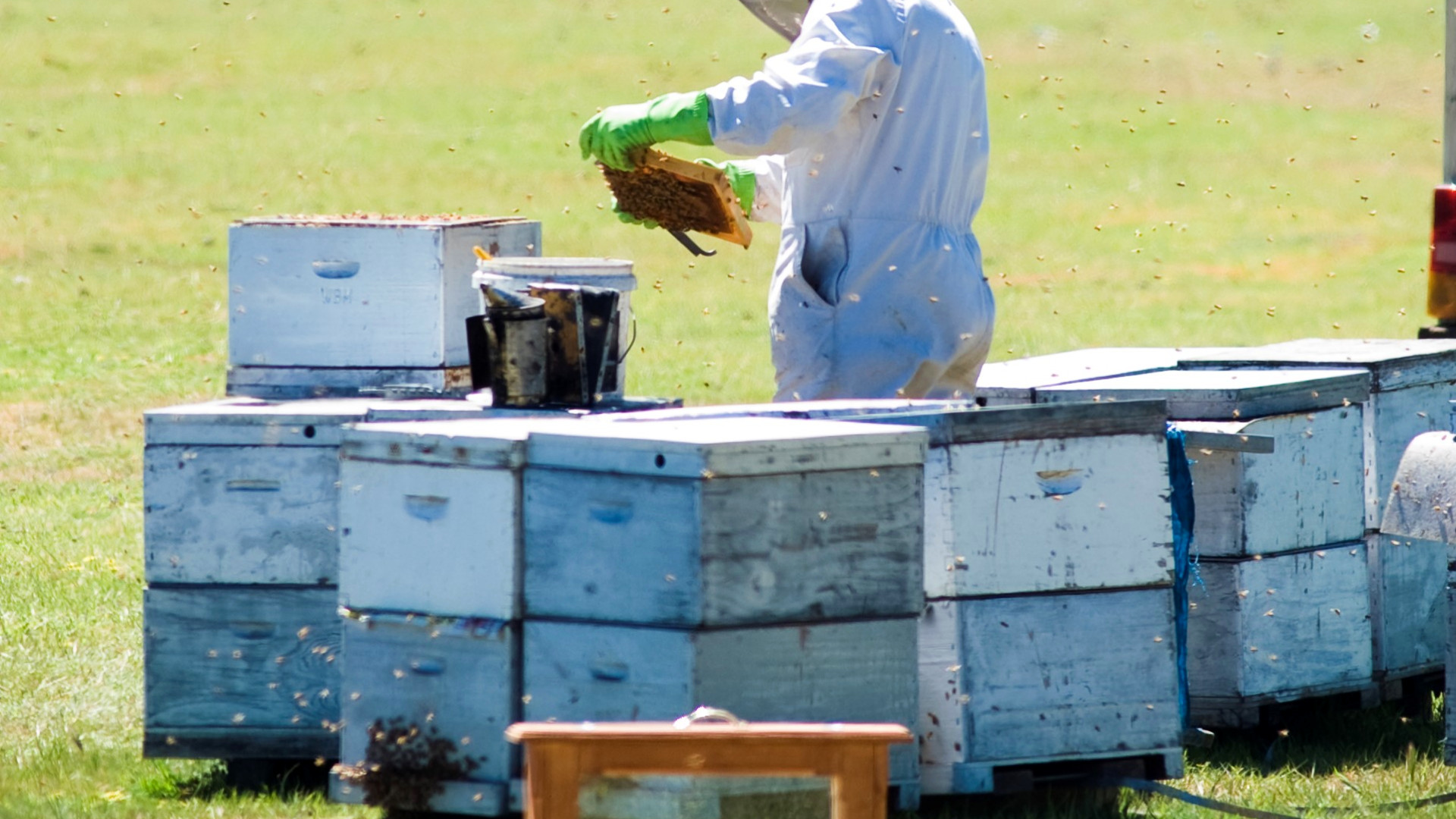
Biosecurity Standards for Bees and Apiary Commodities
The Standards outline the conditions of entry for particular commodities. The document is designed to be easily updated to allow adjustment to apiary industry needs.
The Standards will bring together all other apiary notices, regulations, schedules and conditions into one document that will support the implementation of the incoming Biosecurity Act.
Download the Standards (PDF)Products for human consumption
An entry permit or apiary health certificate in not required to bring apiary products into South Australia that are solely for personal or human consumption – except to Kangaroo Island.
Permitted products are:
- no more than 5 kilograms of commercially processed and packaged liquid honey
- no more than 1 kilogram of commercially packaged honey-comb
- no more than 1 kilogram of commercially packaged cut comb
- no more than 1 kilogram of commercially packaged creamed honey
- no more than 500 grams of commercially processed and packaged pollen.
Kangaroo Island restrictions
Kangaroo Island is a declared reservation for the European honey bee subspecies Apis mellifera ligustica, commonly known as the Ligurian or Italian honey bee.
To protect this unique species and its disease-free status, you cannot move bees or apiary commodities – including commercially processed honey – to Kangaroo Island.
You can take new and used apiary plant and equipment to Kangaroo Island after appropriate treatment, provided you have a completed an SA apiary heath certificate ( ( ) signed by an SA Apiary Inspector.
Email your completed certificate to PIRSA.beebiosecurity@sa.gov.au.
Apply to move bees and apiary commodities
To apply to move bees and apiary equipment into SA, first read and understand:
- Requirements for the Control or Eradication of Diseases of Bees (South Australian Government Gazette no. 32, 11 June 2026, pp. 1599–1601, PDF).
- Summary of entry requirements of bee colonies into South Australia ( )
Then complete the online permit application form – this will generate a partially filled downloadable Apiary Health Certificate which can be emailed to an authorised inspector from the originating jurisdiction.
Alternatively, you can download and then email to PIRSA.beebiosecurity@sa.gov.au:
- Bee commodity application ( )
- Bee commodity record ( )
- Apiary heath certificate ( ( ) signed by an authorised officer in the originating jurisdiction.
Penalties for offences against Section 33 of the Livestock Act 1997 can result in fines up to $20,000.
Moving bees and bee commodities to other states
To move bees and bee commodities to or through other states, you must:
- comply with that state's conditions and restrictions
- apply for permits and health certificates where needed.
Check the intended state's website for their conditions and entry application process.
Contact
PIRSA Apiary Unit
Phone: 08 8207 7900
Email: pirsa.beebiosecurity@sa.gov.au