
Ghost or Peanut snail
The invasive snail species Bulimulus sporadicus, also known as the ghost or peanut snail, was recently detected at the Port of Brisbane, posing a potential threat to Australian plant health.
Background
Originating in South America, it has spread internationally by hitching rides on shipping containers and through illegal smuggling for the pet trade. First reported in Jacksonville, Florida, around 2009. it has since spread across the southeastern United States, particularly in Georgia, Alabama, and Mississippi and parts of Texas.
Impacts
This invasive species is considered a potentially serious threat to Australia. It could negatively affect:
- agriculture
- natural ecosystems
- human health
- commerce.
Ghost snails can cause feeding damage to crops like citrus, cotton, soybeans, blueberries, and peanuts. Often found in humid, moist habitats, especially in mulched areas and around gardening areas. They are known to aggregate in large numbers, with a tendency to clog irrigation equipment and infrastructure.
The snails are highly mobile and can travel long distances hitching rides on equipment like tractors, ATVs, and boats, as well as on cargo and even people.
Reporting a snail
If you think you have found these snails, please call the Exotic Plant Pest Hotline on 1800 084 881 or email pirsa.planthealth@sa.gov.au with a clear photo and your contact details
Identification
These snails can reach approximately 2.5 cm in total length, Their shells are narrow and pointed with 5-7 whorls and are white or light yellowish brown in colour. Sometimes the shell is marked with darker lines. The soft body is white or off-white, with darker grey pigmentation along the eyestalks.
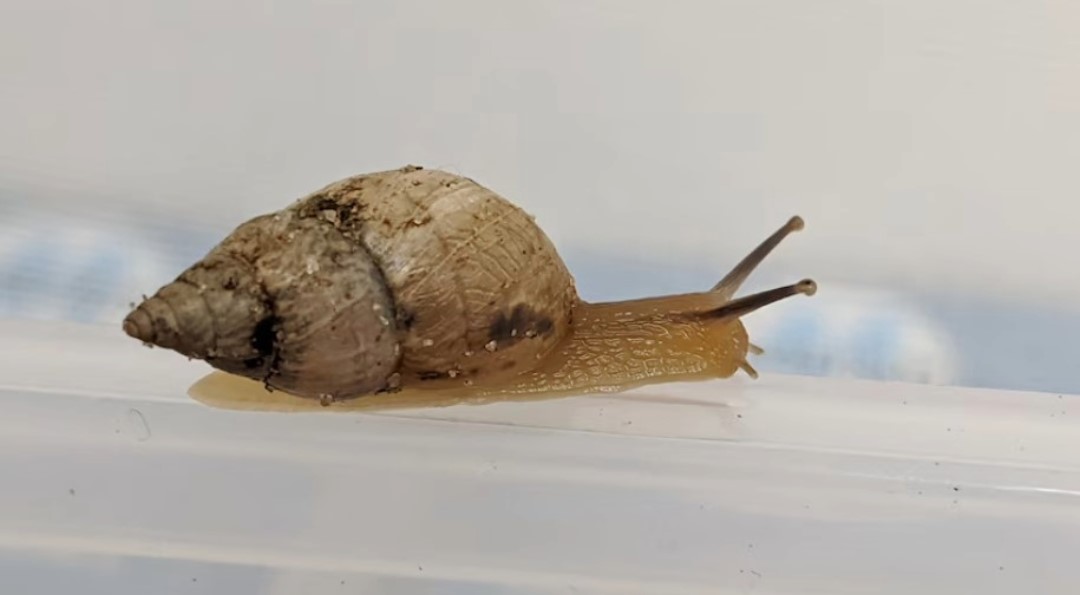
Ghost snail - photo : University of Florida