
Tomato potato psyllid
Tomato potato psyllid (Bactericera cockerelli) is a tiny sap-sucking, winged insect.
It can spread a serious plant disease known as zebra chip in potato, caused by the Candidatus Liberibacter solanacearum (CLso) bacterium.
Background
The tomato potato psyllid (TPP), Bactericera cockerelli, is believed to be native to Central America and has since spread internationally, becoming established in New Zealand by around 2006.
TPP was first detected in Western Australia near Perth in February 2017 and is now established throughout that state.
In November 2024, TPP was detected for the first time outside Western Australia at multiple locations in southwest Victoria. A further detection occurred in Melbourne’s northern suburbs in late 2025, indicating spread beyond the original restricted area. Genetic analysis suggests the Victorian population originated from Western Australia.
As of 2026, South Australia considers TPP established in both Victoria and Western Australia, with interstate certification and market access arrangements in place to manage movement risks.
Import requirements have been updated to align with nationally agreed standards.
Ongoing surveillance activities are being undertaken to support South Australia’s freedom from TPP
Australia remains free of Candidatus Liberibacter solanacearum (CLso), the bacterium transmitted by TPP that causes zebra chip disease in potatoes and other solanaceous crops.
Impact
TPP causes significant production losses by feeding on tomato, potato, capsicum, chilli, goji berry, tamarillo, eggplant, sweet potato, and solanaceous weeds like nightshade.
The disease presents through symptoms such as:
- severe wilting of plants caused by high numbers of psyllids feeding
- yellowing or purpling leaf margins
- upward curling or cupping of leaves, dwarfing and stunting
- white sugar-like granules excreted by adults and nymphs, which coat the plant leaves and stems – this may lead to sooty mould or attract ants
- stem death, similar to other potato and tomato disorders.
Identification
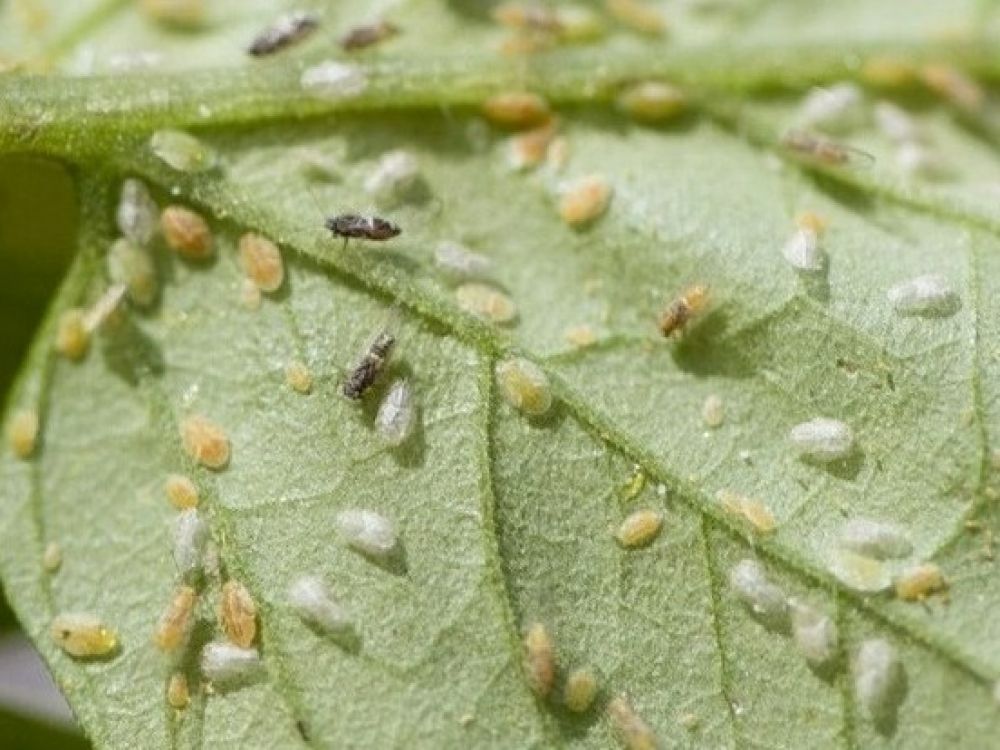
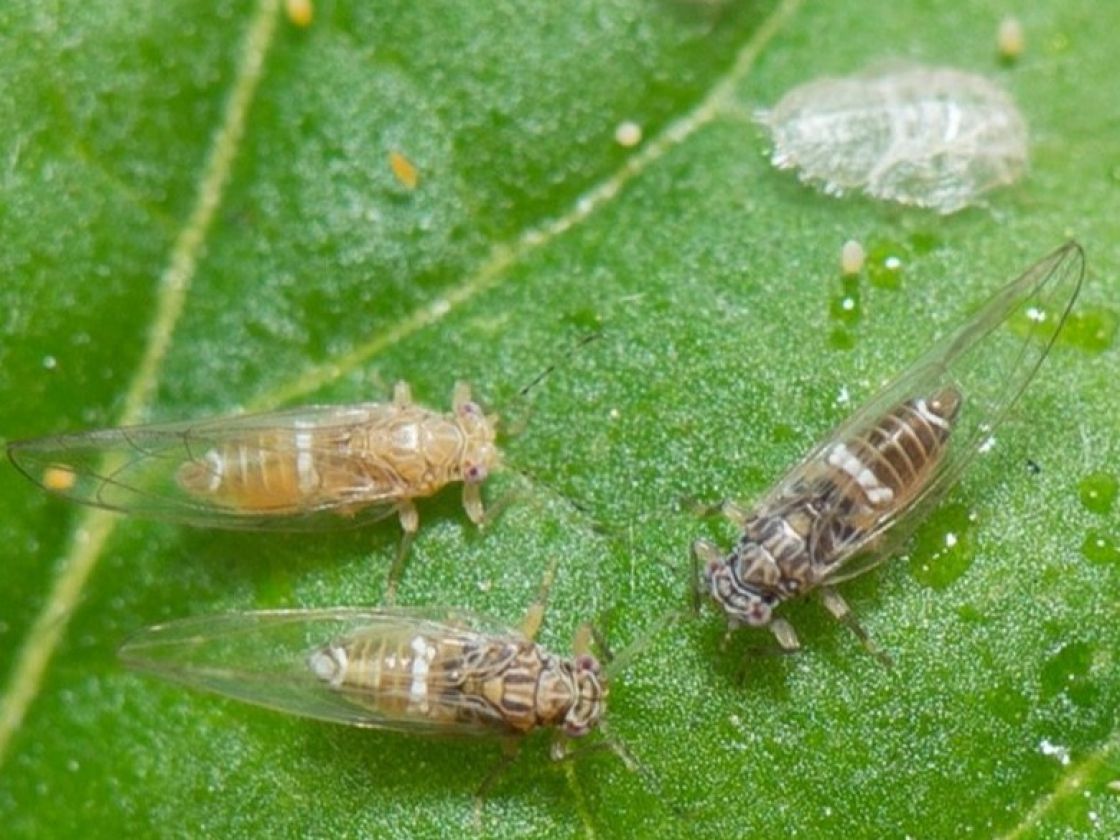
When present in a crop, TPP can be seen jumping from the foliage when disturbed. They have 3 stages of development.
Eggs are up to 1 mm long and attached to the plant by a short vertical thread. They are laid on the lower surface of leaves, or along the leaf stalk. Eggs are white at first, before turning yellow to orange after a few hours.
Nymphs are up to 2 mm long, oval shaped, flattened and scale-like in appearance. Young nymphs are yellow with a pair of red eyes and 3 pairs of short legs. Older nymphs are greenish, fringed with hairs, and have visible wing buds.
Adult psyllids resemble small, winged cicadas and are about 3 mm long. The body is brownish and has white or yellowish markings on the chest and a broad white band on the abdomen. Wings are transparent and held vertically over the body.
Management
Control TPP using biosecurity practices to limit spread between growing facilities. This includes:
- inspecting your crops regularly and reporting unusual growth
- using pest-free propagation material and seedlings, sourced from a reputable supplier
- keeping equipment and vehicles clean and free of plant matter
- wearing clean clothing before visiting other growers’ properties
- teaching on-farm hygiene practices to all workers and visitors.
Import restrictions requirements
Condition 17 of the Plant Quarantine Standard details restrictions and prohibitions on hosts in the Solanaceae and Convolvulaceae families. This affects products like potatoes, tomatoes, capsicums, eggplants and sweet potato.
Learn more about importing commercial plants and plant products into SA.