
Largest aerial survey of coastline in decades as SA records second bird flu case
Wednesday 8 July 2026 BiosecurityEmergencies and recoveryMedia release
The largest aerial survey undertaken in more than four decades of South Australia’s coastline, islands and reefs has found no evidence of widespread impacts from H5 bird flu on wildlife.
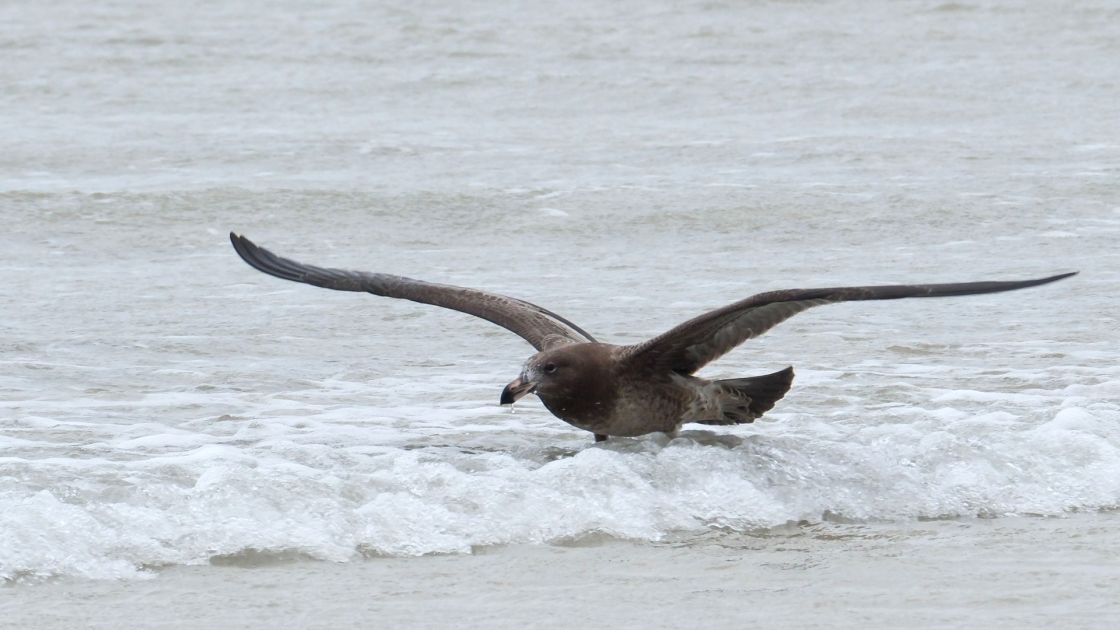
It comes as South Australia records its second confirmed detection of H5 bird flu, in a giant petrel collected from Hardwicke Bay on Yorke Peninsula. The first case in SA was confirmed on June 24 in another giant petrel at Port Elliot on Fleurieu Peninsula.
Testing at PIRSA’s Glenside facility has also led to two further suspect cases in giant petrels. Both birds were collected on Monday 6 July, one from Port Vincent on the Yorke Peninsula and the second from Emu Bay on Kangaroo Island. Samples from both birds have been sent to the CSIRO’s Australian Centre for Disease Preparedness in Geelong for further analysis.
Bird flu has not been detected in commercial poultry or any non-migratory wild birds in SA, nor has it become established in any part of Australia.
The extensive rapid surveillance operation covered almost 5,000 kilometres, with more than 30,000 seabirds and seals recorded from about 600 locations, including 85 islands, islets and reefs between the Head of Bight and The Pages (east of Kangaroo Island).
In terms of scale and geographic coverage, this is the largest coordinated survey of South Australia’s offshore islands and coastal wildlife since the landmark island surveys of the 1970s and early 1980s. Those surveys took almost a decade to build a picture of South Australia’s offshore biodiversity.
This survey, which is the first of many, was conducted in two and a half days utilising helicopters, a fixed wing plane, remote-control drones and field crews on the ground.
It provides an important baseline of population size and breeding locations for key South Australian marine species such as coastal seabirds, and marine mammals that can be impacted by H5 bird flu such as Long-nosed Fur Seals and Australian Sea Lions.
Importantly, no evidence of multiple sick or dead seabirds or seals or widespread impact was observed during the surveys, with conditions appearing normal across the surveyed areas.
Additional aerial surveys have targeted other remote areas in the state, including Kati Thanda-Lake Eyre, the Riverland, the Lower Lakes and the Coorong.
South Australia has been preparing for H5 bird flu for the past few years, with the State and Federal Governments investing a combined $8.1 million into PIRSA to boost its emergency response capabilities, surveillance, diagnostics, workforce capability and overall readiness.
Other preparedness efforts have included training and simulation exercises, and other targeted environmental and wildlife activities.
A further $3.5 million has been invested into the Department for Environment and Water from the Federal Government to support preparedness and resilience building activities for the environment and at-risk wildlife.
Federal funding has also been allocated to the Zoo and Aquarium Association to help safeguard threatened native species at Cleland Wildlife Park, Adelaide Zoo and Monarto Safari Park.
What you can do
The community is encouraged to report any dead or sick birds or wildlife showing signs of bird flu. Possible signs of bird flu in birds include:
- multiple sick or dead birds in one location
- weakness, inability to stand or fly
- neurological signs or abnormal behaviour
- swelling or discolouration
- respiratory distress.
If you see sick or dead birds or other wildlife, do not touch them.
Avoid contact. Record what you see. Report it to the Emergency Animal Disease Hotline on 1800 675 888 from anywhere in Australia.
For more information on bird flu visit birdflu. For information on bird flu preparedness in South Australia, visit birdflu.