
South Australia confirms first H5 bird flu case
Wednesday 24 June 2026 Biosecurity
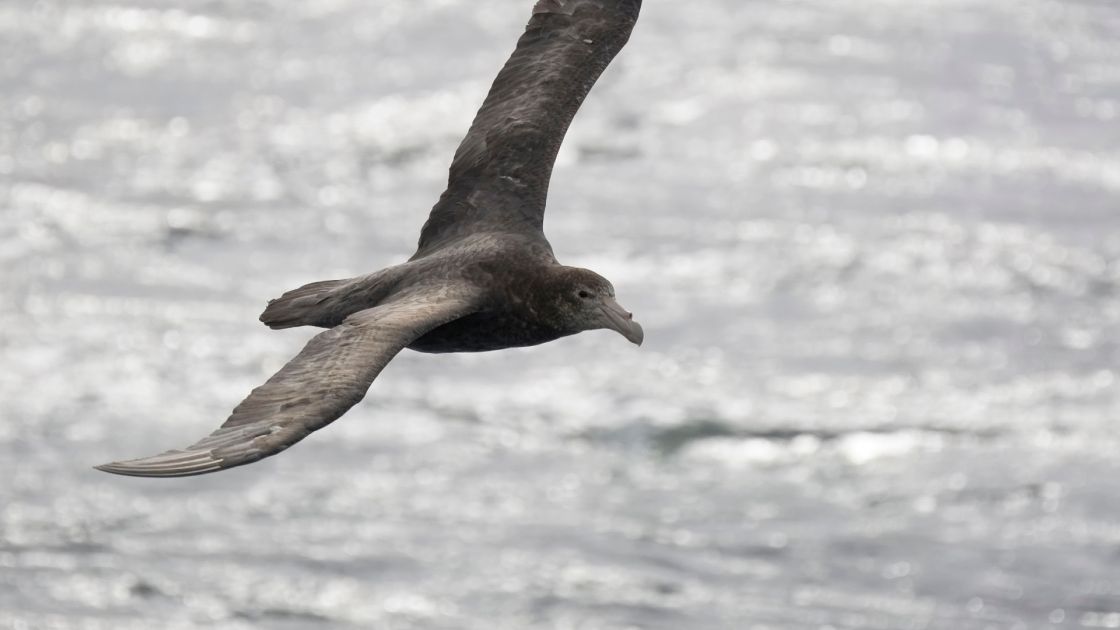
On Wednesday 24 June, South Australia recorded its first confirmed case of H5 bird flu in a vagrant migratory seabird found on a beach on the Fleurieu Peninsula.
The confirmed case, a Southern Giant Petrel, was found by a wildlife welfare organisation on 14 June on Knights Beach at Port Elliot in a debilitated condition and taken into care.
PIRSA contacted the organisation on Friday 19 June upon learning of the case via social media and took samples immediately.
Testing by CSIRO's Australian Centre for Disease Preparedness (ACDP) has today returned a positive detection.
This is the first time this strain has been detected in South Australia. Since 1 January 2026, 774 samples from birds have been tested in SA.
Testing of the two seabirds found near Fowlers Bay on Eyre Peninsula has returned negative results.
The Southern Giant Petrel is a migratory seabird that breeds in Antarctica and the sub-Antarctic islands between October and March. During the southern winter, these birds migrate north and can travel significant distances, including to the waters off South Australia.
Importantly, this is currently being treated as an isolated incident, and there are no detections in poultry anywhere in Australia at this time.
The State Government is asking the public to avoid, record and report any dead or sick birds or other wildlife to the Emergency Animal Disease Hotline on 1800 675 888.
South Australia is well prepared to respond quickly to H5 bird flu to protect poultry production and reduce impacts on wildlife and communities.
The South Australian Government is also working with equivalent agriculture, environment and health agencies at a state and national level to coordinate emergency animal disease response activities, and the Department of Primary Industries and Regions (PIRSA) continue to lead the state’s preparedness for H5 bird flu.
Significant preparedness activities for H5 bird flu have included a $6.8 million State Government investment since 2022 to establish a mobile diagnostic laboratory, decontamination units and other equipment to enable rapid deployment and on-ground responses, and workforce readiness and capability development has included comprehensive training of over 240 personnel.
For more information, see Avian influenza.
Photo: lwolfartist, CC BY 2.0, via Wikimedia Commons
