
Management of fungicide resistance in cereal crops
Thursday 14 August 2025 SARDICrop Watch
Management of fungicide resistance in cereal crops
Fungicide resistance has been increasingly difficult to manage for South Australian growers, particularly, in wheat and barley crops. The latest has been: Triple fungicide resistance detected in Yorke Peninsula barley net form net blotch.
A mutant form of net form net blotch (NFNB) has been identified during May 2025 after a suspected fungicide-resistant barley sample, collected from the Yorke Peninsula, was submitted to the Centre for Crop and Disease Management (CCDM) for analysis.
Laboratory testing confirmed that this NFNB strain carries genetic mutations associated with resistance to multiple fungicide groups – specifically Group 3 (DMI), Group 7 (SDHI), and Group 11 (QoI).
This is a major concern for growers in the current and future seasons, as resistance to three different fungicide groups significantly reduces available control options.
Best practice
With significant rain events over the past fortnight, there’s a risk of NFNB emergence particularly in the susceptible varieties that are widely grown. Where symptoms are noticed growers are urged to be cautious while applying fungicides.
For better management of NFNB and fungicide resistance:
- Inspect barley paddocks regularly – especially those sown into infected stubble or showing early leaf spotting symptoms.
- In the absence of any resistance, most fungicides should work well provided they are applied correctly.
- Where resistance is detected, some products will struggle/fail to control the disease:
- Group 3 DMI resistance: epoxiconazole and propiconazole will be severely impacted. However, all fungicides from this group will see a decline in efficacy.
- Group 7 SDHI resistance: fluxapyroxad will be severely impacted. Same situation applies to other fungicides from group 7. Bixafen seems to be the least impacted by current resistance.
- Group 11 QoI resistance: azoxystrobin will be more affected than pyraclostrobin. In the presence of group 11 resistance, this group should be avoided if possible. But if required then pyraclostrobin in a mixture would be best.
Effective strategy
The most effective strategy for the control of NFNB and manage fungicide resistance is use of resistant varieties. Where resistant varieties are grown, the need for fungicide applications will be reduced, thereby lowering the risk of further development of fungicide resistance within the state. Notably, all resistance mutations detected to date have been found in susceptible varieties.
For the latest disease ratings of currently available varieties, refer to the NVT Cereal Disease Guide.
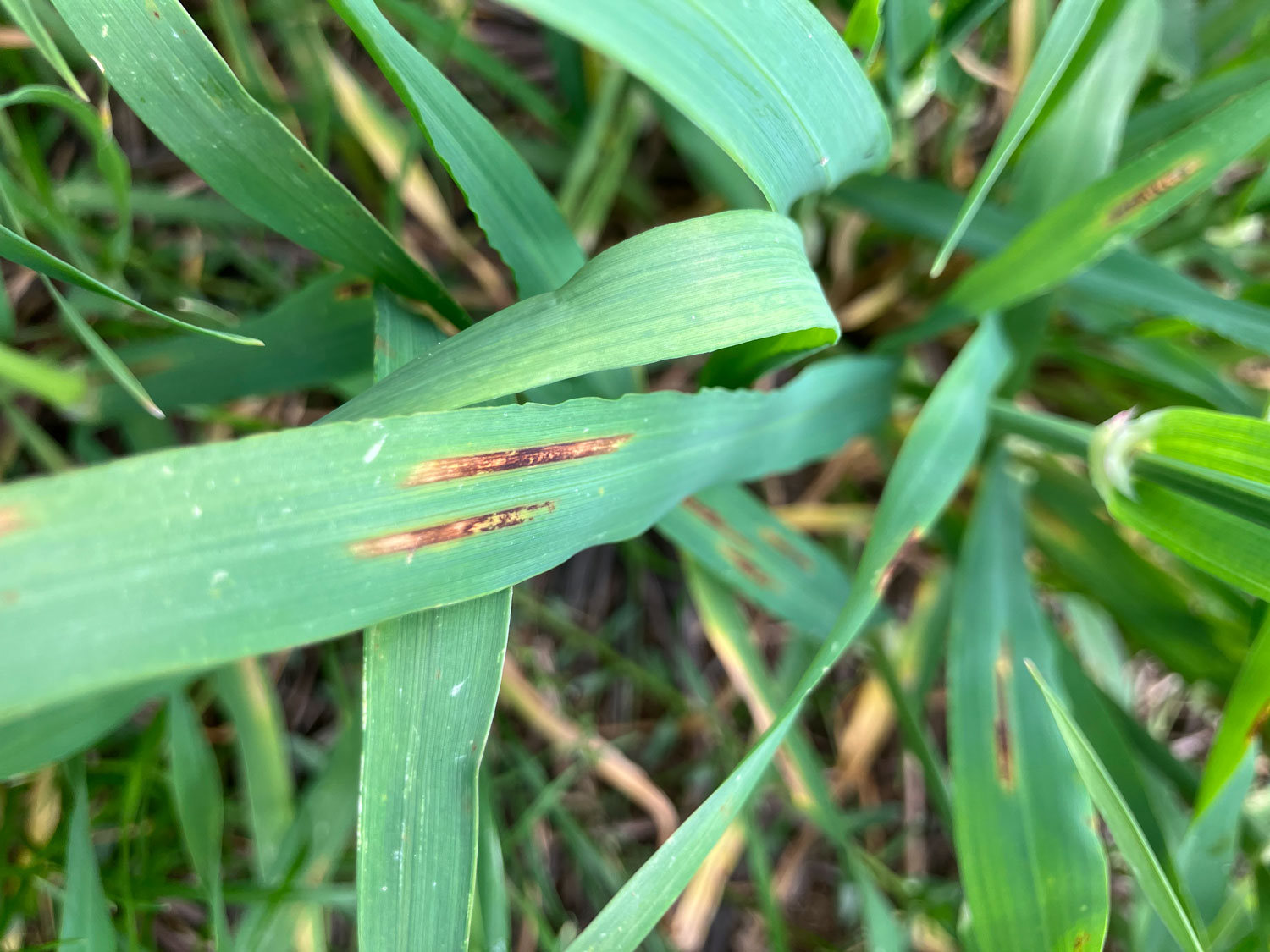
Symptoms of net form net blotch (NFNB)
For an overview of fungicide resistance status in wheat and other barley diseases South Australia, please refer to the table below.
It highlights the latest laboratory detections, reduced sensitivity, and confirmed resistance cases for key foliar and diseases, along with the fungicide groups affected.
| Crop | Disease | Group 3 (DMI) | Group 7 (SDHI) | Group 11 (Qol) |
|---|---|---|---|---|
| Barley | Powdery mildew | Laboratory detection, reduced sensitivity, resistant* | Not detected | Not detected |
| Net form net blotch | Laboratory detection, reduced sensitivity, resistant | Laboratory detection, reduced sensitivity, resistant | Laboratory detection, reduced sensitivity | |
| Spot form net blotch | Laboratory detection, reduced sensitivity, resistant | Not detected | Laboratory detection | |
| Leaf rust | Laboratory detection | Not detected | Not detected | |
| Wheat | Septoria tritici blotch | Reduced sensitivity | Not detected | Laboratory detection |
| Powdery mildew | Laboratory detection, resistant | Not detected | Resistant |
* The presence of laboratory detection, reduced sensitivity and resistant within a single fungicide group signifies a mixed resistance profile, where certain active ingredients are compromised while others remain effective.
For more information on fungicide resistance see: