
Green peach aphids detected
Wednesday 27 May 2026 SARDIPestFacts
The PestFacts SA team has received reports about green peach aphid (GPA) activity, ranging from the Mid North through to the South East regions of South Australia.
Following rain at the end of February, some growers commenced early canola sowing, while others only recently planted crops.
As a result, canola crops across South Australia are currently at a wide range of growth stages – from newly emerged seedlings through to more advanced vegetative crops.
These varied crop stages, combined with mild autumn conditions and the persistence of green bridge vegetation, are likely supporting green peach aphid survival, reproduction and movement.
Green peach aphid can rapidly build up on a range of weed hosts, including wild radish, volunteer canola and other brassica weeds, before moving into emerging canola crops.
Aphid activity this season relates to increased concern around turnip yellows virus (TuYV), particularly in early-sown crops where young plants remain exposed to aphid movement for longer periods.
Even low numbers of green peach aphids can spread the virus into young canola plants. Once crops progress through to flowering without significant TuYV infection, the risk of major impact is much lower.
It is important to note that not all aphids observed in canola crops are green peach aphids. Growers and advisers should look for the presence of colonies and young nymphs, as the winged adults of other aphid species can appear similar and may simply be passing through crops rather than establishing populations.
Identification
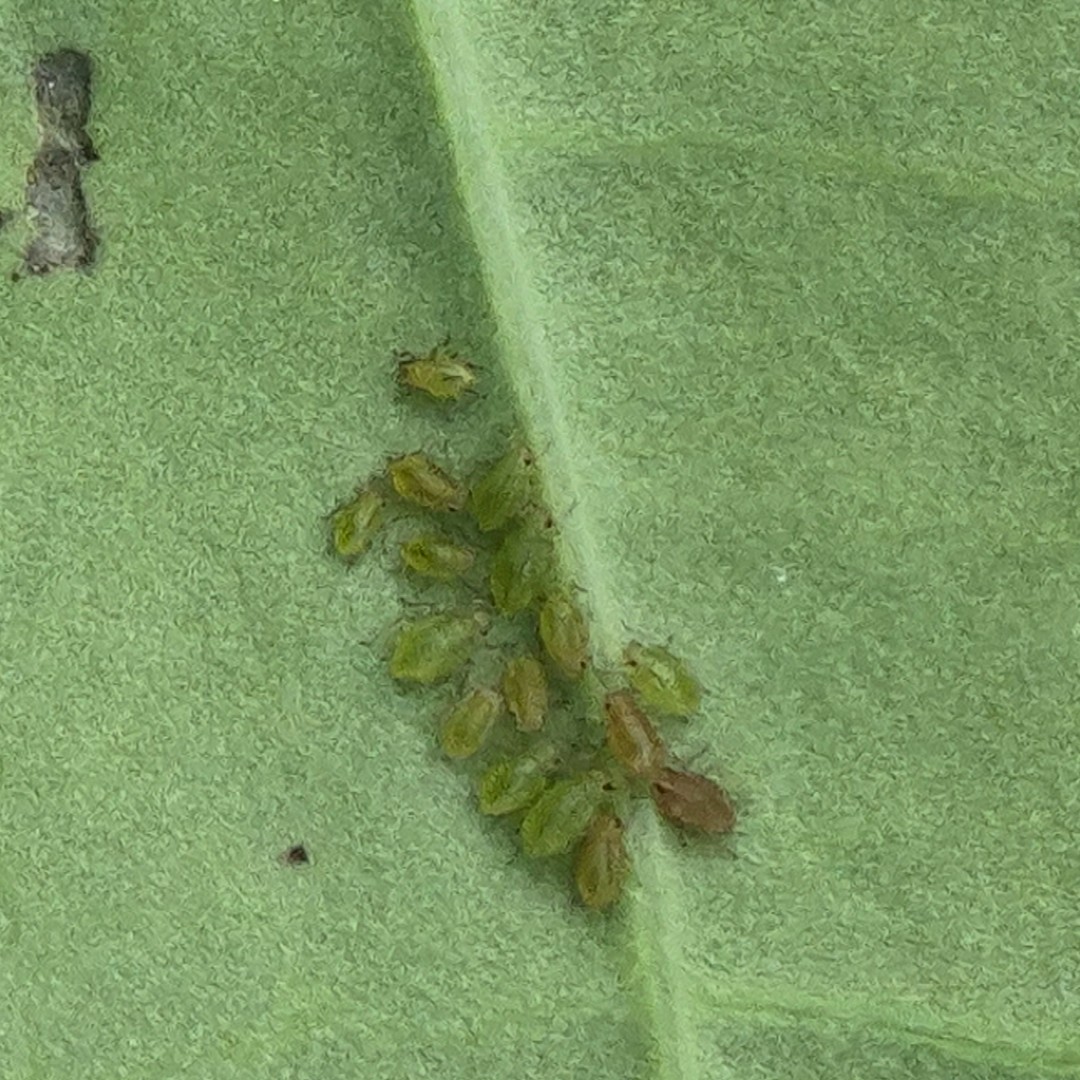
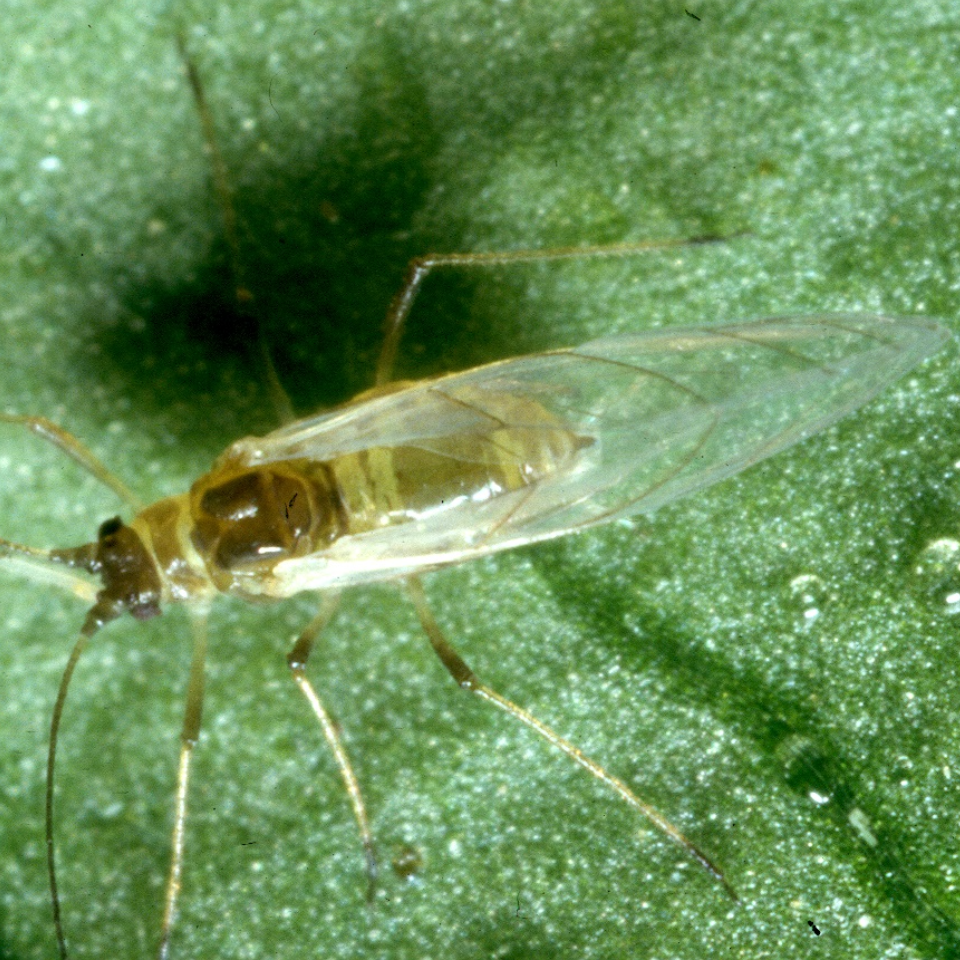
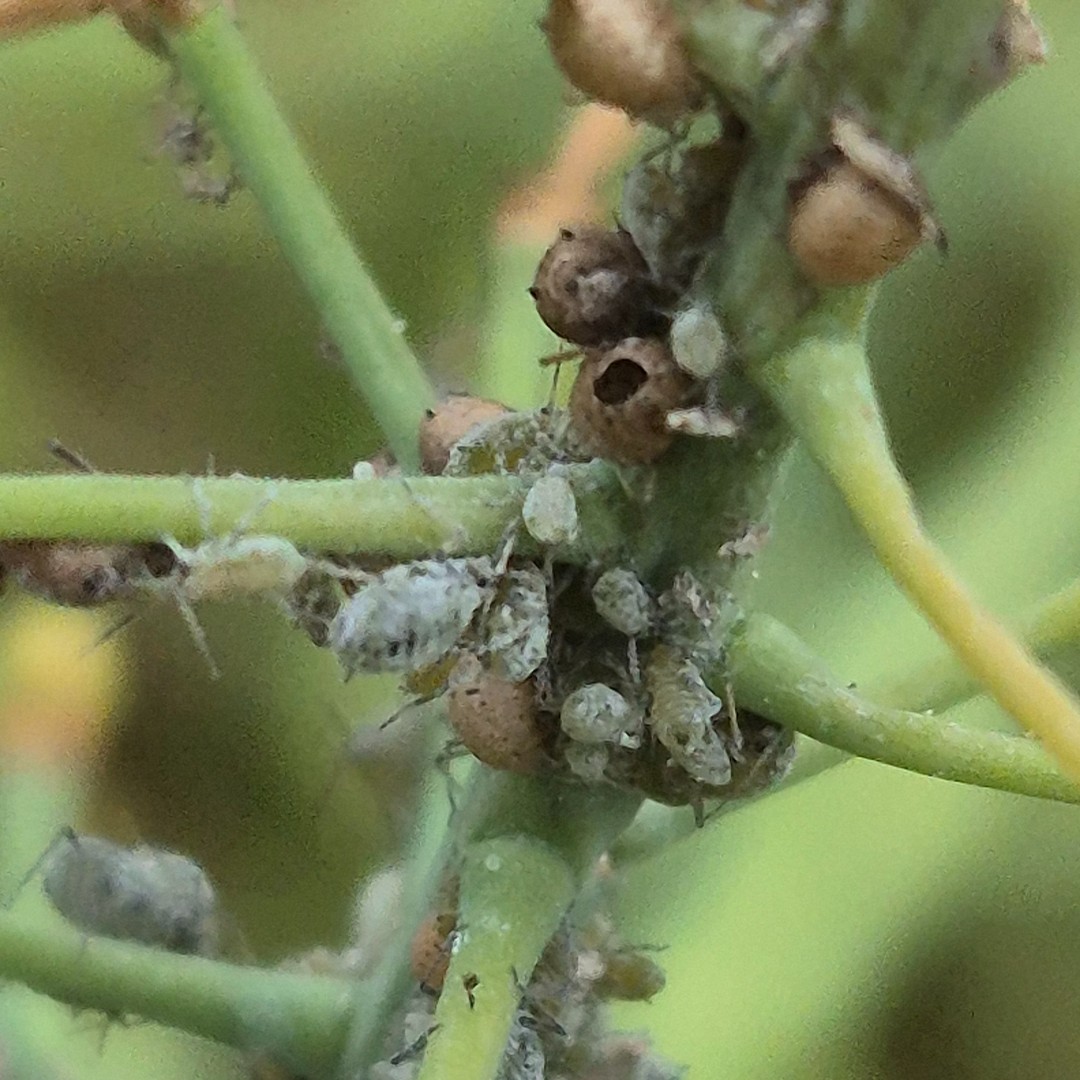
Green peach aphid (Myzus persicae) are small, soft-bodied aphids that vary in colour – shiny pale yellow-green, green, orange or pink.
Adults are oval-shaped and can be winged or wingless.
Winged adults (alates) have a dark patch on the abdomen, while wingless adults are usually quite uniform in colour and smaller in size.
Monitoring and management
Monitoring should include inspecting the undersides of leaves and growing points of at least 10 to 15 plants across the paddock.
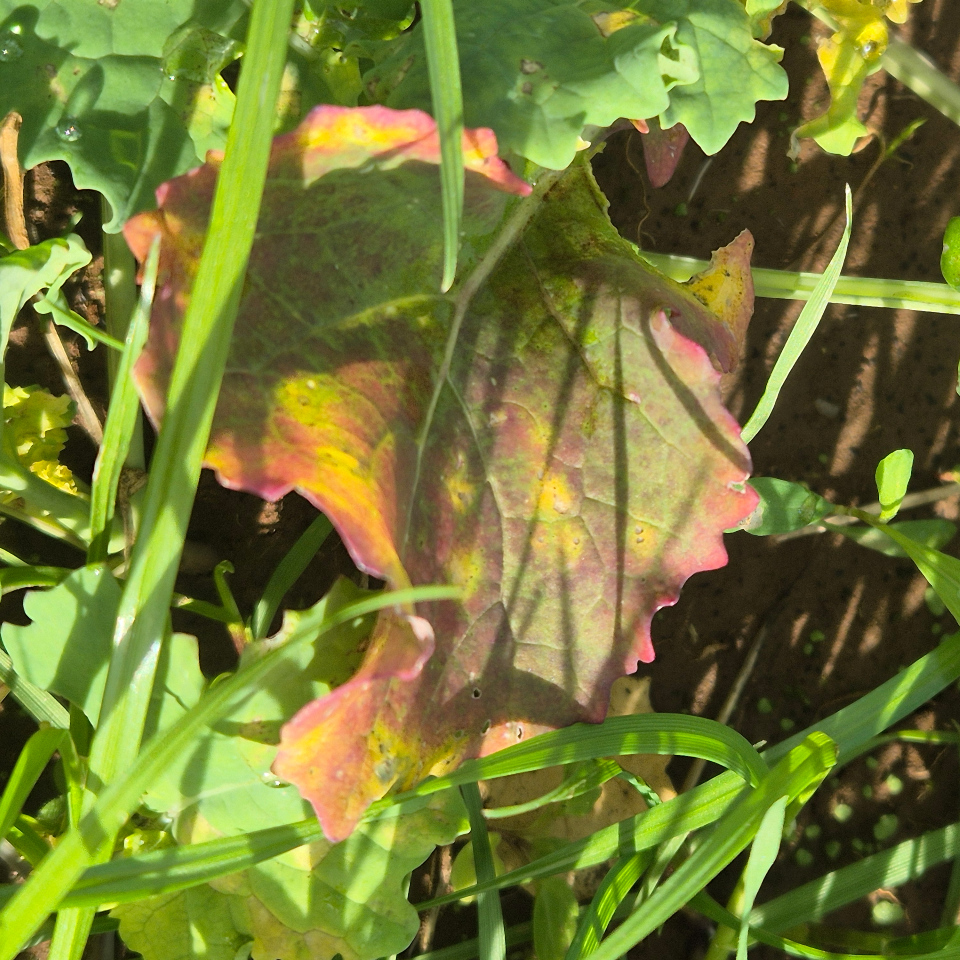
Crops should also be checked for early signs of turnip yellows virus (TuYV), including reddening, yellowing or purpling of older leaves, stunting, reduced plant vigour and patchy crop growth.
Beneficial insects can play an important role in helping reduce aphid numbers. Natural enemies such as parasitoid wasps, ladybirds, hoverflies and lacewings can help slow aphid population build-up in canola crops.
A team of experts involved in the current national GRDC-supported Canola Allies project is investigating the role of beneficial insects in sustainable canola pest management, including how farming practices such as early-season insecticide applications may influence the biological control of green peach aphid in canola systems. To find out more about the project, see Canola Allies: Tailoring practices for beneficials in canola systems.
Where chemical control is required, growers should consider insecticide resistance management, as green peach aphid populations have developed resistance to several insecticide groups, including
- synthetic pyrethroids
- carbamates
- organophosphates
- neonicotinoids.
Recent research shows that even neonicotinoid seed treatments may no longer provide adequate protection against green peach aphid and subsequent turnip yellows virus (TuYV) infection.
Avoid repeated use of the same mode of action and always follow current label and permit recommendations through the APVMA.
If green peach aphids are detected in your crops, please email Nicole.Thompson@sa.gov.au to organise turnip yellows virus (TuYV) testing to assist management decisions.
For more information about green peach aphid and turnip yellows virus (TuYV) management, check:
Please continue reporting aphid activity and suspected virus symptoms to the PestFacts SA team throughout the season to help improve monitoring efforts and regional awareness.