
Lesser budworm
Tuesday 14 April 2026 SARDIPestFacts
PestFacts SA has received reports of moths and also caterpillars that resemble native budworm from the Upper Eyre Peninsula, Ceduna, Kimba, Streaky Bay and even the mid-north.
Reports described caterpillars on medics in grazing paddocks showing ‘armyworm-like’ behaviour, moving in groups in search of new food after exhausting their current host plants.
Molecular testing of submitted moth specimens and caterpillar samples has confirmed moths as lesser budworm (Heliothis punctifera), and most caterpillars as lesser budworm with an occasional native budworm.
What is lesser budworm?
Lesser budworm caterpillars can be confused with native budworm (Helicoverpa punctigera) and cotton bollworm (Helicoverpa armigera), Australia's top two pest moth species which are prevalent in agricultural areas and considered more detrimental to crops than lesser budworm.
While generally considered less damaging than native budworm, lesser budworm can still cause damage to a range of crops and weeds, including cereals, under the right conditions. Native budworm generally does not attack cereals unless it has been ovipositioned on broadleaf weeds in cereal paddocks and then runs out of food.
Identification
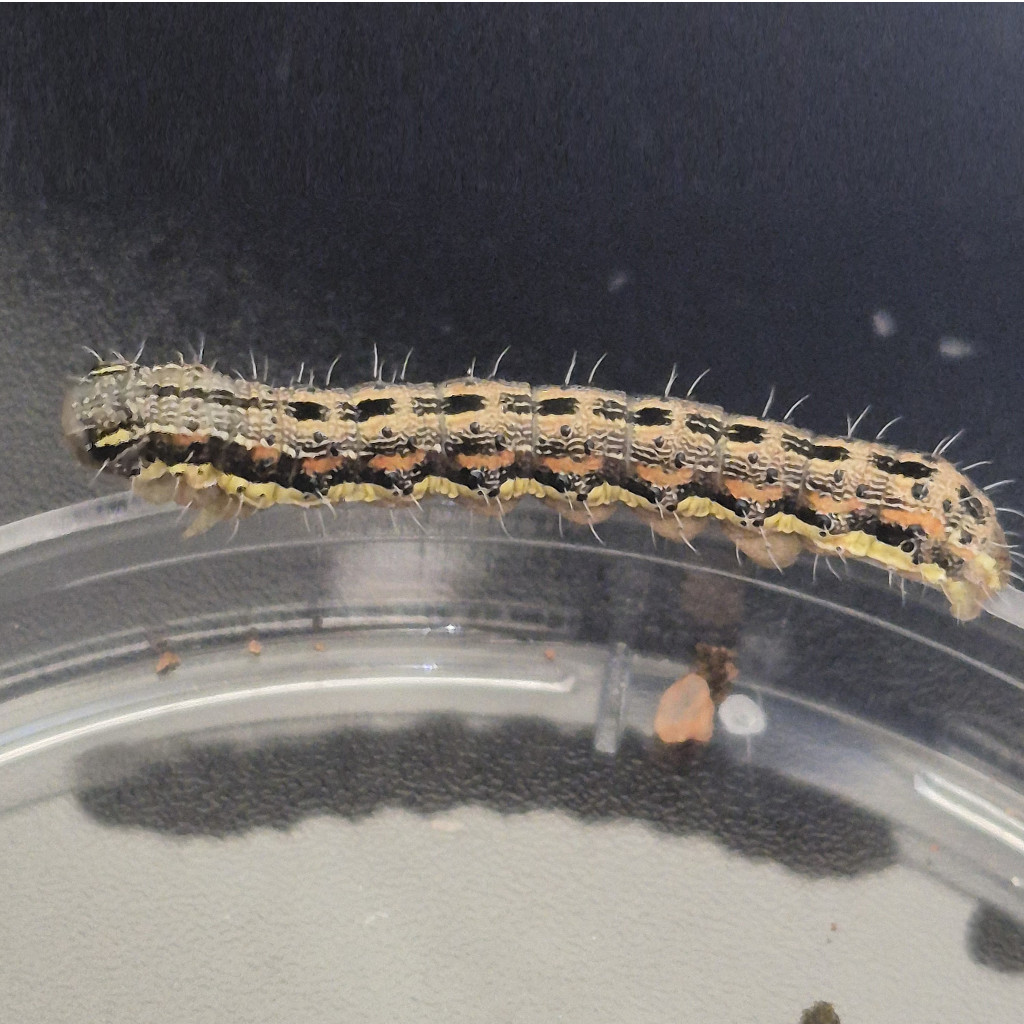
The caterpillar has broad stripes of dark green to brown with a light-coloured strip down each side of the body and reaches about 40 millimetres in length. Unlike native budworm, it has fine white hairs behind the head and all over the body.
Lesser budworm caterpillars are considered extremely mobile, with typical armyworm behaviour: moving across the ground between host plants in their quest to consume plants and flower heads.
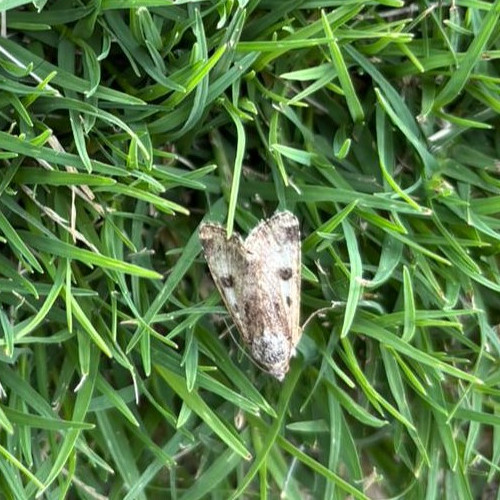
Lesser budworm moths are generally darker in colour than the native budworm, and adults have a distinctive pattern on the forewing. Accurate identification requires expert confirmation or molecular diagnostics, particularly when larvae are small.
Management
Lesser budworm can cause damage to crops and grazing paddocks under favourable conditions. Significant summer rainfall that promotes vegetation growth, combined with strong winds that can facilitate long-distance moth movement into agricultural areas, can lead to population build-up. The early February rainfall has likely created these conditions. This species is capable of producing several generations each year, allowing populations to increase rapidly when conditions remain suitable.
Management of lesser budworm should focus on reducing early population build-up and monitoring crop establishment closely in all major grains crops (and pastures), including cereals:
- Effective and timely green bridge control is critical, with volunteer plants and weeds removed at least 4 weeks prior to sowing to minimise breeding hosts and reduce the risk of larvae moving into emerging crops.
- Paddocks should be monitored both before and after crop emergence, particularly following rainfall events that can trigger moth activity and larval movement. Caterpillars can migrate from the edges into the crop.
- Early detection of eggs or caterpillars in the crop is important, as control is more effective when caterpillars are small and before they disperse widely.
At present, most reports suggest relatively low pressure, with more severe damage in some grazing paddocks.
Continued monitoring is recommended, especially in regions that have received recent rainfall and where green bridge is present.
Please report any observations to PestFacts SA, especially south of current known locations:
- email Maryam Ehsangar: maryam.ehsangar@sa.gov.au
- text message or WhatsApp: 0448 010 339
- tagging or messaging on X: @PestFactsSARDI