
Look out for aphids this spring
Friday 29 August 2025 SARDIPestFacts

As we move into spring, particularly under mild and warm conditions, aphid populations like cabbage aphid, cow pea aphid, and oat aphid can expand rapidly.
Temperatures between 20 to 25 °C are optimal for aphid development and reproduction, though the exact range varies with species. When conditions are favourable, aphids can complete several generations in a short timeframe, leading to rapid population build-up.
By this stage of the season, the risk of virus transmission by aphids decreases. The primary purpose of monitoring crops then shifts to detecting direct feeding damage, which can cause wilting, stunting, and reduced growth. Heavy infestations may also reduce flowering, prevent pod set, and limit pod fill.
Identifying aphids
Cowpea aphid (Aphis craccivora)
In recent weeks, we received reports of high cowpea aphid activity from Keith, Bordertown, and Peake.
Even though cowpea aphids are also active during autumn and can persist through winter, they are most prominent in spring. They infest a range of pulse crops, including lentils, faba beans, field peas, lupins, lucerne, and clover.
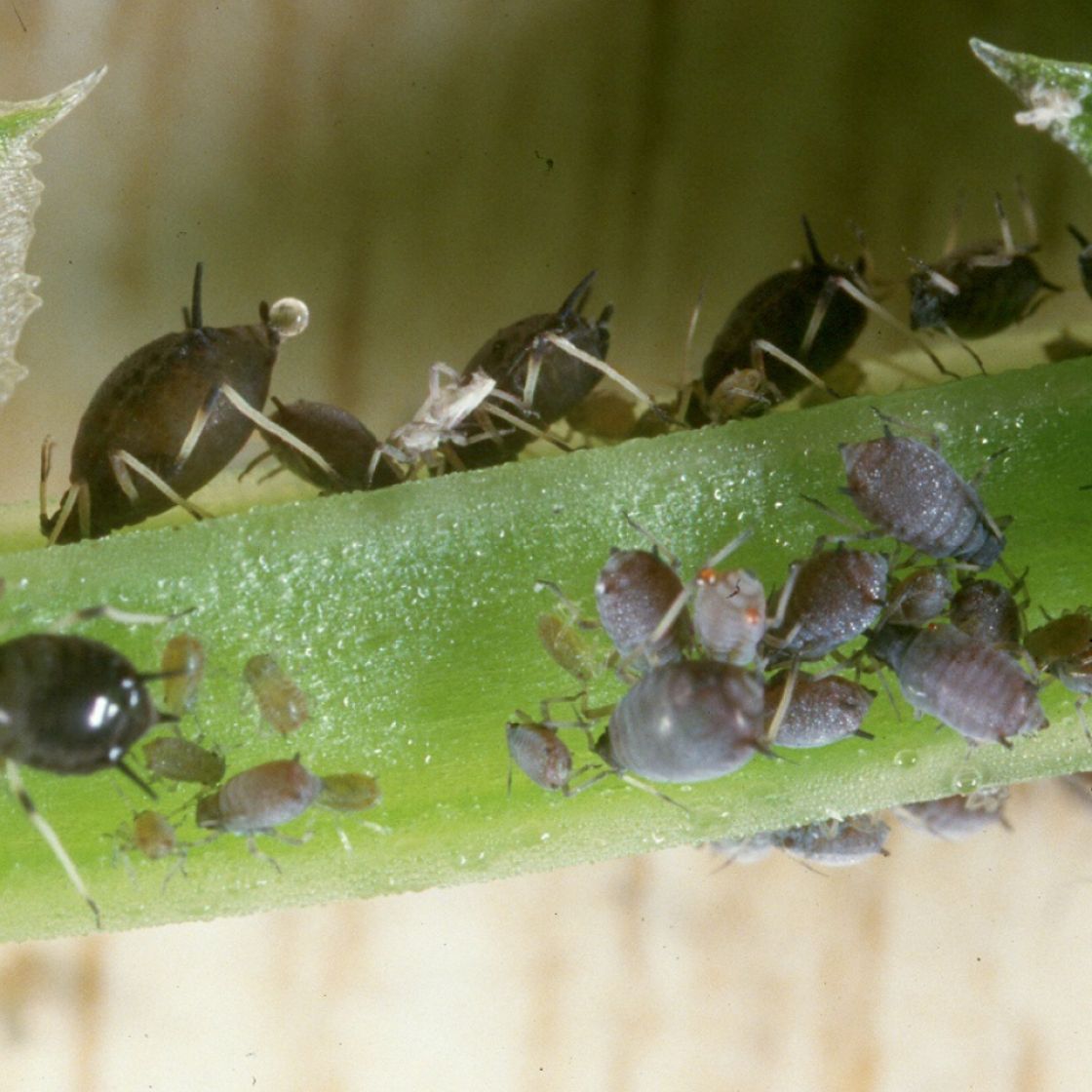
Adult cowpea aphids are a shiny black and can grow up to 2 mm in length, while nymphs are dull grey and lightly dusted with wax. All life stages are characterised by their white and black legs, making them relatively easy to distinguish in the field.
Infestations usually begin as dense colonies on individual plants or in patches, spreading more widely under fine and warm conditions. Colonies often establish at growing points before moving onto surrounding plants, creating distinct hot spots within a crop. Heavily infested plants may develop distorted leaves, stunted growth, and wilting, with symptoms most severe in water-stressed crops. If infestations happen during flowering, pod set and fill can be greatly reduced or even prevented.
Though not proven conclusively, it's strongly believed cowpea aphids contain a photodynamic fluorescent pigment that causes phototoxic effects (photosensitisation) in stock after direct consumption during pasture grazing.
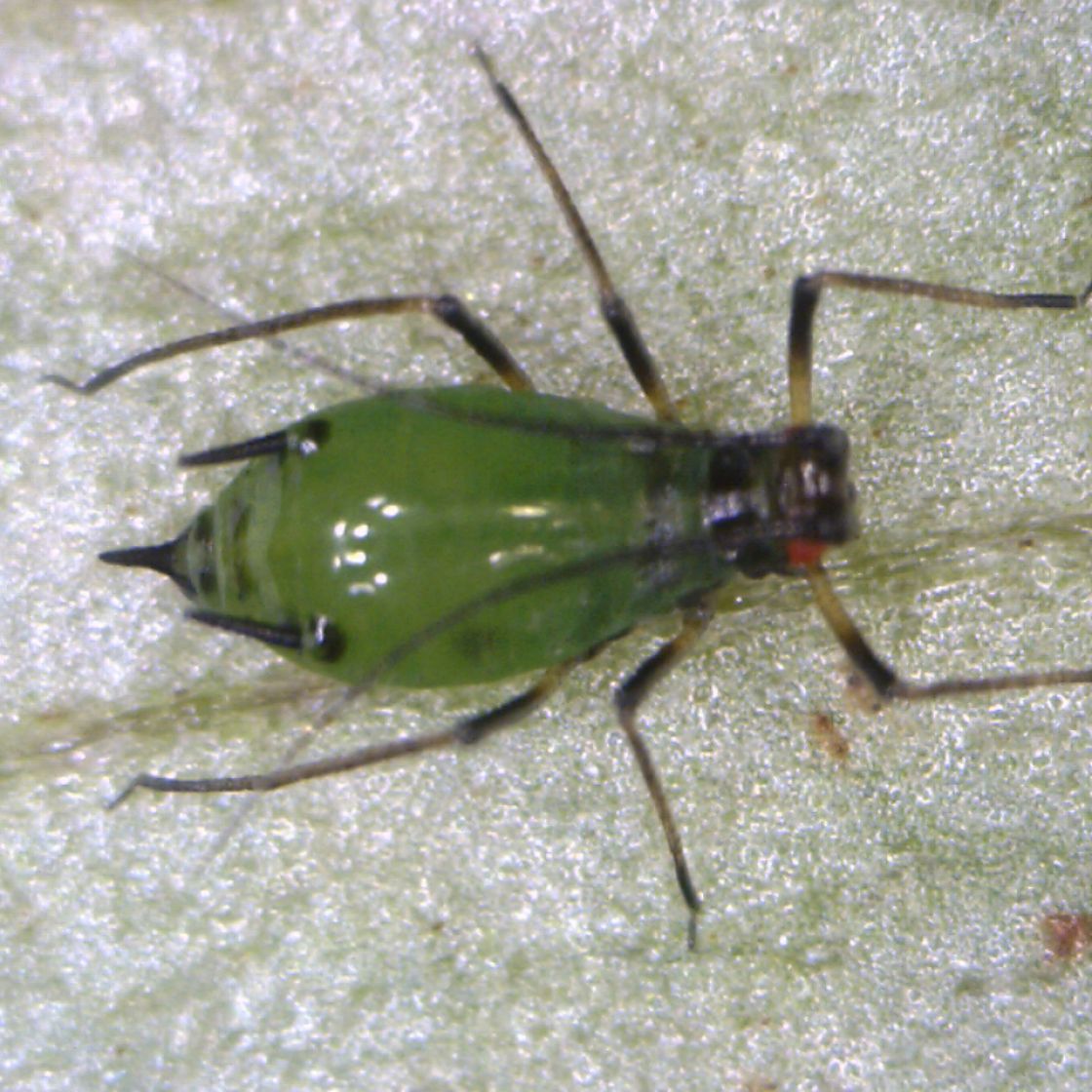
Cowpea aphids are sometimes misidentified as faba bean aphids. Cowpea aphids are black to dark grey, whereas faba bean aphids are dark green with a distinctive black head, cauda, siphunculi, antennae, and legs. The faba bean aphid is a relatively new pest in south-eastern crops. While no activity has been reported so far in South Australia, there are infestations interstate, including in the NSW Riverina. Learn more about faba bean aphids from GRDC.
To reduce cowpea aphid risk, monitor vulnerable crops regularly from bud formation through to late flowering. In some cases, a border spray when aphids first migrate into crops may be sufficient to suppress populations without the need to treat the entire paddock.
Cabbage aphid (Brevicoryne brassicae)
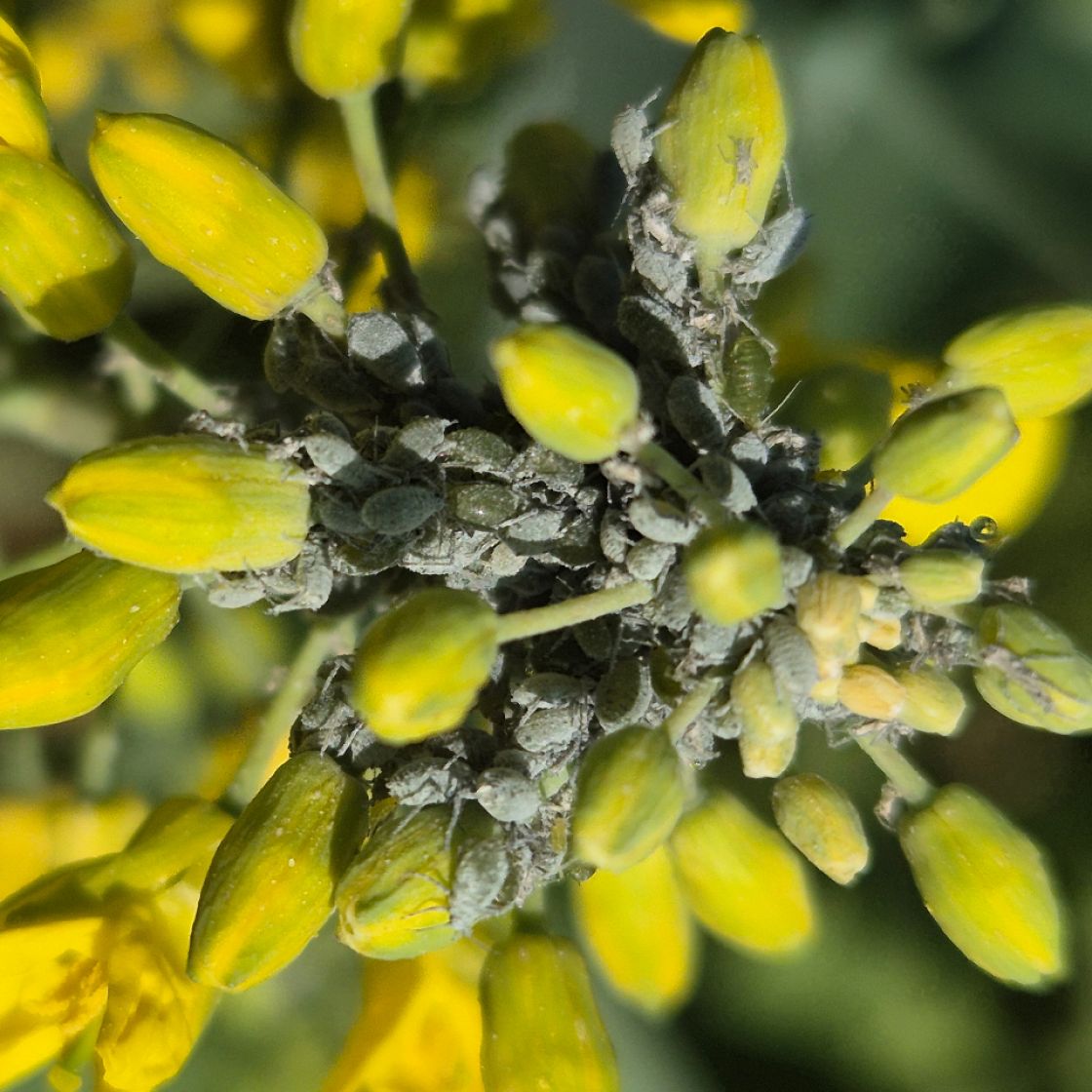
Cabbage aphid is a piercing and sucking pest of cruciferous plants (including canola) during spring. Both adults and nymphs use needle-like mouthparts to penetrate plant tissue and extract phloem sap. Colonies are most obvious during flowering and pod-development stages on the upper stems, flowers, and pods of canola. There they form distinctive blue-grey clusters typically covered in a thick, whitish, waxy powder. If colonies are sufficiently dense, they can reduce pod formation, restrict pod development, and result in poor grain quality.
Cabbage aphids are often mistaken for turnip aphids, which are olive to grey-green in colour and wax-covered, but have a thinner wax layer than cabbage aphids.
Monitoring for cabbage aphid should begin from flowering through to grain fill. They usually first appear at crop edges. Infestations can be patchy, so scouting should include at least 5 points across the paddock, with at least 20 plants inspected at each point.
Control may be warranted if more than 20% of plants are infested, or if more than 10% of plants have colonies extending 25 mm along the stem. Closer to harvest, crops can tolerate higher infestation levels, and the threshold for control becomes correspondingly higher.
Oat aphid (Rhopalosiphum padi)
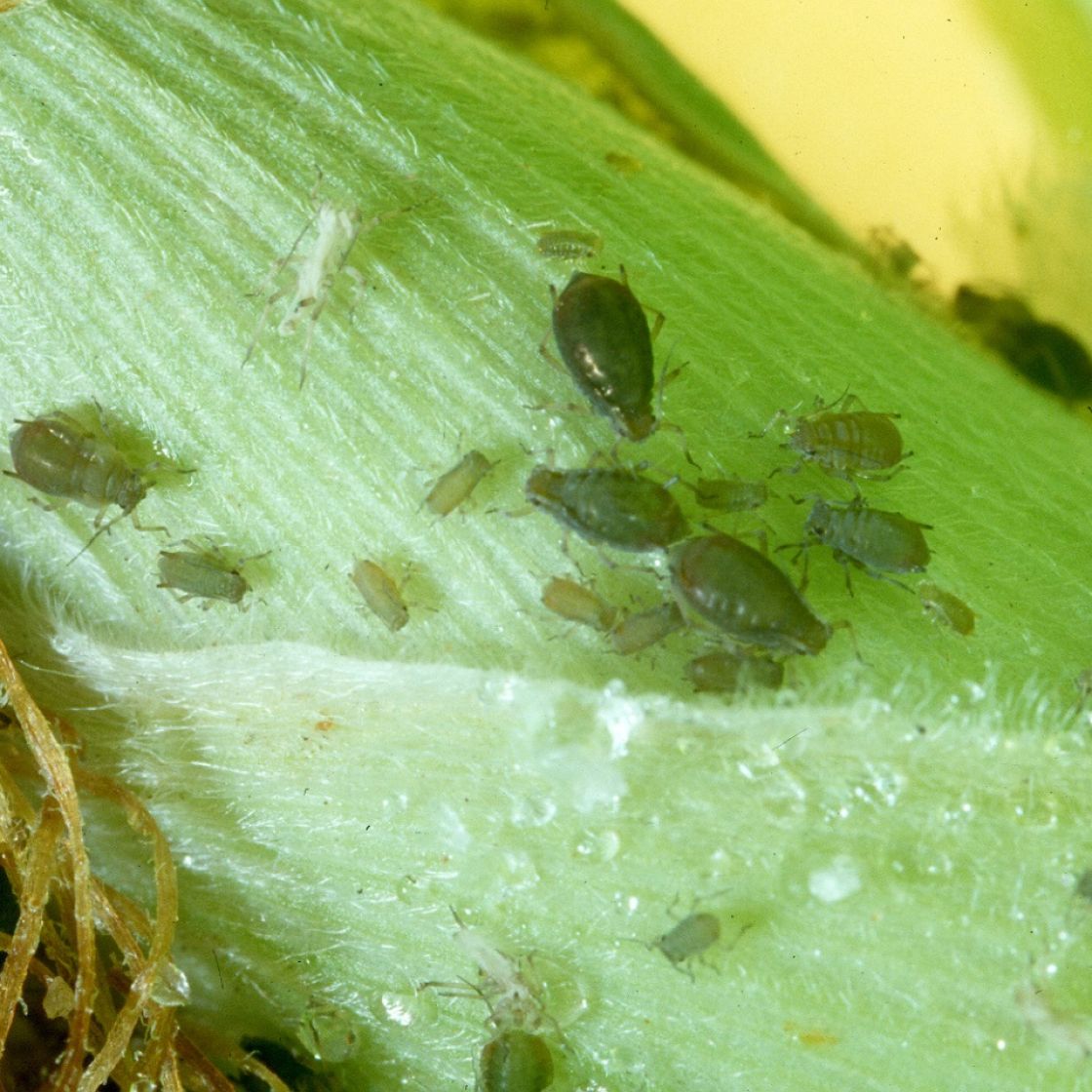
Oat aphid is a common pest of cereals, including wheat, barley, and oats. Oat aphids vary in colour from olive-green to greenish-black and are usually identifiable by a dark rust-red patch on the tip of the abdomen (though under some conditions it's not apparent).
Adults are approximately 2 mm long, pear-shaped, and have antennae extending half the body length. Adults may be winged or wingless; they tend to develop wings when plants become overcrowded or unsuitable.
Colonies typically establish at the base of plants and spread upwards along leaves and stems, often forming patches within crops. Heavy infestations can cause stunting, reduced tillering, early leaf ageing, and poor grain fill. Honeydew excreted by aphids can also encourage growth of sooty mould, which interferes with photosynthesis.
Populations of oat aphid tend to build rapidly in late winter and spring, particularly under mild conditions. Monitoring should focus from stem elongation through to flowering, which is when crops are most vulnerable. Because infestations are often patchy, scouting should cover multiple points across the paddock, with at least 20 plants inspected at each site to detect early colonies.
In some situations, a border spray when aphids first move into crops may provide effective control without the need to spray the entire paddock. Because oat aphid colonies typically establish at the base of plants, however, they can be difficult to target with chemical control in dense canopies, making early detection critical.
Managing aphids
Effective management of aphids relies on early detection, accurate identification, and timely decisions. Because aphids reproduce rapidly under favourable spring conditions, regular monitoring is essential to prevent both direct feeding damage and the spread of viruses.
You should:
- check crops weekly from early growth stages through to flowering and pod or grain development
- inspect multiple points across the paddock (at least 5) and examine 20 plants per site to detect patchy infestations
- pay close attention to crop edges and plants already stressed where infestations often begin.
When monitoring for aphids, keep an eye on the beneficials as they play a very important role in suppressing aphids. There are many effective natural enemies of aphids, including ladybeetles, hoverflies, damsel bugs, lacewings, and parasitoid wasps. If levels of parasitism and predation increase over time, it is likely that aphid populations will be controlled naturally.
Avoid the use of broad-spectrum ‘insurance’ sprays and apply insecticides only after monitoring and distinguishing between aphid species. Consider the populations of beneficial insects before choosing to spray, particularly in spring when natural enemies can play a very important role in suppressing aphid populations if left alone. Check Cesar Australia's updated beneficials chemical toxicity table to help control pests while limiting harm to beneficial insects.
Always apply insecticides according to label and APVMA permit instructions. Consider the impact on beneficial insects before making spray decisions.
Report to PestFacts
The PestFacts SA team always wants to know what invertebrates you find in your crops and pastures, whether it's a pest, beneficial, or unknown species. We even want to know about the usual pests.
Please send your reports or identification requests via the PestFacts map.
Alternatively, please contact:
Maryam Ehsangar
Phone: 0448 010 339
Email: maryam.ehsangar@sa.gov.au
Maarten van Helden:
Phone: 0481 544 429
Email: maarten.vanhelden@sa.gov.au