Mites and lucerne fleas
Thursday 7 May 2026 SARDIPestFacts

With recent rainfall across parts of South Australia, it would not be surprising to see increased activity of mites and lucerne flea in emerging crops. These early-season pests often build up on the green bridge before moving into newly sown paddocks, particularly under cool and moist conditions.
Mites
Several types of mite can feed on emerging crops. So far, the PestFacts team has received reports of mite activity, including Bryobia mites. Accurately identifying which mite species is present is essential, as their response to insecticides can differ due to natural tolerance or resistance. Use the GRDC Crop Mites Back Pocket Guide to help with identification.
Redlegged earth mite
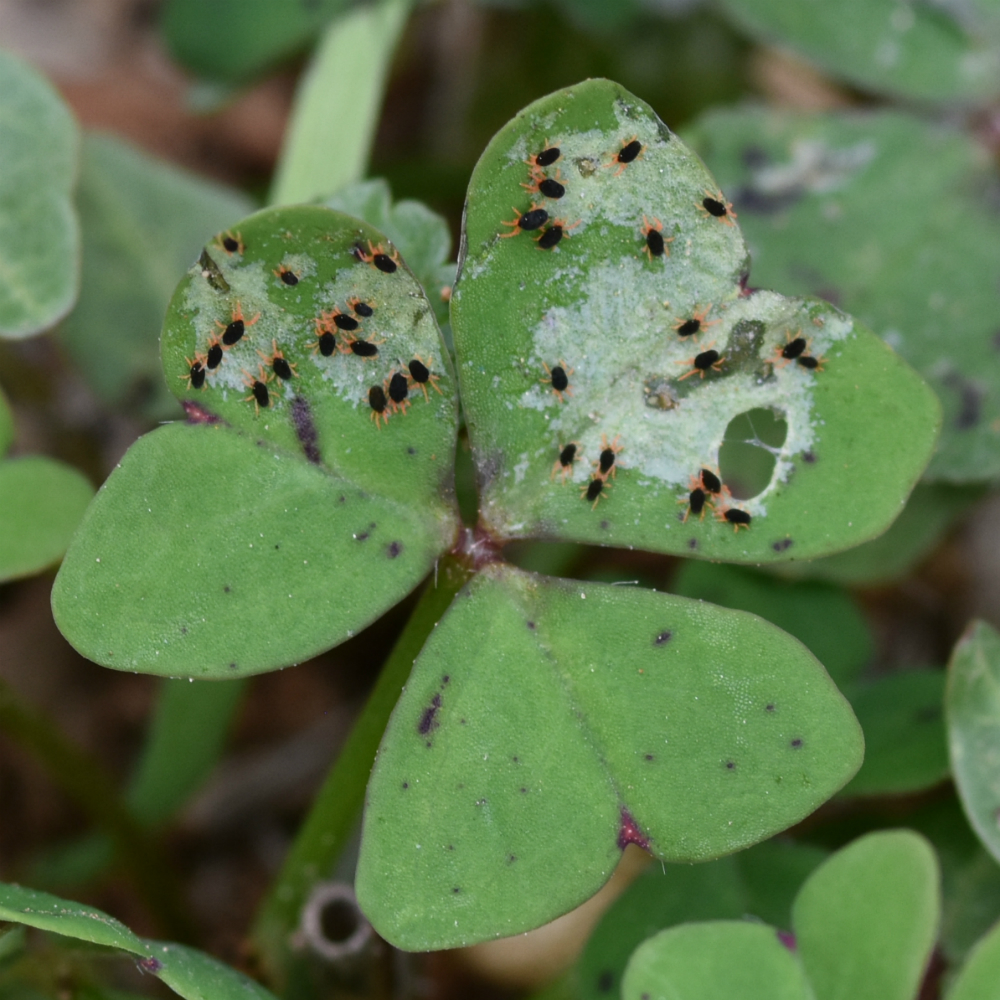
Redlegged earth mite (RLEM, Halotydeus destructor) is small, with a dark body and distinctive red legs, and is most active during cool, overcast conditions.
Feeding results in a characteristic silvering or whitening of leaves, and in severe cases can stunt or kill young seedlings, particularly in canola and pulses.
Eggs lie inactive over summer and hatch after autumn rains and a period of cooler temperatures (under 16°C for 10 days).
Populations typically develop on weeds and self-sown plants following autumn rainfall before moving into crops.
Early control of the green bridge at least 3 to 4 weeks prior to sowing remains one of the most effective management strategies along with timely monitoring.
When it comes to chemical control, it’s better to consider resistance of RLEM to synthetic pyrethroid and organophosphate insecticides. To help manage resistance, check:
- Redlegged earth mite (RLEM) and pesticide resistance
- Seasonal pest risk (for RLEM in canola)
Following recent rainfall in parts of South Australia, conditions are favourable for RLEM egg hatch. Now is a good time to check the redlegged earth mite hatch timing tool for your region and compare predicted hatch with crop stage, particularly in paddocks with a history of RLEM in previous years.
Blue oat mites
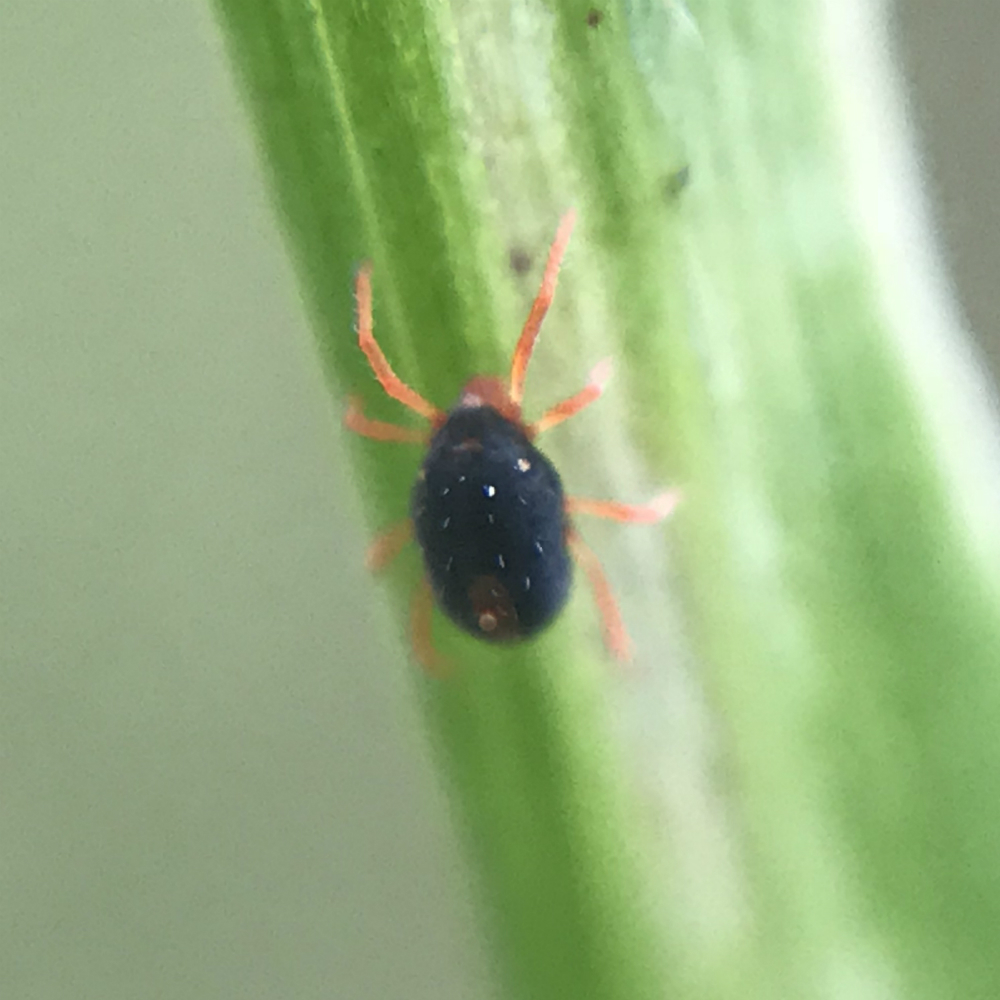
Adult blue oat mites (Penthaleus spp.) are approximately 1 millimetre in length and have a blue-black body with a distinctive red mark on their back, along with 8 red-orange legs.
Newly hatched nymphs are pinkish-orange with 6 legs, but they quickly develop extra legs and change colour from brown to green before reaching the adult stage.
Blue oat mites are active during the cooler, wetter months, typically from April to late October.
Most crops and pastures are susceptible, particularly at the seedling stage.
Unlike redlegged earth mites, blue oat mites tend to feed individually or in small groups. Their feeding causes silvering or white discolouration of leaves, and in severe infestations can lead to distortion or shrivelling. High populations can result in seedling death at emergence.
Bryobia mite
Bryobia mites (clover mite, Bryobia spp.) are characterised by their flattened bodies and noticeably long front legs, which can be up to 1.5 times their body length.
They are most active during the warmer parts of the day and can be difficult to detect in the early morning or under wet conditions.
Bryobia mites prefer broadleaf plants such as canola, lupins, vetch, lucerne and clover, but may also attack cereals.
Unlike many other mites that spend time on the soil surface, bryobia mites are commonly found feeding on the upper surfaces of sprouts (cotyledons) and leaves. Their feeding causes distinctive trails of whitish-grey spots, and in severe cases, damage can lead to cotyledon shrivelling.
Early control of summer and autumn weeds (particularly broadleaf weeds such as capeweed and clovers) within and around paddocks can help reduce the risk of outbreaks.
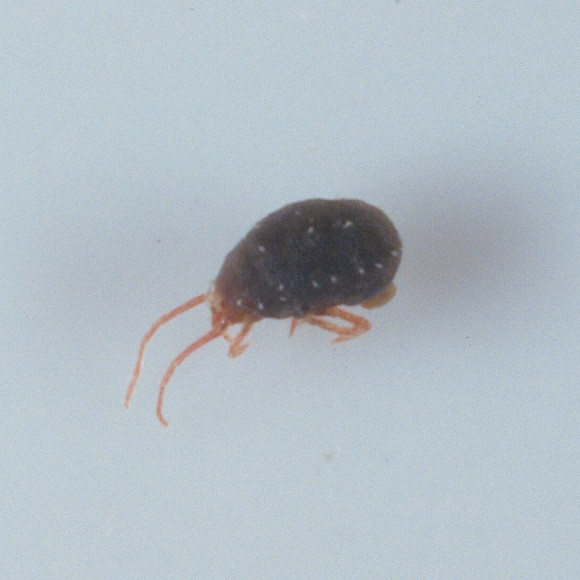
Balaustium mites
Balaustium mites (Balaustium medicagoense) are relatively large mites that are often observed feeding on leaf tips, particularly in seedling crops and pastures.
They can grow up to 2 millimetres in length and have a rounded red-brown body with 8 red-orange legs.
Adults are covered with short, stout hairs and have distinctive pad-like structures on their forelegs.
Activity is typically highest from April to June.
While all crops and pastures can be affected, canola, lupins and cereals are most susceptible, especially at the seedling stage.
Some broadleaf weeds, such as capeweed, can act as alternative hosts.
In canola, damage appears as distorted, cupped cotyledons with a leathery appearance, while in pulses and cereals feeding results in irregular white spotting or bleaching of leaves.
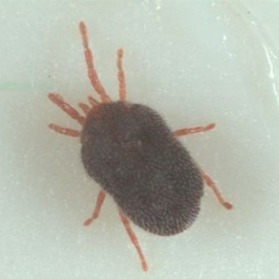
Lucerne flea
Reports have already been received of lucerne flea (Sminthurus viridis) activity on young medic pastures in the Adelaide Hills.
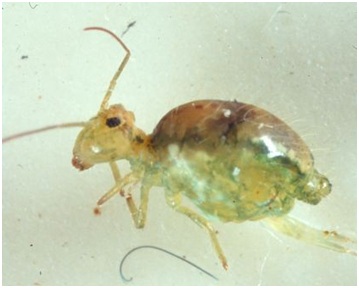
Lucerne flea is a small, green-yellow, globular springtail commonly found in broadleaf crops and pastures, particularly at crop emergence.
It possesses a forked structure (furcula) beneath the abdomen that allows it to spring off vegetation when disturbed.
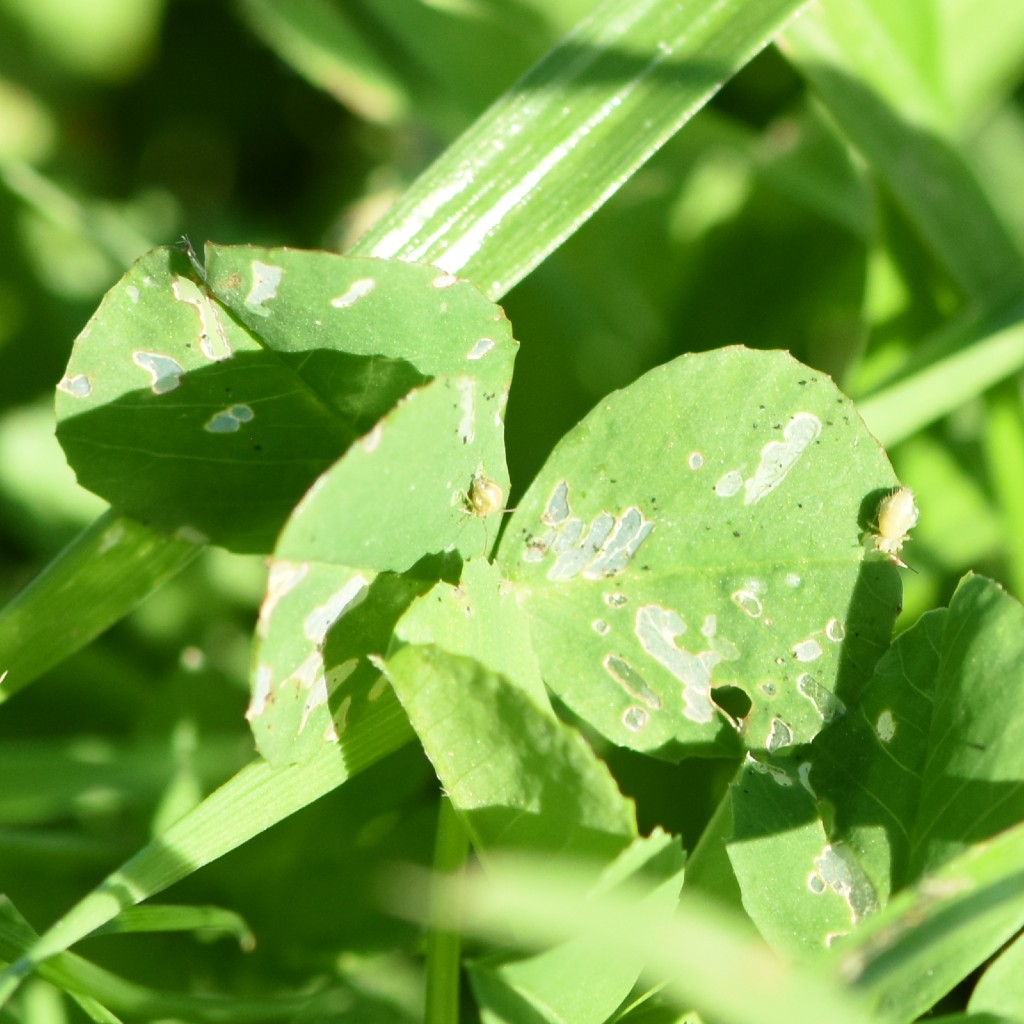
Feeding results in characteristic windowing damage on sprouts and young leaves, which can slow crop establishment under high pressure.
The first generation typically hatches from over-summering eggs in March to April following soaking autumn rainfall, with populations building on clovers, medics and other broadleaf weeds.