
On the radar: Native budworm activity in pulses
Friday 31 October 2025 PestFacts

We recently received several samples of native budworm (Helicoverpa punctigera) from pulse crops after insecticide application in the South East and Murray regions. In many cases, larvae were found inside pods, which likely reduced spray coverage and effectiveness.
For best results, you should apply sprays when larvae are small (under 7 mm) and before they enter pods or flowers, which is when they are most exposed and susceptible.
Early targeting of small larvae is critical because older larvae (10 mm or larger) require significantly higher insecticide exposure to achieve the same level of control. Effective control also depends on thorough canopy coverage as larvae feeding within enclosed plant parts are shielded from direct spray contact, further reducing efficacy.
If you still notice caterpillars after treatment, it may be due to later egg-laying or poor coverage, and you may need to apply a follow-up spray. Always refer to current product labels for correct timing and observe withholding periods before harvest.
If you’re unsure whether the larvae are Helicoverpa armigera or H. punctigera, send samples for identification as confirming the species can guide better management decisions.
Native budworm moth trapping update 15 to 30 October
Over the last 2 weeks, the moth trapping network detected:
- high flights (over 290 individuals) at Mudamuckla
- moderate flights (178 to 238 individuals) at Port Broughton and Bordertown
- light activity (under 80 individuals) at Penong, Talia, and Frances.
Check the latest native budworm moth activity through MothTrapVis (Cesar Australia).
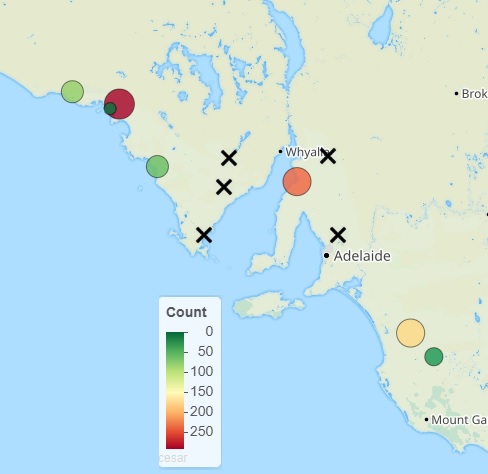
MothTrapVis map showing native budworm trapping between 21 and 28 October.
Manage native budworm
Caterpillar numbers largely determine potential crop damage, and moth flights are only an indication of risk. We've had many reports of caterpillars, even in cereals in areas with high trapping numbers. Early observations are required as small caterpillars are easier to manage.
The native budworm spraying threshold provides a more precise measure of potential loss. For example, 1 caterpillar per 10 sweeps equates to 20,000 caterpillars per hectare in pulse crops (DPIRD).
Refer to DPIRD's native budworm spraying threshold factsheet for more on spraying economics.
Always apply insecticides according to label and APVMA permit instructions. Consider the impact on beneficial insects before making spray decisions.
Please let us know if you’ve seen high numbers of native budworm in your crops.
Report to PestFacts
Maryam Ehsangar
Phone: 0448 010 339
Email: maryam.ehsangar@sa.gov.au
Maarten van Helden – Maarten van Helden
Phone: (08) 8249 0642
Email: maarten.vanhelden@sa.gov.au