
Rutherglen bug
Wednesday 27 May 2026 SARDIPestFacts
Identification
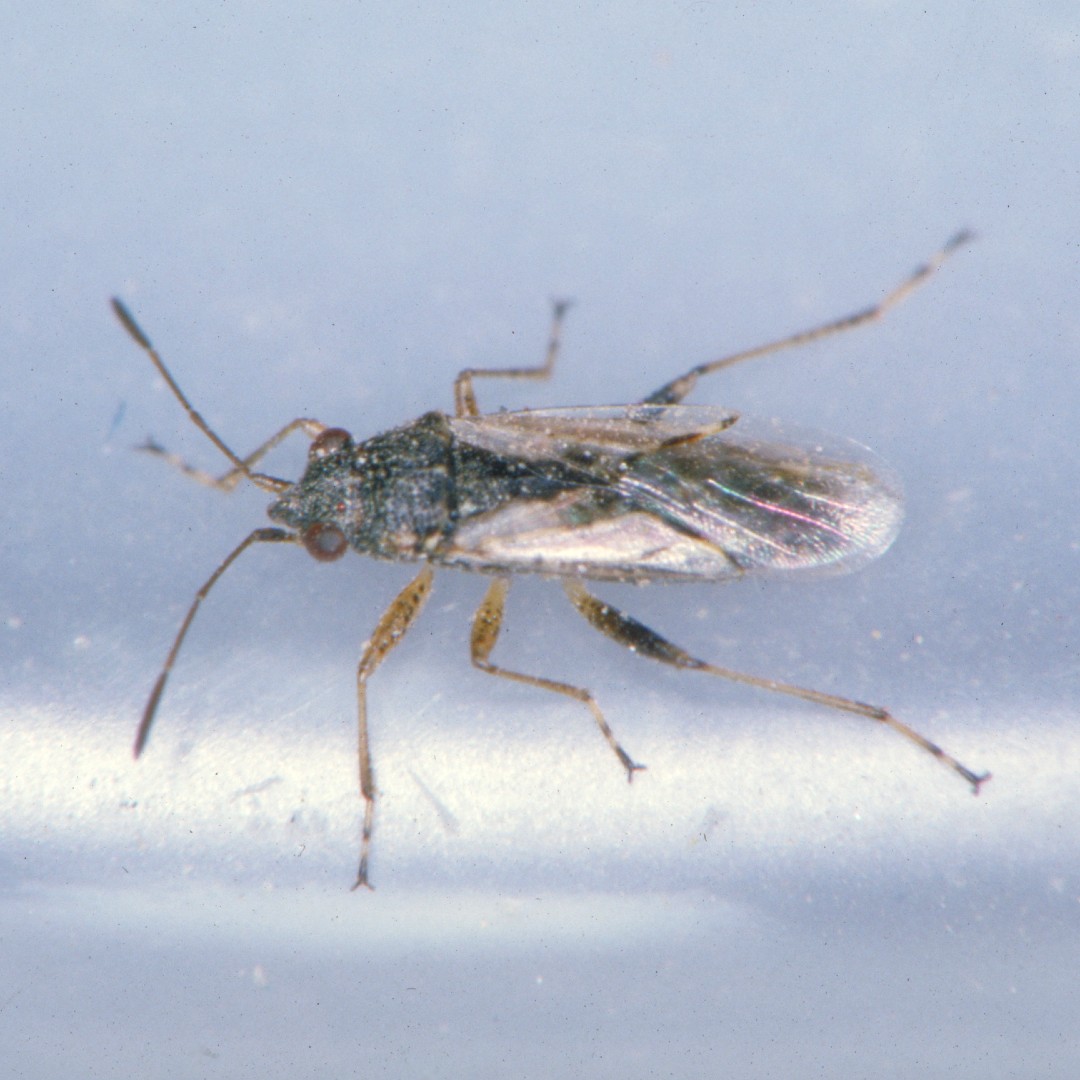
- Adults are approximately 4 millimetres long, grey-brown in colour, and have clear wings folded flat across the back.
- They have a narrow body, prominent dark eyes, and piercing-sucking mouthparts.
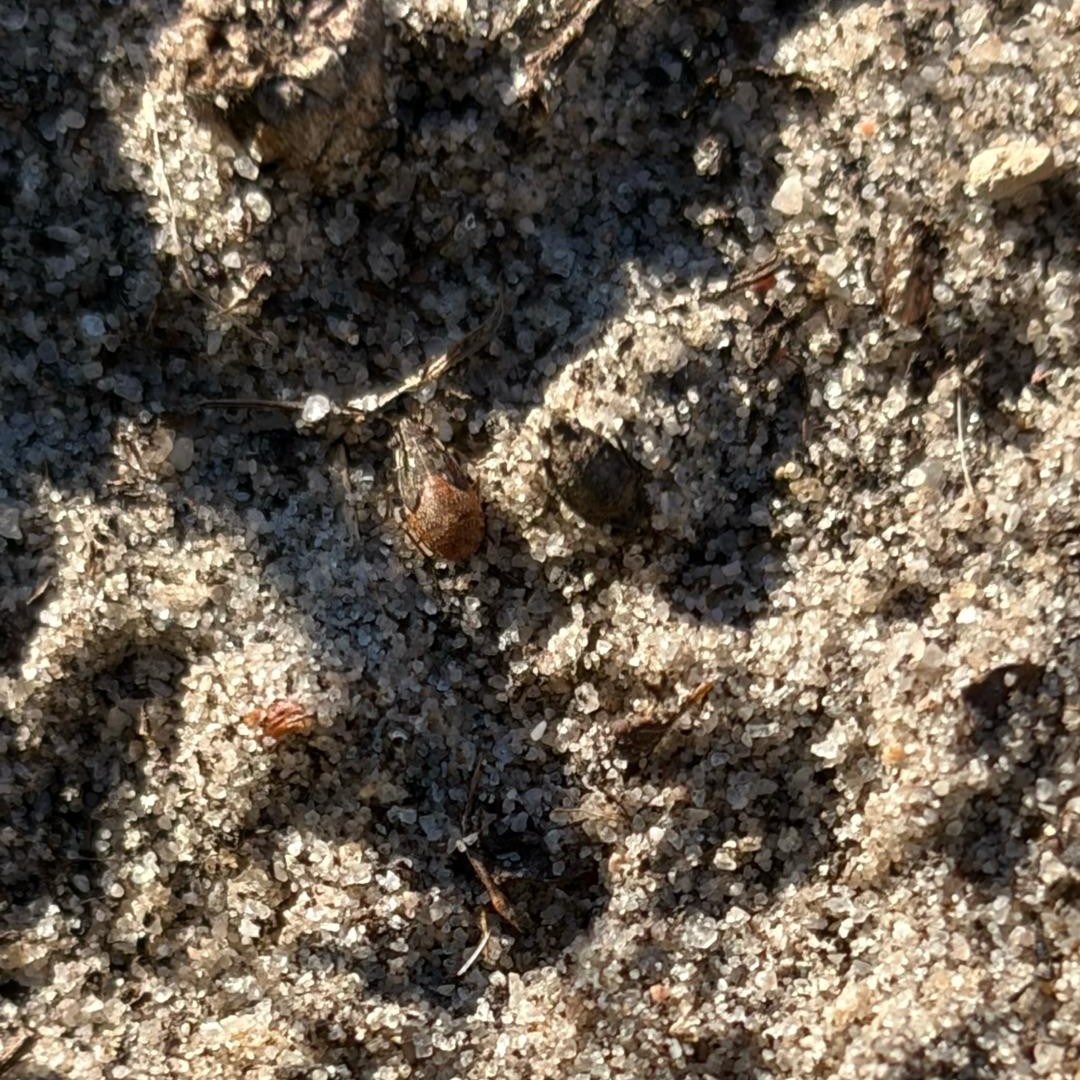
- Nymphs are wingless, pear-shaped, dark reddish in colour, and typically appear broader and larger-bodied than adults.
- Both adults and nymphs are highly mobile and can rapidly move into crops as surrounding host plants and weeds begin to dry off.
Damage and impact
Rutherglen bugs are sap-sucking insects that can damage crops at several growth stages:
- Under favourable autumn conditions, large numbers moving into emerging winter crops may cause cupping and distortion of young leaves, retard seedling growth and occasionally result in seedling death.
- Later in the season, feeding on stems, flowers and developing pods can reduce yield, oil content and oil quality in crops such as canola, particularly when crops are under moisture stress.
- In pulse crops, feeding may reduce pod set and cause seed shrivelling.
- Rutherglen bugs can also remain active around windrowed crops and during harvest, where feeding on pods may increase grain moisture levels and create issues with grain flow through harvesting equipment.
Watch: Rutherglen bug; Risk management and forecasting
Monitoring and management
Rutherglen bug is a sporadic pest that is most common during spring and early summer, but can also impact emerging crops.
It commonly breeds on broadleaf weeds growing in and around crops. Young nymphs hatch in autumn and develop slowly through winter before maturing in spring.
As surrounding weeds and host plants begin to dry off, adults and late-stage nymphs can move into nearby crops, sometimes in large numbers if conditions are favourable.
Given recent reports, growers are encouraged to monitor emerging crops closely – particularly along paddock edges adjacent to drying weeds, pastures and stubbles where bugs often accumulate before moving into crops.
Sweep netting and direct visual inspections can help detect early infestations and determine whether populations are increasing.
Where possible, management should focus on reducing green bridge hosts and broadleaf weeds around paddocks, as these can support population build-up before crop emergence.
Chemical control is generally most effective along paddock edges or when insects are less active during cooler parts of the day. Always follow current label and permit recommendations from the APVMA.