Snail populations and early season control in 2026
Friday 20 March 2026 SARDIPestFacts
By Dr Kym Perry, Adelaide University
Outlook for snail populations in 2026
The 2025 cropping season began with low snail populations, following severe drought conditions that significantly reduced snail survival.
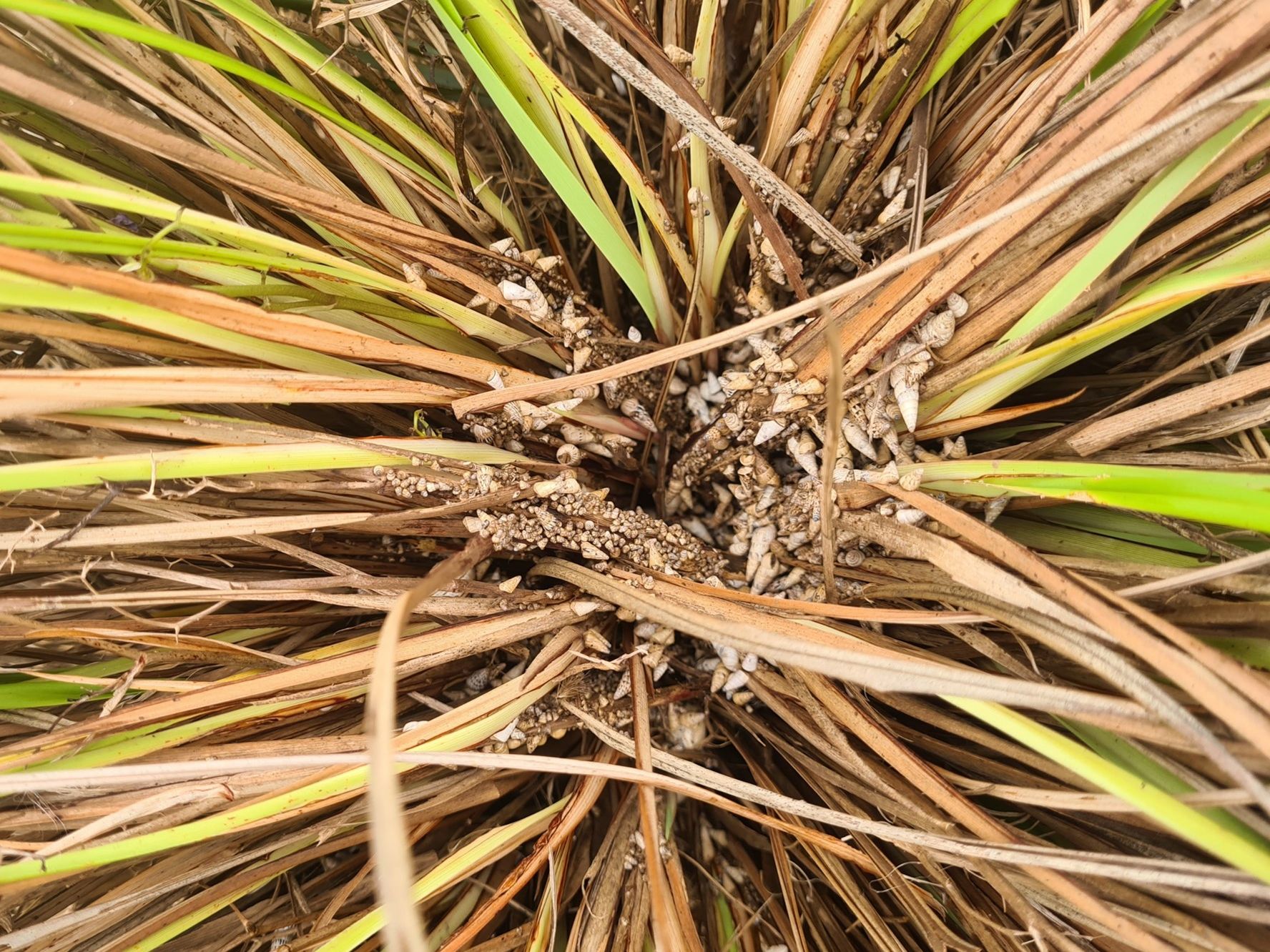
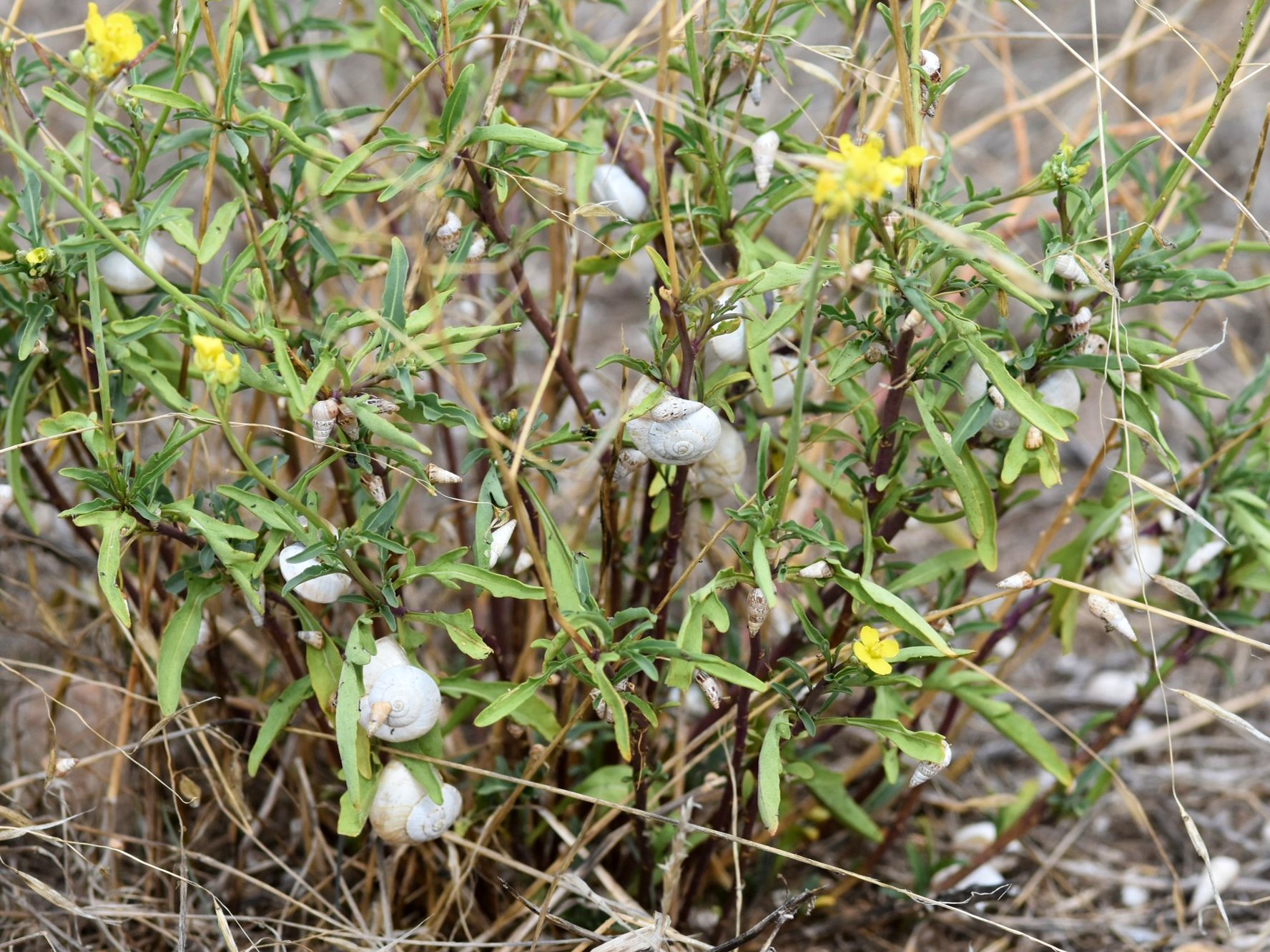
Despite this, growers in some areas still experienced snails contaminating grain during the 2025–26 harvest. Parts of Yorke Peninsula reported contamination from higher than usual numbers of juvenile conical snails (Cochlicella acuta), with many small enough to pass through a 2 millimetre screen.
Based on weather patterns, these juvenile snails were likely the result of breeding events during winter, when most season-breaking rainfall occurred. Following a dry early spring, relatively wet conditions in late spring (November) likely encouraged snail movement into crop canopies and windrows and may have increased the survival of young snails, which typically experience high mortality.
This occurrence highlights that the risk of snail contamination in spring depends on several factors including:
- weather conditions
- snail behaviour
- size and developmental stage of snail populations.
Risk cannot be predicted solely from snail numbers observed in the previous autumn. Snail populations can also recover quickly from low levels.
Heading into the 2026 season, a relatively dry summer across much of southern coastal SA is expected to have helped limit snail survival, suggesting moderate snail populations this autumn. However, snail risk may be higher in areas that received above-average rainfall in February 2026, such as parts of western Eyre Peninsula. Monitoring individual farms is recommended.
Monitoring and control
Monitoring snail populations remains important to maximise the return on investment in snail control. It also helps place this year’s populations in context with previous seasons, guiding the level of management required and identifying areas of the farm where control efforts should be focused.
Heading into early autumn, growers should monitor 2 key aspects:
- snail numbers – including overall populations and any hotspots that may require baiting or flat steel rolling
- Snail movement activity – to help guide the timing of early bait applications for maximum effectiveness.
Monitoring snail numbers is often considered difficult or impractical across large areas.
For practical methods of making a rapid assessment of snail numbers across a farm in just a couple of hours, refer to Nail the Snails (Chapter 3, pages 16 to 20). This can be done by checking the known trouble spots each year, combined with a few random checks across paddocks.
When to apply snail bait
Monitoring snail movement is important to identify early baiting opportunities – as these can be highly effective. Timing is critical for baiting success.
At the end of summer dormancy, snails are extremely hungry and spend several weeks feeding and maturing in preparation for breeding. Baiting should begin as soon as snail movement increases to kill as many individuals as possible before egg laying begins.
Snail movement often occurs overnight when relative humidity exceeds 90% to 95%, typically following light rainfall (less than 2 millimetres) or dew.
The best time to commence baiting is around mid-March to mid-April, but this depends on local weather and farm conditions.
Guidelines for baiting, including a product selection guide, are available in Section 4 of Nail the Snails.
Key baiting tips:
- Choose an appropriate bait product (see Nail the Snails, page 26).
- Broadcast pellets evenly using a spreader calibrated for the chosen product.
- Apply bait before snails lay eggs, and when snails are expected to move across the soil surface. Aim to apply when ground relative humidity will exceed 95% (ideally close to 100%).
- Apply bait at the correct rate and re-apply bait at registered rates to achieve sufficient bait points, ideally at least 30 bait points per square metre.
Snail movement alerts for farmers
In autumn 2026, growers will be able to receive real-time updates on snail activity across SA and WA to help guide baiting decisions and timing.
A network of 4 sentinel cameras will monitor snail activity, with 2 units in South Australia (Yorke Peninsula and Meningie) and 2 in Western Australia. Growers can follow regular updates on snail activity to help guide baiting decisions and timing by following Dr Kym Perry on social media:
- X (Twitter): @x_slimeminister
- Instagram: @the_slimeminister
This work is being conducted under a GRDC-supported project 'More effective control of pest snails in Australian grains crops', led by Dr Kym Perry from Adelaide University, collaborating with SARDI, CSIRO, DPIRD WA, and Data Effects.
More information
Dr Kym Perry – Adelaide University
Phone: 0421 788 357
Email: kym.perry@adelaide.edu.au