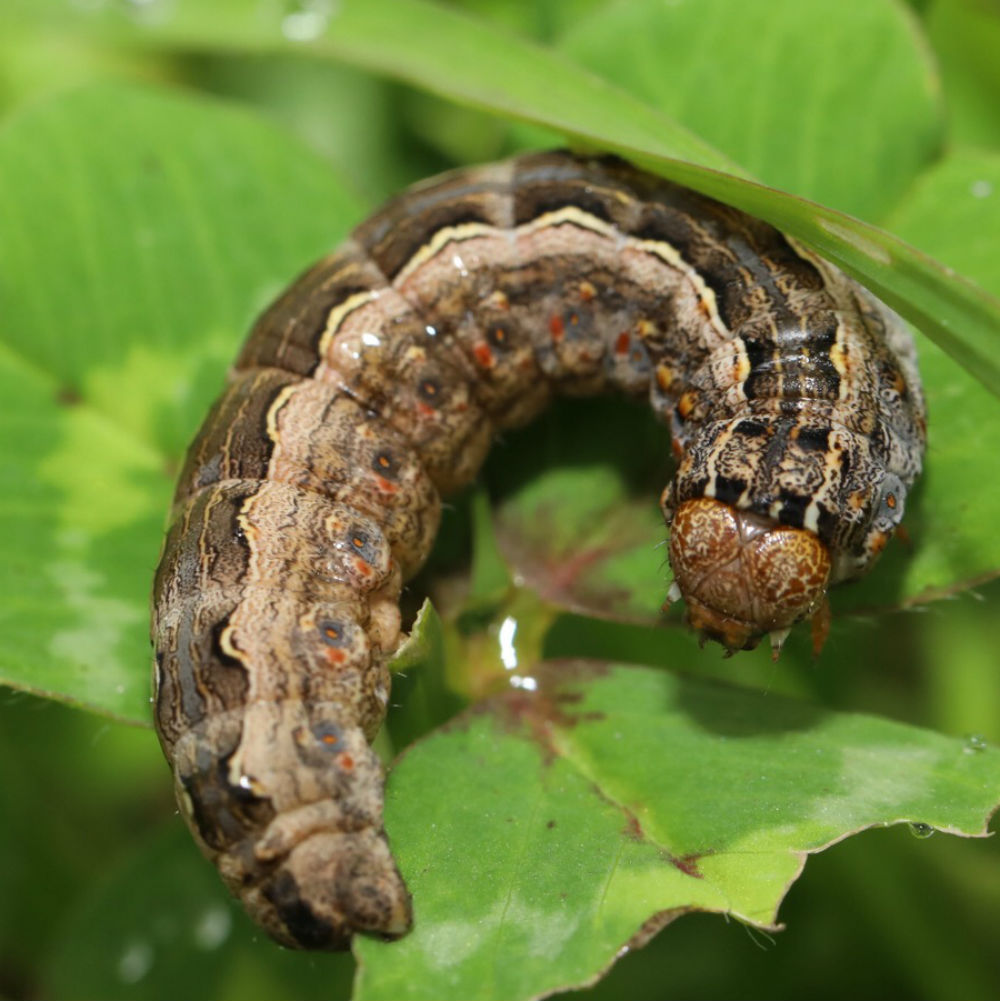
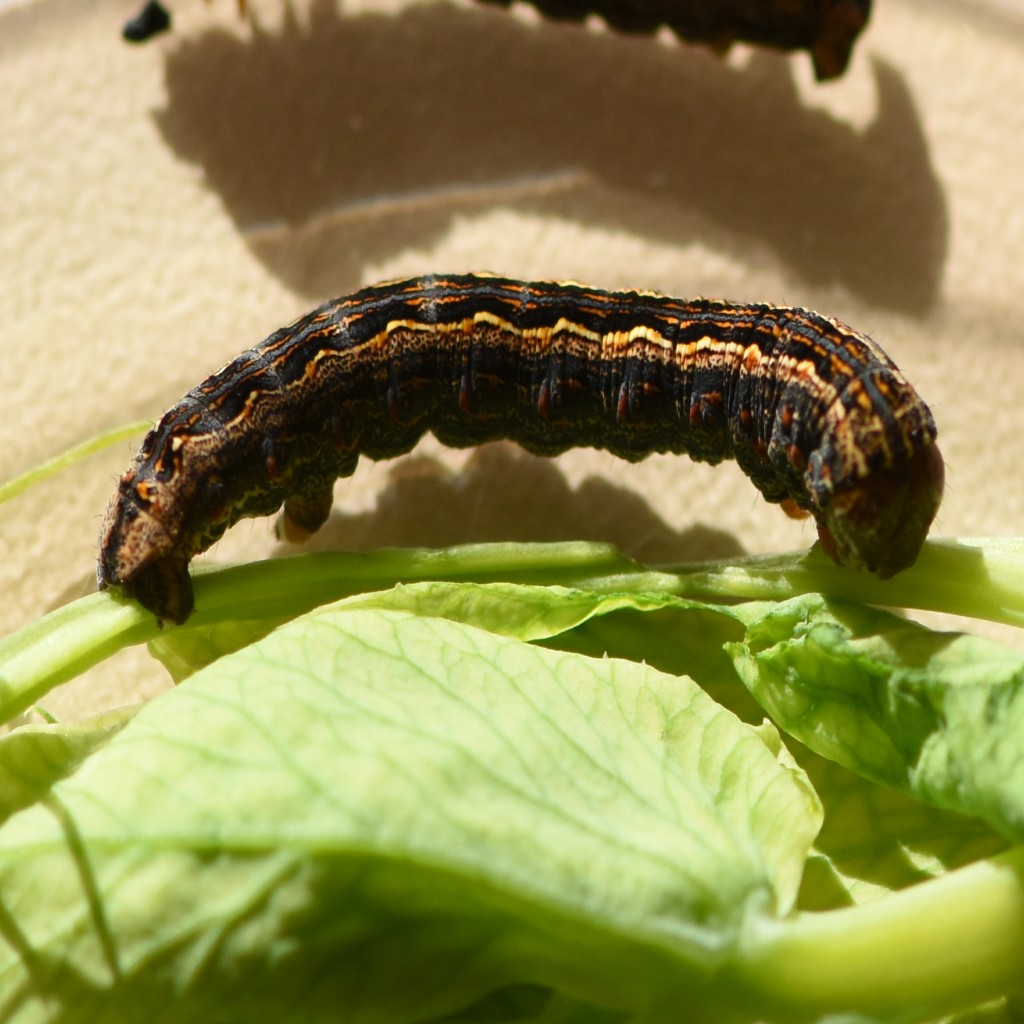
The caterpillar with a distinctive walk: Brown pasture looper
Wednesday 17 June 2026 SARDIPestFacts
As crops continue to emerge across the state, you may notice brown pasture looper caterpillars’ activity. Although they are not an every-year pest, favourable conditions and abundant host plants can allow populations to build quickly, particularly in young crops where feeding damage is most noticeable.
Brown pasture looper caterpillars (Ciampa arietaria) are native caterpillars that feed on canola, some pulses, lucerne, clover, lupins and a range of broadleaf weeds such as capeweed and Erodium sp., before moving into nearby crops. Although they can occasionally be found in cereals, any damage is unlikely to result in financial loss.
How to identify brown pasture loopers
If you're unsure whether you're looking at a brown pasture looper or another common caterpillar, watch how it moves.
Unlike most caterpillars, brown pasture loopers lack the middle set of legs found on the underside of the body, causing them to arch their body into a loop before stretching forward in a distinctive 'inchworm' motion. This looping movement is one of the most reliable ways to distinguish them from other caterpillars, although it becomes less obvious as larvae approach their full size of around 30 millimetres.
Caterpillars vary from green to brown in colour and can reach up to 35 millimetres in length. They can be identified by the pair of wavy yellow lines running along the back of older larvae, which typically become more obvious once caterpillars reach about 10 millimetres in length. However, these markings are often difficult to see in newly hatched and young caterpillars, which tend to be a dull brown or grey colour and can easily blend into surrounding vegetation.
What damage should you look for?
Their colouring provides excellent camouflage amongst crop foliage and weeds, meaning feeding damage is often noticed before the caterpillars themselves.
Early feeding by brown pasture loopers typically appears as small holes or windowing in leaves. As caterpillars grow, their feeding becomes more noticeable, with larger larvae consuming increasing amounts of leaf tissue and leaving plants looking ragged or heavily chewed. Damage is often patchy within paddocks and may be concentrated around weedy areas or crop edges where populations have built up.
When should you act?
The best approach to managing brown pasture loopers is regular monitoring. While feeding damage can look alarming, crops can often tolerate low numbers of caterpillars, particularly once plants are well established.
Check crops regularly for both feeding damage and active caterpillars, paying close attention to paddock edges and weedy areas where infestations often begin. Predatory beetles, spiders, birds and parasitoid wasps can help keep populations in check, so consider their presence when assessing the need for control.
Where management is required, ensure caterpillars are correctly identified before taking action and always follow current Australian Pesticides and Veterinary Medicines Authority (APVMA) label recommendations for registered products.