Watch for early season pests before sowing
Tuesday 14 April 2026 SARDIPestFacts
Recent seasonal conditions, particularly rainfall across parts of South Australia, are supporting the growth of green bridge and increasing the risk of early-season caterpillars and moths building up on weeds. Several caterpillar and aphid species can establish on these hosts prior to sowing and later move into emerging crops. Key species to watch include Russian wheat aphid, green peach aphid, diamondback moth, cabbage centre grub, weed web moth and budworms.
Green peach aphid
Green peach aphid (GPA, Myzus persicae) is a key early-season pest for a range of horticultural and broadacre crops, with populations often building up on green bridge hosts such as volunteer canola and brassica weeds.
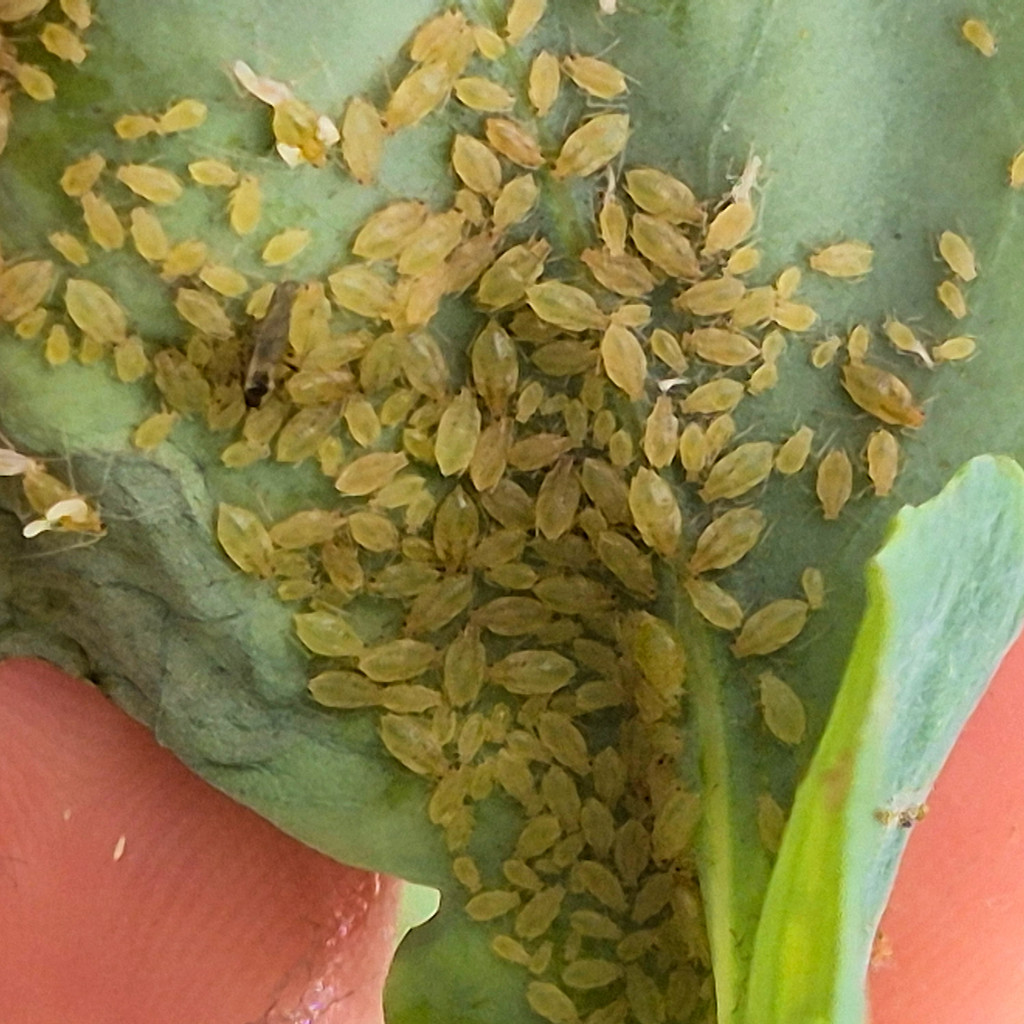
GPA aphids are small, soft-bodied and their body colour ranges from yellow, green, and orange to pink.
Feeding can cause direct damage through sap removal, leading to reduced vigour and plant stress, but the main risk is the transmission of Turnip yellows virus (TuYV), which can result in significant yield loss.
Infestations can establish early and spread rapidly under mild conditions.
GPA has developed resistance to several insecticide groups, making early monitoring, correct identification and timely management critical, particularly at crop establishment.
Russian wheat aphid
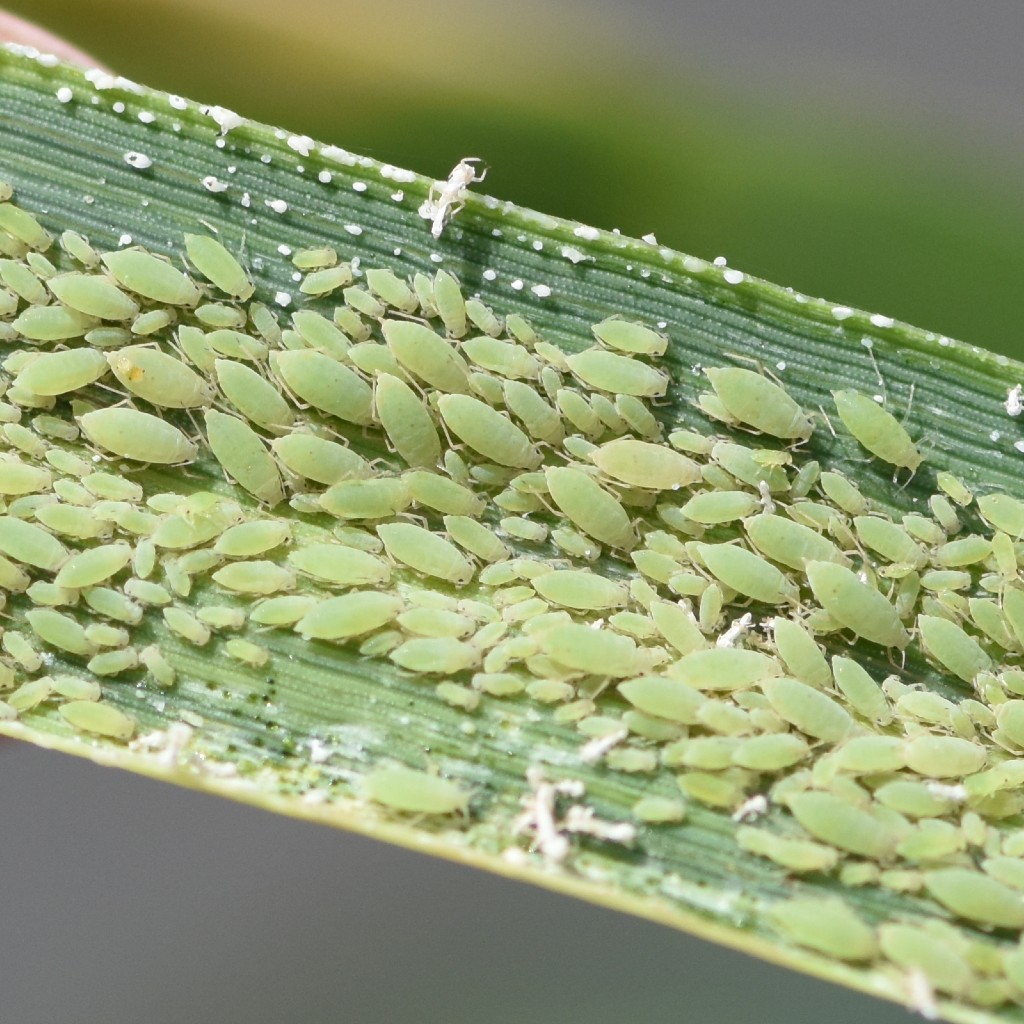
Russian wheat aphid (RWA, Diuraphis noxia) is an notable pest of cereals – including wheat and barley – and can establish on grasses and volunteer cereals prior to crop emergence.
RWA aphids are small, light green and elongated, often found concealed within tightly rolled leaves.
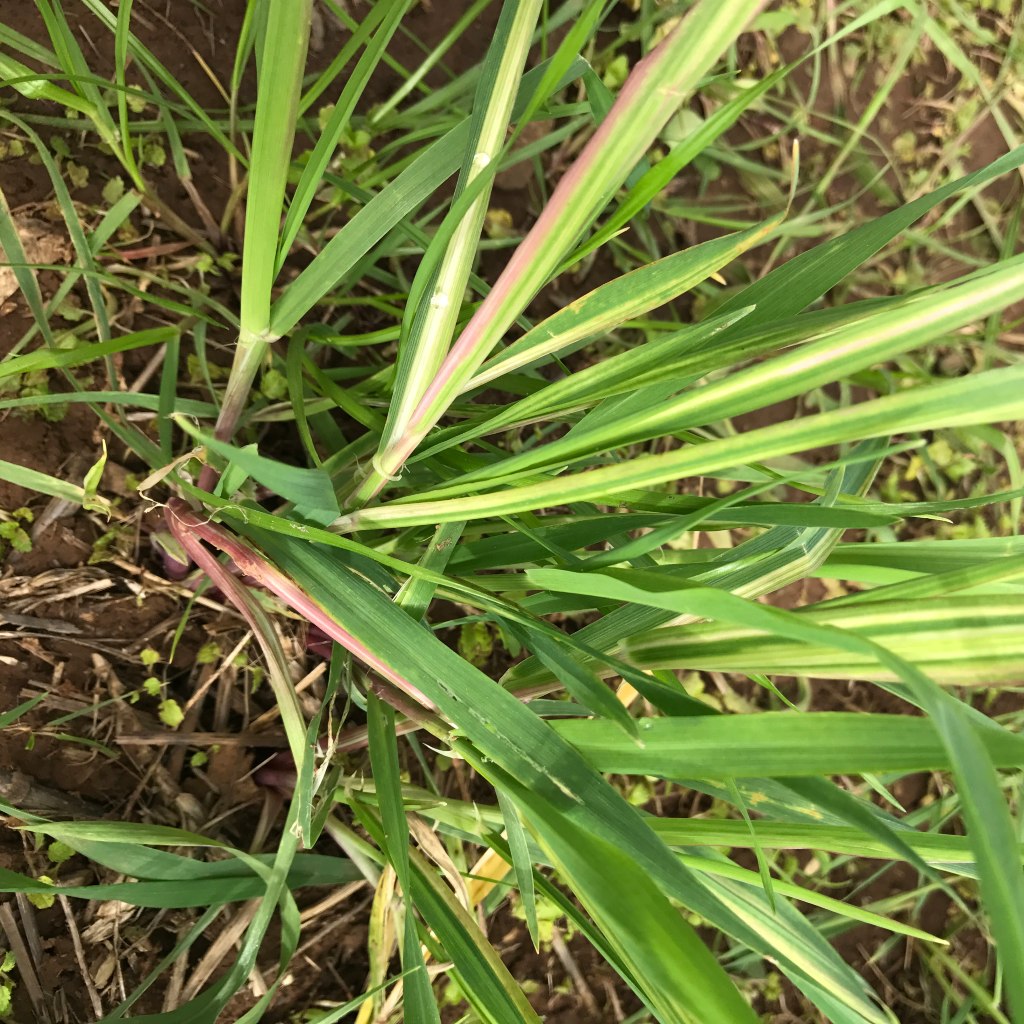
Feeding causes characteristic symptoms including leaf rolling, white to purple streaking and reduced tillering, which can lead to significant yield loss under high pressure.
Infestations are often patchy and may be difficult to detect early due to their concealed feeding habit. There is greater risk of RWA when green bridge hosts are present, allowing populations to persist between seasons.
Early monitoring and control of volunteer cereals and grasses is important to reduce the risk of establishment.
Diamondback moth
Diamondback moth (DBM, Plutella xylostella) is a well-known pest for brassica crops and can build up rapidly on brassica weeds such as wild radish and volunteer canola.
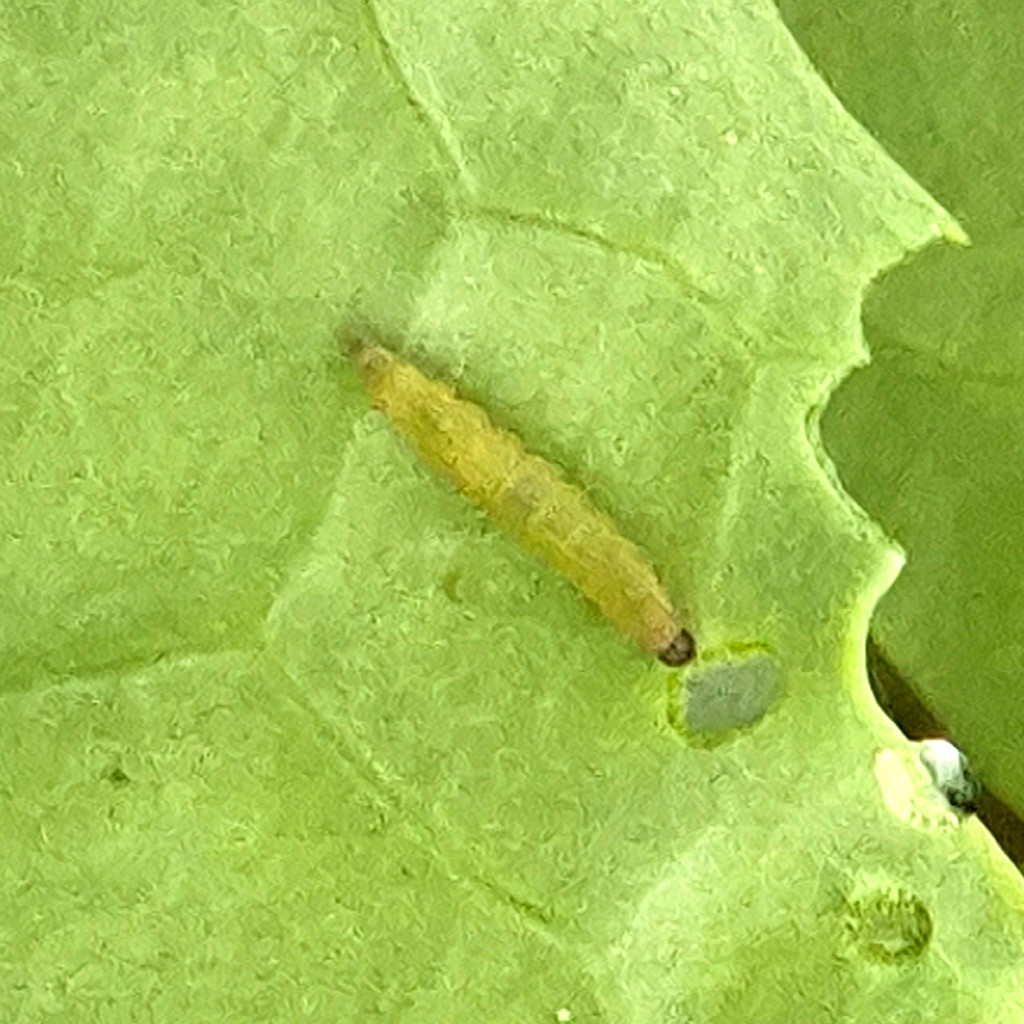
Larvae are small, pale green and actively wriggle when disturbed.
Feeding typically results in 'windowing' of leaves, where leaf tissue is eaten leaving the upper surface intact, and can progress to more severe defoliation under high pressure.
Early infestations are often patchy but can escalate quickly under warm conditions, particularly when supported by green bridge hosts.
DBM is also known for developing resistance to multiple insecticide groups, making early monitoring, correct identification and timely management critical.
Cabbage centre grub
Cabbage centre grub (Hellula hydralis) risk is higher in warmer seasons, particularly when early autumn rainfall promotes egg-laying and larval survival.
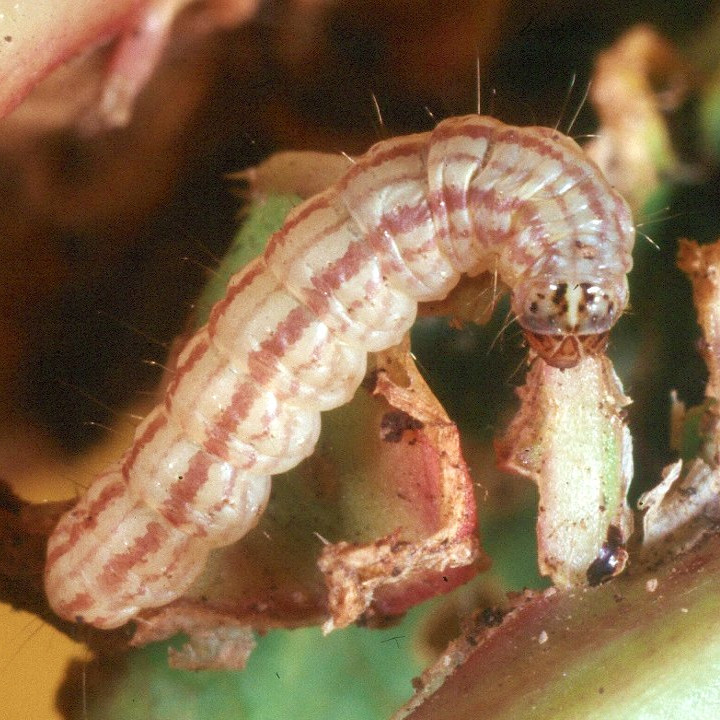
Larvae are smooth, light brown with reddish longitudinal stripes and a dark head, and feed on a range of brassica hosts including canola, wild radish and wild turnip.
Infestations often build up on green bridge weeds before moving into emerging crops.
Feeding initially occurs on leaf surfaces, but larvae quickly bore into the central growing point, making early damage difficult to detect. This internal feeding leads to stunting, distortion and poor establishment, and in severe cases can result in plant death.
Weed web moth
Weed web moth (Achyra affinitalis) is commonly associated with a wide range of broadleaf weeds, where larvae build up before moving into crops.
Larvae are thin, slightly hairy caterpillars (up to 15 to 20 mm long), varying from grey-green to pale brown with a black head and often a darker stripe along the back. A key identifying feature is their silken webbing on leaves, where they feed and skeletonise foliage.
Larvae are highly active and wriggle vigorously when disturbed, and older larvae may shelter in soil burrows between feedings.
Risk is higher in warm conditions, particularly following early autumn rainfall that promotes weed growth.
While not always a major crop pest, high populations on weeds can pose a risk to establishing crops such as canola, lucerne, lupins and other broadleaf species if larvae move into paddocks after weed senescence or control.
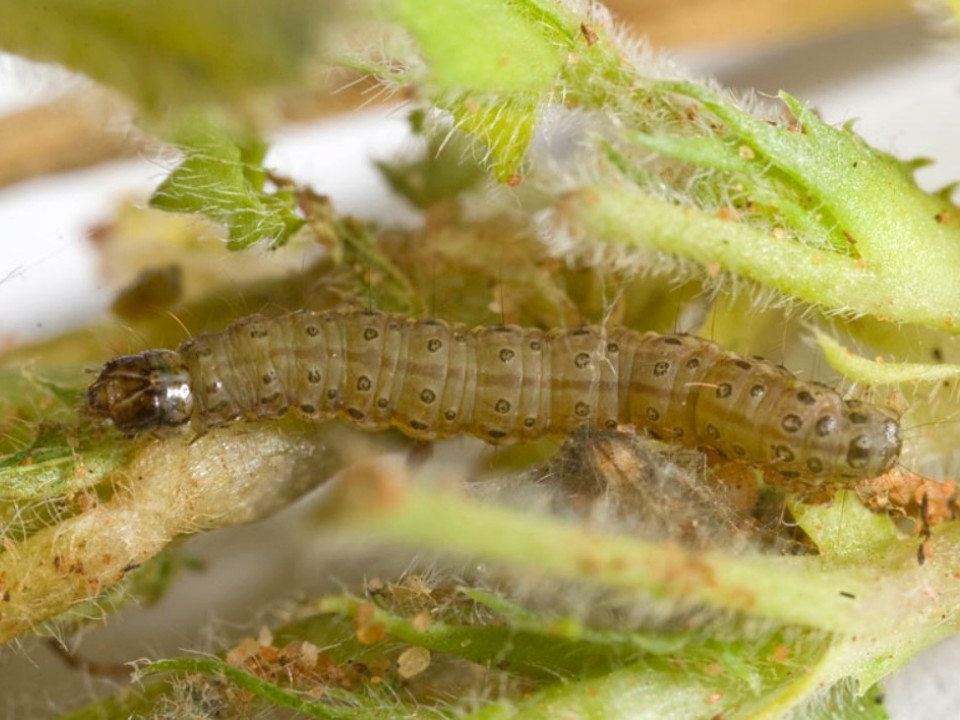
Budworms
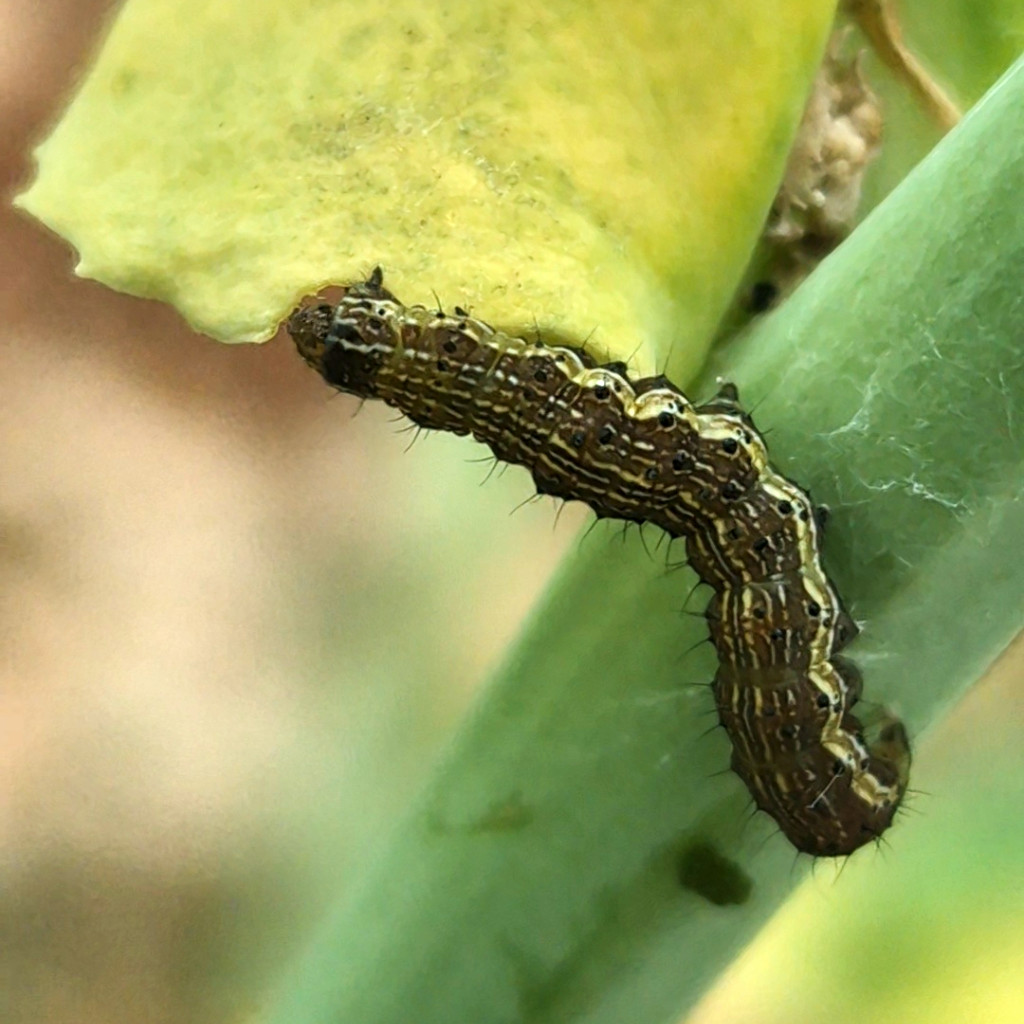
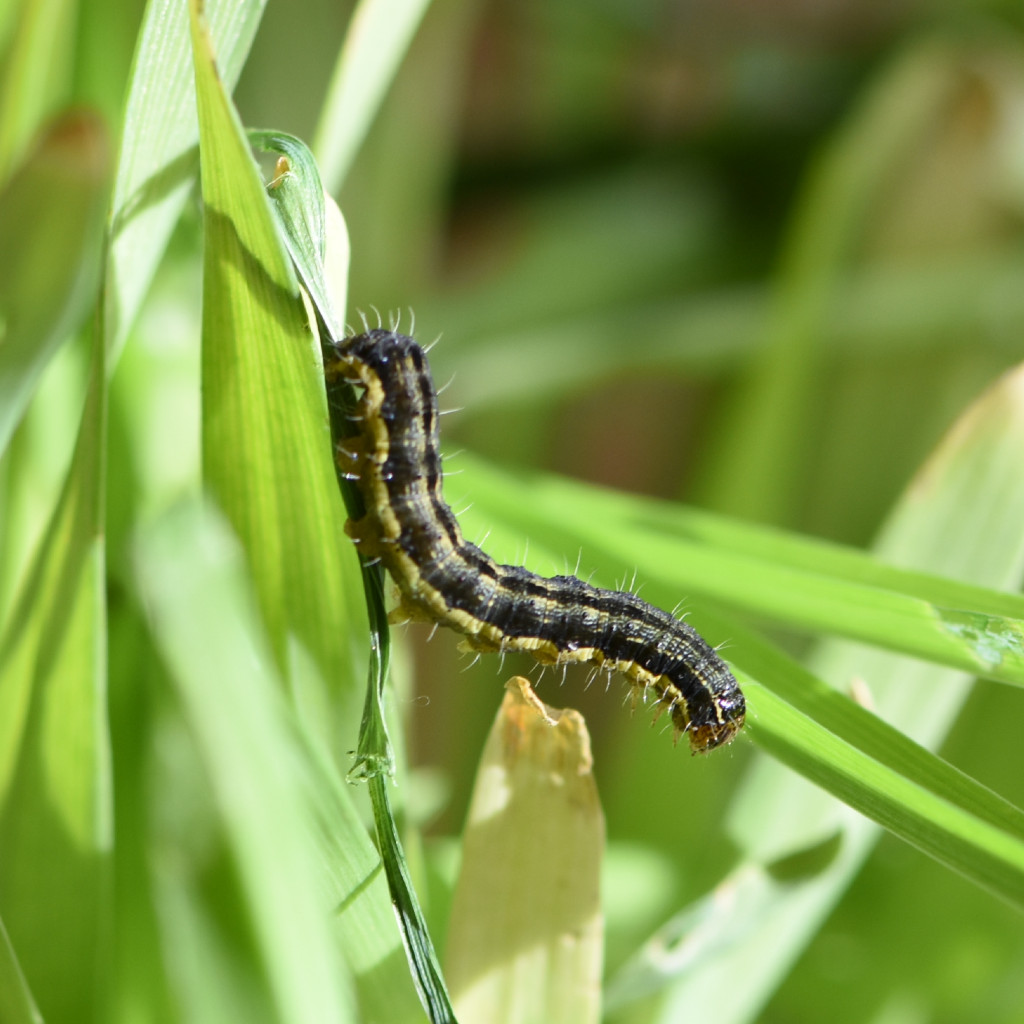
Native budworm (Helicoverpa punctigera), corn earworm (Helicoverpa armigera) and lesser budworm (Heliothis punctifera) all pose a risk for a wide range of crops including pulses, canola and cereals.
Native budworms are migratory, with moths moving into cropping regions from inland breeding areas, while corn earworms can persist locally where suitable hosts are available.
Lesser budworms are generally less damaging but can build up on green bridge hosts and move into crops under favourable conditions, lingering the whole season.
Larvae are variable in colour (green, brown or striped) and are identified by the colour fine hairs along the body.
Feeding damage is typically seen on leaves, buds, flowers and pods, with larger larvae capable of causing significant yield loss.
Based on recent reports, large number of lesser budworm and low numbers of native budworm have been observed in different regions. While suitable crop hosts are currently limited, available green bridge may support population persistence.
Early monitoring is critical, as control is most effective on small larvae.