Watch for faba bean aphids
Wednesday 17 June 2026 SARDIPestFacts
Faba bean aphid (Megoura crassicauda) is a lesser-known exotic pest that feeds on pulses, particularly faba beans and vetch, and has the potential to affect faba bean production if it becomes established in South Australia.
Native to parts of Asia, faba bean aphid was first detected in Sydney in October 2016. While it is not considered widespread, ongoing surveillance and reporting remain important to help track its distribution and support early detection efforts.
Identification
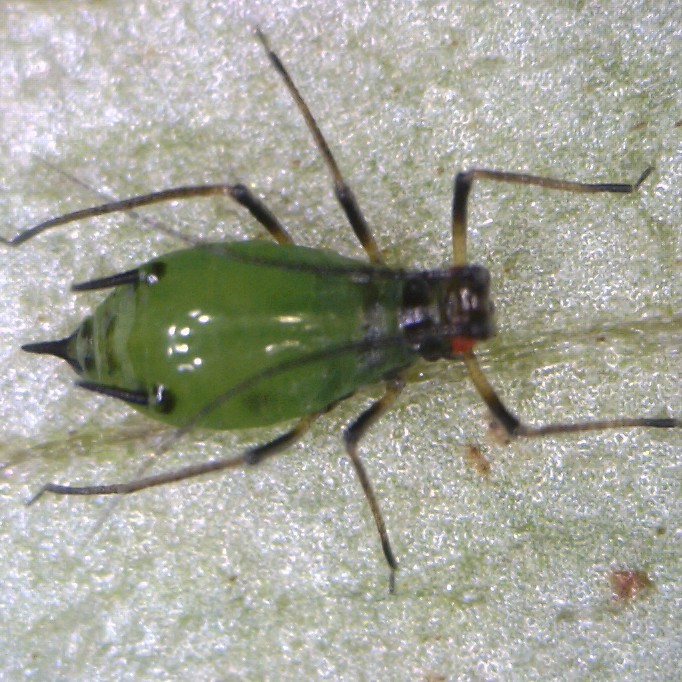
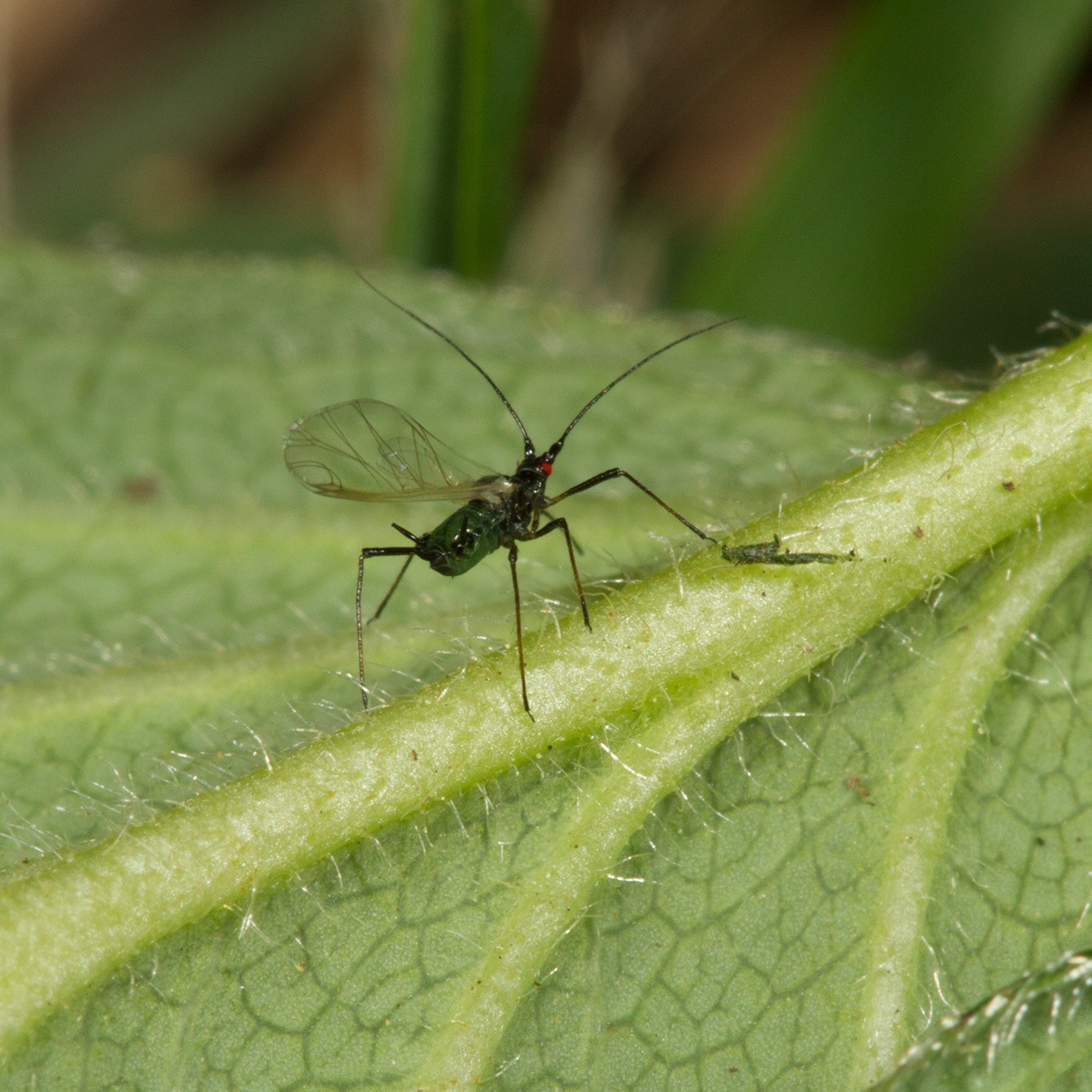
Faba bean aphids have a distinctive appearance when compared with other pulse aphids.
They are noticeably larger than many other aphid species commonly found in broadacre crops, reaching up to 4 millimetres in length.
Adults are dark green to brownish-green with long legs and antennae.
One of their most striking features is their bright red eyes, although these can be difficult to see without close inspection.
Colonies are typically found on young shoots, stems and the undersides of leaves, where aphids gather in groups and reproduce rapidly under favourable conditions.
As populations increase, large clusters of aphids can develop around growing points and other soft plant tissues.
What makes this aphid different?
One challenge with faba bean aphid is its ability to survive between seasons on alternative hosts. Lucerne, volunteer faba beans and pasture legumes, particularly vetch species, can help populations persist in the landscape and move into emerging pulse crops when conditions are favourable.
Colonies can establish and expand quickly. Under favourable conditions, aphids can build up rapidly on growing points and young plant tissue, forming dense hotspots.
Heavy infestations may result in wilting, stunting, leaf yellowing, necrosis and defoliation.
Beyond direct feeding damage, faba bean aphids can transmit both bean leaf roll mosaic virus (BLRV) and pea seed-borne mosaic virus (PSbMV), viruses. This means the impact of infestations may extend beyond visible aphid numbers.
Regular crop monitoring remains the best way to detect infestations before populations build to damaging levels.
Check growing points, stems and the undersides of leaves, where aphids tend to cluster.
Make management decisions on active infestations rather than just old feeding symptoms.
Let us know if you see something unusual
With plenty of alternative hosts and favourable seasonal conditions this year, keep an eye out for unusual aphid activity that could help us understand if this pest is expanding into new areas.
If you come across aphids that look unusual or suspect faba bean aphid, take a few clear photos and share them with the PestFacts SA team.
Your reports help us build a better picture of pest activity across the state and provide an early warning for other growers and advisers.
Report any unusual or suspect pest observations to the Exotic Plant Pest Hotline on 1800 084 881.
Early reporting plays an important role in protecting Australia's pulse industries and strengthening our biosecurity surveillance efforts.