
Innovations in estimating biomass in the dynamic SA snapper fishery
Friday 13 December 2024 Fishing and aquacultureSARDIQuarterly Catch
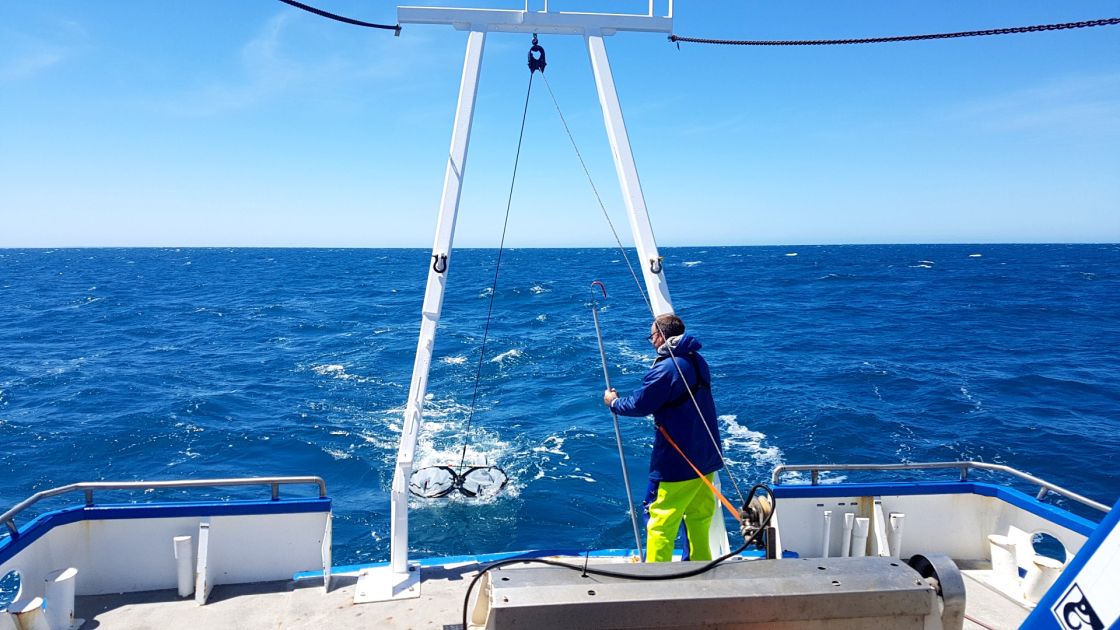
Monitoring the size of snapper populations through time is crucial to fishery management, although this is challenging in the absence of fishery catch data due to the current fishery closures. Researchers are trialling and refining several techniques to estimate the population size of snapper as part of the Snapper Science Program – a 3-year, $5 million initiative co-funded by the South Australian Government and Fisheries Research and Development Corporation (FRDC).
Last summer, several field studies were conducted in Gulf St Vincent to refine the daily egg production method (DEPM) and trial hydroacoustic surveys to estimate snapper biomass.
Daily egg production method (DEPM)
The DEPM estimates spawning biomass based on the density of eggs in the water column and the reproductive condition of adult fish. In December 2023 and January 2024, researchers conducted surveys to test 3 methods to sample snapper eggs:
- vertical
- oblique
- neuston tows.
Even though each of these methods filtered different volumes of water, they collected similar concentrations of snapper eggs. The study also found that increasing the intensity of sampling provided a higher estimate of spawning biomass, mainly because it increased the chance of finding small areas of high egg density.

Three methods used to sample snapper eggs: vertical (left), oblique (middle), and neuston plankton tows (right).
Hydroacoustic surveys
Acoustic surveys use underwater sound signals to identify fish – just like an echosounder! This study is led by CSIRO and assessed if hydroacoustic surveys were appropriate to estimate the size of Snapper aggregations. The first survey found that Snapper predominantly aggregated around benthic structures and were often mixed with small pelagic fish, such as Yellowtail Scad and Blue Mackerel. The second survey estimated the number of Snapper in each aggregation. Researchers used a combination of acoustics and underwater video to identify Snapper and estimate the biomass of individual aggregations.

The 5 groups of acoustic signatures and their relative contribution to snapper biomass. [SPF – small pelagic fishes]
Where to from here?
The results of both the DEPM and hydroacoustic surveys will be used to design surveys for summer 2024-25 which will inform the 2025 Snapper Stock Assessment.
See Snapper Science Program for more information.