
Digging deep – value of the soil microbiome unearthed
Tuesday 9 July 2024 SARDI
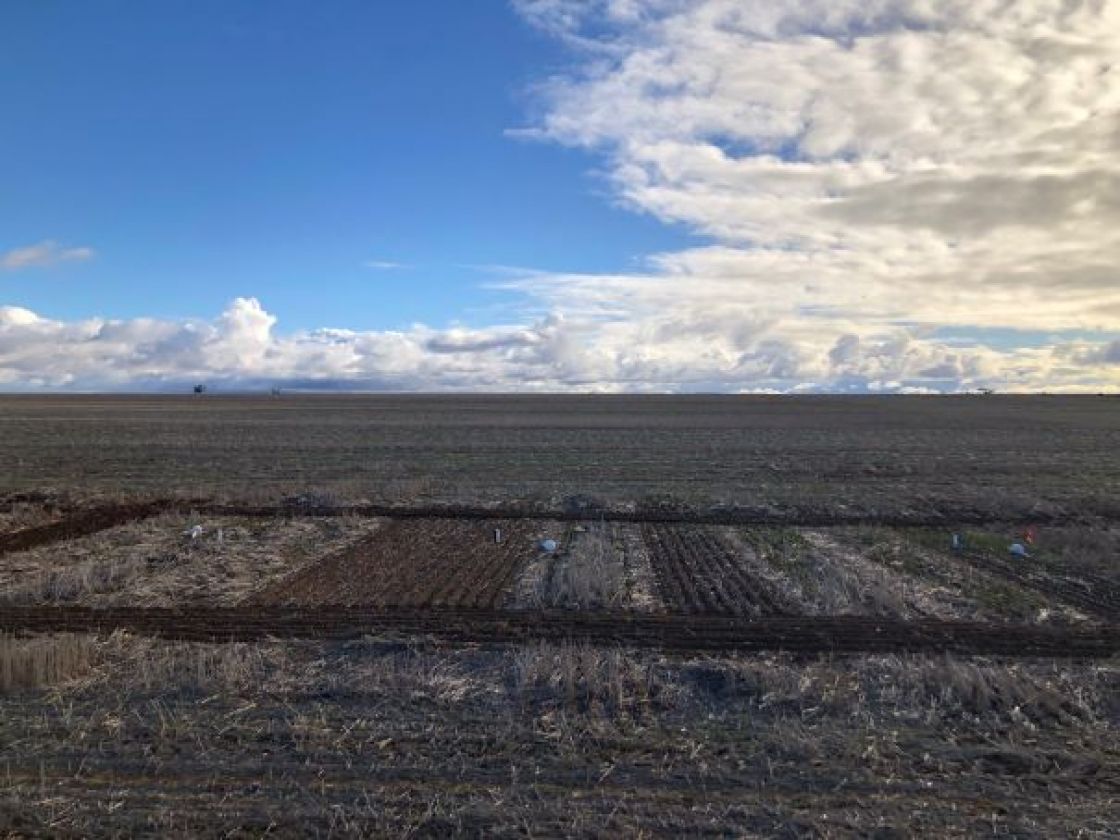
Researchers from SARDI, the University of Adelaide, and Flinders University have been digging deep into South Australia’s history of soil biology to gain a better understanding of how the soil microbiome functions. This will ensure sustainable broadacre farming into the future.
South Australian Research and Development Institute (SARDI) Senior Research Officer in the Agronomy program, Dr. Andong Shi, recently published an article in Advances in Agronomy titled ‘Impact of agronomic management on the soil microbiome: A southern Australian dryland broadacre perspective’.
As the soil ecosystem is one of the key components of a farming system, Dr. Shi said it is crucial to understand the effects past changes in land management practices have had on current farming systems to help improve future systems.
'The aim of the article is to increase awareness of the importance of soil biology in farming systems, as it is often ignored, particularly when compared to the traditional soil analysis where the chemical and physical properties are often measured and monitored,' Dr. Shi said.
'We hope that by learning from the past, we can harness the benefits of soil microorganisms in sustainable farming practices to help increase soil fertility, reduce environmental footprint and maintain or enhance crop productivity.'
The soil microbiome is a collective concept, including all the microorganisms in the soil, living or dead, as well as their metabolites and genetic materials in the close vicinity.
'Our management of soil has a direct influence on shaping how the soil microbiome functions,' Dr. Shi said.
'Management practices alter the food source, water availability and accessibility, as well as the shelter for the soil microbiome. As a result, the changes in these elements exert feedback on the whole soil ecosystem.'
'Therefore, the way that we manage the soil reflects on how healthy the soil ecosystem is, how well it functions, and how productive and sustainable it will be for crop and pasture production in the future.'
This study is part of a larger soil microbiome project called ‘Past, present and future drivers of soil change’, which is co-led by SARDI’s A/Prof. Rhiannon Schilling, and A/Prof Stuart Roy from the University of Adelaide along with Dr. Krista Sumby from the University of Adelaide and Prof. Timothy Cavagnaro from Flinders University. The project also involves:
- Birchip Cropping Group in Victoria
- Kalyx Australia in Western Australia
- the Thomas Elder Institute.
A core aim of this project is to determine whether the diversity and composition of soil communities from past farming systems differ from those of present farming systems. To investigate this, soil DNA samples collected over the past 20 years from Southern Australian farms have been analysed. The goal is to assess changes in the soil microbiome alongside the evolution of broadacre cropping management practices in the Southern Australian farming zone.
Dr. Krista Sumby said the findings to date for the soil DNA have revealed changes in the soil microbiome composition over the past 2 decades.
'We are currently untangling if or how this correlates with changes in climate and broadacre cropping practices over the same time period,' she said.
The project has secured more than $3 million in funding from the Federal Government’s Soil Science Challenge program, run by the Department of Agriculture, Fisheries and Forestry (DAFF).