
House mouse
Background
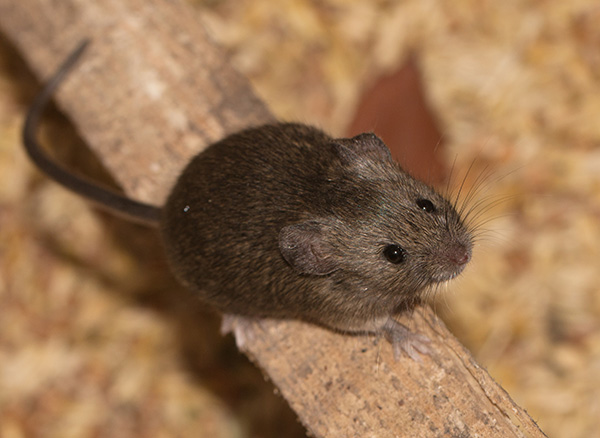
The house mouse likely arrived in Australia with the First Fleet. Mice are now found all over Australia, and due to their close association with human activity, are most common in agricultural and urban areas.
The introduced house mouse should not be confused with native rodents, pygmy possums or marsupial mice.
Impacts
Mice have little impact when numbers are low. When conditions are favourable, they can breed exponentially and become a serious pest.
In South Australia, mouse plagues occur every 4 to 6 years, causing substantial economic and social hardship. This is most problematic in low rainfall, cereal-growing areas where they devastate sown crops.
Mice can damage infrastructure and furnishing by chewing on wiring, upholstery and motors. They impact on pig and poultry farmers through consuming feed and attacking stock, causing stress and injury.
Mice also pose a health risk to humans and livestock as they can transmit disease.
Controlling mice
Landholders are responsible for controlling mice on their properties under the Landscape South Australia Act 2019. The most effective methods are:
- reducing food sources
- reducing available shelter
- baiting
- monitoring their presence through mouse sightings, burrows, droppings and crop damage.
There are registered bait products available to control mice. Your local chemical retailer can advise on the right product for your circumstances.
Mouse bait mixing stations are also available, allowing farmers to have poison bait mixed into their own grain.
Reporting
MouseAlert is a tool for reporting mice, including management activities undertaken and photos of their impacts.
The information is used to identify practical solutions and coordinate control. Complete a MouseAlert report and help to identify the risk of mouse plagues in your area.
Mice activity
CSIRO’s outlook for mice activity in Spring 2026 mouse forecast is for low numbers of mice in most parts of South Australia, with the exception of southern Yorke Peninsula, western parts of Eyre Peninsula, and around Jamestown, where mice numbers may become moderate to high in coming seasons.
We recommend that you:
- harvest as cleanly as possible
- clean up any grain spillages
- look for signs of mice activity during sowing, growth, harvest and on stubble following harvest
- bait early when mice activity is detected – if mice are detected before crops mature, consider baiting early, as bait will become less attractive to mice once grain develops in the head
- report mouse activity on your farm on MouseAlert.
Note that:
- ZNP25 baits are available for all regions of SA
- an emergency permit allows for the supply and use of Zinc Phosphide (ZnP50) under strict conditions and pending fortnightly monitoring, to manage localised mouse outbreaks between 18 May 2026 to 15 December 2026 – see Mice baiting.
More information
- About house mice – Pestsmart
- Prevention and control of rats and mice – SA Health
- Tackling Australia's persistent mouse problem – CSIRO
Contact
For advice on mouse control specific to your situation, contact your local agronomist.
For advice on using poison baits, contact:
Biosecurity SA – Rural Chemicals Operations
Phone: 1300 799 684
Email: PIRSA.RuralChemicals@sa.gov.au