
Horehound
Marrubium vulgare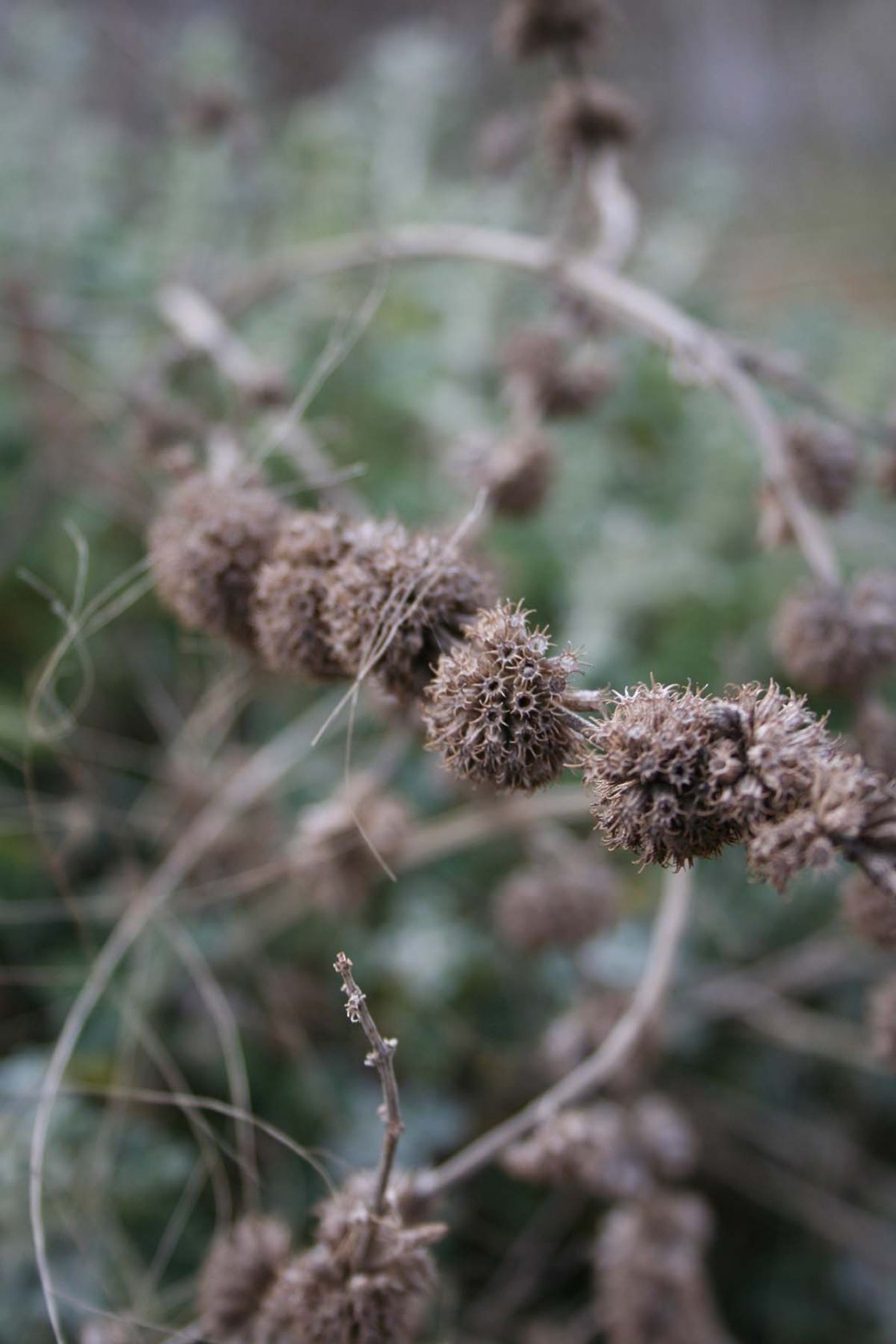
Weed profile
 Perennial
 Herb
Herb- Habitat: pastures
Impact
Competes with pastures. Unpalatable.
Description
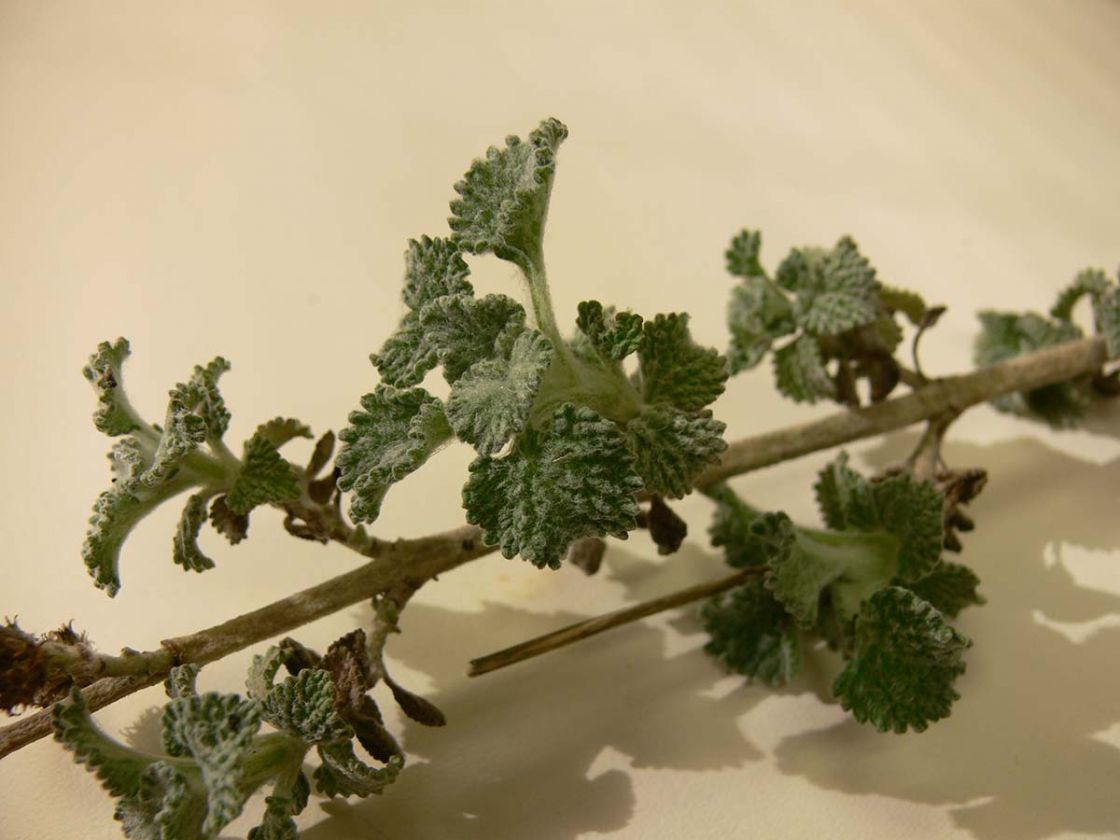
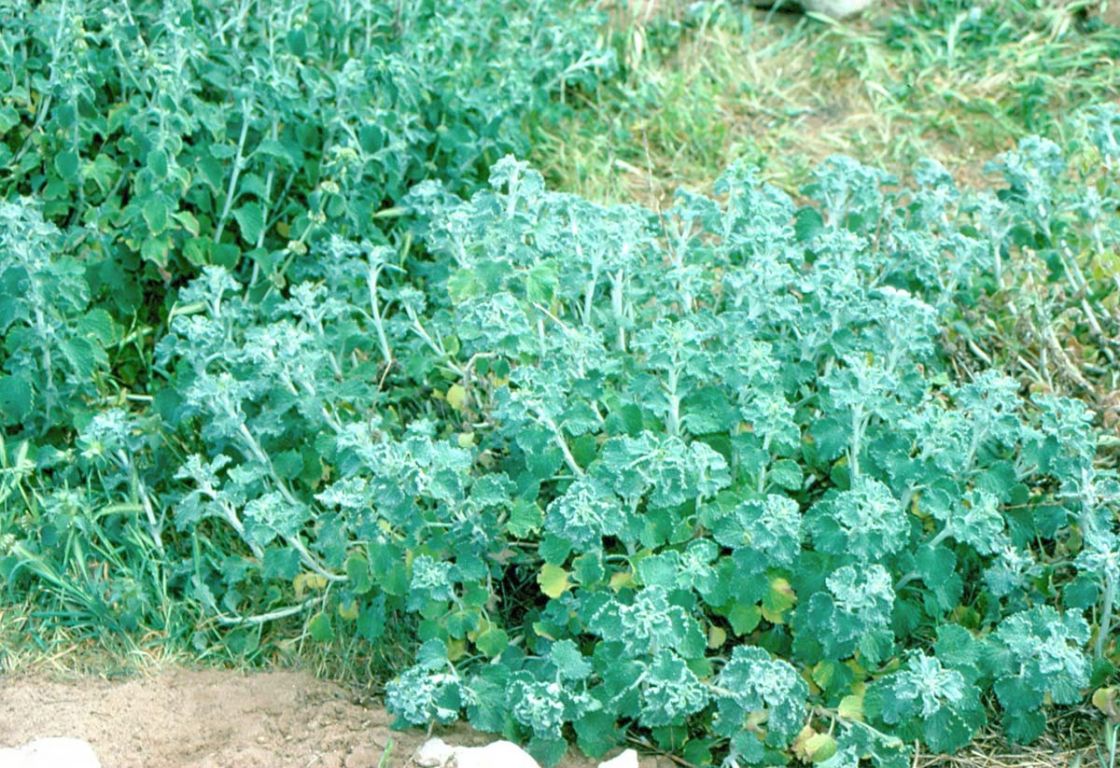
- Perennial herb, densely covered in white hairs.
- Leaves in opposite pairs, broad, crinkled.
- Flowers white, in clusters in upper leaf axils.
- Small brown burrs in dense clusters.
Control options
2,4-D amine (625g/L) + metsulfuron-methyl (600g/kg)
Application Method: Spot spray
Application Rate: 500mL + 5g/100L
Product Name: Amine 625® + Ally®
Herbicide Group: 4, 2
Situation: Non-cropping areas.
Timing: Spot spray, September - November
Comments: Hormone type herbicide - use with caution near sensitive crops. Refer to drift warnings on the label. Soil active herbicide, may damage desirable vegetation.
Legal Status: Product and use are registered, but this weed is not on the label.
glyphosate (540g/L) + metsulfuron-methyl (600g/kg)
Application Method: Spot spray
Application Rate: 500mL + 5g/100L
Product Name: Ozcrop Glyphosate 540K® + Ally®
Herbicide Group: 9, 2
Situation: Non-cropping areas.
Timing: Spot spray, autumn
Comments:
Slashing or burning old growth to promote fresh growth before spraying may increase kill rate.
Non selective, avoid contact with desirable plants. Soil active herbicide, may damage desirable vegetation.
Legal Status: Products and use are registered, but this weed is not on the label.
glyphosate (360g/L)
Application Method: Spot spray
Application Rate: 1L/100L
Product Name: Roundup Biactive®
Herbicide Group: 9
Situation: Non-cropping areas.
Timing: Spot spray, autumn
Comments:
Young plants only. Slashing or burning old growth to promote fresh growth before spraying may increase kill rate. Non selective, avoid contact with desirable plants.Legal Status: Product and use are registered, but this weed is not on the label.
glyphosate (450g/L)
Application Method: Boom spray
Application Rate: 1.2-1.6L/ha
Product Name: Roundup CT®
Herbicide Group: 9
Situation: Fallows.
Timing: Boom spray, start of fallow.
Comments: Non selective, avoid contact with desirable plants. Slashing or burning old growth to promote fresh growth before spraying may increase kill rate.
Legal Status: Product and use are registered, but this weed is not on the label.
2,4-D ethyl hexyl ester (680g/L)
Application Method: Boom spray
Application Rate: 1.7-3.3L/ha
Product Name: Genfarm 2,4-D Ester 680 LV Herbicide®
Herbicide Group: 4
Situation: Grass pastures
Timing: Boom spray, May to August
Comments: Hormone type herbicide - use with extreme caution near sensitive crops - refer to drift warnings on the label. Slashing or burning old growth to promote fresh growth before spraying may increase kill rate.
Legal Status: Registered
2,4-D ethyl hexyl ester (680g/L)
Application Method: Boom spray
Application Rate: 800mL-1.15L/ha
Product Name: Genfarm 2,4-D Ester 680 LV Herbicide®
Herbicide Group: 4
Situation: Cereal crops.
Timing: Boom spray, seedlings
Comments: Hormone type herbicide - use with extreme caution near sensitive crops - refer to drift warnings on the label. Cropping. Seedlings or suppression of established plants only.
Legal Status: Registered
MCPA (500g/L)
Application Method: Boom spray
Application Rate: 2.1L/ha
Product Name: Nufarm MCPA 500®
Herbicide Group: 4
Situation: Grass pastures and non-cropping areas.
Timing: Boom spray, autumn
Comments: Seedlings only. Hormone type herbicide - use with caution near sensitive crops. Refer to drift warnings on the label. Will damage clovers and medics in pasture.
Legal Status: Registered
dicamba (500g/L)
Application Method: Spot spray
Application Rate: 80mL/100L
Product Name: Kamba 500®
Herbicide Group: 4
Situation: Non-crop areas
Timing: Spot spray, pre flowering
Comments: Hormone type herbicide - use with caution near sensitive crops. Add surfactant.
Legal Status: Registered
dicamba (500g/L)
Application Method: Boom spray
Application Rate: 1.2L/ha
Product Name: Kamba 500®
Herbicide Group: 4
Situation: Non-crop areas
Timing: Boom spray, pre flowering
Comments: Hormone type herbicide - use with caution near sensitive crops. Use at least 1500 L/ha water. Add surfactant.
Legal Status: Registered
dicamba (500g/L)
Application Method: Spot spray
Application Rate: 76mL/100L
Product Name: Kamba 500®
Herbicide Group: 4
Situation: Grass pastures.
Timing: Spot spray, pre flowering
Comments: Hormone type herbicide - use with caution near sensitive crops. Do not apply to legume-based pastures.
Legal Status: Registered
dicamba (500g/L)
Application Method: Spot spray
Application Rate: 40mL/100L
Product Name: Kamba 500®
Herbicide Group: 4
Situation: Grass pastures.
Timing: Spot spray, seedlings
Comments: Hormone type herbicide - use with caution near sensitive crops. Do not apply to legume-based pastures.
Legal Status: Registered
dicamba (500g/L)
Application Method: Boom spray
Application Rate: 560mL-1.1L/ha
Product Name: Kamba 500®
Herbicide Group: 4
Situation: Grass pastures.
Timing: Boom spray, pre flowering
Comments: Hormone type herbicide - use with caution near sensitive crops. Do not apply to legume-based pastures.
Legal Status: Registered
dicamba (500g/L)
Application Method: Boom spray
Application Rate: 280-560mL/ha
Product Name: Kamba 500®
Herbicide Group: 4
Situation: Grass pastures.
Timing: Boom spray, seedlings
Comments: Hormone type herbicide - use with caution near sensitive crops. Add surfactant. Do not apply to legume-based pastures.
Legal Status: Registered
2,4-D amine (625g/L)
Application Method: Boom spray
Application Rate: 2.2-3.2L/ha
Product Name: Amine 625®
Herbicide Group: 4
Situation: Grass pastures.
Timing: Boom spray, seedlings
Comments:
Hormone type herbicide - use with caution near sensitive crops. Refer to drift warnings on the label.
Slashing or burning old growth to promote fresh growth before spraying may increase kill rate.
Legal Status: Registered
2,4-D amine (625g/L)
Application Method: Boom spray
Application Rate: 1.4L/ha
Product Name: Amine 625®
Herbicide Group: 4
Situation: Cereal crops.
Timing: Boom spray, seedlings
Comments:
Hormone type herbicide - use with caution near sensitive crops. Refer to drift warnings on the label.
Slashing or burning old growth to promote fresh growth before spraying may increase kill rate.
Legal Status: Registered
MCPA (340g/L) + dicamba (80g/L)
Application Method: Spot spray
Application Rate: 470mL/100L
Product Name: Kamba M®
Herbicide Group: 4
Situation: Grass pastures and non-cropping areas.
Timing: Spot spray, August - September
Comments: Hormone type herbicide - use with caution near sensitive crops. Refer to drift warnings on the label. Repeat after 4 weeks if necessary.
Legal Status: Registered
MCPA (340g/L) + dicamba (80g/L)
Application Method: Boom spray
Application Rate: 4-7 L/ha
Product Name: Kamba M®
Herbicide Group: 4
Situation: Grass pastures and non-cropping areas.
Timing: Boom spray, August - September
Comments: Hormone type herbicide - use with caution near sensitive crops. Refer to drift warnings on the label. Repeat after 4 weeks if necessary.
Legal Status: Registered
Manual removal
Situation: Any.
Timing: Any time
Comments: Grub individual plants, ensuring the complete removal of the root system from the soil. Plough infested area, ensuring plants are turned over with roots completely removed from the soil. Follow up control on any new growth.
Legal requirements in each region

Land owners in this region to take reasonable steps to kill plants and prevent their spread. Enforceable by the Alinytjara Wiluṟara Landscape Board.

Must not be sold or traded in any way, including as a contaminant of anything.

Must not be transported on a public road, including as a contaminant of anything.
Land owners in this region to take reasonable steps to kill plants and prevent their spread. Enforceable by the Eyre Peninsula Landscape Board.
Must not be sold or traded in any way, including as a contaminant of anything.
Must not be transported on a public road, including as a contaminant of anything.
Must not be sold or traded in any way, including as a contaminant of anything.
Must not be transported on a public road, including as a contaminant of anything.
Must not be sold or traded in any way, including as a contaminant of anything.
Must not be transported on a public road, including as a contaminant of anything.
Land owners in this region to take reasonable steps to kill plants and prevent their spread. Enforceable by the Kangaroo Island Landscape Board.
Must not be sold or traded in any way, including as a contaminant of anything.
Must not be transported on a public road, including as a contaminant of anything.
Land owners in this region to take reasonable steps to kill plants and prevent their spread. Enforceable by the Limestone Coast Landscape Board.
Must not be sold or traded in any way, including as a contaminant of anything.
Must not be transported on a public road, including as a contaminant of anything.
Land owners in this region to take reasonable steps to kill plants and prevent their spread. Enforceable by the Murraylands and Riverland Landscape Board.
Must not be sold or traded in any way, including as a contaminant of anything.
Must not be transported on a public road, including as a contaminant of anything.
Land owners in this region to take reasonable steps to kill plants and prevent their spread. Enforceable by the Northern and Yorke Landscape Board.
Must not be sold or traded in any way, including as a contaminant of anything.
Must not be transported on a public road, including as a contaminant of anything.
Must not be sold or traded in any way, including as a contaminant of anything.
Must not be transported on a public road, including as a contaminant of anything.
More Information
Find out how to:
- benefit from the early intervention of new and emerging weeds - handbook
- best manage your use and storage of agricultural and veterinary chemicals.
Control advice
For further help and advice managing this weed contact your regional landscape board: