
Update to H5 bird flu reporting
Friday 14 August 2026 BiosecurityMedia release
From Monday 17 August, South Australia will adopt the nationally agreed reporting framework for H5 bird flu.
The change follows an Australian Government announcement earlier this week and will see a move away from listing reports relating to suspect or positive cases relating to individual birds and locations, to a focus on reports of investigations undertaken into new events.
Under the national framework, an event could involve one bird or a large number; the emphasis is on understanding where the virus is occurring, which species are affected and how the situation is changing.
These events may be listed as positive, suspect or negative events based on the testing results.
This framework – which has already been adopted by the Commonwealth and other jurisdictions – still reflects important developments such as new affected species and locations, new patterns and significant mortality events.
It is expected to provide a more meaningful picture on the status of bird flu in South Australia and ensure national reporting consistency.
From Monday, a new interactive map on the bird flu website will show the full picture of H5 bird flu in South Australia since the first confirmation in SA on 24 June 2026. The number of positive events listed will capture all previously reported events.
The change is not a reduction in surveillance or response effort, but a move towards better representing a more targeted, scientifically informed surveillance that focuses on identifying new risks and detecting disease spread.
In relation to the use of vaccines, South Australia is working closely with Zoo and Aquarium Association-accredited facilities in South Australia, including Zoos South Australia and Cleland Wildlife Park, to assess the suitability of priority captive threatened species where indicated.
Vaccinating wildlife is challenging because the bird flu vaccine requires multiple doses, making it difficult to administer and impractical for most free-living species.
Any decision to use vaccines in wild or eligible captive bird species would be based on careful assessment of the risks and benefits and requires authorisation from the appropriate Commonwealth and jurisdictional decision-making bodies.
No single action can prevent the spread of H5 bird flu in wild animals, but vaccination is another tool in the range of response strategies including surveillance, biosecurity measures and conservation actions.
Positive test results for H5 bird flu in samples from 24 wild birds have been received since yesterday’s update.
The new confirmed cases involve:
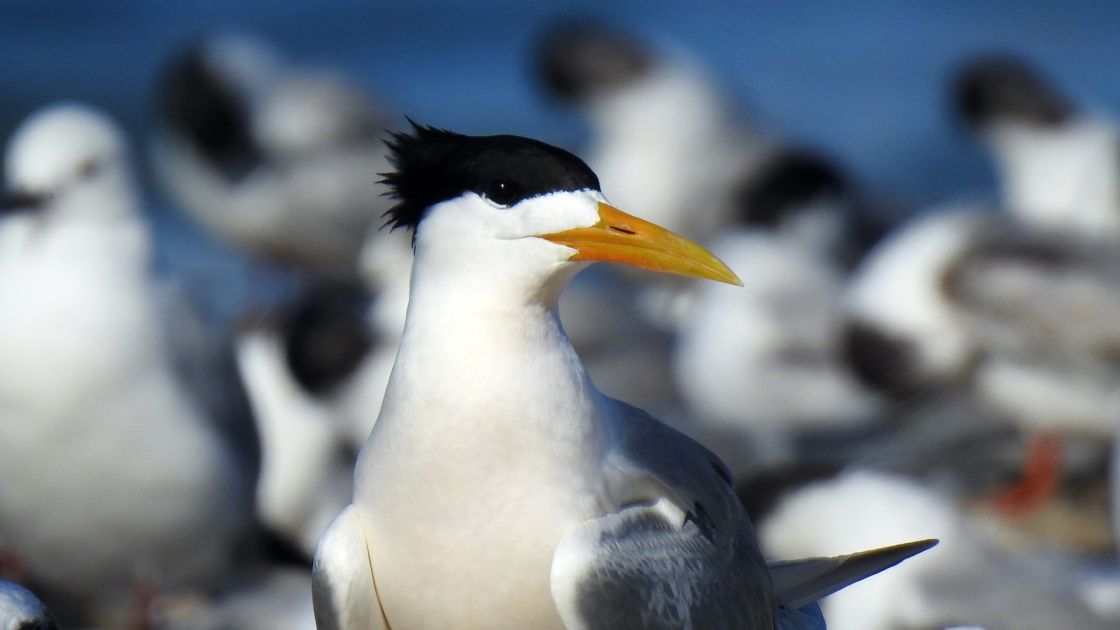
- 18 greater crested terns
- Limestone Coast – Padthaway [1], Port MacDonnell [13], Southend [1] and Carpenter Rocks [2]
- Fleurieu Peninsula – Middleton [1]
- 3 silver gulls
- Limestone Coast – Port MacDonnell [1]
- Fleurieu Peninsula – Middleton [1] and Victor Harbor [1]
- 1 peregrine falcon
- Kangaroo Island – Kohinoor [1]
- 2 black-faced cormorants
- Limestone Coast – Carpenter Rocks [2]
All were previously reported as suspect detections and have now returned positive results for H5 bird flu following testing at the ACDP in Geelong, Victoria.
There have now been 265 confirmed positive H5 bird flu detections in South Australia.
A further 5 suspect cases of H5 bird flu in South Australia have been detected since the last update, bringing the current number of suspect cases to 39. These include:
- Australian raven
- Limestone Coast – Port MacDonnell [1]
- Silver gull
- Limestone Coast – Port MacDonnell [1]
- Greater crested terns
- Limestone Coast – Port MacDonnell [1]
- Metropolitan – North Haven [1]
- Barossa Valley – Tanunda [1]
The samples have been sent to ACDP for confirmatory testing with results expected to be known in the coming days.
There remains no H5 bird flu detections in poultry or other livestock. The risk to human health of H5 bird flu remains low.
South Australians are encouraged to continue being vigilant in reporting sick and dead birds and other wildlife.
Avoid touching sick or dead birds and other wildlife. Record what you see. Report it to the Emergency Animal Disease Hotline on 1800 675 888.
For the latest updates, information and advice about H5 bird flu in South Australia, including how to register for the next community forum at Port Adelaide next Monday 17 August, go to birdflu.sa.gov.au.