
More monitoring and research for Giant Australian Cuttlefish as numbers reach historic lows
Friday 21 August 2026 Fishing and aquacultureMedia release
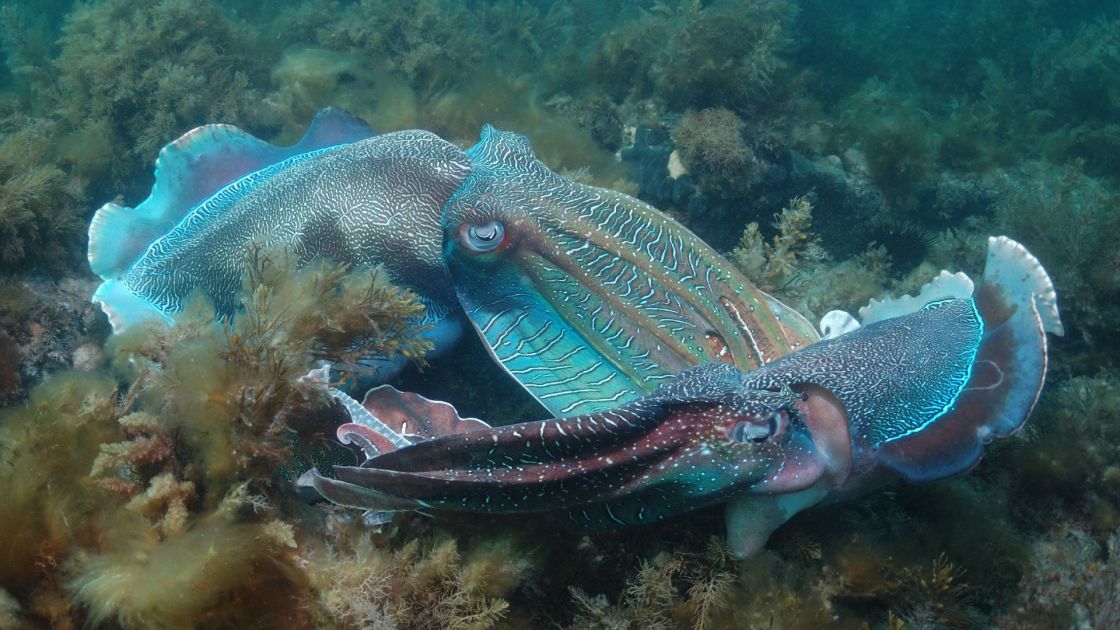
The State Government has expanded monitoring and research to better understand the Giant Australian Cuttlefish population’s decline, including the potential impact the harmful algal bloom has had on the iconic species.
A joint research project between the State Government and Adelaide University is developing a better understanding of the life history and drivers of population change in cuttlefish. It will include:
- Updating modelling to better estimate population size and variability, assess extinction risk — including potential algal bloom impacts — and guide long-term management and conservation of the Cuttlefish Coast Sanctuary Zone.
- Collecting cuttlebones for Adelaide University to analyse breeding age and identify whether the population includes two distinct age groups.
- Improving understanding of the cuttlefish population's vulnerability to help fisheries, tourism operators, Whyalla City Council and government agencies plan for future seasons.
The project is funded through the Australian and South Australian Governments’ $165 million investment in algal bloom response and recovery measures.
Aggregation of cuttlefish at Point Lowly, near Whyalla, in Upper Spencer Gulf, is a globally unique natural phenomenon, and one of South Australia's most important marine wildlife and tourist attractions.
The Department for Environment and Water (DEW) and the South Australian Research and Development Institute (SARDI) completed underwater surveys this month, and while annual cuttlefish numbers are known to fluctuate naturally, this year’s population estimate is 1,811 – the lowest on record.
Cuttlefish numbers naturally rise and fall from year to year since SARDI surveys began in 1998 and have previously ranged from 13,500 in 2013 to 247,000 in 2020. After concern for the low number in 2013, the population estimate rapidly increased to more than 100,000 by 2015. These boom-and-bust cycles are typically driven by environmental conditions, including temperature and food sources.
On July 1, the State Government implemented a temporary restriction on recreational activities to better protect cuttlefish at their Upper Spencer Gulf breeding site.
The 90-day exclusion zone – which restricts in-water recreational activities, including swimming, snorkelling and diving, as well as vessel anchoring – aimed to minimise any disturbance on breeding cuttlefish, and help protect their eggs and hatchlings.
Impacted cuttlefish tour operators in the region are eligible to apply for the Algal Bloom Small Business Support Grants.
Back in 2022, within weeks of being elected, the Malinauskas Government acted quickly to reinstate regulations that prohibit the taking of cuttlefish in the northern Spencer Gulf after restrictions were allowed to lapse under the former Liberal government in 2020.
The Malinauskas Government then enshrined those restrictions in law through The Fisheries Management (Cuttlefish–Northern Spencer Gulf) Amendment Bill 2025, formalising the regulations including a fine of up to $20,000 for anyone caught taking Great Australian Cuttlefish.