
Hoverflies lending a hand in canola
Thursday 23 July 2026 SARDIPestFacts
While growers are keeping an eye on insect pests, it's worth remembering that beneficial insects are also out in force.
During recent monitoring at the GRDC project Canola Allies trial site at Rosedale, hoverflies were commonly observed throughout the canola crop – an encouraging sign that natural enemies are already active this winter.
Although the brightly coloured adults are the easiest to spot, it's their larvae that do the hard work. Adult hoverflies feed on nectar and pollen before laying their eggs close to aphid colonies. Once the eggs hatch, the larvae immediately begin feeding on aphids and other soft-bodied insects, helping to suppress pest populations.
Recognising hoverflies
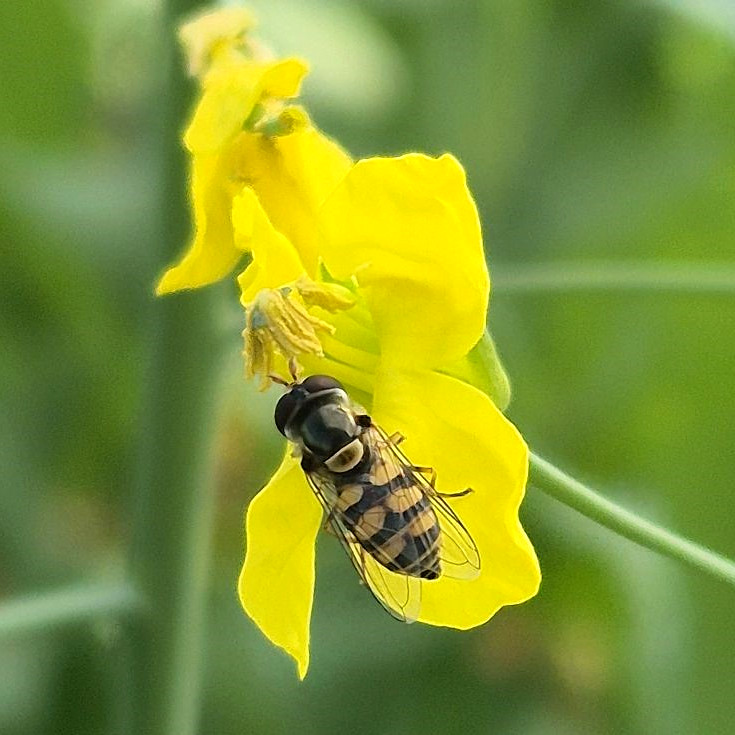
Adult hoverflies are often mistaken for bees or small wasps because of their distinctive black and yellow markings. They are typically 4 to 10 millimetres long, with slender, flattened bodies, and are well known for their ability to hover almost motionless before darting quickly between flowers or plants.
Hoverflies are true flies and have only 1 pair of clear wings, whereas bees and wasps have 2 pairs. They have large compound eyes, short antennae and lack the narrow 'waist' typical of wasps.
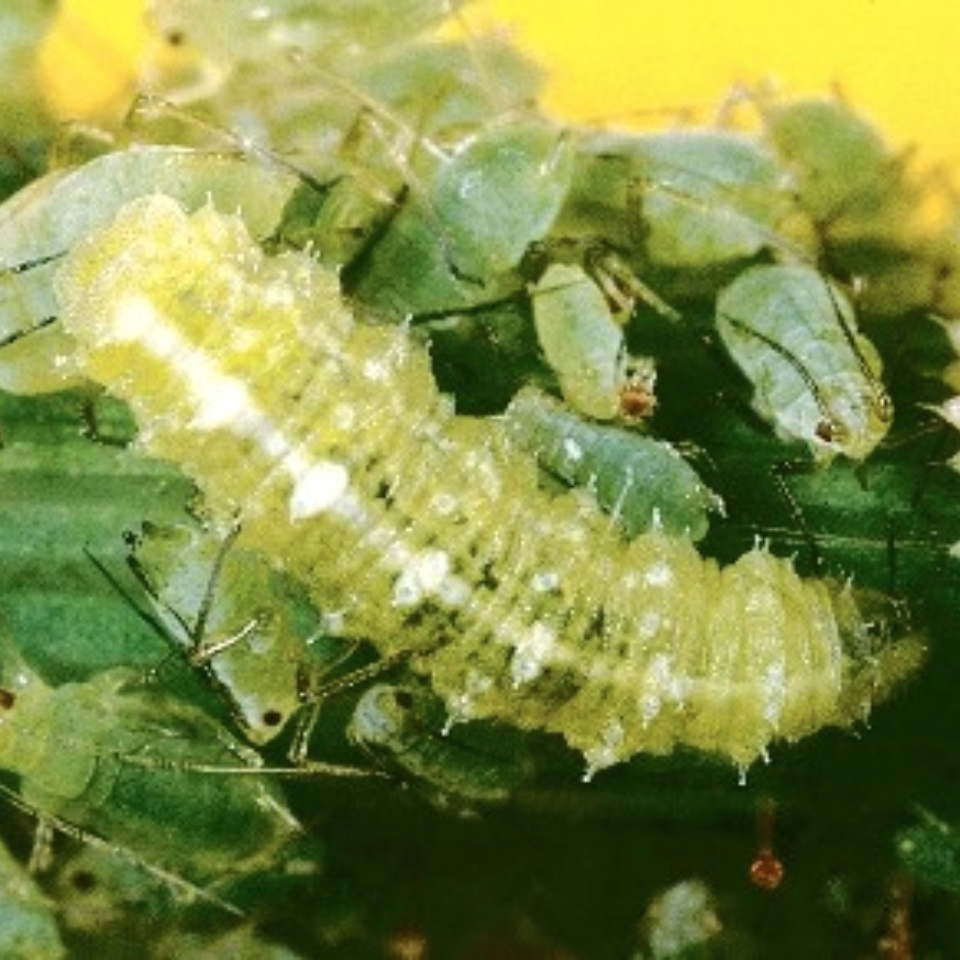
The larvae look completely different from the adults. Growing up to 10 millimetres long, they are flattened, legless and maggot-like, with green or brown colouring that allows them to blend into foliage while searching for aphids.
Because of their unusual appearance, hoverfly larvae are sometimes mistaken for pest insects, despite being one of the crop's most valuable predators.
When inspecting crops, it's worth looking for hoverfly eggs. These are small, white and elongated, and are laid singly near aphid colonies. Finding eggs or larvae is a good indication that natural biological control is underway.
Watch the short videos:
Helping hoverflies help your crop
Simple management practices can help encourage these beneficial insects, including:
- maintaining flowering vegetation around paddock margins where practical
- avoiding unnecessary insecticide applications that may reduce their numbers.
- If insecticide control is required, consider the impact on beneficial insects as well as the target pest:
- choose selective products where possible, avoiding broad-spectrum insecticides
- only spraying when economic thresholds are reached will help conserve hoverflies and other natural enemies, including ladybird beetles, lacewings and parasitoid wasps.
For guidance on insecticide impacts, Cesar Australia's Beneficials chemical toxicity table is a useful resource for selecting products that effectively control pests while minimising harm to beneficial insects.