Look out for native budworm moths
Wednesday 9 September 2026 SARDIPestFacts
Native budworm (Helicoverpa punctigera) is a major pest of pulses, including field peas and lentils, and can also cause damage in canola. The moths themselves don’t cause damage – it’s the larvae we need to worry about. Moth activity gives us a useful indication and pheromone traps help us track when moths are moving into an area, giving growers and agronomists a cue to start watching crops more closely.
Think of moth catches as an early warning, not a spray signal. A jump in trap numbers tells us a flight has arrived, but that doesn’t necessarily mean damaging larvae will follow. Low moth catches don’t necessarily mean a crop is in the clear either; traps only give us an indication of moth activity at a particular location and time. Moths still need to lay eggs, and those eggs need to successfully develop into larvae. That’s why, whether trap catches are high or low, paddock monitoring is what really tells the story, particularly as crops move through flowering and into podding.
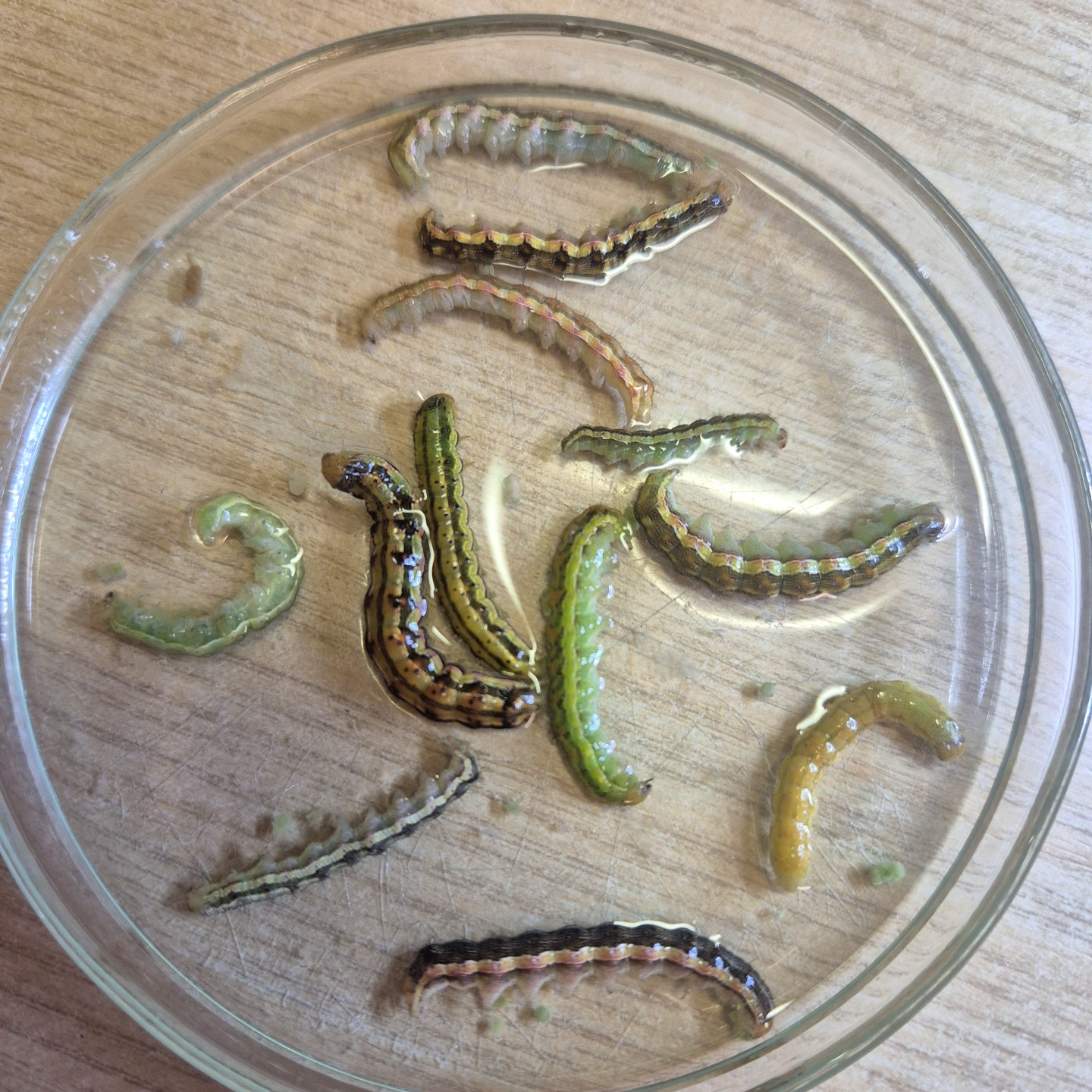
Once eggs hatch, it’s the caterpillars that we need to look for. Native budworm larvae can appear surprisingly different from one another, ranging from green and yellowish through to reddish-brown or almost black, usually with stripes running along the body. One handy feature of Helicoverpa larvae is the sharp downward angle at the rear of the body. If you’re trying to separate native budworm from similar species such as cotton bollworm or lesser budworm, have a closer look at the hairs: native budworm larvae have black hairs around the head and along the body.
Size matters too. Young caterpillars mostly feed on leaves and flowers and cause relatively little damage, but as they grow, so does their appetite. Larger larvae move onto developing pods, chewing through the pod wall and feeding directly on the seed inside. This is when the risk of yield loss really starts to increase.
From flowering onwards, get the sweep net out regularly and don’t just count the caterpillars: check their size as well. Knowing how many larvae are present and their size gives a much better idea of the risk to the crop.
Last season, the PestFacts SA team received several reports of native budworm larvae in cereal crops across the state so don't be surprised if you see them. Cereals aren’t a preferred host, but larvae can still appear and have a nibble before moving on in search of something more suitable. Finding native budworm in cereals doesn’t necessarily mean an infestation will establish or continue. However, even a short period of feeding can sometimes be enough to cause noticeable damage, particularly if larvae are feeding on developing heads or grain. If you do find them, keep an eye on where they’re feeding and whether that feeding is translating into crop damage.
Native budworm trapping update
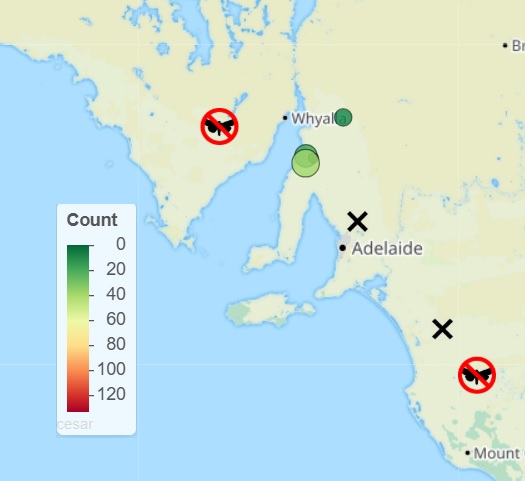
The latest results from our native budworm trapping network show little moth movement across the state to 2 September.
We’ll continue to follow moth movements across SA as spring progresses and share updates through PestFacts SA and our weekly native budworm activity maps.
A big thank you to our trap operators across the state for keeping the counts coming in each week – your contribution makes these updates possible.