Native budworm moth activity update
Tuesday 18 August 2026 SARDIPestFacts
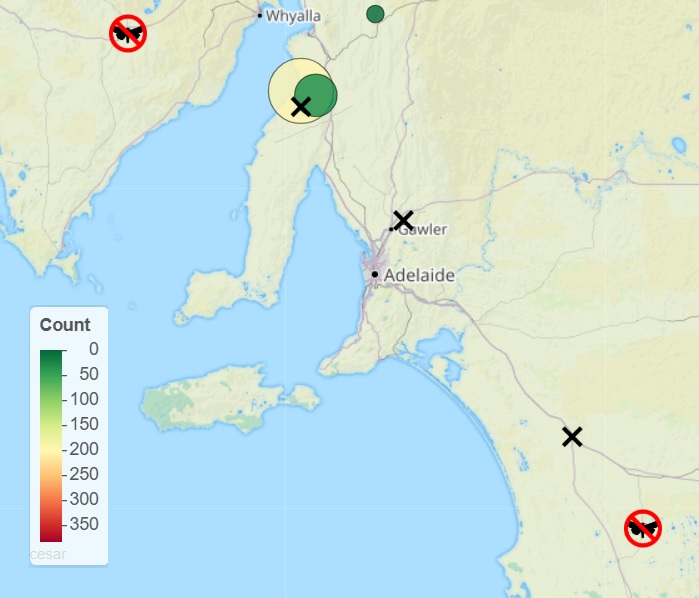
After a few weeks of little to no native budworm (Helicoverpa punctigera) activity across South Australia, recent pheromone trap catches show moth activity picking up again at several monitored sites.
Recent trap catches recorded:
- Port Broughton – moderate
- Mundoora – low
- Jamestown – low
Native budworm is a highly mobile pest, with moths capable of migrating long distances into cropping regions. Recent northerly winds across South Australia may also have assisted moth movement from inland breeding areas, so catches could continue to change over the coming weeks.
What does this mean for crops?
A rise in moth catches doesn't necessarily mean crops are at immediate risk. Pheromone traps give us an indication that adult moths are moving through an area; what happens next depends on crop stage, egg laying and whether larvae establish.
The important period comes as susceptible crops, particularly pulses and canola, move into flowering. Female moths are attracted to flowering crops where they lay eggs, and the larvae that follow can feed on flowers, pods and developing seed.
If your crops are beginning to flower, start sweep-net monitoring for caterpillars and continue regularly as crops move through flowering and pod development. Moth catches tell us adults are on the move, but paddock monitoring tells you whether larvae are actually establishing in your crop.
We'll continue tracking moth flights through the South Australian pheromone trap network and sharing updates as the season progresses. The latest trap captures can be viewed through MothTrapVis by Cesar Australia.
Thanks to our fantastic network of volunteer trap operators for their continued commitment to servicing traps and providing weekly data. Their contributions are invaluable in helping PestFacts SA provide timely, statewide updates on native budworm activity.