Nature's hidden ally: fungal pathogens attacking aphids
Tuesday 18 August 2026 SARDIPestFacts
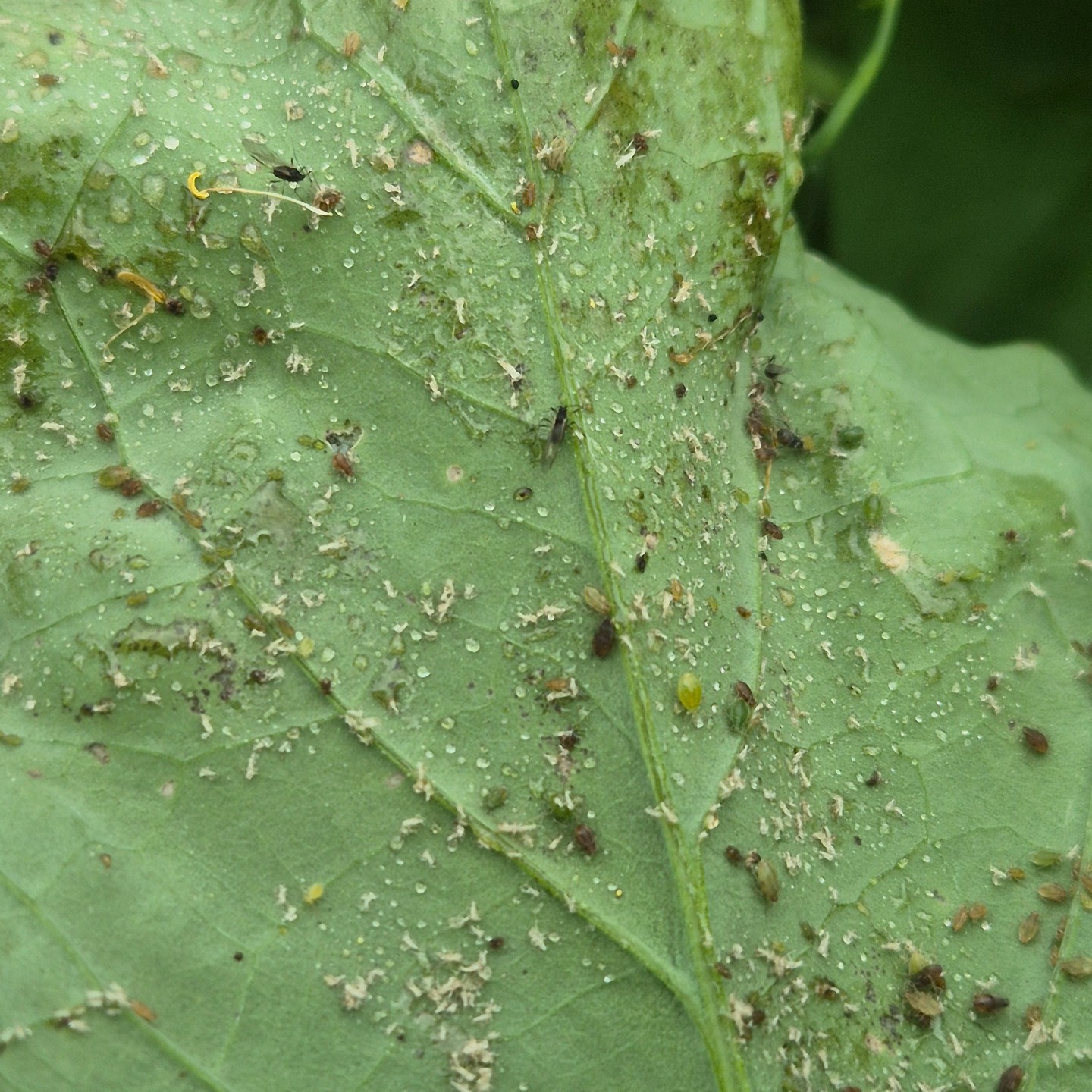
When our team receives images of aphids for identification, our focus is usually on determining the species and assessing potential crop risk. However, this season we've also noticed something else appearing in several submissions: pale, shrivelled aphids alongside healthy aphid colonies. These are often aphids infected by naturally occurring entomopathogenic (insect-killing) fungi, an important group of natural enemies that can help suppress aphid populations.
While aphid populations have increased in many areas this season, the same prolonged periods of high humidity and leaf wetness that favour aphids also create ideal conditions for fungal diseases to spread through colonies.
Fungal pathogens infect aphids when microscopic airborne spores (conidia) land on the insect's cuticle, germinate and penetrate the body. The fungus grows inside the aphid, eventually killing it before producing new spores that spread to nearby aphids. In dense colonies, this natural process can lead to rapid declines in aphid numbers when cool, humid conditions persist.
Unlike aphids parasitised by wasps, which become the familiar bronze-coloured "mummies", these aphids often appear brownish, swollen and wet, and remain attached to the leaf or stem. Under humid conditions a white or cream-coloured fungal growth may develop on the outside of the aphid as new spores are produced.
What does this mean for management?
The presence of fungal-infected aphids is a good sign that natural biological control is already occurring in the crop. These fungi work alongside parasitoid wasps, hoverflies, lacewings and ladybird beetles to naturally suppress aphid populations and, under favourable conditions, can contribute to significant reductions in aphid numbers.
Before making a spray decision:
- Monitor whether aphid populations are increasing or beginning to decline.
- Look for evidence of natural enemies, including fungal-infected aphids, parasitoid mummies and predatory insects.
- Consider crop growth stage, aphid abundance and virus risk before applying insecticides.
- Where chemical control is required, choose selective products where possible to minimise impacts on beneficial insects and other natural enemies.
With above-average rainfall and extended periods of humidity across many cropping regions this season, conditions have been particularly favourable for naturally occurring fungal pathogens. Continued crop monitoring remains important, as these beneficial fungi may provide valuable suppression of aphid populations while conditions remain cool and moist.
Have you seen white, dry exuviae aphids this season? We'd be interested to hear your observations. Your reports help improve our understanding of how seasonal conditions influence natural biological control across South Australian cropping regions.