Stay one step ahead of Etiella: now is the time to watch
Tuesday 18 August 2026 SARDIPestFacts

Etiella (Etiella behrii) can be a difficult pest to stay ahead of in pulse crops. Adults can arrive with little warning. They lay eggs on plants, and after hatching, the small larvae move into developing pods where they feed on seeds. Once larvae hatch and move inside developing pods, they become well protected and much harder to manage. Infestations can easily go unnoticed until damaged grain is found.
The key is knowing when to start looking. This is where the SARDI Etiella degree-day model can provide a useful early warning.
Know what to look for
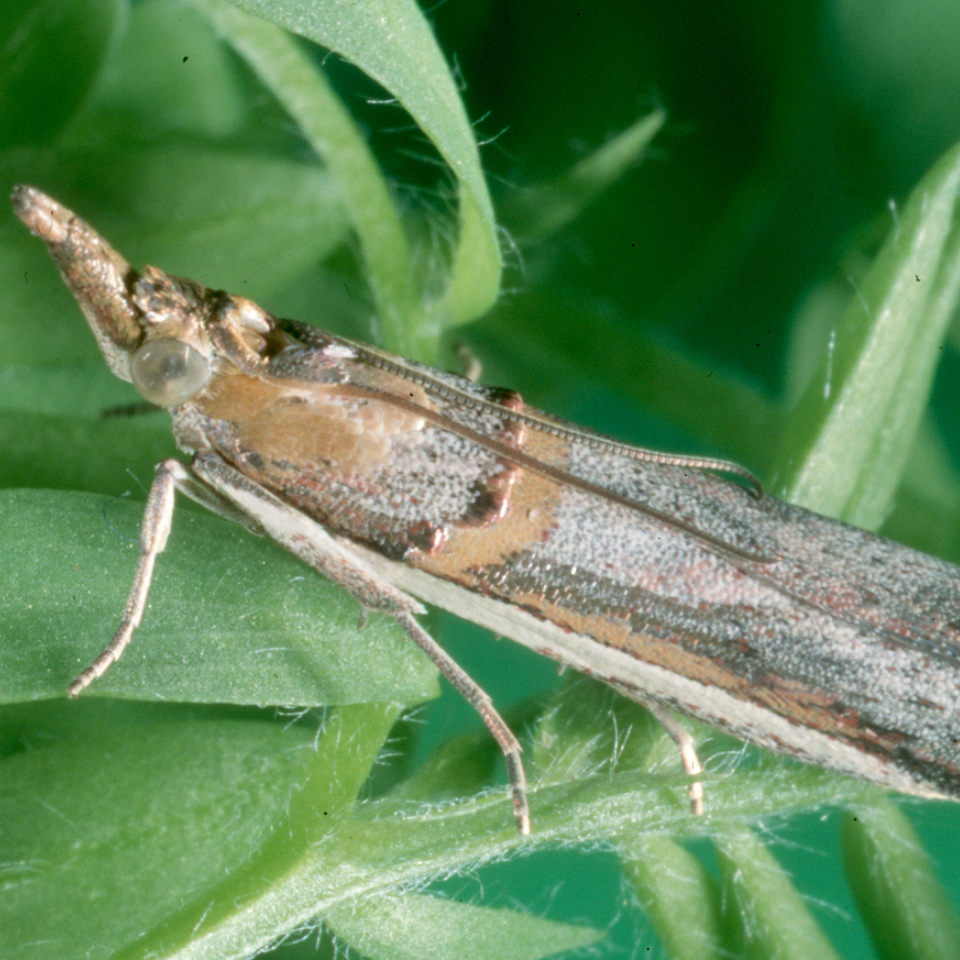
Adult Etiella are small, slender moths, around 10–15 mm long, with grey-brown forewings and a distinctive white stripe running along the leading edge of each forewing. When resting, the wings are held close to the body, giving the moth a narrow appearance.
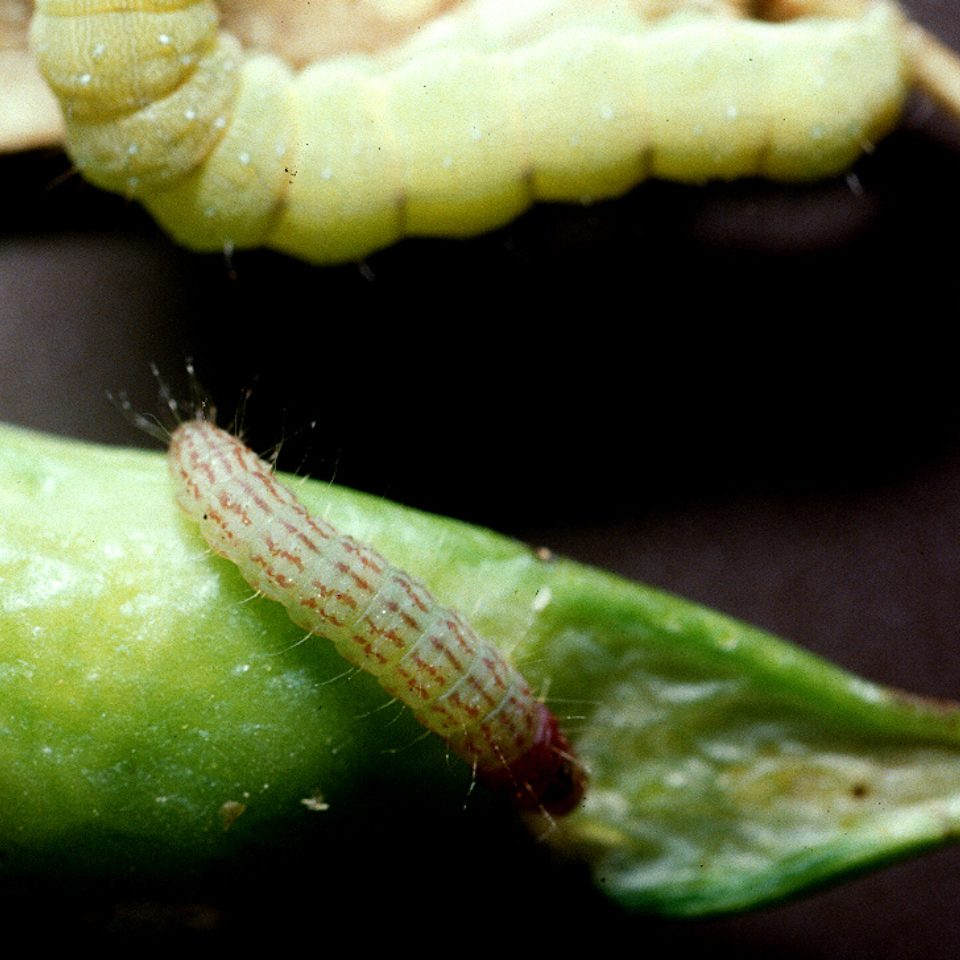
Eggs are very small and can be difficult to spot in the crop. Newly hatched larvae are pale before developing a pink to reddish colour as they grow. Once larvae enter pods, they feed directly on developing seed. Their feeding can leave damaged or partly eaten grain, often accompanied by webbing and frass inside the pod.
Knowing what the adult moth looks like is particularly useful, as spotting moth activity before larvae disappear inside pods gives you a much earlier warning of potential risk. Etiella can produce up to three generations a year, with larvae overwintering in the soil before adults begin emerging as conditions warm in spring.
One catch is that not every small moth you see in a pulse crop is Etiella. Weed web moth (Achyra affinitalis) and cabbage centre grub (Hellula hydralis) can sometimes cause confusion. Weed web moth larvae tend to produce obvious webbing around foliage and stems, while cabbage centre grub larvae mainly feed on vegetative growth. Etiella, on the other hand, is the one to watch around developing pods, where larvae can get inside and feed directly on the seed.
Use the model as your cue to start looking
The model is most useful as an early-warning tool, rather than a stand-alone prediction of crop risk. Etiella development and emergence are closely linked to temperature. The SARDI Etiella degree-day model uses temperature accumulation to estimate when moth emergence is likely to begin. The important number to keep in mind is 300 degree-days (DD).
As your location approaches 300 DD, it's time to pay closer attention to crops. Sweep netting is a simple and useful way to monitor Etiella activity, particularly as pulse crops move towards flowering and pod development. To get a good picture of what's happening across the paddock, aim for at least three sets of 20 sweeps at randomly selected locations, rather than relying on a single area. As pods begin to develop, also visually inspect seedpods for larvae and signs of feeding.
Reaching 300 DD doesn't mean a damaging infestation will occur, and it certainly doesn't mean it's time to spray. Think of it as your cue to grab the sweep net and start looking.
Current model predictions for degree-day accumulation up to 11th August show that many monitored locations are still below the 300 DD mark:
- Wudinna: 172
- Roseworthy: 136
- Cummins: 155
- Cleve: 142
- Port Pirie: 179
- Keith: 128
- Horsham (Vic): 96
These numbers will continue to climb as temperatures increase, so locations that are currently well below 300 DD can move towards the predicted emergence window relatively quickly as conditions warm.
And remember, the model tells you when to look but the paddock tells you what's actually there. Crop stage, local conditions, surrounding vegetation and Etiella activity in the area all need to be considered when assessing the risk.
If Etiella turns up, what next?
Finding moths doesn't automatically mean a spray is needed. The model and moth observations are there to help time monitoring, while any management decision should consider crop stage, pest activity and the level of risk in the paddock.
Timing is particularly important with Etiella. Insecticides target adult moths and/or newly hatched larvae before they enter the pod. Once larvae are feeding inside pods, they are largely protected from foliar insecticides, making control much more difficult.
If chemical control is being considered, use a product registered for Etiella in the crop and follow label directions carefully. Avoid unnecessary applications and, where options are available, consider products that minimise disruption to beneficial insects.
Continue monitoring after treatment or after moth activity is detected, as moth flights and egg laying can occur over an extended period.
Most importantly, don't wait until damaged pods appear to start looking. Using the degree-day model to anticipate moth emergence, then backing that up with paddock monitoring, gives you the best chance of detecting Etiella while there is still time to respond.
Seen Etiella moths or larvae in your area? Let the PestFacts SA team know. Reports from growers and agronomists help us compare model predictions with what's actually happening in the paddock and provide more timely updates across the region.