Pea weevil watch: monitor now, spray smart
Tuesday 18 August 2026 SARDIPestFacts
The SARDI pea weevil model is predicting that adult pea weevil movement into field pea crops could begin around 25 August, with egg-laying activity expected from approximately 8 to 10 September.
Pea weevil (Bruchus pisorum) adults spend summer, autumn and winter sheltering outside pea paddocks, often around trees, sheds and other protected areas. As temperatures begin to warm in late winter and early spring, adults become active and start moving into nearby field pea crops.
The important message isn't to find a pea weevil and immediately reach for the spray rig. It's to know when they arrive, how many are present and whether populations have reached threshold.
Know what you're looking for
Despite its name, pea weevil isn't actually a true weevil and doesn't have the long snout normally associated with weevils.
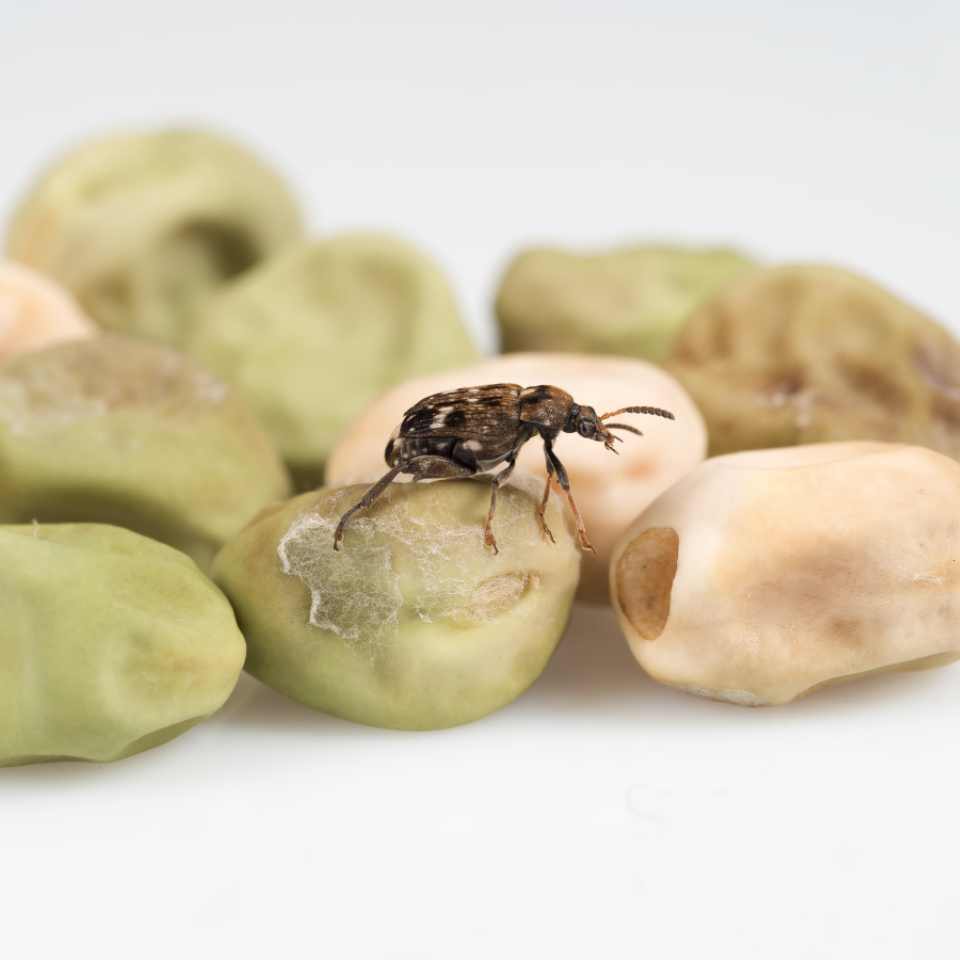
Adults are chunky beetles, around 5 mm long, with mottled brown, white, black and grey colouring. A useful identification feature is the end of the abdomen, which extends beyond the wing covers and is white with two distinctive black oval spots.
Adults aren't responsible for the main damage. The problem begins when females lay their yellow, cigar-shaped eggs on developing green pea pods. After hatching, the tiny larvae burrow directly through the pod and into developing seeds, where they feed and complete their development. Once inside the seed, they are protected from insecticide treatment.
This is why timing is everything with pea weevil management; if control is required, it needs to target adults before significant egg laying occurs.
Start at the edges
Pea weevils generally enter crops from surrounding shelter, so monitoring should begin around crop edges, particularly those close to trees, sheds and other likely overwintering sites.
Use a sweep net approximately 2 metres into the crop and monitor every 5–7 days. Check the net after every 25 sweeps and sample across 5–10 sites.
The current South Australian spray threshold is an average of 2 or more adult pea weevils per 25 sweeps, calculated across the sampling sites.
Finding a few adults doesn't necessarily mean the whole paddock needs treatment. If numbers above threshold are concentrated around the crop edge, a 20–40 m border spray may be sufficient and could avoid an unnecessary whole-paddock application.
Spray smart - timing matters
If pea weevil numbers reach threshold, the aim is to control adults before they have the chance to lay significant numbers of eggs on developing pods.
Avoid spraying too early simply because the first adults have appeared. Adults can continue moving into crops over time, so an early application may miss later arrivals. Equally, leaving control too late means larvae may already have entered the developing seed, where insecticides can no longer reach them.
And while you're sweeping, keep an eye out for native budworm (Helicoverpa punctigera) as well. If sweep-net monitoring also shows native budworm numbers above threshold, a whole-crop spray will effectively control both pests as both pests can be present as field peas move through flowering and podding.
Think beyond the spray
Pea weevil management doesn't finish after an insecticide application.
Harvesting field peas as early as seasonal conditions allow is another useful part of management. Early harvest can help ensure pea weevils are still immature inside the seed, reducing the opportunity for adults to emerge and disperse into surrounding areas.
Good management this season can therefore do more than protect grain quality at harvest; it can also help reduce the number of pea weevils carrying over into the following season.