Prepare for next season by breaking the summer green bridge
Wednesday 25 November 2026 SARDIPestFacts
Harvest might mark the end of this season’s crop, but pest management doesn’t stop there.
Summer weeds, volunteer and regrowth crops can provide a green bridge, allowing pests and crop viruses to survive between seasons.
Keeping on top of this green growth can help reduce pest pressure before next season even begins.
Summer rain can change the pest picture
Good rainfall towards the end of summer can be a great start to the season, bringing valuable soil moisture and creating opportunities for earlier sowing as in 2026. But that same rainfall can also bring a flush of summer weeds, volunteer cereals and canola, creating a green bridge for pests and diseases.
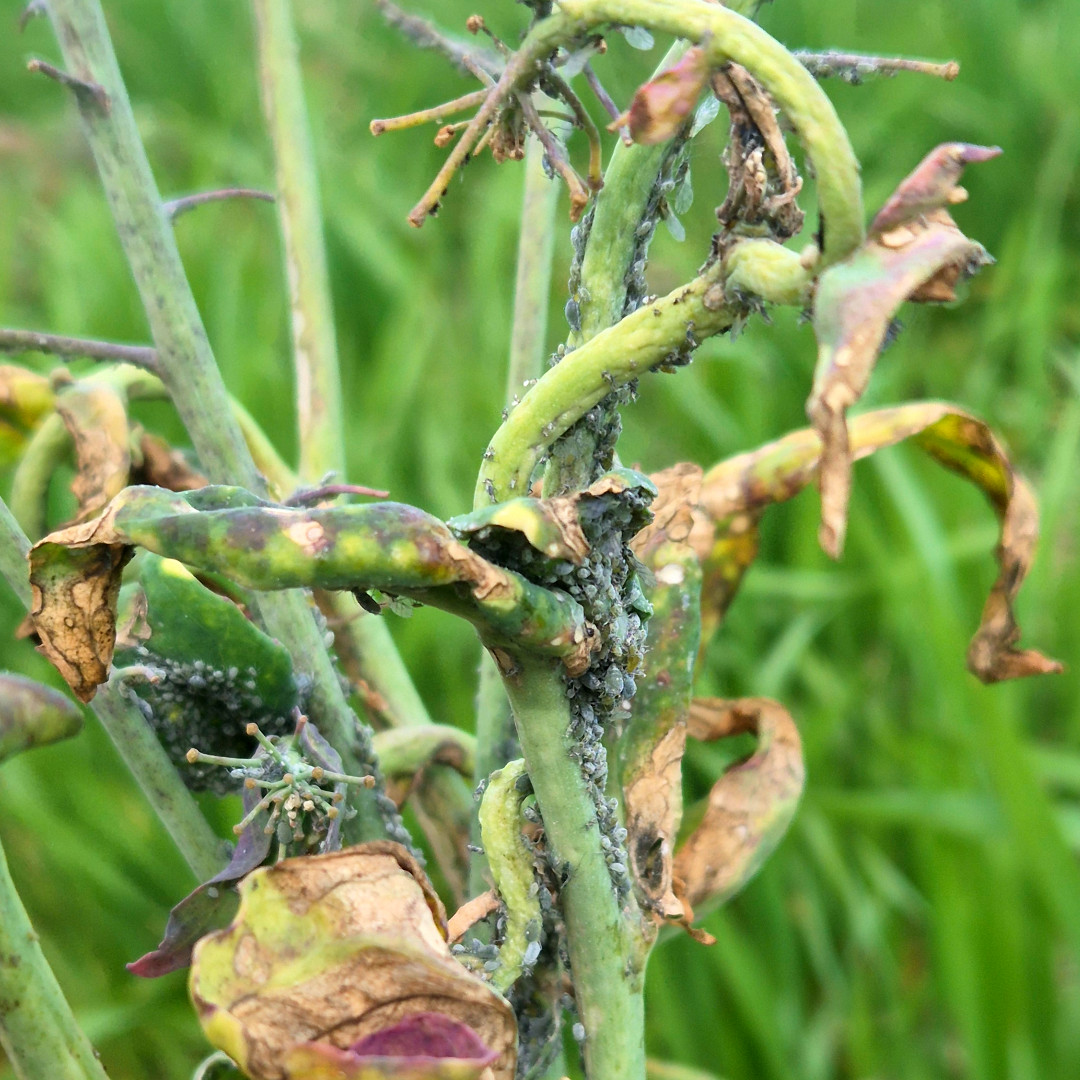
This season was a good example. Following summer rainfall and plenty of green growth, we received reports of green peach aphid in newly emerging canola crops, with turnip yellows virus (TuYV) infection later confirmed in some crops. The summer green bridge likely played an important role, with broadleaf weeds and volunteer canola providing suitable hosts for green peach aphid and TuYV to persist between seasons before moving into newly emerging crops.
The locust activity we saw in northern parts of South Australia this season was another good example of how summer conditions can influence pest pressure later in the growing season. Summer rainfall increased soil moisture, helping to trigger egg development and hatching, while the green feed that followed provided favourable conditions for nymphs to survive and develop. Luckily PIRSA and the Australian Plague Locust Commission were able to monitor, treat hopper bands in the outback and reduce the risk for growers.
So, if we receive some summer rain, it is worth keeping an eye not only on how much green growth comes up, but also on what is living amongst it.
Which pests benefit from the green bridge?
A range of pests can take advantage of summer weeds and volunteer crops:
- Aphids and viruses – Summer broadleaf weeds, such as marshmallow, and regrowth canola can allow aphids, including green peach aphid, to persist over summer. These plants can also provide a reservoir for viruses such as turnip yellows virus, increasing the risk of early movement into emerging canola.
- Mites – As resident pests, mites such as redlegged earth mite (RLEM) can remain in the paddock from one season to the next. If suitable weeds and volunteer plants are left growing, they provide food and shelter that can help maintain populations. Paddocks with a history of RLEM and plenty of suitable host plants are therefore more likely to carry a higher pest risk into the following season. Use the RLEM severity risk assessment and the TimeRite approach to determine your best strategy
- Pest snails – Summer weeds and volunteer plants can provide food and refuge for snails between cropping seasons. Summer is also a useful time to reduce snail numbers before they become a seedling or harvest contamination problem next season.
Don’t wait until sowing
Green bridge control is most useful when it happens before the new crop emerges. Where possible, control weeds and volunteer plants at least four weeks before sowing. This removes food and host plants, and allows for pest populations decline before seedlings emerge.
After summer rainfall, take the opportunity to walk paddocks and check what has come up and what is living on it. Fence lines, roadsides and neighbouring vegetation are also worth watching as they can provide alternative hosts.
Summer pest observations can also help with planning. Knowing what pest has been present in a paddock can guide crop choice, monitoring and management, rather than relying automatically on preventative insecticides.