Serpentine leaf miner in the lower South East
Wednesday 25 November 2026 SARDIPestFacts

We recently received reports and samples, allowing us to confirm the first case of Serpentine leaf miner (Liriomyza huidobrensis) in broad beans in the lower South East.
This exotic pest has been established for many years in Australia, initially in NSW and Queensland (2020), spreading into Victoria and recently Tasmania (June 2026).
We received the first reports from SA in early November.
Identification
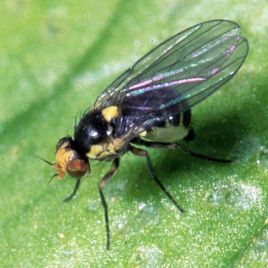
Adult serpentine leaf miner are small (less than 2.5 millimetres) and black with yellow markings on their head and thorax.
There are several other very similar leaf miner flies in Australia, including the cabbage leafminer (Liriomyza brassicae) and the vegetable leaf miner (Liriomyza sativae), so identification can be difficult and requires close inspection under a microscope.
Larvae are small maggots and feed within the leaf. They can feed on over 250 plant species, including common weeds like sow thistle and nightshade, as well as vegetable crops.
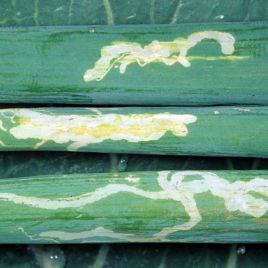
Feeding damage is easily recognisable as whitish mines on leaf surface, with extreme cases causing premature leaf drop or death. However, seeing a few leaf mines on a sow thistle is not cause for concern as these could be due to endemic leaf miner species – but seeing large areas of leaf mining is a cause for concern and further investigation.
While serpentine leaf miner is typically more of an issue in horticultural crops, please report to PestFacts SA if you see any suspicious leaf miner activity in broadacre.
For more information, see Exotic leaf miners.