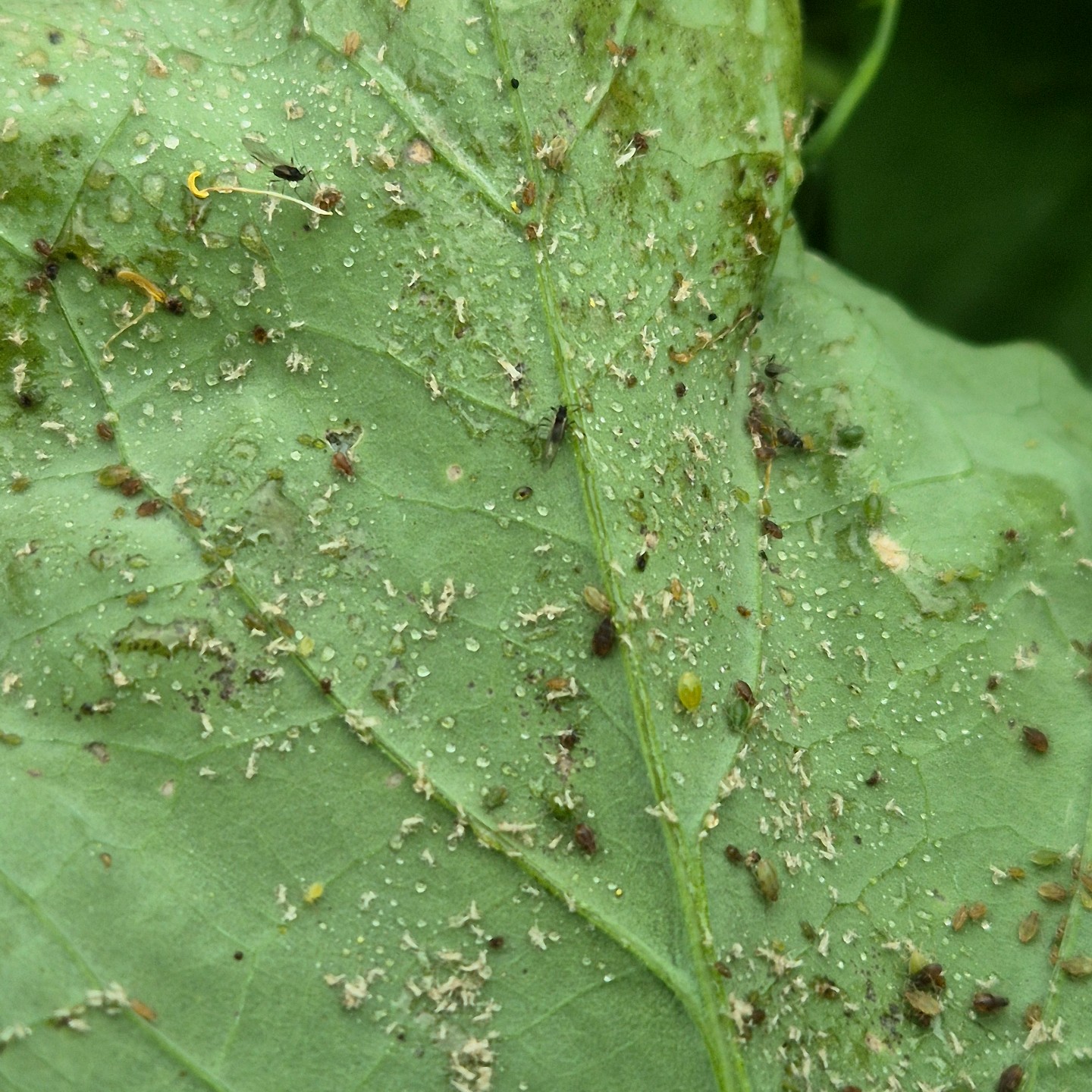
Spring brings more than flowers to canola
Wednesday 9 September 2026 SARDIPestFacts
Do you feel spring in the air? So do the insects in canola crops! As temperatures rise and canola moves through flowering and pod development, insect activity starts to pick up. Pests such as diamondback moth, green peach aphid, cabbage aphid and turnip aphid can become more active, but they’re not the only ones on the move. Beneficial insects are also building up and can play an important role in keeping pest populations under control.
Watch for diamondback moth
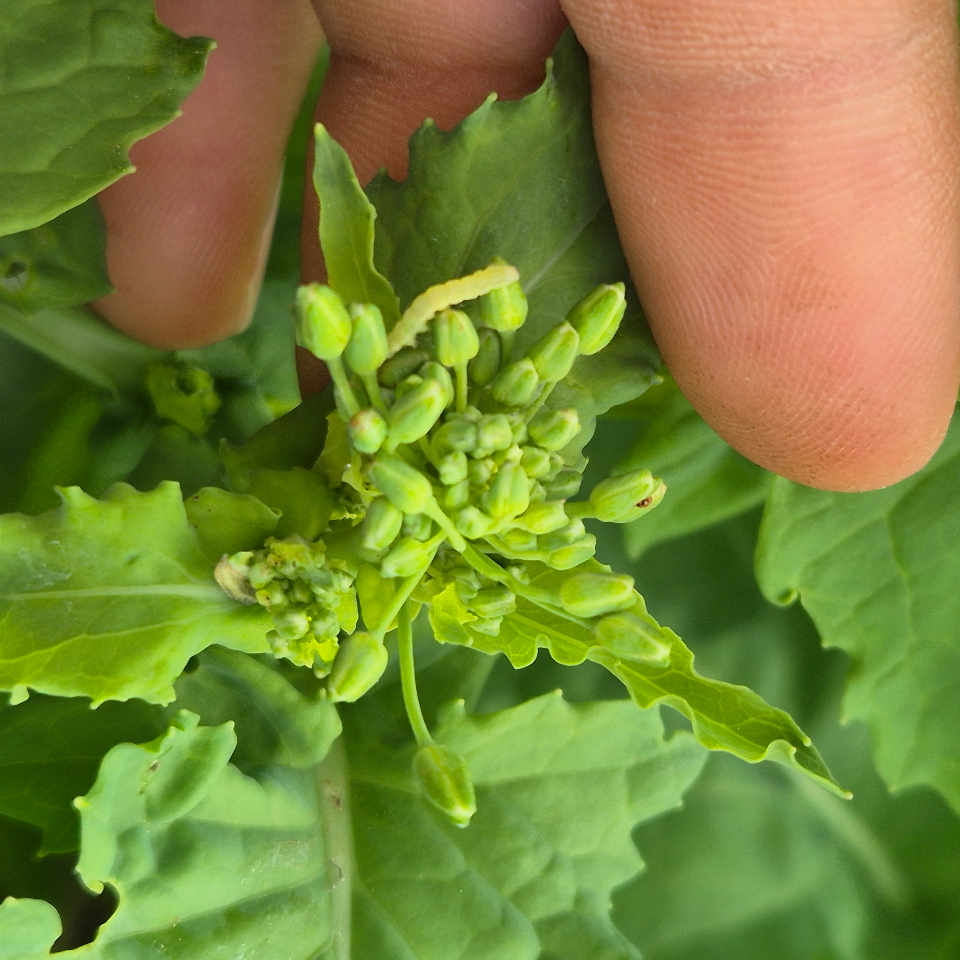
Diamondback moth (DBM, Plutella xylostella) is a familiar spring pest in canola. The small, pale-green larvae grow to about 10 millimetres long and are easy to recognise because when disturbed they wriggle rapidly and may drop from the plant.
Small larvae mainly feed on leaves, but as they grow, they can move onto buds, flowers and developing pods. Canola can tolerate some feeding, but DBM numbers can build quickly when spring turns warm and dry. Regular sweep-netting is the best way to know what is happening in the paddock, particularly from flowering onwards.
If DBM reaches threshold and control is needed, follow your current resistance management strategy, rotate mode-of-action groups and choose more selective options where possible. DBM has already developed resistance to several older insecticide groups, and reduced sensitivity to some newer products has also been detected.
Look for DBM's natural enemies too
Several parasitoid wasps can attack DBM, with Diadegma semiclausum one of the key species targeting the larvae. These tiny wasps can have a bigger impact you might expect and help keep DBM populations in check. Recent GRDC-supported work in WA found that 33% to 65% of DBM larvae at one unsprayed site were already parasitised at the rosette stage, even while DBM numbers were still below damaging levels.
Keep an eye out for signs of parasitism while monitoring, as they can tell you that natural enemies are already at work in the crop. DBM larvae normally pupate inside a loose, gauze-like cocoon, often attached to the underside of leaves or other parts of the plant. A healthy DBM pupa is generally green at first and becomes brown as it develops. Dark or black cocoons can be a clue that parasitoids have been at work, with parasitoid development changing the appearance of the pupal stage.
For more information see:

Green peach aphid: a different concern in spring
The concern with green peach aphid (GPA, Myzus persicae) changes in spring. Earlier in the season, the main concern with GPA is its ability to spread turnip yellows virus (TuYV) into young canola. By spring, however, crops are well established and new TuYV infections are much less likely to cause yield losses.
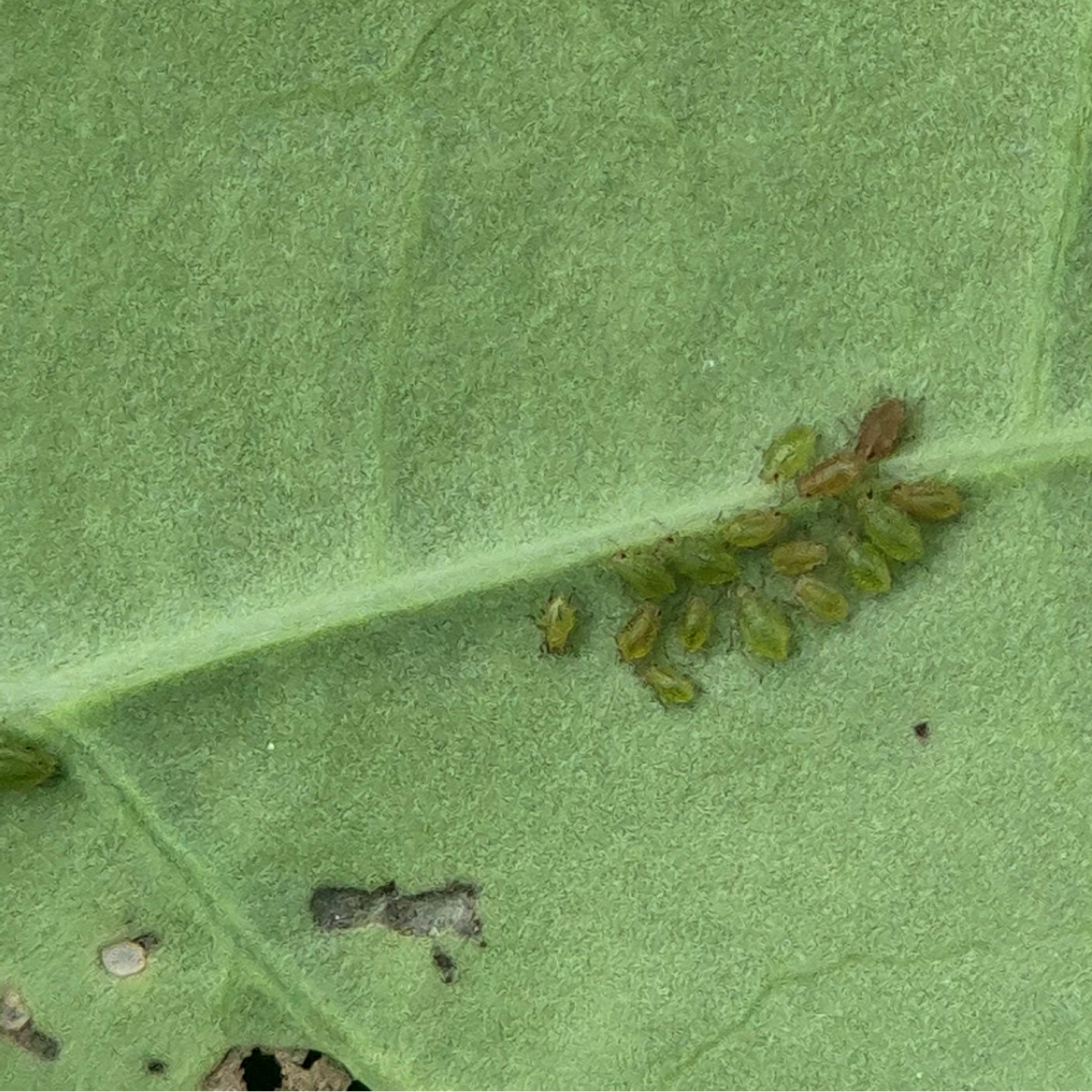
Instead, the focus shifts towards how many aphids are present and the pressure from direct feeding. GPA colonies can still build through spring, usually starting on the underside of leaves and lower parts of the plant before moving higher into the canopy as numbers increase. Large populations suck sap from plants and can reduce vigour and add to crop stress, particularly when moisture is limited.
The good news is that established canola can tolerate reasonable numbers of GPA. Seeing aphids in the crop doesn't automatically mean they need controlling – what matters is how quickly populations are building, crop condition, and any beneficials already at work.
If chemical control is needed, resistance needs to be considered. GPA has developed resistance to several insecticide groups, including:
- organophosphates
- carbamates
- synthetic pyrethroids.
Where treatment is necessary, use a registered product and preferably choose a more selective option that gives those beneficial insects a better chance to keep working.
Watch for cabbage aphid as canola flowers
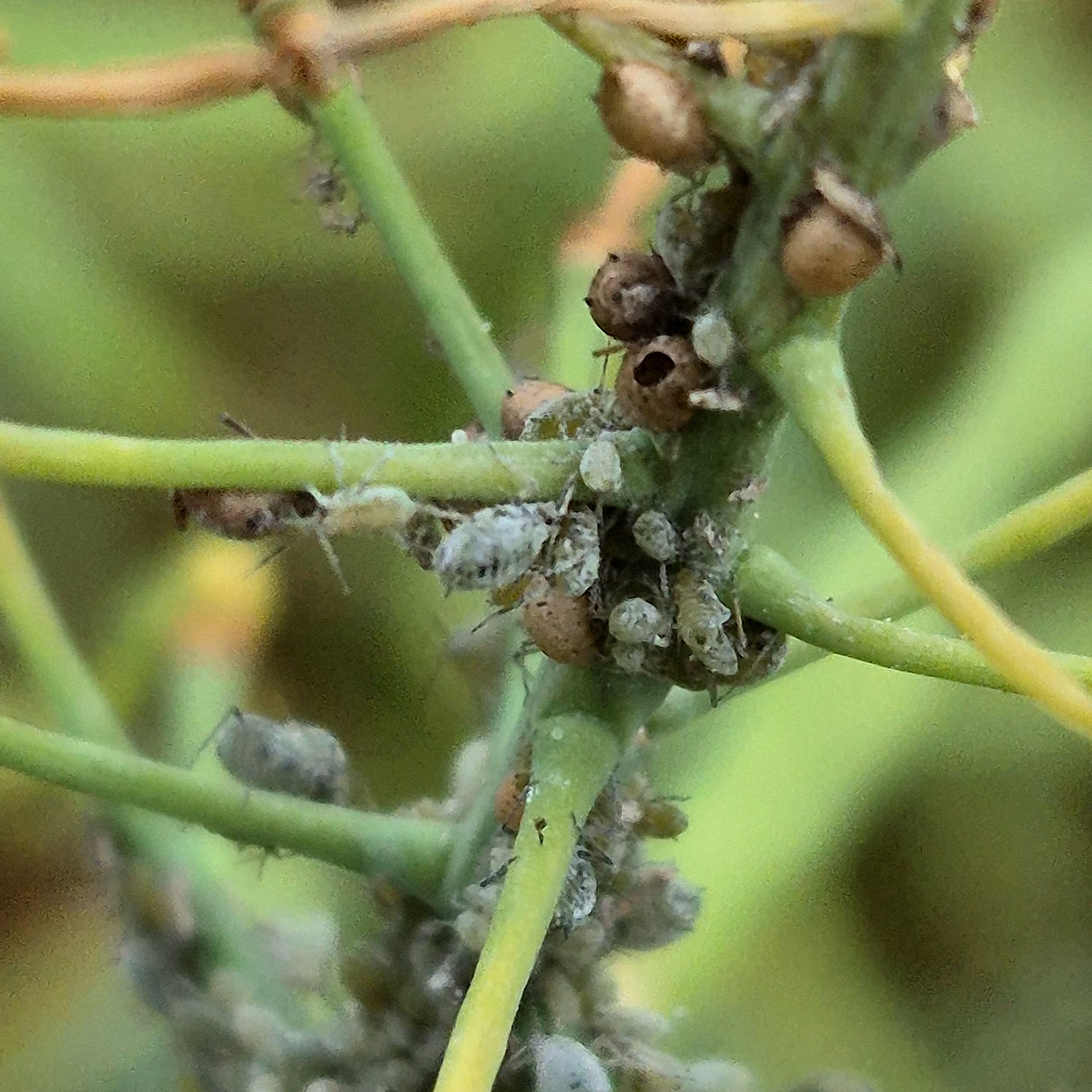
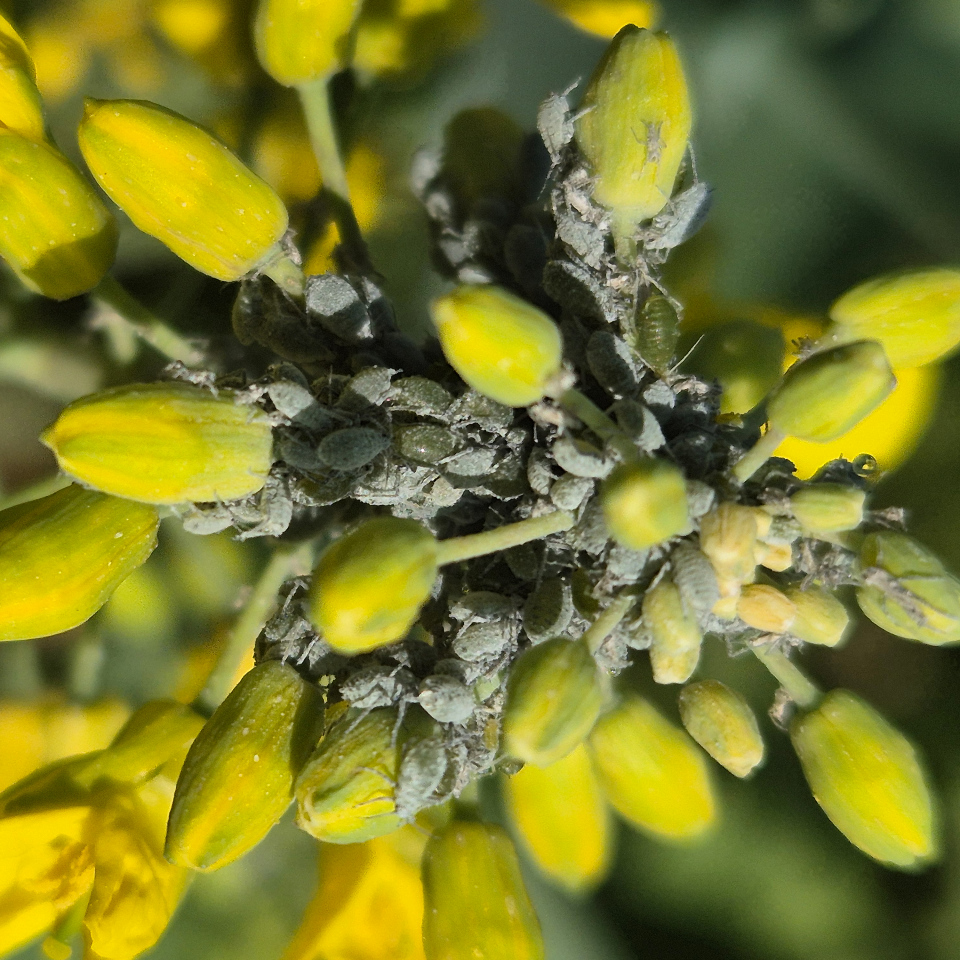
Cabbage aphids (Brevicoryne brassicae) are hard to miss once colonies get going. As canola moves through flowering and pod development, these aphids tend to gather in dense clusters around flowering stems, buds and developing pods – unlike GPA which is often tucked away on the underside of leaves.
Their grey-green bodies are covered in a distinctive whitish wax, giving colonies a dusty or powdery look. As numbers build, whole sections of a flowering stem can become crowded with aphids.
The main concern at this stage is direct feeding. Large colonies suck sap from flowering stems and developing pods, adding extra pressure to the crop, particularly when moisture is already limited. Crop edges are a good place to start looking, as this is often where colonies establish first before spreading further into the paddock.
Turnip aphid: easy to confuse, worth a closer look
Not every aphid colony around the top of a canola plant is cabbage aphid. Turnip aphid (Lipaphis pseudobrassicae) can look similar, and populations often peak from late winter into spring.
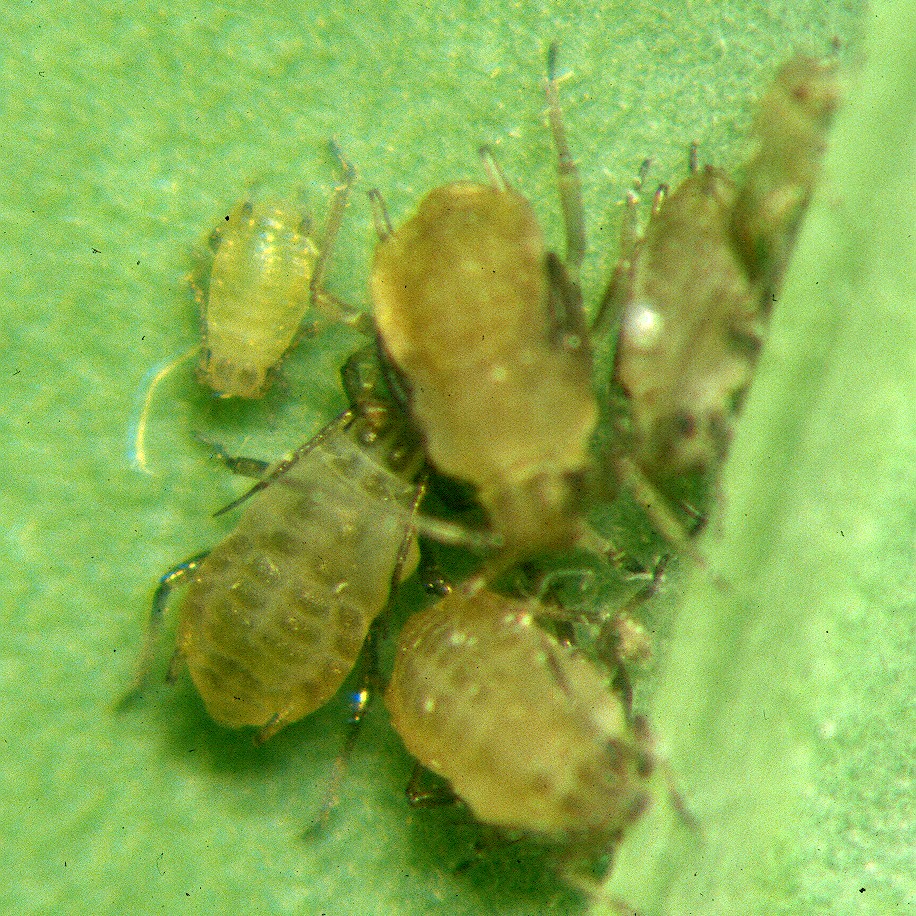
A closer look can help tell them apart. Turnip aphids are around 3 millimetres long, usually olive to greyish-green with dark bars across the abdomen. They may have a light waxy covering, but lack the thick, powdery coating that gives cabbage aphid colonies their distinctive dusty appearance.
For turnip aphid, crop stage is particularly important. Canola is most sensitive to direct feeding from bud formation through to late flowering, when heavy infestations can affect pod set, pod fill and ultimately grain quality.
Turnip aphid can also transmit turnip yellows virus (TuYV) and several other viruses. As with GPA, the timing of infection makes a big difference. Early virus infection poses the greatest threat to yield; once canola is well established in spring, the potential impact of new infections is generally much lower.
Look for natural enemies as well as aphids
When checking aphids this spring, look at what else is living among the colonies. As aphid numbers build, their natural enemies often build with them. This season, we’ve been seeing good numbers of beneficial insects in crops – more than in recent years – and they may already be playing an important role in keeping aphid populations in check. So, don’t underestimate these little helpers when deciding whether control is needed.
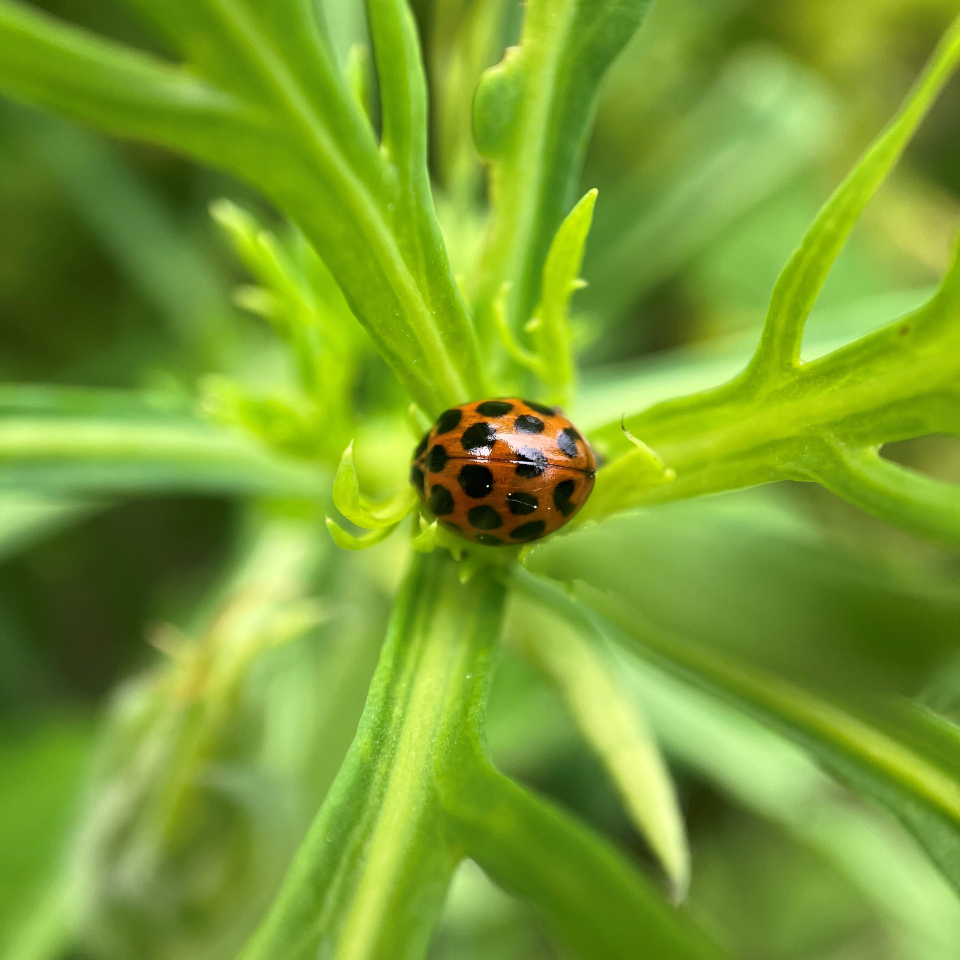
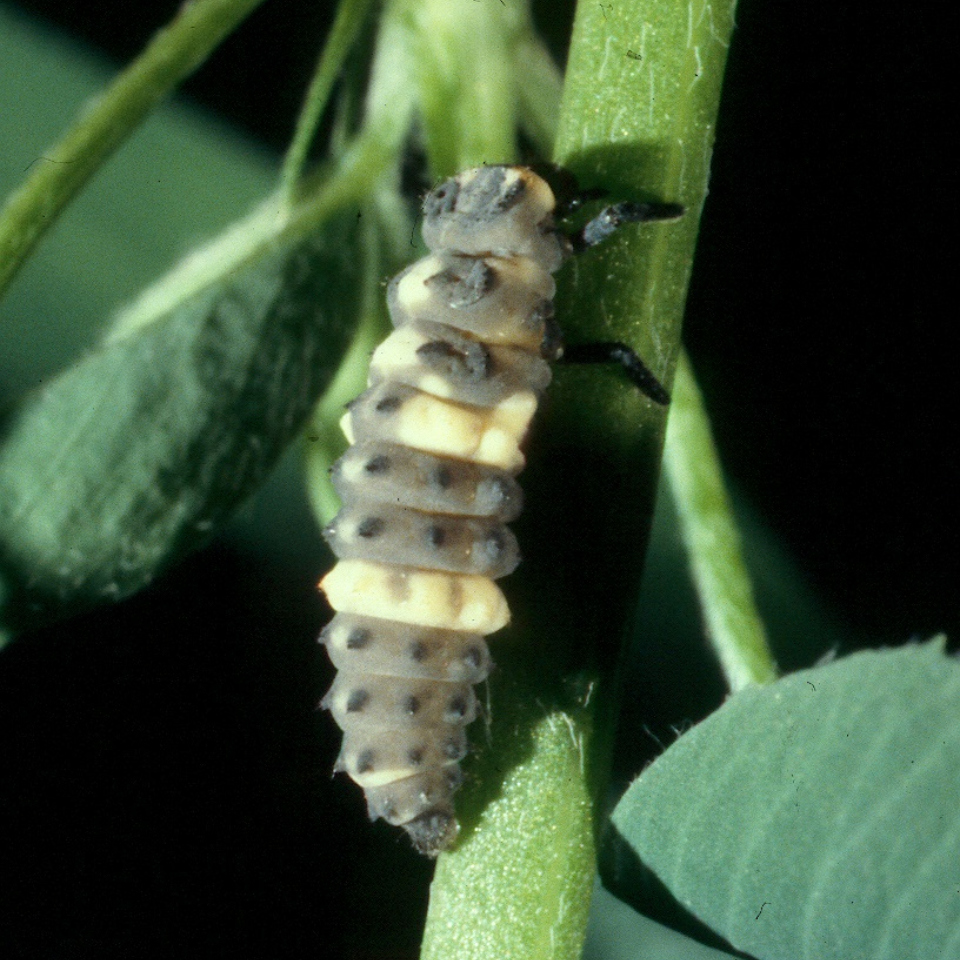
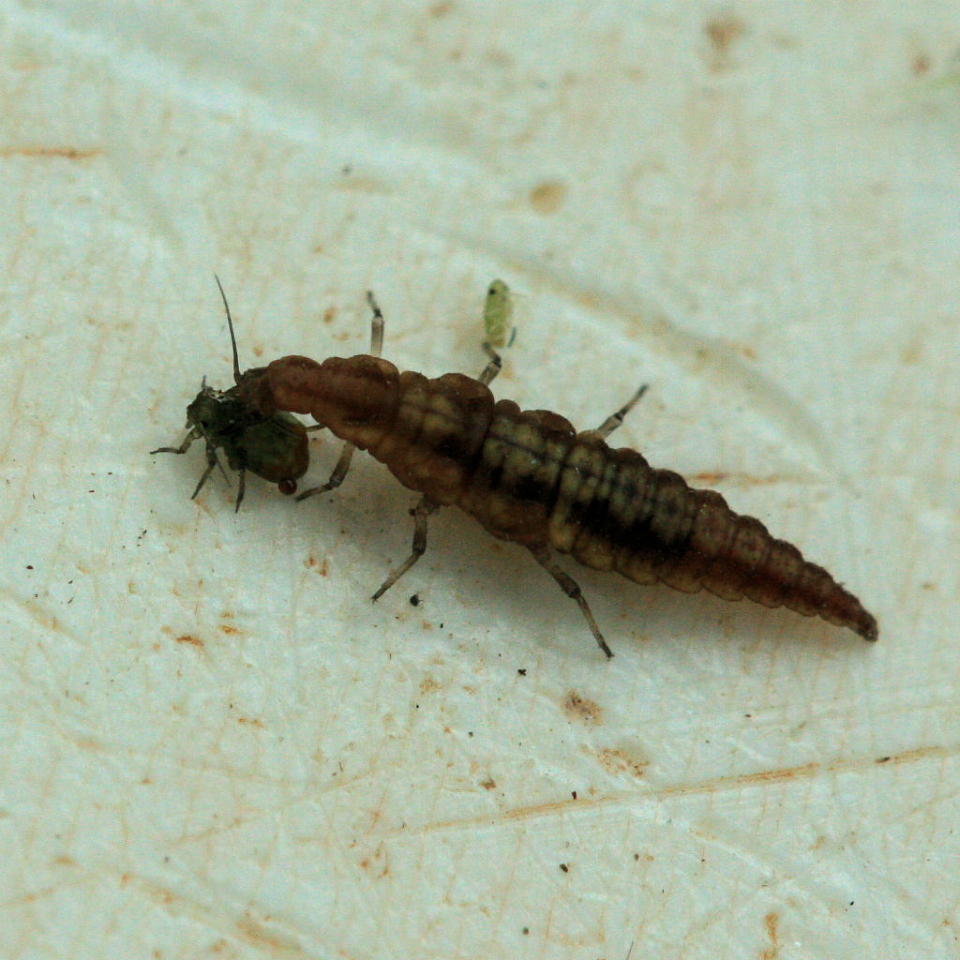
Ladybeetles (Coccinellidae) are some of the easiest to spot. Both adults and their very different looking larvae are active aphid predators, moving through colonies and feeding as they go. Don’t mistake the dark, elongated and often spiky-looking ladybeetle larvae for pests – they can be some of the busiest aphid hunters in the crop.
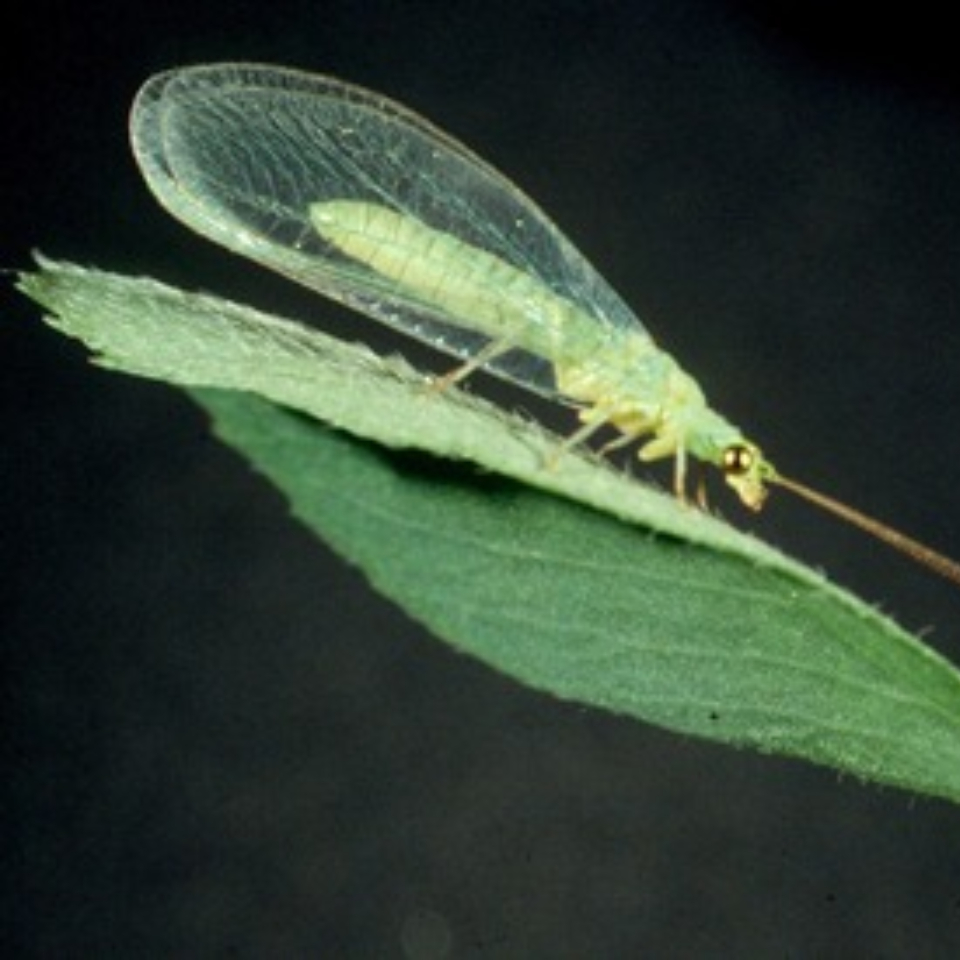
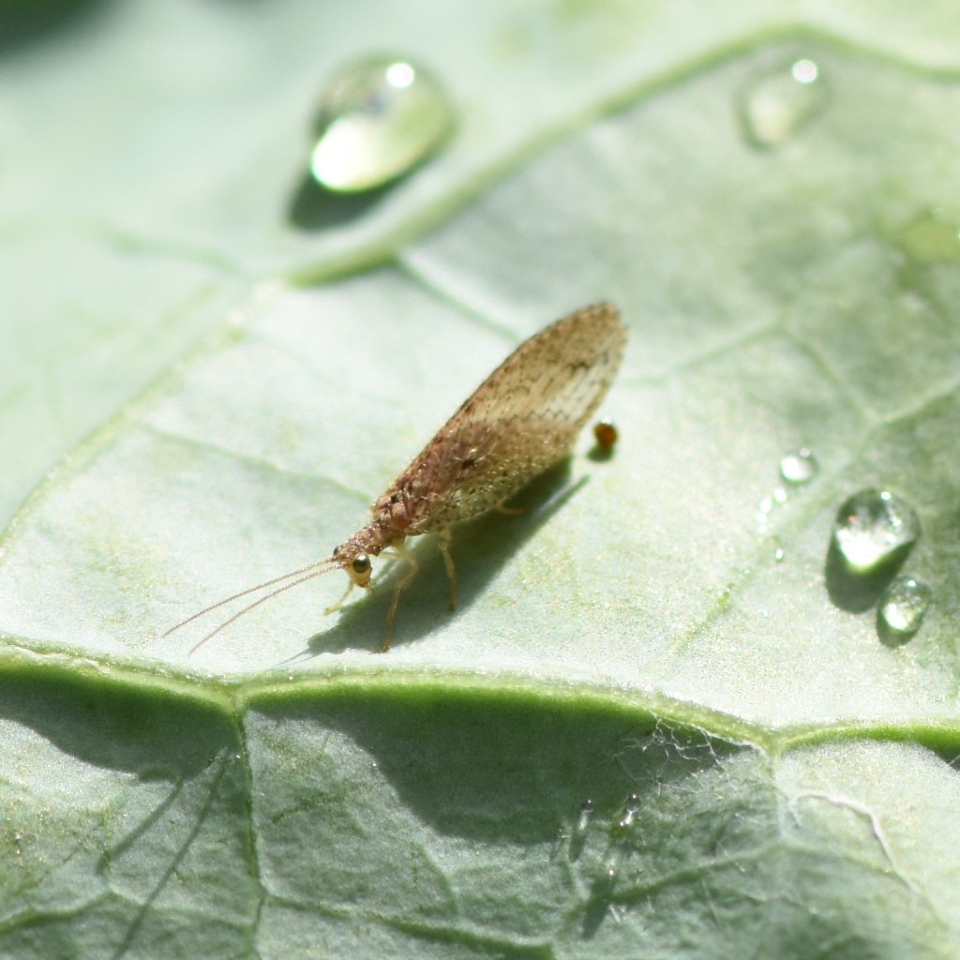
Learn to recognise lacewing larvae. Both green lacewings (Chrysopidae) and brown lacewings (Hemerobiidae) are valuable aphid predators. Their larvae have prominent curved jaws that they use to grab aphids and other soft-bodied insects. The delicate green or brown adults may be easier to notice in the crop, but it’s often the larvae doing much of the aphid-control work.
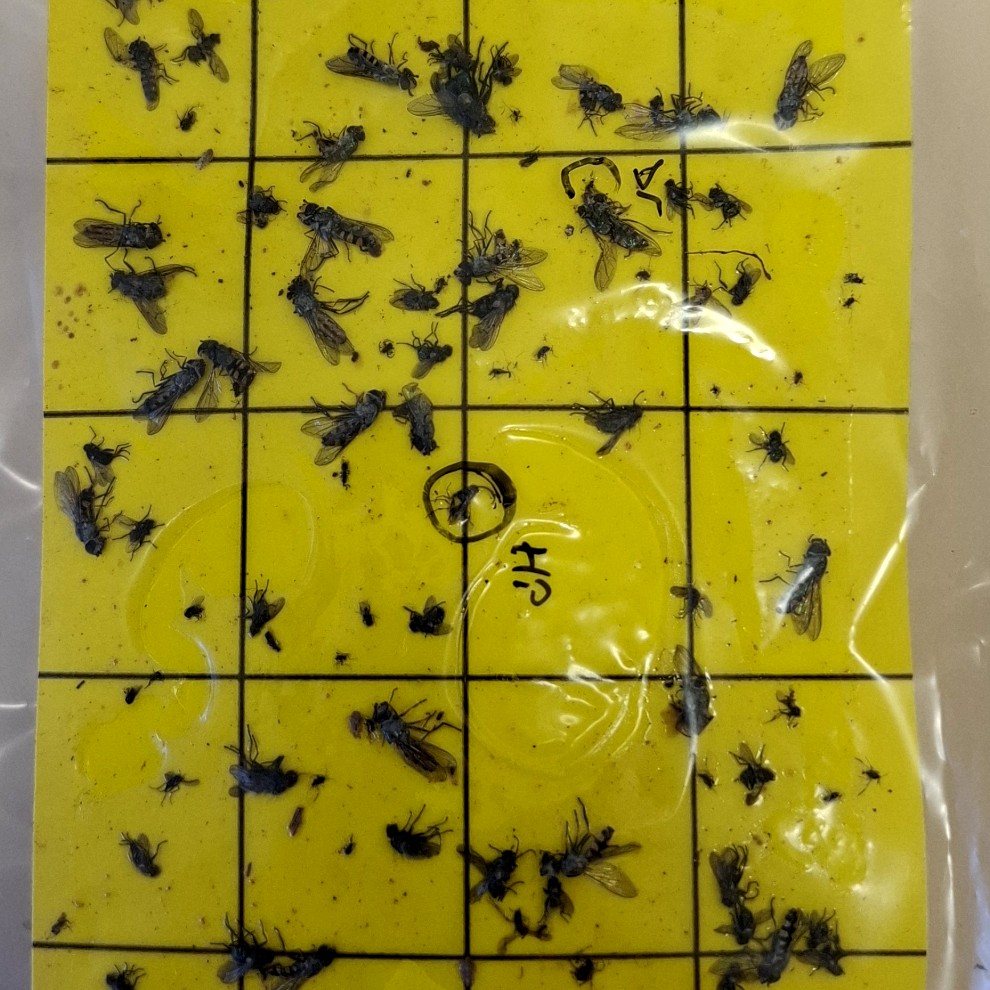
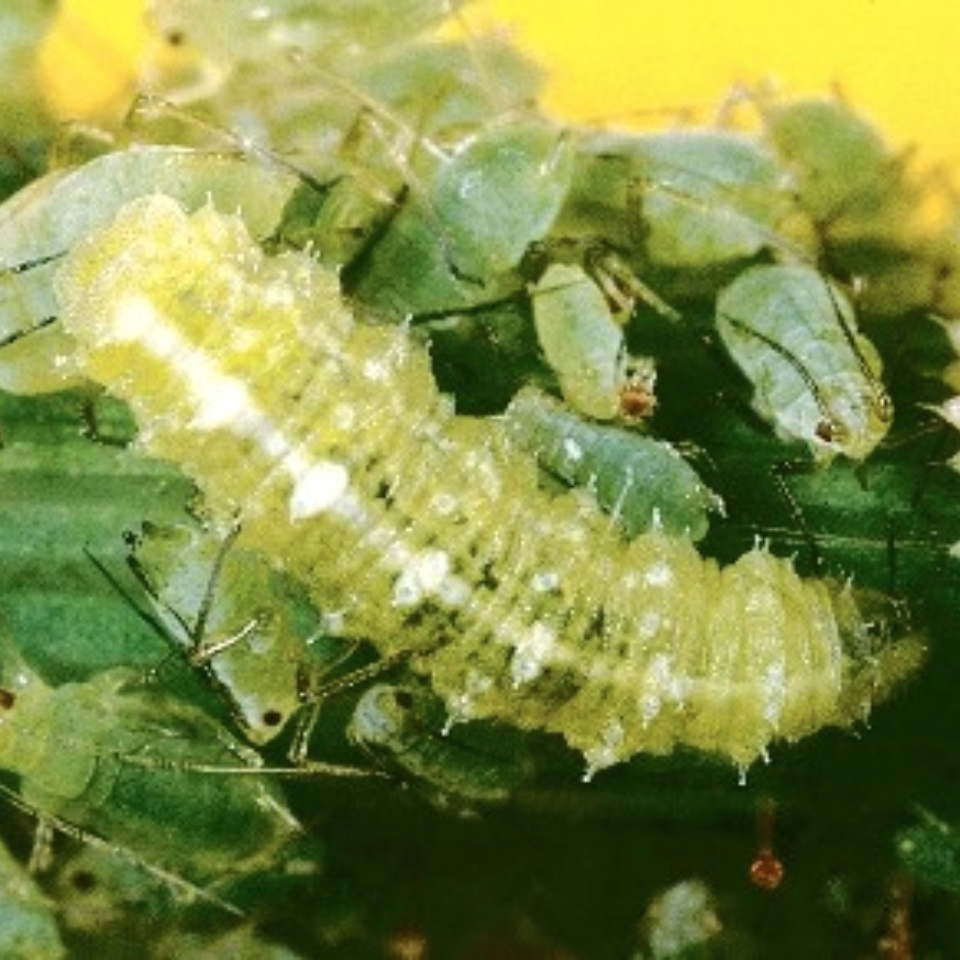
Adult hoverflies (Syrphidae) are easy to recognise, hovering around flowers and are important pollinators, but their larvae have a completely different job. These small, legless, maggot-like larvae move through colonies feeding on aphids – so don’t be too quick to dismiss an unfamiliar larva.
Parasitoid wasps may be much harder to spot, but they leave an obvious clue. Tiny wasps such as Diaeretiella rapae lay their eggs inside living aphids. As the parasitoid develops, the aphid dies and becomes swollen and bronze or golden-brown – what we call a mummified aphid. If you look closely, you may even see a neat round hole where the new adult wasp has emerged.
Finding mummies among an aphid colony is a good sign that parasitoids are at work. Remember that if there are mummies, other aphids that look normal may already be parasitised.
Lastly, there’s another natural enemy getting some help from this season’s conditions. The humid weather has been favourable for insect-killing fungi, and we’ve seen reports of fungal infections spreading quickly through aphid colonies. These naturally occurring fungi can knock aphid populations down surprisingly fast when conditions are right.
If you come across brown, swollen or wet-looking aphids, or aphids covered in visible fungal growth, we’d love to see them – send your photos and observations through to the PestFacts SA team.