
Three to watch in cereals: aphids, cutworms and armyworms
Tuesday 18 August 2026 SARDIPestFacts
Cereal crops are well underway across South Australia, and a few familiar pests are starting to make an appearance.
The PestFacts SA team has received reports this season of oat aphid from Eyre Peninsula and northern Eyre Peninsula, Russian wheat aphid from Yorke Peninsula, cutworms from northern Eyre Peninsula, and armyworms from upper Eyre Peninsula. While all four can turn up in cereal crops, the signs they leave behind and where you need to look for them can be quite different. Knowing a few key clues can make finding the problem much easier.
Oat aphid – look within the canopy
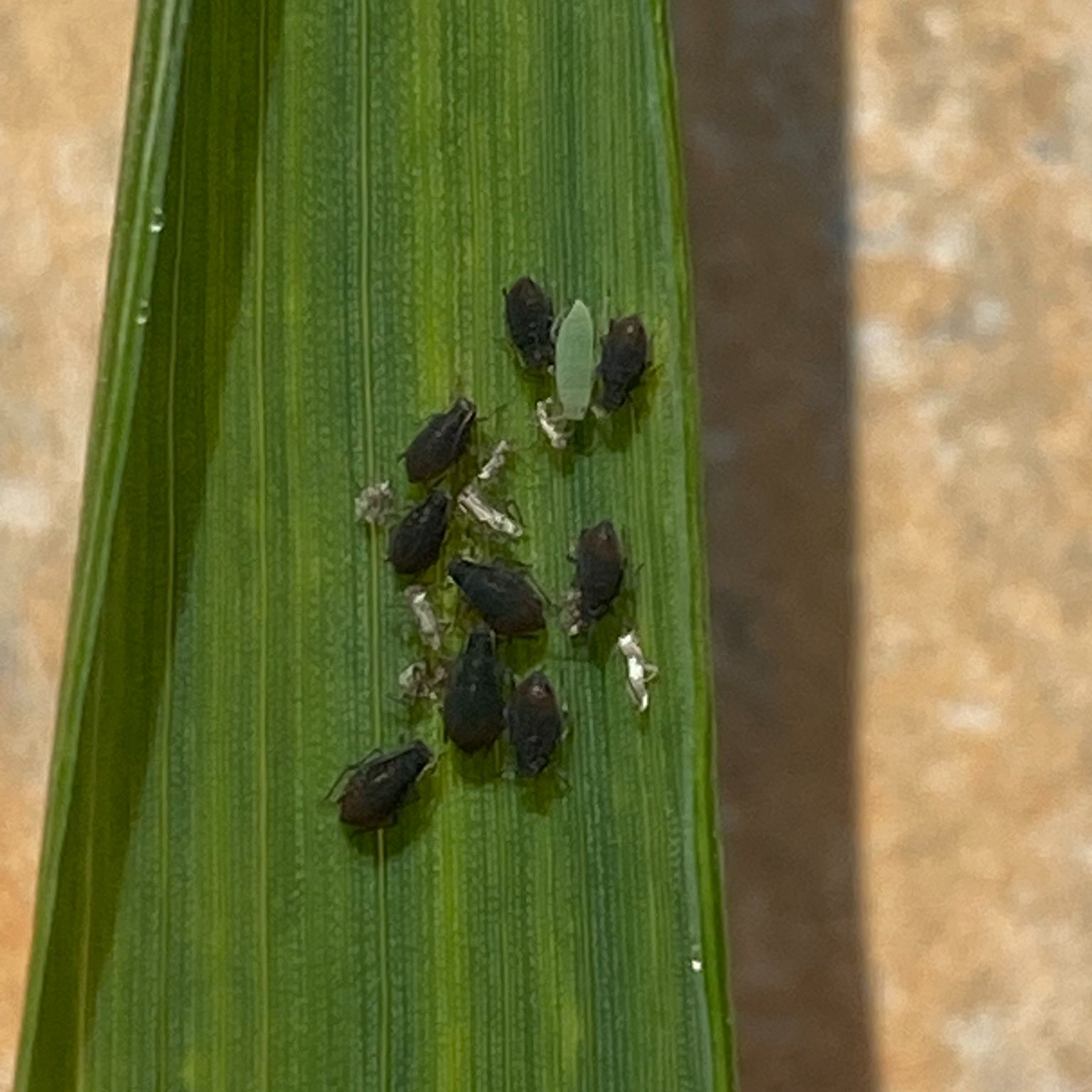
Oat aphids (Rhopalosiphum padi) are usually dark olive-green to almost black, with a characteristic reddish-brown patch around the baseof the cornicles (the two small tubes at the rear of the abdomen). They can be found on wheat and barley, often feeding on leaves and stems within the crop canopy.
Small populations generally cause little direct feeding damage to established crops, but numbers can build when conditions are favourable. Oat aphids are also important vectors of barley yellow dwarf virus (BYDV), particularly when infection occurs early in crop development. Infected plants may appear stunted and develop yellowing or reddening of the leaves, often beginning at the leaf tips and progressing towards the base. Symptoms can occur in patches across the paddock, reflecting where infected aphids have been feeding.
When monitoring, don't just look across the top of the crop. Check plants closely, particularly around the lower leaves and stems, and look for both winged and wingless aphids. Also keep an eye out for ladybird beetles, hoverfly larvae, lacewings and parasitoid wasps, which can all help keep aphid populations in check.
Russian wheat aphid – look for the symptoms first
Russian wheat aphid (Diuraphis noxia) can be easy to miss because colonies often shelter deep within rolled leaves. The aphids are small, pale green and spindle-shaped, with very short cornicles that are difficult to see. A useful identification feature under magnification is the double-tail appearance at the rear of the abdomen.
Often, however, the plant tells you they're there before you see the aphids. Feeding can cause white, yellow or purple longitudinal streaks on leaves, while heavily infested leaves may roll tightly around the aphids. Young plants can become stunted when populations are high.
If you see these symptoms, carefully open affected leaves and inspect the newest growth and areas close to the stem. Keep in mind that other aphid species, and even insects such as earwigs, can shelter inside rolled leaves, so symptoms alone shouldn't be used to confirm Russian wheat aphid.
Crop growth stage is also important when assessing risk. Once cereals are past growth stage 50, and the flag leaf fully emerged (which will already be the case in many paddocks), Russian wheat aphid is generally less able to establish and feed successfully. Migrating adults may still land on plants and cause some characteristic symptoms, but their presence at this stage does not necessarily mean the crop is at risk of significant damage.
Plants disappearing overnight? Look for cutworms
If young cereal plants are being cut off near ground level or seem to be disappearing in patches, cutworms could be responsible.
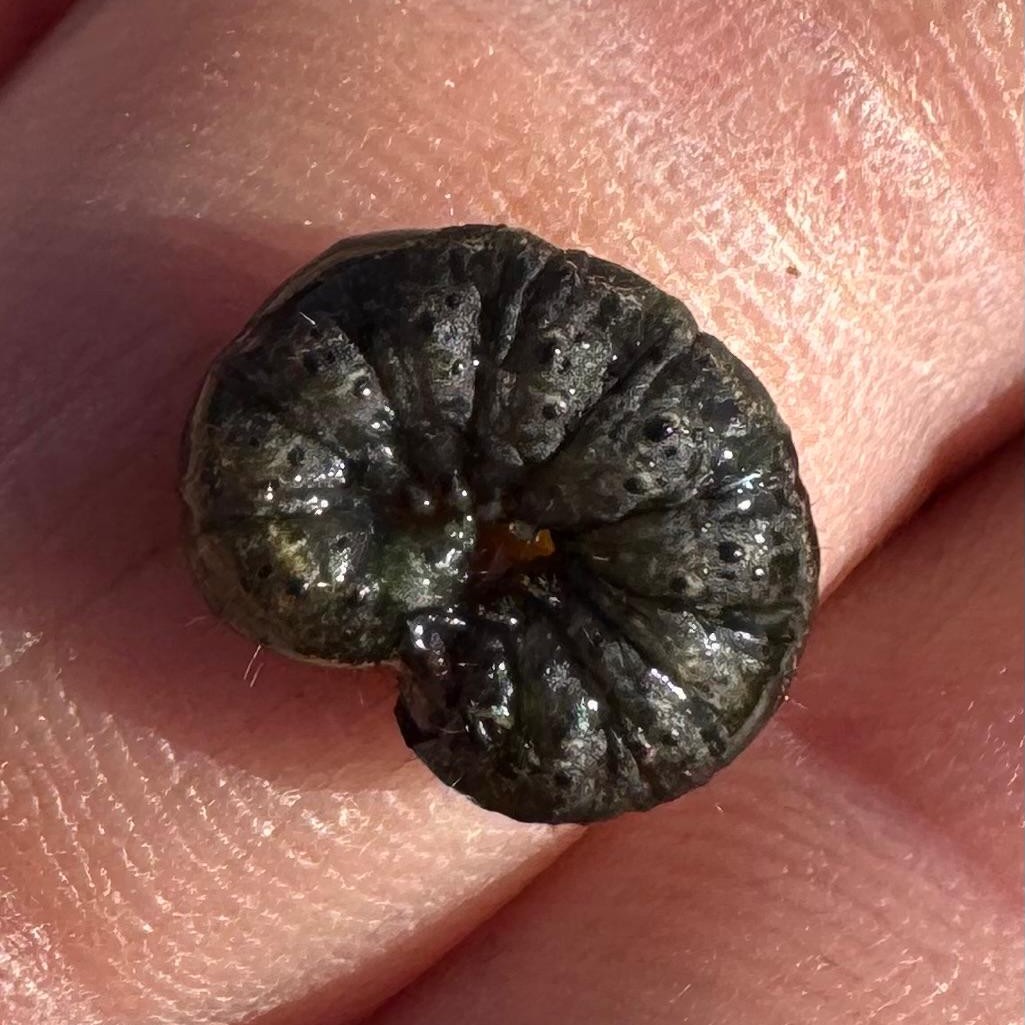
Cutworms are stout, smooth-bodied caterpillars, commonly grey, brown or almost black. One handy clue is their behaviour: when disturbed, they typically curl tightly into a C-shape.
They are mostly nocturnal feeders, which means the caterpillars themselves can be surprisingly difficult to find during a daytime crop inspection. During the day they shelter in the soil beneath clods, stubble, or other plant material close to damaged plants.
Look for seedlings severed at or just above ground level. If you find suspicious damage but no caterpillars, scratch around the soil near affected plants. Checking the paddock around dusk or at night can also make active larvae much easier to find.
Armyworms – small now, but worth keeping an eye on
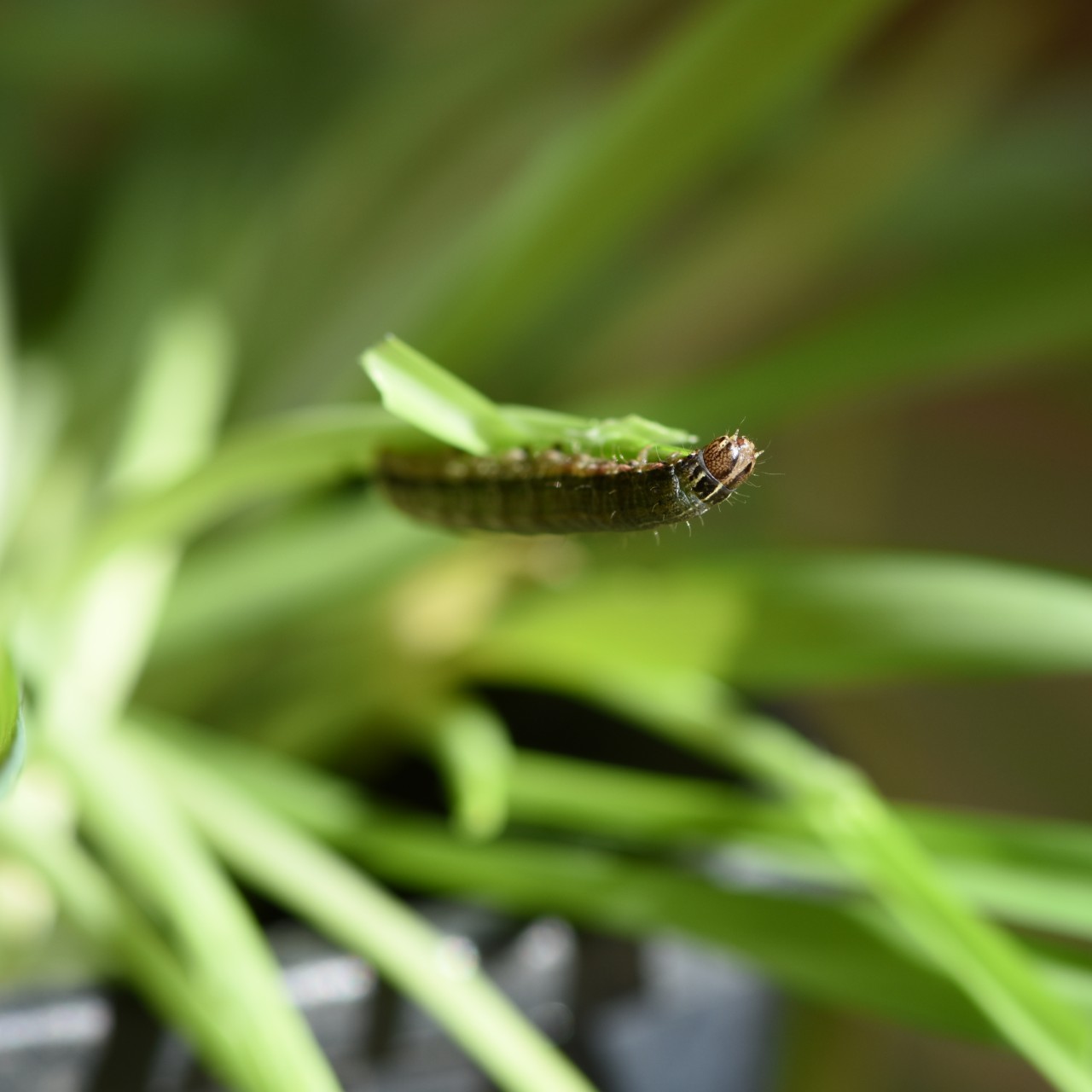
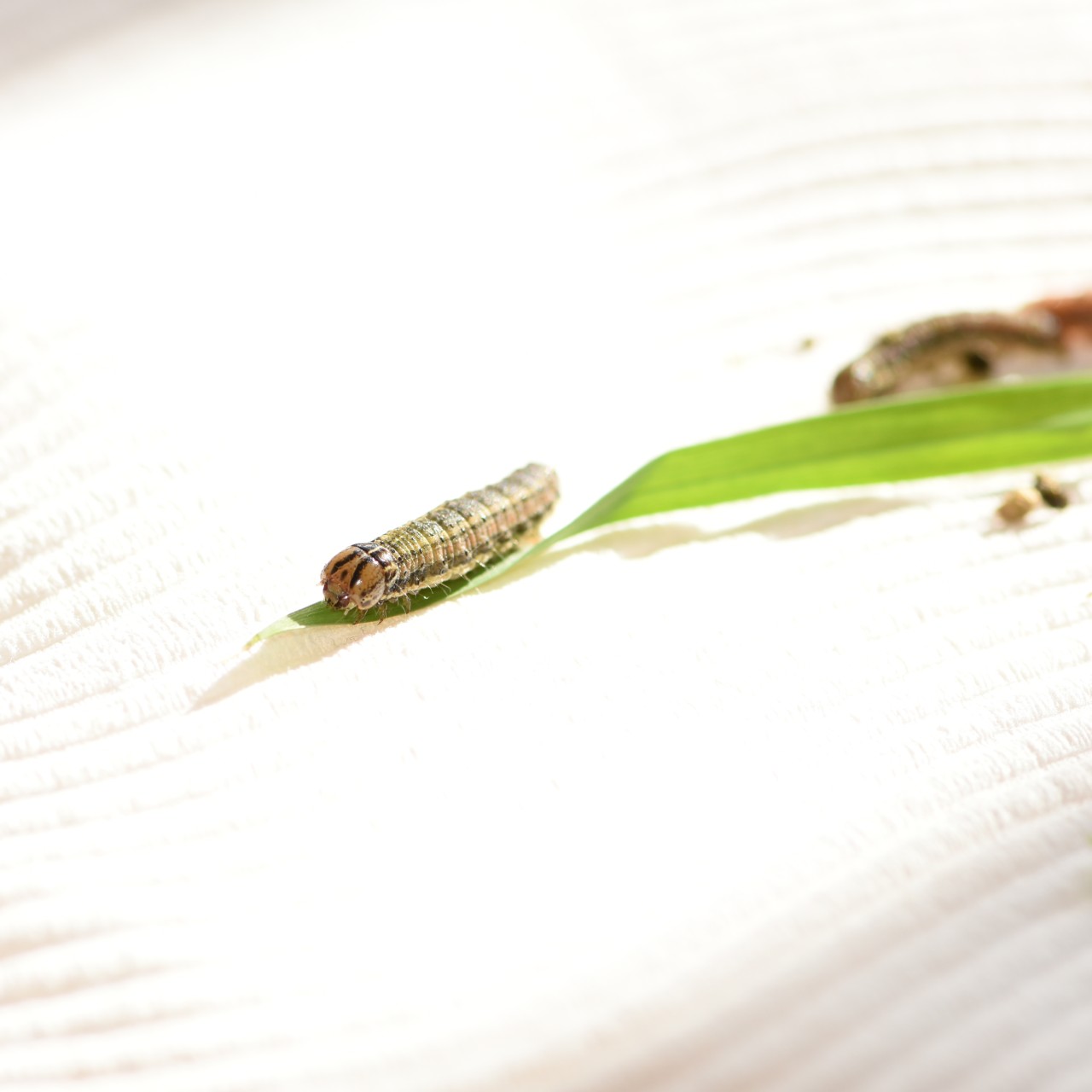
Armyworms are another group of caterpillars worth keeping on the radar in cereal crops. Several species can occur, but larvae are generally smooth-bodied with distinct longitudinal stripes running along the body. Unlike cutworms, armyworms don't typically curl tightly into a C-shape when disturbed.
Young larvae feed on leaves, producing irregular chewing damage that can sometimes go unnoticed within a well-established crop. They are generally more active at night and may shelter around the base of plants, under stubble or within the crop canopy during the day.
Finding a few armyworm larvae now doesn't necessarily mean the crop is at risk, but knowing which paddocks have populations present can be useful later in the season. The greatest concern in cereals generally comes as crops approach maturity, when larger larvae can climb plants and chew through stems immediately below the heads, causing head-lopping and potentially significant grain loss.
One paddock, different clues
These pests are a good reminder that monitoring isn't just about counting insects. Where the damage occurs, what the plant looks like and where the pest is hiding can tell you a lot.
Dark oat aphids clustered on leaves and stems, pale Russian wheat aphids hidden inside streaked and rolled leaves, seedlings cut off by cutworms, or striped armyworm larvae chewing foliage each leave their own clues.
Before considering control, confirm which pest is present, assess its abundance and distribution, and consider crop stage and the level of damage. And don't forget to look for beneficial insects and signs of natural control—they may already be helping keep pest numbers down.
Seeing something unusual in your cereal crops? Send your observations and clear photos to the PestFacts SA team. Reports from growers and agronomists help us track pest activity across South Australia and keep the industry informed.