
Back to the future for destructive wheat pathogen raised from 50-year time capsule
Thursday 5 November 2026 SARDI

Researchers at the South Australian Research and Development Institute (SARDI) Plant Research Centre will apply their scientific expertise in an attempt to unlock the secrets of a wheat fungus sample suspended in a time capsule for the past 50 years.
Among the items stored in the 1976 time capsule at the then-Roseworthy Agricultural College grounds (now Roseworthy Campus, part of Adelaide University) were two vials containing Zymoseptoria tritici, a fungal pathogen collected in 1976 that causes Septoria tritici blotch (STB), a major disease of wheat crops today.
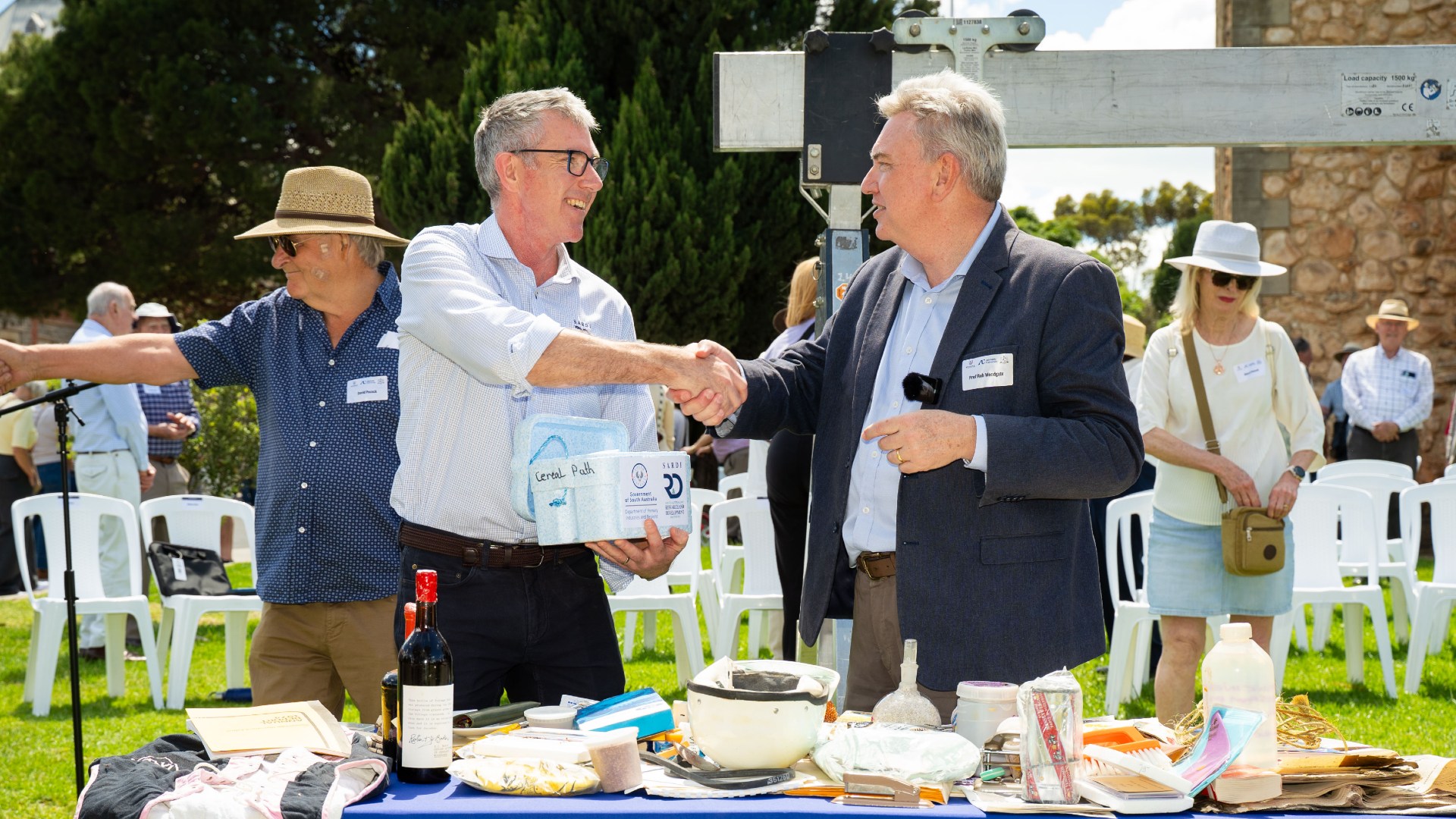
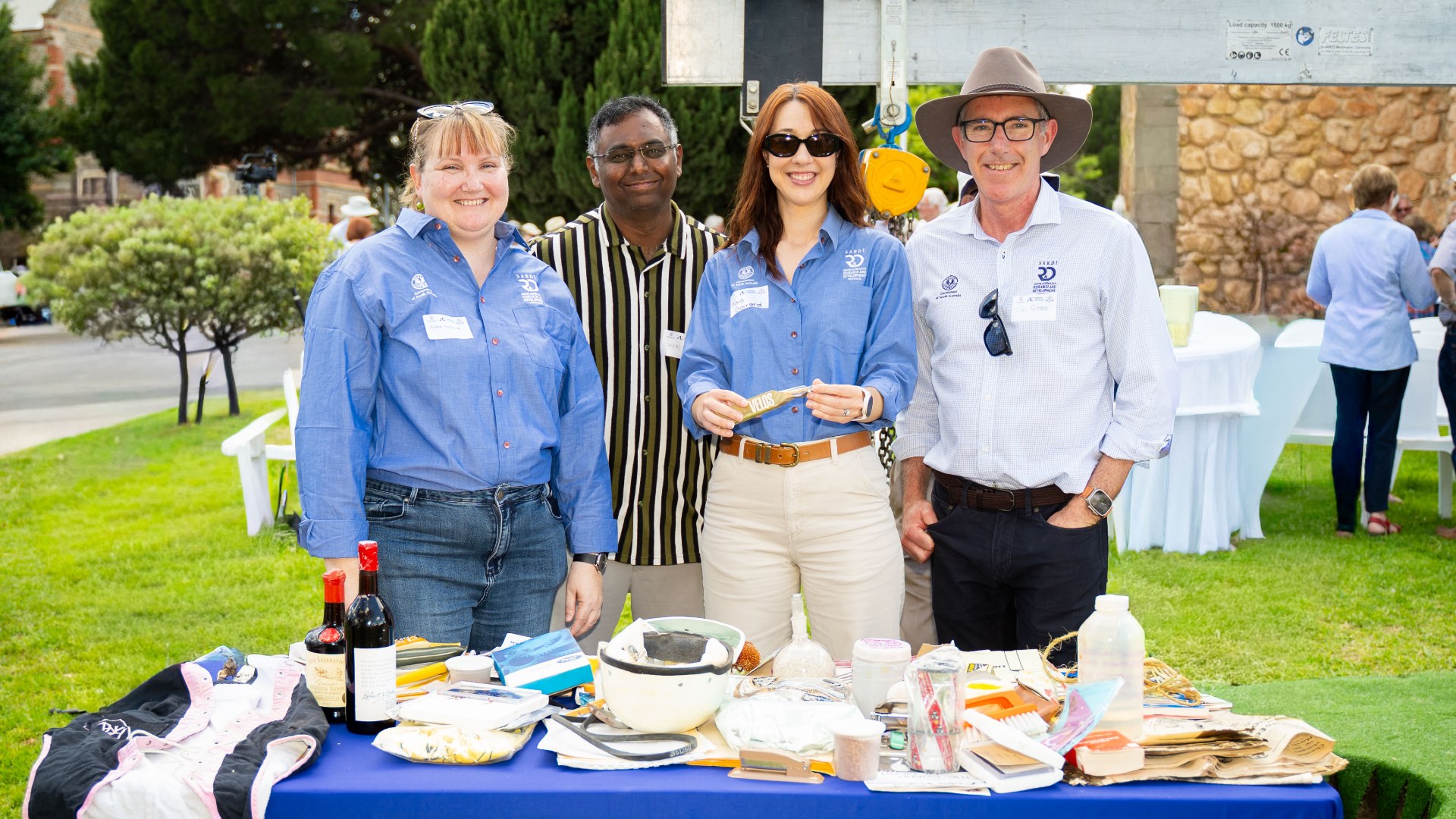
The historic samples contained in tiny glass vials were handed over to SARDI by the Adelaide University at the official time capsule unearthing and retrieval ceremony on Saturday 17 October.
With the samples now at the Plant Research Centre, excitement is building as SARDI scientists prepare to undertake various scientific tests to discover if the 50-year-old Septoriasamples are viable – and what it could teach today’s scientists.
Robin Wilson, a plant breeding consultant who is now in his 70s and still working in Western Australia, provided the samples for the capsule during his tenure with Roseworthy’s Wheat Breeding Program in the 1970s.
"Septoria tritici blotch is one of the most important foliar diseases affecting wheat in southern and eastern Australia," Mr Wilson said.
"In the 1970s it was on the rise, but we were very poorly prepared for it, and I was keen to see if the spores remained viable in 50 years’ time."
SARDI plant pathologist Dr Tara Garrard praised Mr Wilson for considering a future-focused scientific investigation into an emerging disease of the '70s.
"To have the foresight in the 1970s to think, 'Well, we don't really know what to do about this disease and this pathogen at the moment but we're starting to see it everywhere – let's store it for half a century and see how it sits within our farming system in the future' is remarkable," Dr Garrard said.
"I’m excited by what we might find."
Here and now
Fast forward to 2026 and Septoria tritici blotch (STB) is one of the major diseases in the cereal-growing regions of Australia including in South Australia where the estimated grain production for 2026–27 is 11.6 million tonnes, 32% above the 5-year average.
STB is a fungal pathogen that kills heathy leaf tissue in wheat crops, leaving behind lesions containing spores. It’s a rain-splash disease, meaning that spores are released when the rain hits infected leaves, causing further infection higher in the plant’s leaves – and beyond.
It survives between seasons on infected wheat stubble and spores are released early in the growing season, infecting new crops.
"We know that this destructive process is a major contributor to both yield loss and grain quality loss and that the pathogen has adapted significantly in the last 15 years in particular," Dr Garrard said.
"The other thing that we've seen is the development of fungicide resistance. We've got a couple of different genetic mutations prevalent in Australian septoria populations that provide a mechanism for the fungus to continue infecting plants even after being treated.
"In short, Mr Wilson’s instincts were good. Septoria is very much a problem in 2026."
Science to find a way
SARDI plant pathologists will be the first to undertake tests to understand whether the historical Zymoseptoria tritici samples remain viable.
To do this, samples of the historic diseased leaf tissue will be placed on a growth medium (agar) in a sterile petri dish before being subjected to optimum temperature and moisture conditions to encourage spores to emerge.
If this stage is successful and enough fungus can be cultured, there would be an opportunity to inoculate some varieties of wheat under controlled conditions to bring the 50-year-old disease back to life.
Professor Tim Sutton, Research Director Crop Sciences at SARDI, said foliar diseases remain one of the most significant challenges to grain production across southern Australia.
"This rare opportunity to compare a historical pathogen sample to those prevalent today in wheat crops, could strengthen our understanding of fungal disease evolution and importantly for growers, provide insights into future management strategies.
"The real value will be turning what we might learn into practical outcomes for growers.
"The findings could help refine disease monitoring and prediction of emerging risks, guide plant breeding priorities and inform more targeted management strategies to protect crop yields and grain quality.
"SARDI scientists ensure grain growers have access to trusted, independent scientific knowledge.
"Translating discoveries like this into practical advice supports informed decisions on farm and helps safeguard the profitability and sustainability of South Australia’s grains industry.
"It also highlights the importance of sustained investment in agricultural research, where the value of scientific collections and knowledge can continue to grow over decades."