
Opening doors: Inaugural SARDI Aboriginal Rangers workshop a success
Thursday 12 November 2026
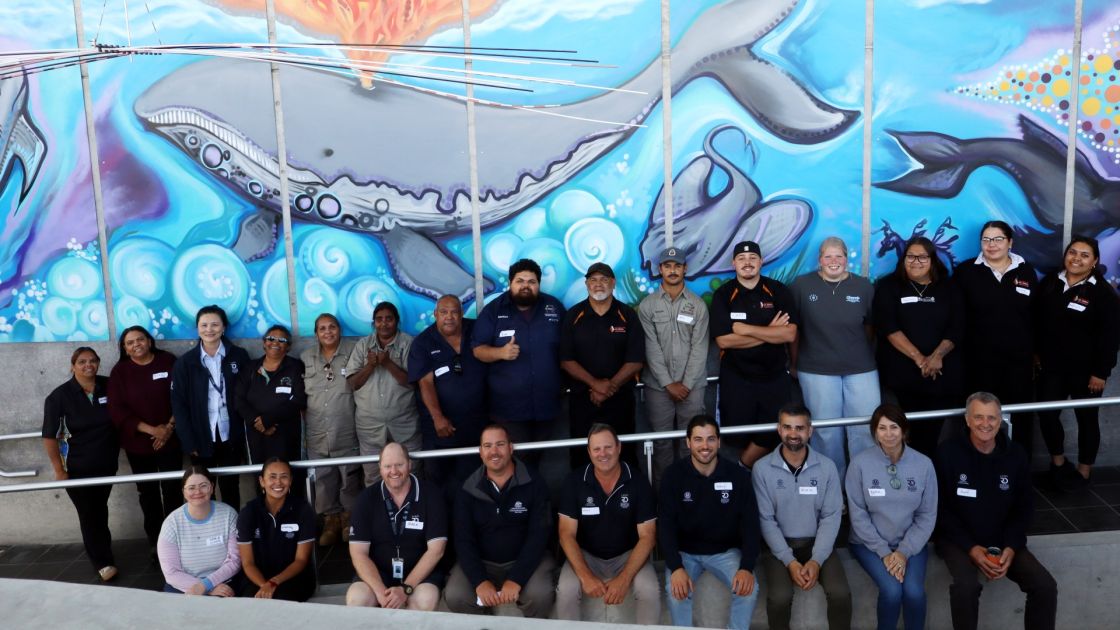
After working with SARDI scientists to monitor Pondi (Murray cod), a fish of profound cultural significance to First Nations peoples in South Australia (SA) and a living symbol of their enduring connection to Country, the award-nominated SARDI Flow-MER Pondi Monitoring Program has continued to strengthen its partnership with Aboriginal leaders, with 14 Rangers, Elders and community members attending a two-day knowledge-sharing workshop in Adelaide.
The participants of the inaugural SARDI Aboriginal Rangers Workshop, which included 14 Rangers, Elders and community members from across the Lower Murray and Coorong, Lower Lakes, and Murray Mouth (CLLMM) region along with staff from the Commonwealth Environmental Water Holder, PIRSA and SARDI, taking a group photo in front of the mural of Kondili (the whale) at the South Australian Aquatic Science Centre at West Beach.
For First Nations peoples who call the Lower Murray and Coorong, Lower Lakes, and Murray Mouth (CLLMM) area at the end of the Murray River in SA home, Pondi (Murray cod) holds deep cultural significance.
Pondi plays an important role in their creation story of the Murray River, and of all fish.
Over recent decades, Pondi sightings in the Lower Murray have declined, causing concern for river communities.
Within the Commonwealth Environmental Water Holder (CEWH)’s science program, integration of cultural knowledge with western science has informed the co-design of Pondi monitoring. It is an ongoing partnership between the Ngarrindjeri Aboriginal Corporation (NAC), River Murray and Mallee Aboriginal Corporation (RMMAC), (CEWH), and South Australian Research and Development Institute (SARDI).
Finding Pondi
The collaborative Pondi monitoring between SARDI scientists and First Nations Rangers began in February 2025, complementing SARDI’s long-term monitoring of fish populations in the SA Murray River since the early 2000s. During this year, Rangers from NAC and RMMAC worked alongside SARDI Inland Waters researchers aboard the team's electrofishing boat. Together they surveyed multiple sites between Renmark and Swan Reach in the SA Murray River.
It wasn't long for the Rangers to witness the presence of Pondi; netting fish of various sizes, undertaking critical measurements, collecting tissue samples, applying tags and returning the fish to the water.
To share the work with the wider First Nations community, the team hosted a Pondi electrofishing demonstration day during the Pondi monitoring week, attended by more than 50 First Nations Elders and community members. For some Elders, the Pondi netted that day were the first they'd seen in more than 60 years. Guided by Elders, another electrofishing demonstration was conducted in July 2025 to engage First Nations students from four Riverland and Murraylands high schools. Engaging young people in learning about Pondi monitoring and fish research helps strengthen cultural connections to Country and supports the next generation of custodians to care for native fish and river health.
The Pondi monitoring program continues, with the second year of monitoring conducted in May 2026, and the third year’s work planned for May 2027. With strong support by Flow-MER Cultural Advisors and First Nations Elders, a third electrofishing demonstration targeting primary school students is also planned for May 2027.
Deepening connections through culture and science
Strong interest from RMMAC and NAC Rangers in the western science approaches for Pondi and other fish research led to development of a two-day skills and knowledge workshop designed to deepen scientific and cultural understanding.
14 Aboriginal Rangers, alongside representatives from CEWH, travelled to Adelaide where they joined the SARDI team at the South Australian Aquatic Sciences Centre (SAASC) at West Beach.
Day one opened with a warm welcome from SARDI’s Flow-MER Team Lower Murray and CLLMM Area Leader Associate Professor Qifeng Ye, followed by PIRSA's Aboriginal Engagement General Manager Vicky Welgraven, who provided rangers an insight into PIRSA’s Aboriginal engagement goals.
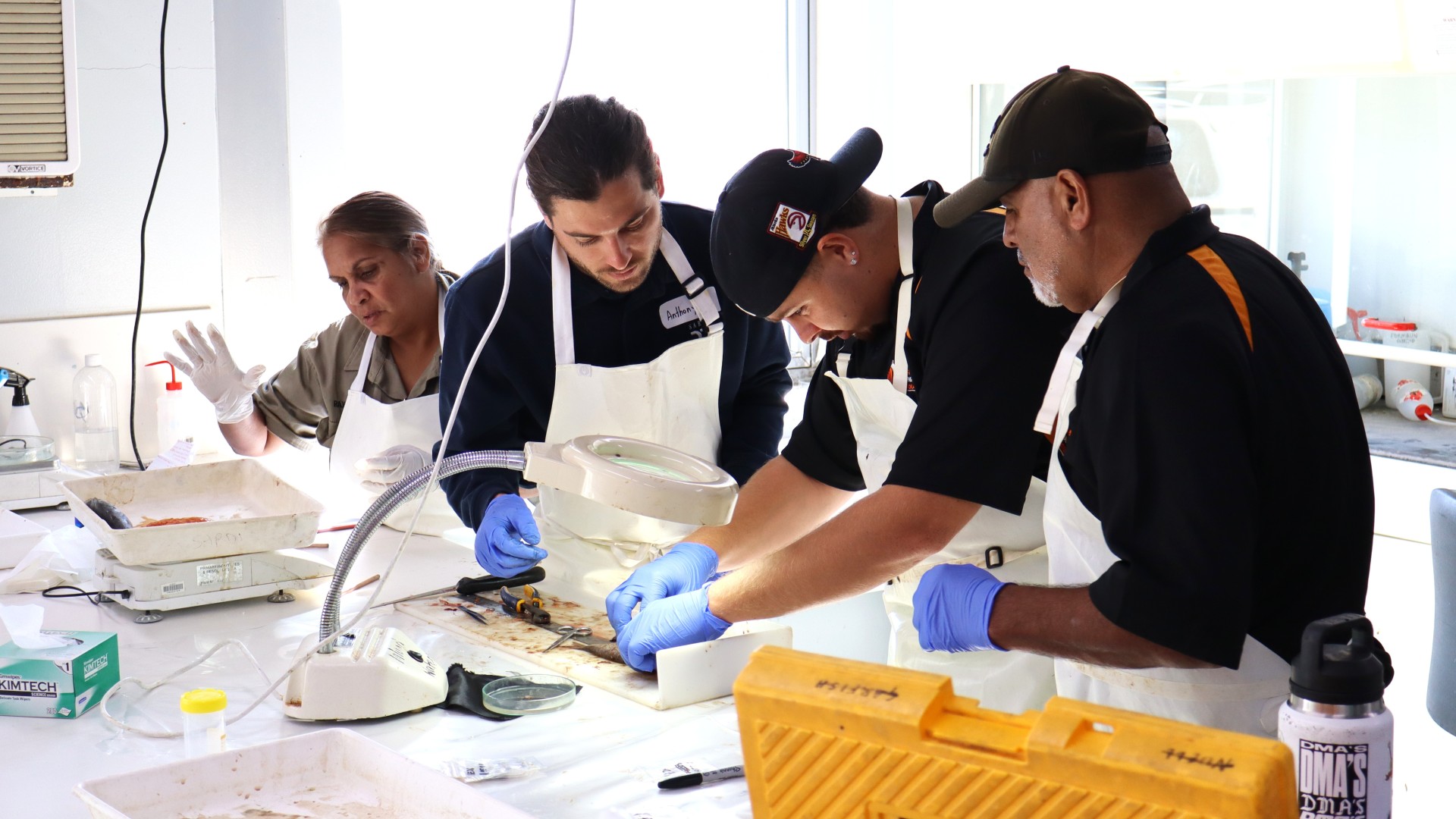
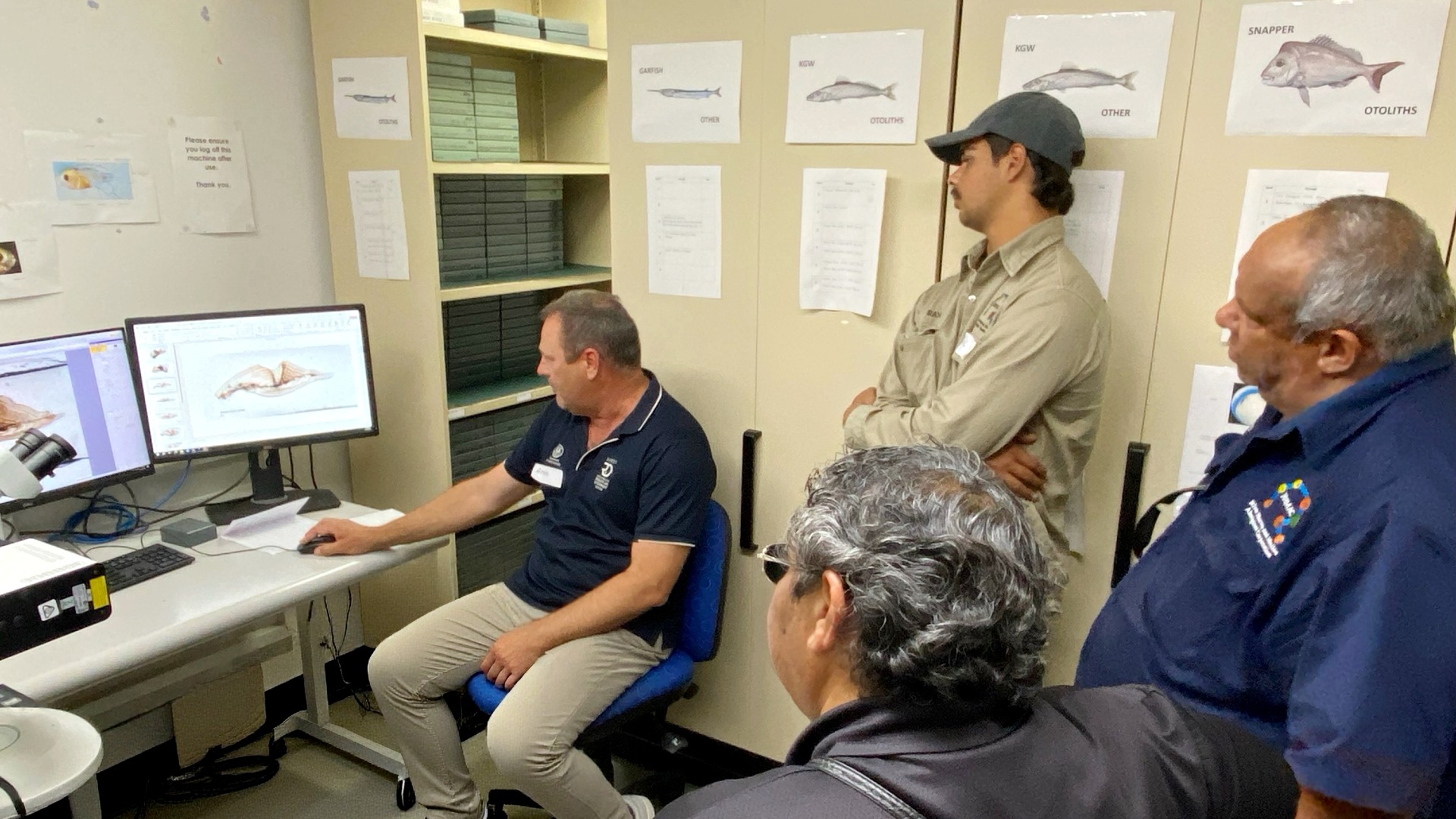
Attendees toured the SARDI facility and then, were divided into three groups and rotated through three interactive learning stations/laboratories. Under the guidance of SARDI researchers, participants worked through a series of hands-on excercises: fish sample processing — measuring specimens, recording data, extracting otoliths (ear bones), collecting tissue samples for DNA analysis, and examining otolith sections under the microscope to reveal a fish's age and growth history.
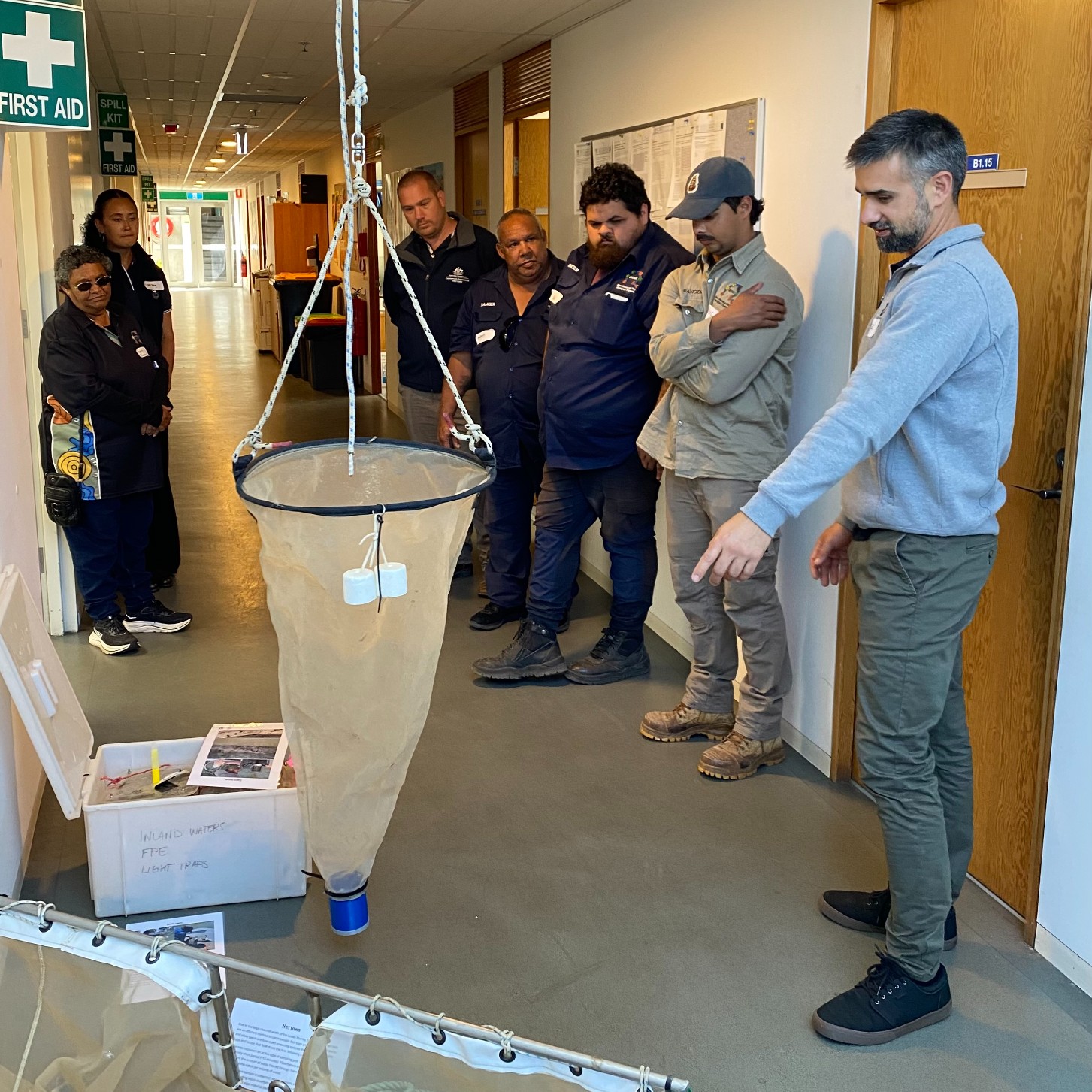
Rangers also practised tagging techniques and learned how different tags allow individual fish to be tracked over time. They learned how otolith microchemistry analysis could inform their location at birth and migratory history across river catchments. Rangers discovered what nets and traps are used to catch fish eggs and larvae and how to differentiate species based on key features.
The day gave participants a first-hand understanding of a range of fish research techniques and how the data gathered on Country is turned into knowledge that directly informs environmental flow and conservation management.
Day two started with a warm Welcome to Country by Aunty Margaret Brodie at Yitpi Yartapuultiku Aboriginal Cultural Centre in Port Adelaide, then the participants were were led on a site tour by Yitpi Cultural Ranger Willis Daveson, culminating with a yarning circle where Rangers, along with SARDI and CEWH program partners, were able to reflect on the most valuable outcomes of the workshop in a culturally safe,respectful and inclusive way.
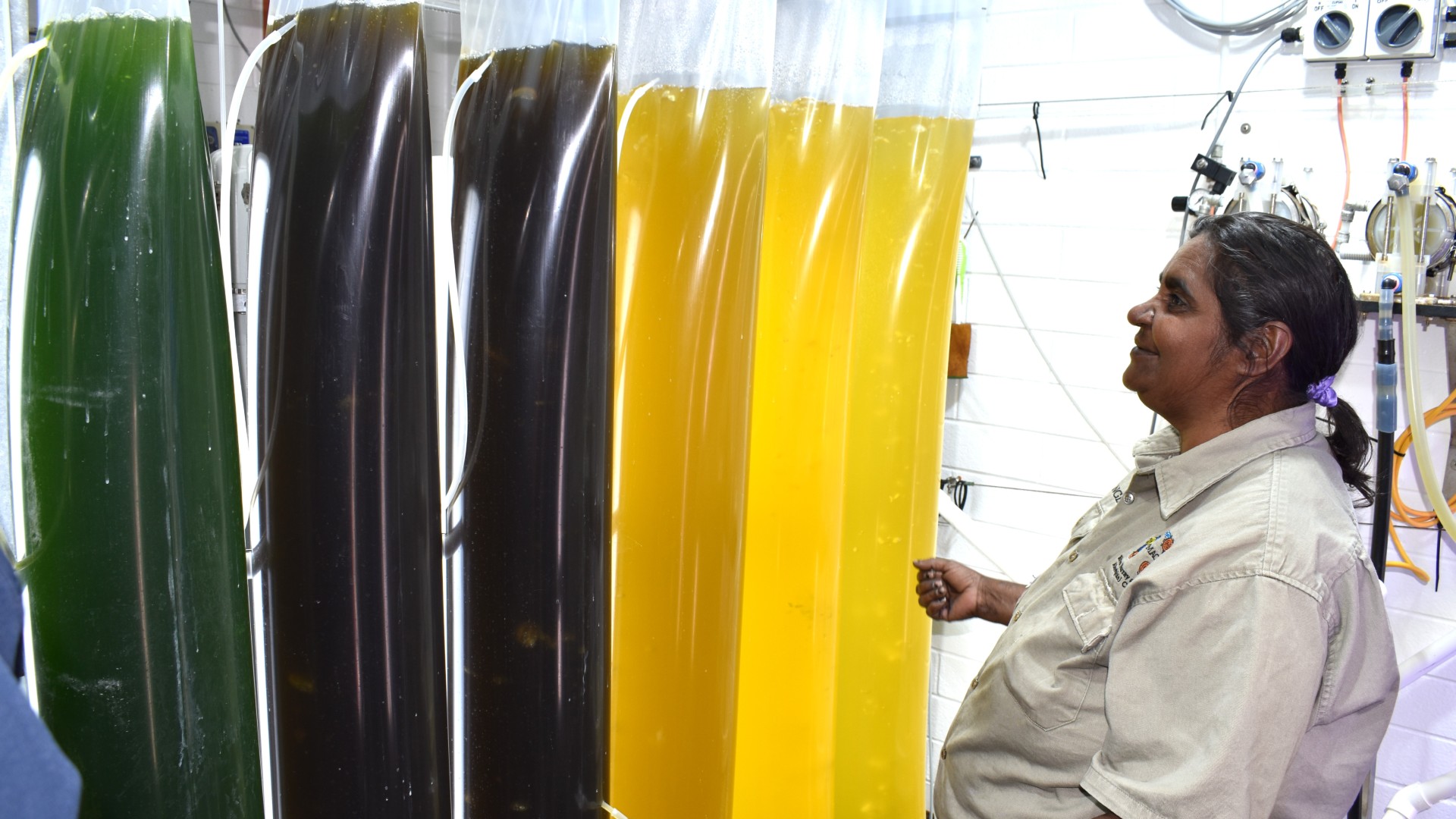
‘It’s this sharing and caring of our knowledges that I love’
Feedback from all the Rangers was overwhelmingly positive.
NAC The Living Murray (TLM) Coordinator Brad Hartman, a Ngarrindjeri and Boandik man, says he absolutely loved learning how otoliths are used by fisheries to track fish age, growth, stock structure and environmental history.
“We can use this science to identify hotspots and where we should be doing our fish monitoring surveys back home,” he says.
Similarly, RMMAC Wetlands Ranger Kaleb Karpany, a Ngarrindjeri man, says it was an eyeopener to learn about the other side of fisheries management.
“There’s so much high-tech science and expertise. It’s really great stuff and I’m eager to learn more,” he says.
RMMAC Rangers Team Leader Lucille (Lucy) Sumner, a woman of the First Peoples of the River Murray and Mallee, says it was fantastic to have this opportunity especially for the next generation of Aboriginal leaders.
“It’s great to have the young ones come along and share in our knowledges,” she says.
“The river doesn’t disconnect. People don’t disconnect from the river. It’s this sharing and caring of our knowledges that I love.
“I’d love to see this program grow bigger and brighter.”
Similarly, RMMAC Elder Aunty Sheryl Giles, a Ngangruku and Ngintait woman, says the workshop showcased the possibility of what a shared future could look like.
“It’s keeping the doors open for our kids. It’s showing them there are pathways,” she says.
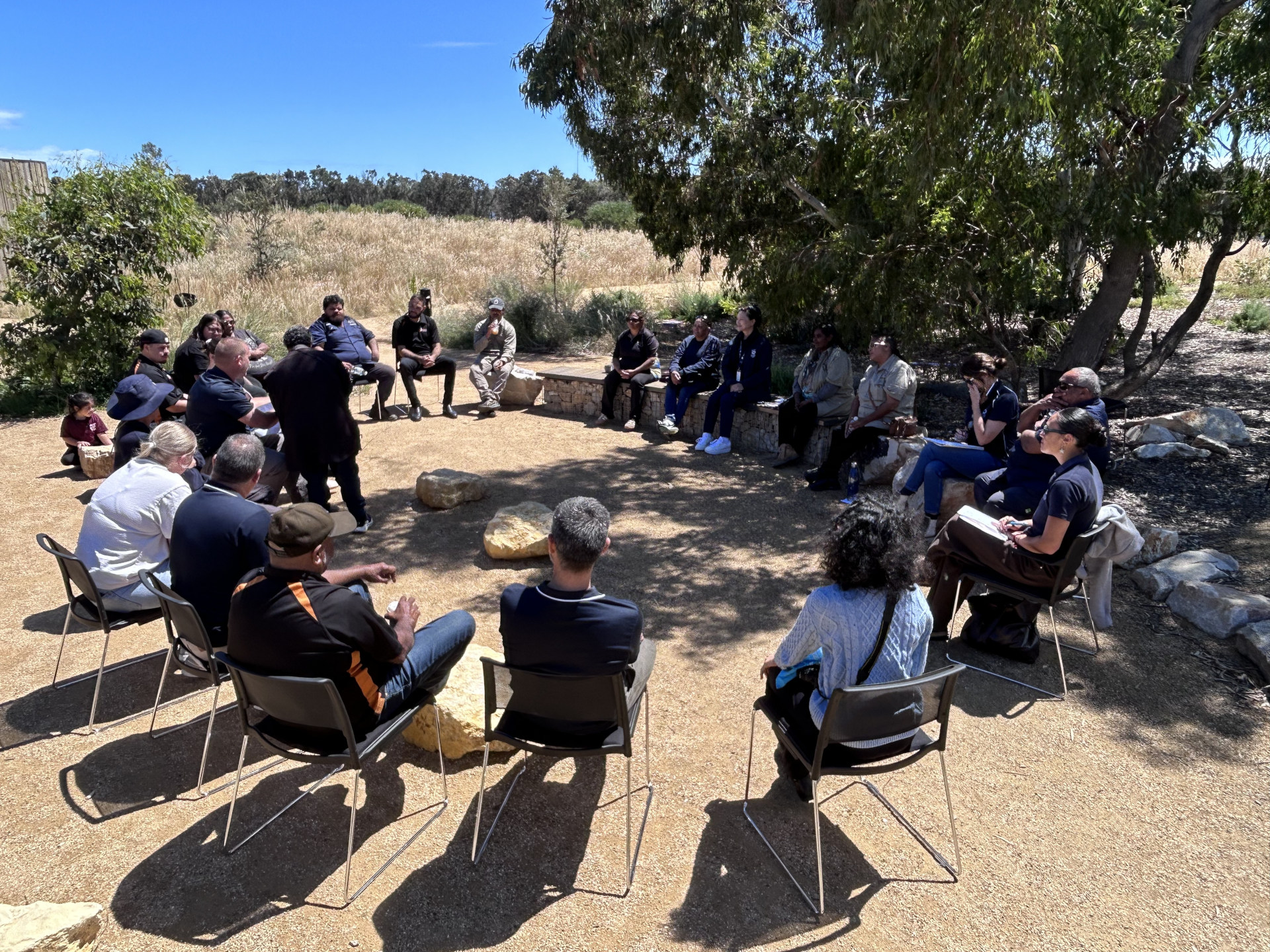
Associate Professor Qifeng Ye says the Flow-MER Pondi Monitoring Program has been a pioneering initiative, showcasing how strong partnerships can be built between different cultural groups, including NAC and RMMAC, and across government agencies such as CEWH and PIRSA-SARDI. The program has enabled Aboriginal Rangers from different Nations to work collaboratively with scientists and water managers towards a shared goal.
“This work we do together is really important. It integrates the science from SARDI research and the Flow-MER Program with local cultural knowledge to inform adaptive management of environmental water to achieve better outcomes for rivers, fish and communities. Together, we identify priority questions and combine science and cultural knowledge to generate insights that support informed decision making to improve river ecosystem and native fish populations,” she says.
This year, PIRSA celebrated the release of the National Statement on First Nations in Agriculture, Fisheries and Forestry, which strengthens the national, state and local commitment to:
- respect Indigenous Knowledges, rights and cultural authority
- support First Nations peoples to explore their own career and economic goals
- recognise the importance of long-term stewardship of Country.
Award-nominated science program demonstrates what can be achieved together
The strength of this Pondi-led partnership and the program's growing success, has been recognised in the 2026 SA Science Excellence + Innovation Awards in which it's one of three finalists in the Aboriginal and Torres Strait Islander STEMM Award category.
Winners of the 2026 SA Science Excellence + Innovation Awards will be announced on Thursday 12 November at the Adelaide Entertainment Centre.