
Blue Carbon Research to Safeguard Marine Diversity and Function in Exmouth Gulf 2026
Date
12th March–24th March 2026
Background
Exmouth Gulf is one of Australia's most important coastal marine environments, supporting fisheries, biodiversity, tourism and significant blue carbon ecosystems. Seagrass meadows, macroalgal habitats, mangroves and saltmarshes play an important role in storing carbon, supporting marine life and maintaining healthy coastal ecosystems.
Despite their importance, many of these habitats remain poorly studied, particularly in the eastern Gulf. Increasing pressures from climate change, marine heatwaves and coastal development highlight the need for improved baseline information to support conservation and management.
This voyage brought together researchers from CSIRO and the Department of Biodiversity, Conservation and Attractions (DBCA) to investigate the distribution, condition and ecological function of blue carbon habitats throughout Exmouth Gulf. The findings will support future monitoring, marine planning, climate adaptation and conservation initiatives across the region.
Voyage
Fieldwork was conducted aboard the RV Naturaliste across more than 100 sites throughout Exmouth Gulf. Researchers surveyed seagrass meadows, macroalgal habitats, pen shell beds, and adjacent mangrove and saltmarsh environments to better understand how these ecosystems contribute to biodiversity, productivity and long-term carbon storage.
Scientific activities included underwater habitat surveys, diving assessments, sediment coring, biological sampling, water quality monitoring and habitat mapping. Standardised sampling methods were used to measure vegetation cover and biomass, assess benthic invertebrate communities, investigate food-web relationships and collect sediment samples for carbon stock analysis.
The voyage also documented previously undescribed razor clam (Pinna spp.) reefs within the southern Gulf. Preliminary observations of these unique habitats included estimates of population density, size structure and reef distribution, providing valuable information for future ecological studies and conservation planning.
Favourable weather conditions allowed most planned activities to be completed successfully. Extensive photographic and video records were also collected throughout the voyage to support future outreach, education and public engagement activities.
Outcomes
The voyage delivered one of the most comprehensive recent assessments of blue carbon ecosystems within Exmouth Gulf. Researchers collected extensive biological, ecological and spatial datasets that will improve understanding of habitat condition, ecosystem connectivity, productivity and carbon storage processes.
The surveys confirmed the importance of seagrass and macroalgal habitats as key components of Exmouth Gulf's marine environment and established important baseline information for future monitoring. The work also identified areas where marine vegetation has expanded or declined, contributing to a better understanding of how ecosystems respond to environmental change, including marine heatwaves and other climate-related pressures.
Samples collected during the voyage are now undergoing laboratory analysis to estimate biomass, productivity, carbon stocks and food-web relationships. These results will support future scientific publications, conservation planning, restoration initiatives and blue carbon research programs across Western Australia.
The project strengthened collaboration between CSIRO, DBCA and other partners while generating valuable information for government agencies, Traditional Owners, researchers and local communities. Ultimately, the voyage provides knowledge that will help guide the long-term stewardship and protection of Exmouth Gulf's globally significant marine ecosystems.
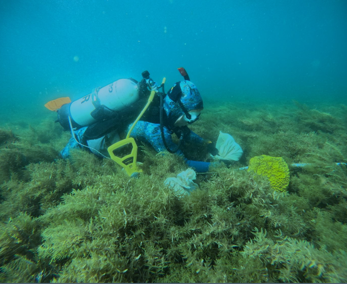
Diving surveys undertaken at several sites along within the eastern gulf to quantify the health and biomass of macroalgae and seagrass ecosystems
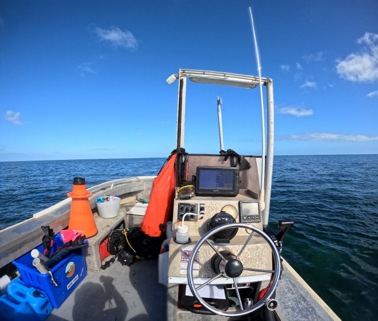
Dedicated RV Naturaliste tender permitted surveys at shallow sites within Exmouth Gulf
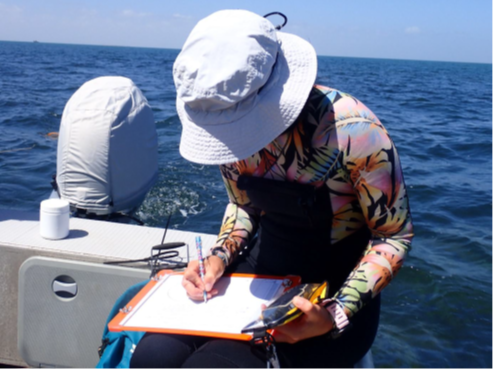
Researchers collecting a wealth of new data on the structure and function of blue carbon ecosystems for policy and decision making
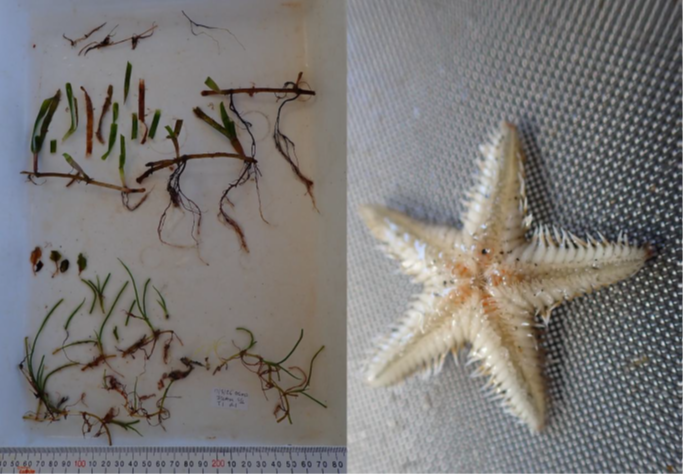
Processing biological samples and cataloguing the species diversity and biomass of important keystone species like seagrasses, macroalage and benthic fauna that live within these vegetated ecosystems onboard RV Naturaliste
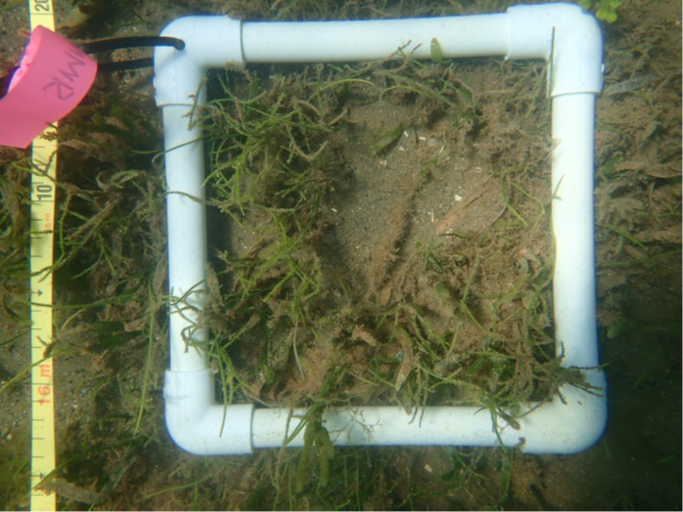
Underwater shot of a seagrass quadrat used to better understand the tructure and function of blue carbon ecosystems for management of climate impacts and Nature-based Solutions (NbS)
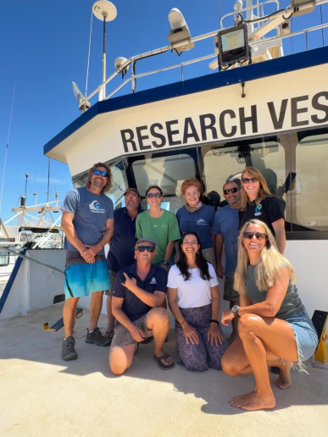
The team on board the RV Naturaliste during fieldwork in Exmouth Gulf in March 2026