
Caltrop
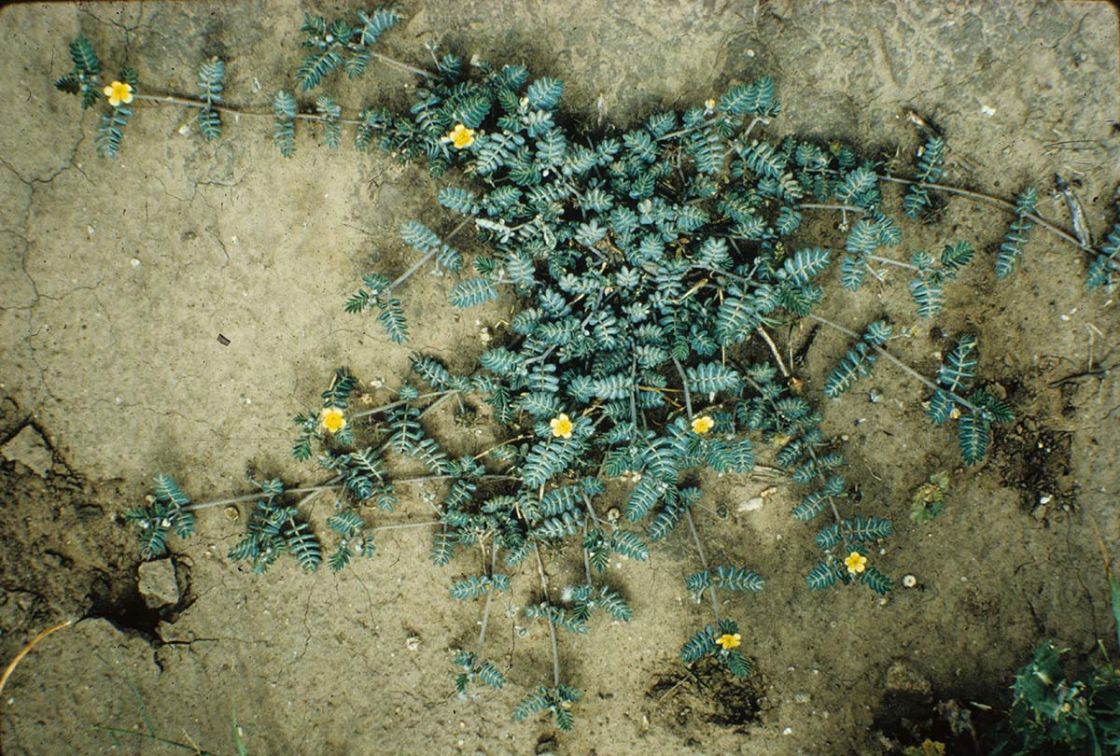
Tribulus terrestris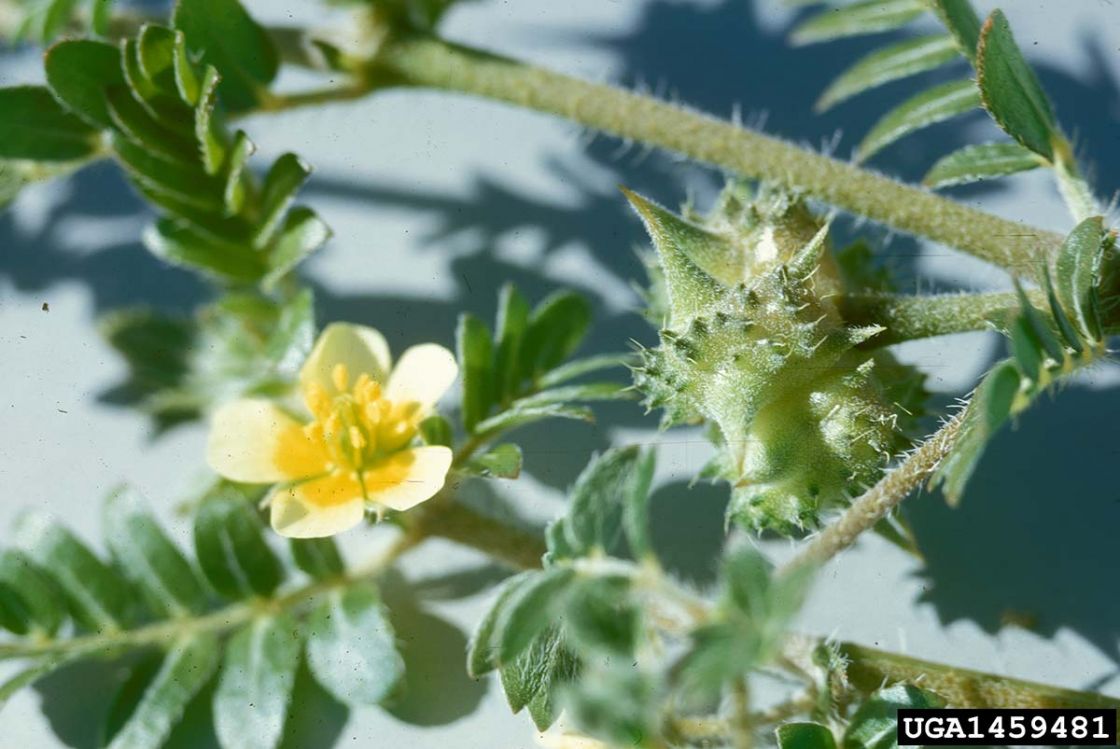

Weed profile
 Annual
 Herb
Herb Contaminates produce
 Toxic to livestock
- Habitat: gardens, pastures
Impact
Spiny burrs. Toxic to livestock.
Description
- Prostrate summer annual.
- Creeping stems spread from a central root.
- Blue-green leaves divided into oblong leaflets in 2 rows.
- Flowers have 5 yellow petals.
- Burrs with sharp spines.
Control options
glyphosate (450g/L)
Application Method: Spot spray
Application Rate: 1L/100L
Product Name: Roundup CT®
Herbicide Group: 9
Situation: Conservation areas, bushland and other non-crop areas.
Timing: Spot spray, September - April. before seed set.
Comments: Non selective, avoid contact with desirable plants.
Legal Status: PER 13371 (exp. 2027)
glyphosate (450g/L)
Application Method: Boom spray
Application Rate: 1.6-2.4L/ha
Product Name: Roundup CT®
Herbicide Group: 9
Situation: Fallows.
Timing: Boom spray, at beginning of fallow period.
Comments: Non selective, avoid contact with desirable plants.
Legal Status: Registered for this use, but this weed is not on the label.
glyphosate (360g/L)
Application Method: Boom spray
Application Rate: 2-3L/ha
Product Name: Roundup Biactive®
Herbicide Group: 9
Situation: Urban areas and other non-crop situations.
Timing: Boom spray, September - March. before flowering.
Comments: Treat within 3 weeks of seed germination. Non selective, avoid contact with desirable plants.
Legal Status: Registered
glyphosate (360g/L)
Application Method: Spot spray
Application Rate: 500-700mL/100L
Product Name: Roundup Biactive®
Herbicide Group: 9
Situation: Urban areas and other non-crop situations.
Timing: Spot spray, September - March. before flowering.
Comments:
Treat within 3 weeks of seed germination. Non selective, avoid contact with desirable plants.
Legal Status: Registered
flumetsulam (800g/kg)
Application Method: Spot spray
Application Rate: 25g/100L
Product Name: Broadstrike®
Herbicide Group: 2
Situation: Agricultural non-crop areas.
Timing: Spot spray, September - March. before flowering.
Comments:
Add 500 mL/100L Uptake® spray oil. Lasts 2-3 months, less if conditions are wet or soil is disturbed.
Legal Status: Registered
nonanoic acid (525 g/L)
Application Method: Spot spray
Application Rate: 700mL/10L
Product Name: Slasher Organic Weedkiller®
Herbicide Group: _
Situation: Urban areas. Suitable for use in organic gardens.
Timing: Spot spray, September - March. young plants.
Comments:
Spray to completely cover weed surface. Non persistent, retreatment may be needed for later germinations. Non selective, avoid contact with desirable plants.
Legal Status: Registered for this use on annual weeds in general.
Manual removal
Situation: Urban and amenity areas
Timing: When noticed.
Comments:
Cut plants off at root and dispose. Scrape off surface soil containing seeds and bury it at least 50 cm deep.
Competing vegetation
Situation: Pastures and amenity areas.
Timing: Long term
Comments:
Caltrop is favoured by bare ground, and does not compete effectively with other plants. Management to maintain a dense ground cover significantly reduces germination. Grass cover crops allow overspraying with selective broadleaf herbicides.
Legal requirements in each region

Land owners in this region to take reasonable steps to kill plants and prevent their spread. Enforceable by the Alinytjara Wiluṟara Landscape Board.

Must not be sold or traded in any way, including as a contaminant of anything.

Must not be transported on a public road, including as a contaminant of anything.
Land owners in this region to take reasonable steps to kill plants and prevent their spread. Enforceable by the Eyre Peninsula Landscape Board.
Must not be sold or traded in any way, including as a contaminant of anything.
Must not be transported on a public road, including as a contaminant of anything.
Land owners in this region to take reasonable steps to kill plants and prevent their spread. Enforceable by the Green Adelaide Board.
Must not be sold or traded in any way, including as a contaminant of anything.
Must not be transported on a public road, including as a contaminant of anything.
Land owners in this region to take reasonable steps to kill plants and prevent their spread. Enforceable by the Hills and Fleurieu Landscape Board.
Must not be sold or traded in any way, including as a contaminant of anything.
Must not be transported on a public road, including as a contaminant of anything.
Land owners in this region to take reasonable steps to kill plants and prevent their spread. Enforceable by the Kangaroo Island Landscape Board.
Must not be sold or traded in any way, including as a contaminant of anything.
Must not be transported on a public road, including as a contaminant of anything.
Land owners in this region to take reasonable steps to kill plants and prevent their spread. Enforceable by the Limestone Coast Landscape Board.
Must not be sold or traded in any way, including as a contaminant of anything.
Must not be transported on a public road, including as a contaminant of anything.
Land owners in this region to take reasonable steps to kill plants and prevent their spread. Enforceable by the Murraylands and Riverland Landscape Board.
Must not be sold or traded in any way, including as a contaminant of anything.
Must not be transported on a public road, including as a contaminant of anything.
Land owners in this region to take reasonable steps to kill plants and prevent their spread. Enforceable by the Northern and Yorke Landscape Board.
Must not be sold or traded in any way, including as a contaminant of anything.
Must not be transported on a public road, including as a contaminant of anything.
Land owners in this region to take reasonable steps to kill plants and prevent their spread. Enforceable by the South Australian Arid Lands Landscape Board.
Must not be sold or traded in any way, including as a contaminant of anything.
Must not be transported on a public road, including as a contaminant of anything.
More Information
Find out how to:
- benefit from the early intervention of new and emerging weeds - handbook
- best manage your use and storage of agricultural and veterinary chemicals.
Control advice
For further help and advice managing this weed contact your regional landscape board: