
Water hyacinth
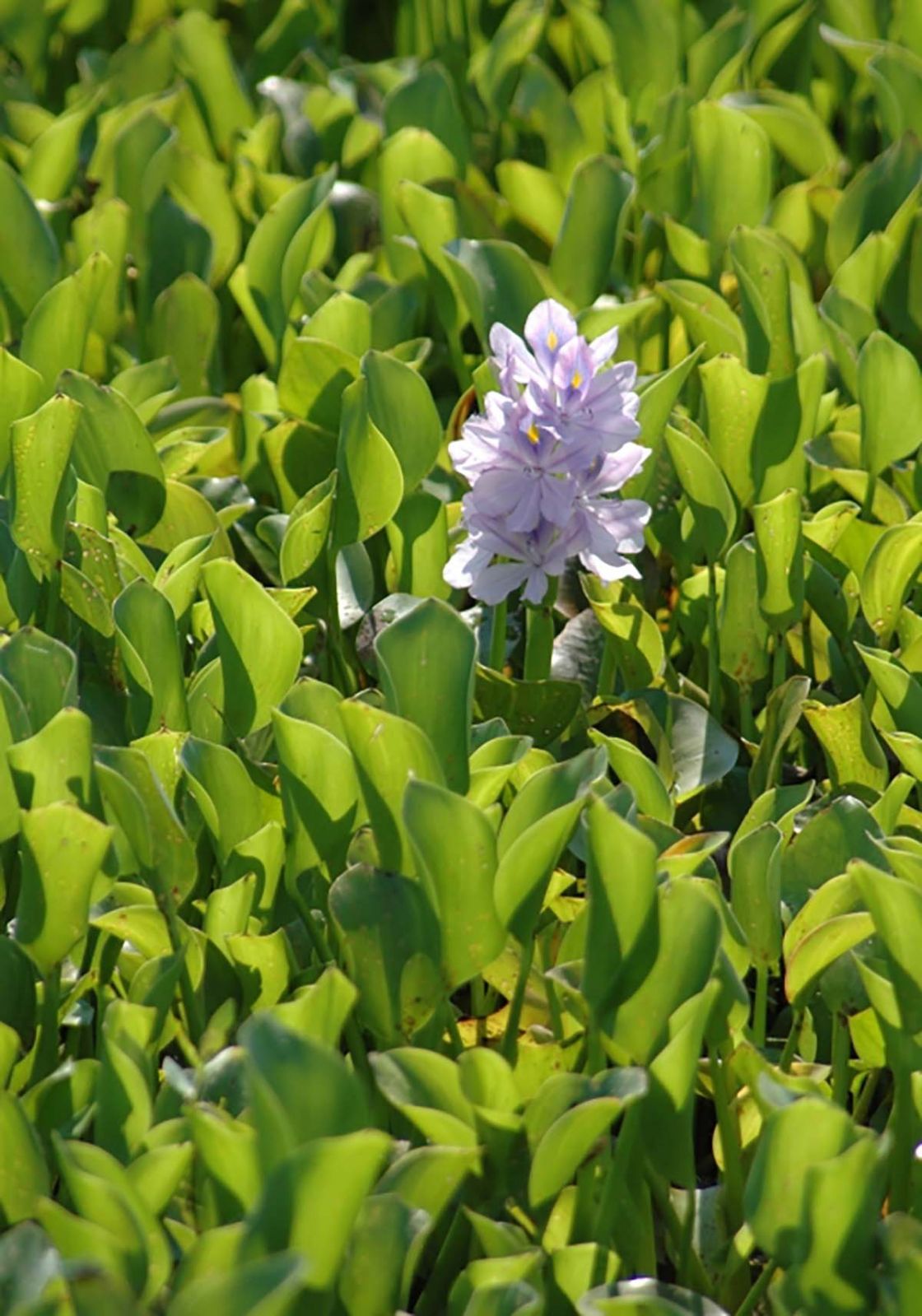
Eichhornia crassipes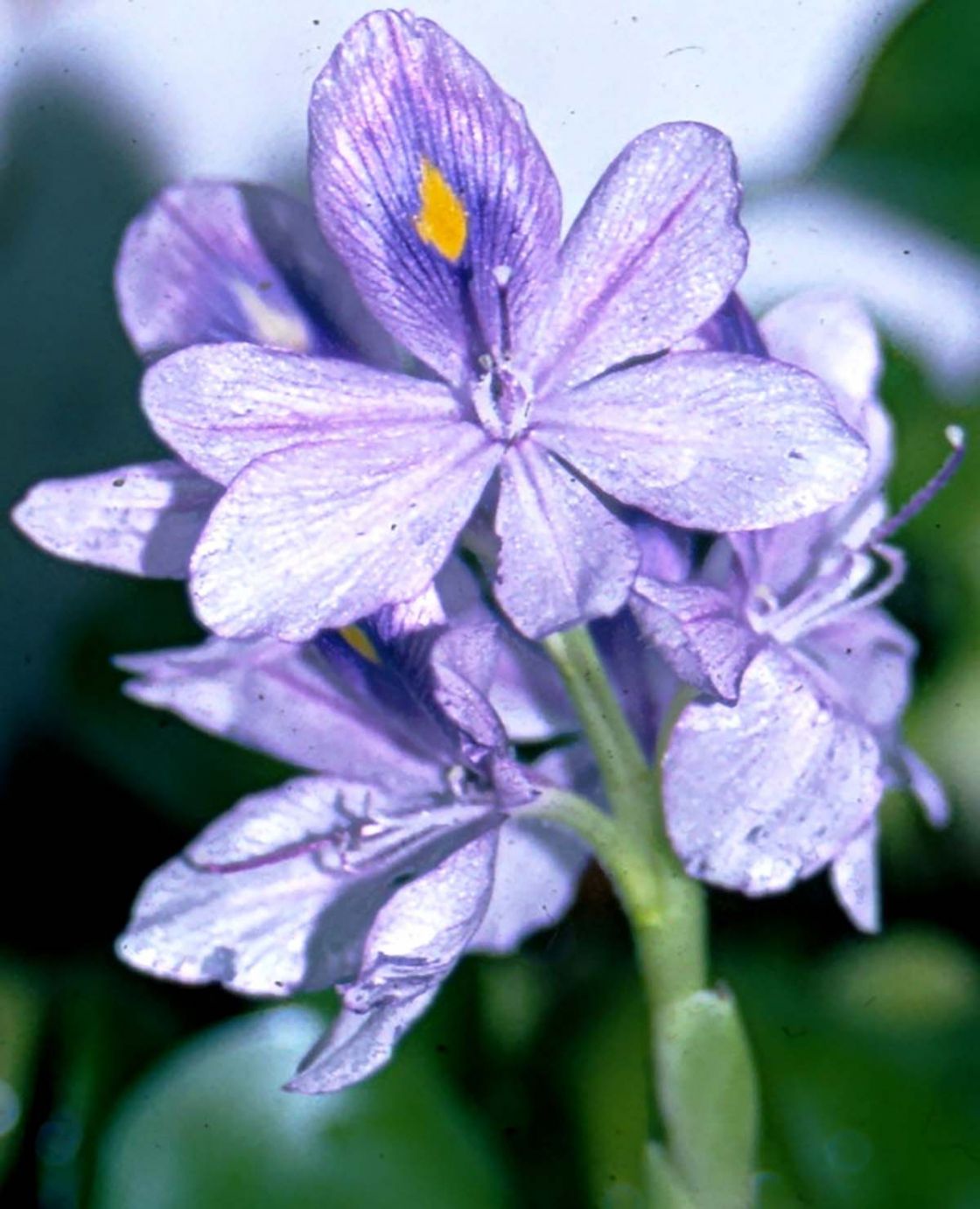
 See it - Report it
Early detection is vital to stop Water hyacinth becoming established in South Australia.
If you see this weed, please report it to the National Pest Alert Hotline (Freecall) 1800 084 881.
Weed profile
 Perennial
 Reportable
 Hinders movement
- Habitat: waterways
Impact
Invades and covers creeks and dams.
Description
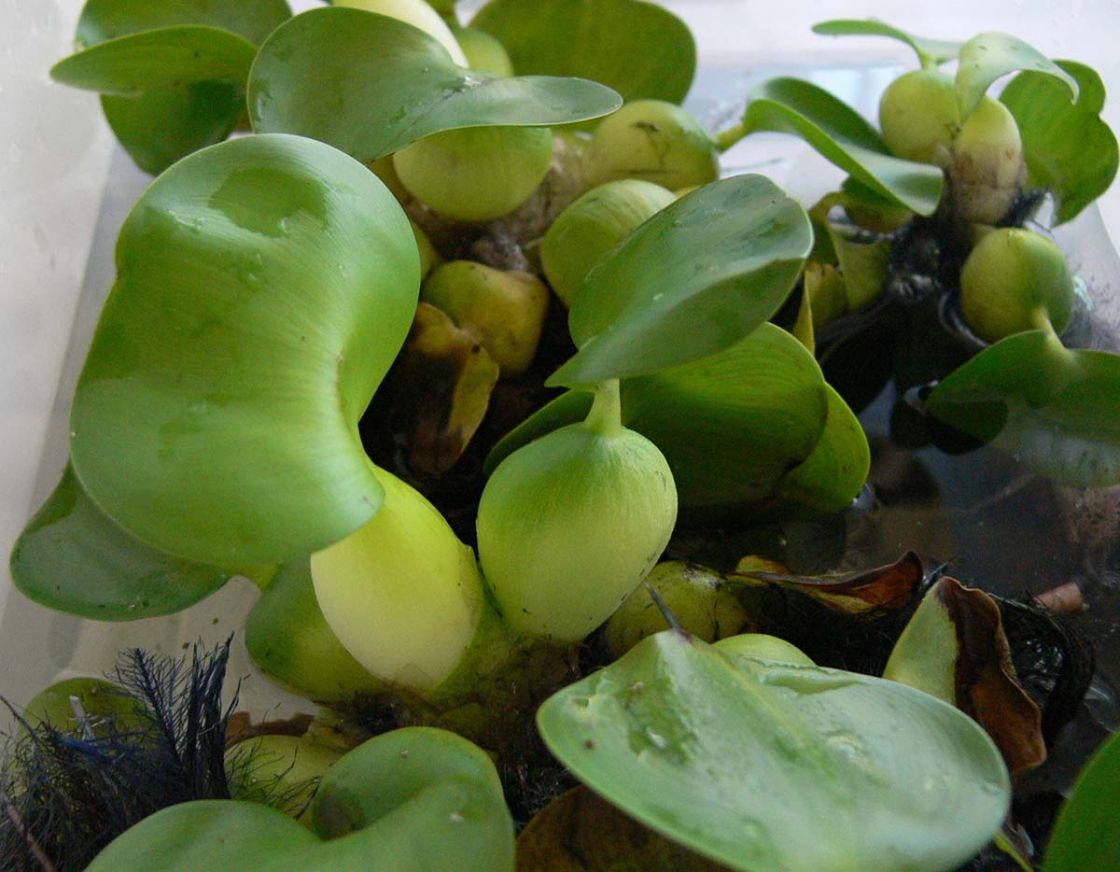
- Aquatic floating plant with black branching roots trailing underwater.
- Leaves with shiny broad oval blade and inflated base, forming rosettes.
- Large lilac and white flowers held just above the leaves.
Control options
glyphosate (360g/L)
Application Method: Spot spray
Application Rate: 10-13mL/1L
Product Name: Roundup Biactive®
Herbicide Group: 9
Situation: Aquatic habitats.
Timing: Spot spray, summer, while actively growing.
Comments:
- Seek advice from regional landscape board. Monitor site until eradication achieved.
- Use the higher rate on dense infestations.
- Suitable for use near waterways - refer to label.
- Non selective, avoid contact with desirable plants.
Legal Status: Registered
diquat (200g/L)
Application Method: Spot spray
Application Rate: 400mL/100L
Product Name: Reglone®
Herbicide Group: 22
Situation: Aquatic habitats.
Timing: Spot spray, summer
Comments: Seek advice from your regional landscape board. Caution, the herbicide is toxic to humans. Add 150mL Agral® surfactant per 100L of spray mixture. Apply as an overall spray to wet foliage thoroughly. Repeat applications 7-14 days later may be necessary for control of dense infestations.
Legal Status: Registered
Manual removal
Situation: Aquatic habitats.
Timing: Any time
Comments: Seek advice from your regional landscape board. Skim plants off the water and dispose by composting or thorough drying. Monitor site until eradication has been achieved.
Legal requirements in each region

Land owners in this region to eliminate the plant from their property. Enforceable by the Alinytjara Wiluṟara Landscape Board.

Must not be sold or traded in any way, including as a contaminant of anything.

Must not be transported on a public road, including as a contaminant of anything.

Must not be imported into the region.
land owners in this region must notify the Alinytjara Wiluṟara Landscape Board of any infestation of the plant found on their land.
Land owners in this region to eliminate the plant from their property. Enforceable by the Eyre Peninsula Landscape Board.
Must not be sold or traded in any way, including as a contaminant of anything.
Must not be transported on a public road, including as a contaminant of anything.
Must not be imported into the region.
land owners in this region must notify the Eyre Peninsula Landscape Board of any infestation of the plant found on their land.
Land owners in this region to eliminate the plant from their property. Enforceable by the Green Adelaide Board.
Must not be sold or traded in any way, including as a contaminant of anything.
Must not be transported on a public road, including as a contaminant of anything.
Must not be imported into the region.
land owners in this region must notify the Green Adelaide Board of any infestation of the plant found on their land.
Land owners in this region to eliminate the plant from their property. Enforceable by the Hills and Fleurieu Landscape Board.
Must not be sold or traded in any way, including as a contaminant of anything.
Must not be transported on a public road, including as a contaminant of anything.
Must not be imported into the region.
land owners in this region must notify the Hills and Fleurieu Landscape Board of any infestation of the plant found on their land.
Land owners in this region to eliminate the plant from their property. Enforceable by the Kangaroo Island Landscape Board.
Must not be sold or traded in any way, including as a contaminant of anything.
Must not be transported on a public road, including as a contaminant of anything.
Must not be imported into the region.
land owners in this region must notify the Kangaroo Island Landscape Board of any infestation of the plant found on their land.
Land owners in this region to eliminate the plant from their property. Enforceable by the Limestone Coast Landscape Board.
Must not be sold or traded in any way, including as a contaminant of anything.
Must not be transported on a public road, including as a contaminant of anything.
Must not be imported into the region.
land owners in this region must notify the Limestone Coast Landscape Board of any infestation of the plant found on their land.
Land owners in this region to eliminate the plant from their property. Enforceable by the Murraylands and Riverland Landscape Board.
Must not be sold or traded in any way, including as a contaminant of anything.
Must not be transported on a public road, including as a contaminant of anything.
Must not be imported into the region.
land owners in this region must notify the Murraylands and Riverland Landscape Board of any infestation of the plant found on their land.
Land owners in this region to eliminate the plant from their property. Enforceable by the Northern and Yorke Landscape Board.
Must not be sold or traded in any way, including as a contaminant of anything.
Must not be transported on a public road, including as a contaminant of anything.
land owners in this region must notify the Northern and Yorke Landscape Board of any infestation of the plant found on their land.
Land owners in this region to eliminate the plant from their property. Enforceable by the South Australian Arid Lands Landscape Board.
Must not be sold or traded in any way, including as a contaminant of anything.
Must not be transported on a public road, including as a contaminant of anything.
land owners in this region must notify the South Australian Arid Lands Landscape Board of any infestation of the plant found on their land.
More Information
Find out how to:
- benefit from the early intervention of new and emerging weeds - handbook
- best manage your use and storage of agricultural and veterinary chemicals.
Control advice
For further help and advice managing this weed contact your regional landscape board: