
White weeping brooms
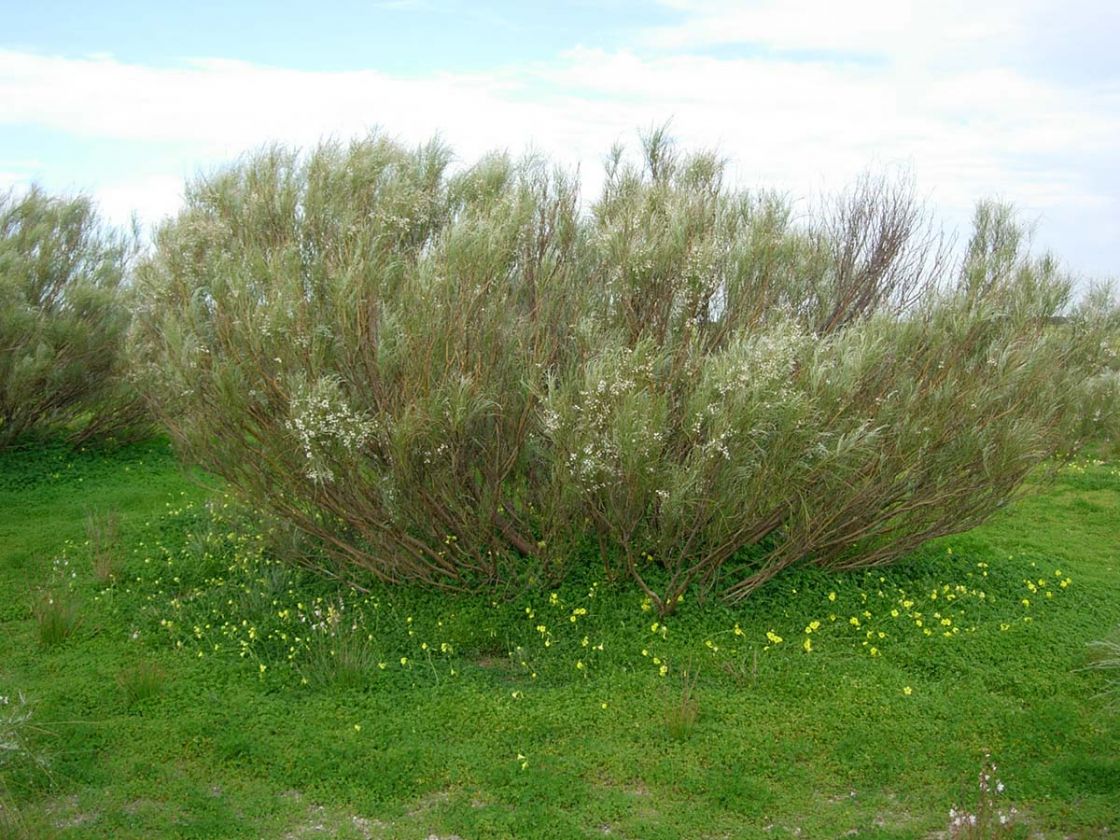
Retama monosperma and Retama raetam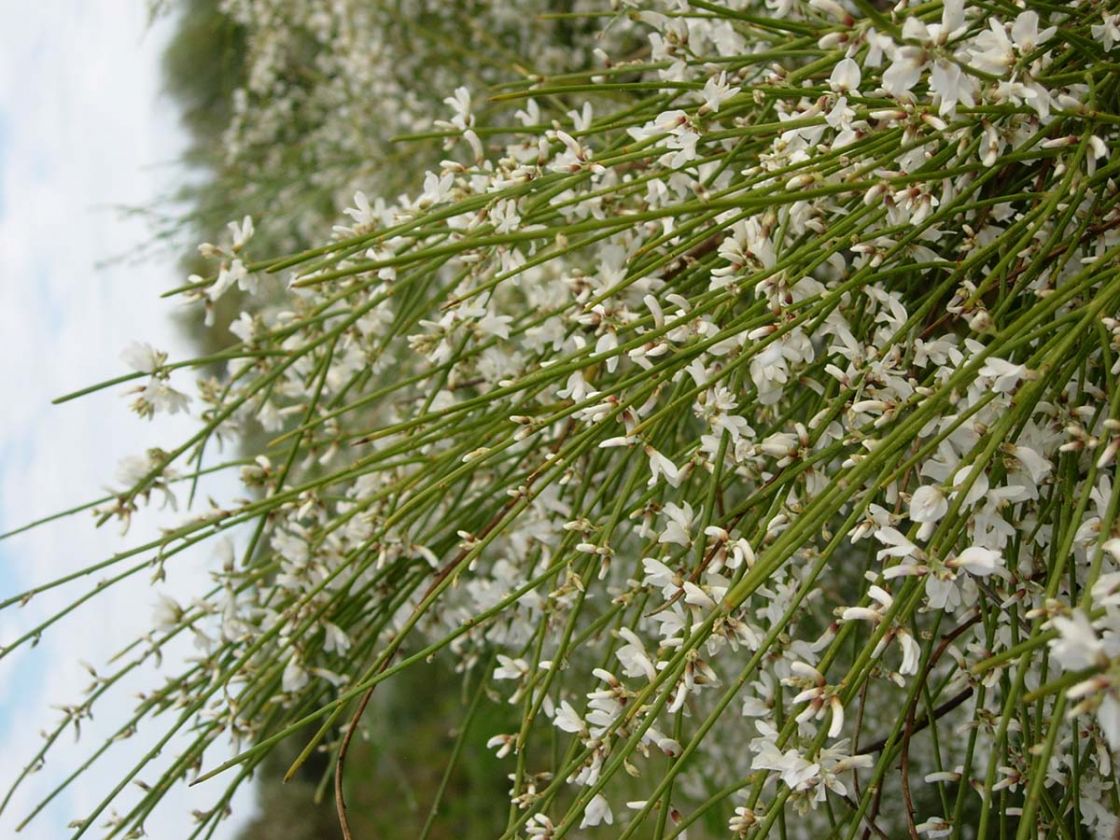
Weed profile
 Perennial
 Shrub
Shrub Tree
Tree Hinders movement
- Habitat: native vegetation
Impact
Invade native vegetation.
Description
- Shrubs to 4m tall with grey-green drooping branchlets.
- Leaves soon lost.
- White pea flowers to 1 cm long in clusters.
- Pods 1 cm long, 2-seeded.
Control options
glyphosate dual salt (360g/L) + metsulfuron-methyl (600g/kg)
Application Method: Spot spray
Application Rate: 1L + 3g/100L
Product Name: Weedmaster® Duo + Brush-Off®
Herbicide Group: 9, 2
Situation: Conservation areas, bushland and other non-crop areas.
Timing: Spot spray, actively growing
Comments: Non selective, avoid contact with desirable plants. Soil active herbicide, may damage desirable vegetation.
Legal Status: PER 13371 (exp. 2027)
glyphosate (360g/L)
Application Method: Cut stump treatment
Application Rate: 1L/1L
Product Name: Roundup Biactive®
Herbicide Group: 9
Situation: Conservation areas, bushland and other non-crop areas.
Timing: Cut stump treatment, actively growing
Comments: Apply herbicide to freshly cut stump.
Legal Status: PER 13371 (exp. 2027)
glyphosate (450g/L)
Application Method: Spot spray
Application Rate: 1L/100L
Product Name: Roundup CT®
Herbicide Group: 9
Situation: Conservation areas, bushland and other non-crop areas.
Timing: Spot spray, actively growing
Comments: Non selective, avoid contact with desirable plants.
Legal Status: PER 13371 (exp. 2027)
glyphosate (450g/L)
Application Method: Cut stump treatment
Application Rate: 1L/1L
Product Name: Roundup CT®
Herbicide Group: 9
Situation: Conservation areas, bushland and other non-crop areas.
Timing: Cut stump treatment, actively growing
Comments: Apply herbicide to freshly cut stump.
Legal Status: PER 13371 (exp. 2027)
triclopyr (600g/L)
Application Method: Basal bark spray
Application Rate: 1L/30L biodiesel or diesel
Product Name: Garlon 600®
Herbicide Group: 4
Timing: Basal bark spray, actively growing
Comments: Saturate bark on trunk and any branches from ground level to up 30 cm.
Legal Status: PER 91974 (exp. 2027)
picloram (44.7g/L) + aminopyralid (4.7 g/L)
Application Method: Cut stump
Application Rate: Undiluted gel
Product Name: Vigilant II®
Herbicide Group: 4
Situation: Native vegetation, gullies, and parks.
Timing: Cut stump, any time
Comments: Cut stump and apply 3-5 mm thick layer immediately. For multi-stemmed plants treat at least 80% of stems including main stems. Do not use in urban home gardens.
Legal Status: Registered for this use on woody weeds in general.
Legal requirements in each region

Land owners in this region to take reasonable steps to kill plants and prevent their spread. Enforceable by the Alinytjara Wiluṟara Landscape Board.

Must not be sold or traded in any way, including as a contaminant of anything.

Must not be transported on a public road, including as a contaminant of anything.

Must not be imported into the region.
Land owners in this region to take reasonable steps to kill plants and prevent their spread. Enforceable by the Eyre Peninsula Landscape Board.
Must not be sold or traded in any way, including as a contaminant of anything.
Must not be transported on a public road, including as a contaminant of anything.
Must not be imported into the region.
Must not be sold or traded in any way, including as a contaminant of anything.
Must not be transported on a public road, including as a contaminant of anything.
Must not be imported into the region.
Must not be sold or traded in any way, including as a contaminant of anything.
Must not be transported on a public road, including as a contaminant of anything.
Must not be imported into the region.
Must not be sold or traded in any way, including as a contaminant of anything.
Must not be transported on a public road, including as a contaminant of anything.
Must not be imported into the region.
Land owners in this region to take reasonable steps to kill plants and prevent their spread. Enforceable by the Limestone Coast Landscape Board.
Must not be sold or traded in any way, including as a contaminant of anything.
Must not be transported on a public road, including as a contaminant of anything.
Must not be imported into the region.
Land owners in this region to take reasonable steps to kill plants and prevent their spread. Enforceable by the Murraylands and Riverland Landscape Board.
Must not be sold or traded in any way, including as a contaminant of anything.
Must not be transported on a public road, including as a contaminant of anything.
Must not be imported into the region.
Must not be sold or traded in any way, including as a contaminant of anything.
Must not be transported on a public road, including as a contaminant of anything.
Must not be sold or traded in any way, including as a contaminant of anything.
Must not be transported on a public road, including as a contaminant of anything.
More Information
Find out how to:
- benefit from the early intervention of new and emerging weeds - handbook
- best manage your use and storage of agricultural and veterinary chemicals.
Control advice
For further help and advice managing this weed contact your regional landscape board: