
Australian plague locust current situation
What's happening
Recent surveillance, landholder reports and advice from the Australian Plague Locust Commission (APLC) indicate:
- we are currently in the critical period for locust surveillance and control activities
- increased emergence and banding is expected over the next few weeks.
PIRSA’s locust surveillance continues across the Flinders and Mid North regions, with field teams deployed north of Orroroo conducting vehicle, motorbike and targeted surveys.
- Surveillance teams report increasing locust activity, including the first confirmed sightings of 4th and 5th instar hoppers.
- Infestations of 2nd and 3rd instar hoppers were identified at densities ranging from 80 to more than 500 per square metre.
- High-density infestations have been detected north and north-west of Ikara-Flinders Ranges National Park, north of Hawker, and across a large area east of Hawker.
- The most significant infestation extends from north of Port Augusta to Hawker along the western side of the Flinders Ranges.
PIRSA continues to receive reports of locust activity from landholders and community members across other regions of South Australia including the Mallee, Riverland and Eyre Peninsula, including around Kimba and Buckleboo.
These reports provide valuable intelligence and help inform ongoing surveillance and monitoring efforts.
Based on APLC forecasts and current activity, outbreak-level locust populations are expected in parts of the state this season. While PIRSA's surveillance program helps identify emerging hotspots and inform response activities, the mobile nature of locusts means it is difficult to predict exactly where the highest populations and impacts will occur.
The Australian Plague Locust Commission (APLC) produces monthly Locust bulletins during the seasons of locust activity (spring, summer and autumn).
What PIRSA is doing
PIRSA continues to deliver a coordinated locust preparedness program which includes the following surveillance, planning and control activities:
- Surveillance has been intensified in areas of elevated activity, with targeted aerial control measures planned from 8 October in priority locations within PIRSA's surveillance and control zone.
- The central operations coordination base in Orroroo continues to support surveillance and response activities and is now managing the delivery of targeted aerial control operations across priority treatment areas.
- PIRSA is working closely with the Department for Environment and Water (DEW) and the APLC to ensure environmental considerations are incorporated into locust management activities and that potential risks are appropriately assessed and managed.
- The Riverland and Mallee regions continue to be actively supported, with the APLC undertaking targeted surveillance across the region and PIRSA working closely with landholders, local government and industry representatives to provide technical advice, share information and support access to the Chemical Rebate Scheme.
- PIRSA continues to meet fortnightly with the Community Reference Group, whose members provide valuable insights into local conditions and emerging concerns across affected regions.
- 'Stop the Hop' campaign continues across print, digital and social media channels as well as regional radio. The campaign focuses on raising awareness of the importance of early locust control, support available to eligible landholders through the Chemical Rebate Scheme, and providing information on PIRSA’s control program in the Flinders and Mid North regions.
Response activities vary across the state to reflect different risk profiles, land uses and operational considerations. While broadscale aerial control can be effective in northern pastoral areas where locust swarms traditionally form, the intensive cropping, horticulture and mixed land use of other regions make targeted, property-level management the most appropriate approach.
Surveillance area
Surveillance and risk assessment activities are ongoing, particularly in marginal agricultural and near-pastoral regions where locust populations may build and later move into higher-value cropping areas. These activities will help PIRSA inform producers in the Eastern Mallee and Upper and Western Eyre Peninsula cropping regions about:
- expected spring hatchings
- monitoring and potential control options
- support planning.
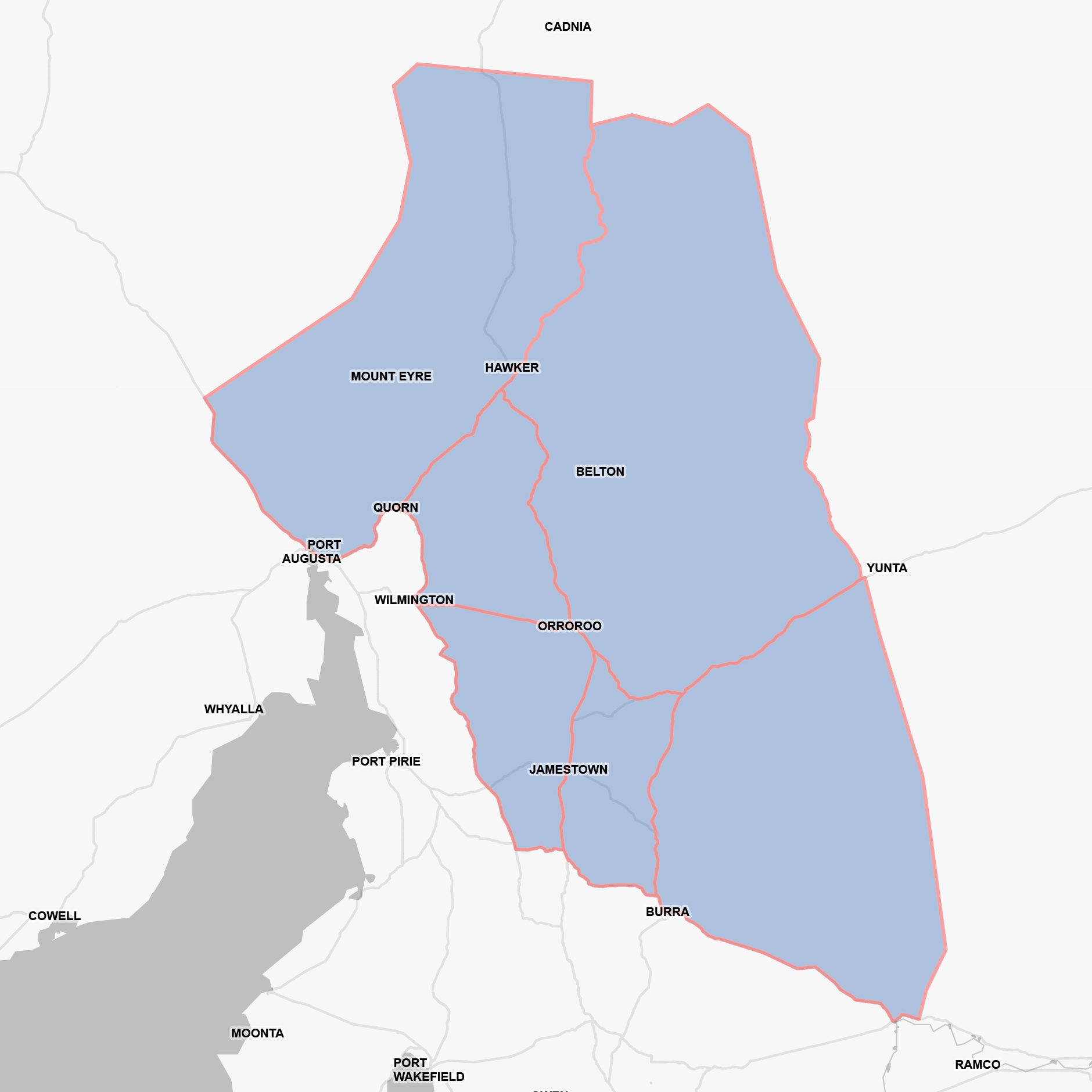
Download the locust surveillance area map ( ).

FaB Mentors are there to assist primary producers when things get tough. They are independent, and experienced in dealing with difficult situations. Contact your local FaB Mentor for a free confidential chat by phone or in person.
Find out moreInformation for beekeepers
Beekeepers should be aware that locust control treatments may be undertaken by landholders, contractors, local councils or government agencies in areas where they have hives.
Maintaining regular communication with landholders about where hives are located is particularly important to help protect hives and minimise risks to bee populations.
PIRSA recognises the importance of protecting managed honeybee populations and considers the location of known apiary sites when planning aerial control operations.
Beekeepers are encouraged to:
- consider relocating hives from areas where locust control activities may occur
- ensure your beekeeper registration is current
- ensure your property identification code information is current
- complete the hive location information form so PIRSA is aware of the location of your hives
- maintain regular communication with landholders where your hives are located.
This information will assist PIRSA in identifying sensitive sites and communicating directly with hive owners if required.
Subscribe for updates
Go to the subscription centre to be emailed locust update bulletins from PIRSA.