
General advice for producers and the community
What producers should do
Producers should remain alert for flying locust swarms and monitor susceptible crops, pastures and horticultural plantings for signs of feeding damage. Management decisions should consider:
- density of locust activity
- value and growth stage of affected crops
- any market access or withholding period requirements associated with control options.
While broadacre crops and pastures have historically experienced the greatest impacts from plague locust outbreaks, vineyards, orchards and citrus plantings can also be affected when large numbers of adult locusts move into production areas.
Young vines, newly established trees and fresh seasonal growth are typically the most vulnerable to feeding damage. High-density locust activity can result in defoliation and damage to new shoots, particularly where large numbers of insects settle for an extended period.
Producers in areas where locust activity has been reported should:
- regularly inspect crops and adjacent vegetation for signs of locust activity
- pay particular attention to young plantings and areas of fresh growth
- monitor local locust reports and updates
- ensure any chemical treatments are registered for the crop and comply with withholding periods and market requirements.
Vineyards
Established vines can generally tolerate low to moderate levels of feeding. However, high numbers of adult locusts may damage young vines, fresh shoots and developing foliage.
Growers should monitor vineyard edges and areas adjacent to roadsides, pasture and unmanaged vegetation, where locusts may initially congregate.
The Australian Wine Research Institute has provided information for the wine industry, vineyard managers and grape growers – see Agrochemical Update: Locust management in winegrape vineyards.
Orchards and citrus
Young orchard trees and citrus plantings are generally more susceptible to feeding damage than mature trees. Locusts may feed on leaves and new flush growth, potentially reducing plant vigour and establishment if large numbers are present.
Growers should closely monitor young plantings and newly developing growth, particularly during periods of increased locust activity in surrounding districts.
Vegetable production
Vegetable crops can be vulnerable to locust feeding, particularly where produce quality and appearance are important market requirements. Crops such as lettuce, Asian vegetables, brassicas and cucurbits may suffer economic losses from relatively low levels of feeding damage.
Growers should monitor crops for feeding damage, prioritise protection of young and high-value crops, and consider harvest and market requirements when assessing treatment options.
Livestock and grazing systems
High-density locust activity can reduce available pasture and fodder, potentially affecting feed availability and carrying capacity. Impacts may become more significant where pasture growth is already limited by seasonal conditions.
Landholders should monitor pasture condition and feed availability and consider the potential impacts on stocking rates and supplementary feeding requirements.
Orchards and fruit trees
Young orchards and recently established trees are generally more susceptible to locust feeding than mature plantings. Severe feeding may affect shoot growth and tree establishment.
Growers should closely monitor young plantings and newly developing growth during periods of increased locust activity.
Seed production, nurseries and propagation
Seed crops, nurseries and propagation businesses can be particularly susceptible to locust feeding. Feeding damage may affect seed yield and quality, while damage to young plants can reduce marketability.
Monitoring should focus on high-value crops and young plants, where feeding damage is most likely to have economic impacts.
Community and recreational facilities
Large numbers of locusts can affect the operation and use of sporting and recreational facilities. Bowling clubs, golf courses, sporting ovals and other outdoor venues may experience insects accumulating on playing surfaces and around infrastructure, increasing maintenance requirements and affecting community use of facilities.
High-density infestations may also cause localised damage to irrigated turf and other vegetation. While these impacts are generally temporary, facility managers should monitor grounds and outdoor areas during periods of elevated locust activity.
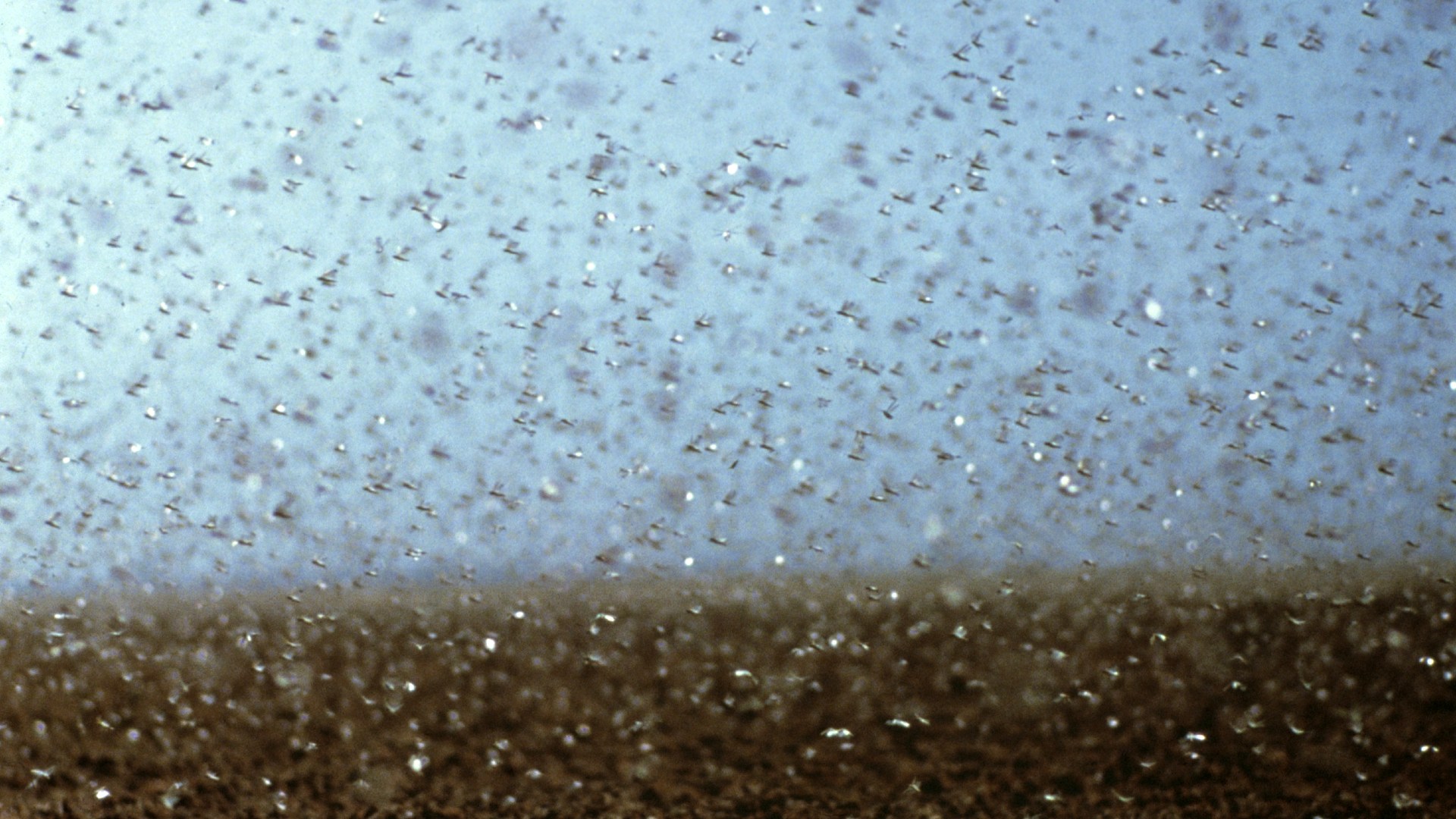
Advice for drivers
Locust swarms can reduce visibility, make roads slippery and damage your vehicle. Download this fact sheet from the RAA on how to drive safely and protect your vehicle.
Photo: CSIRO, CC BY 3.0, via Wikimedia Commons
Download PDF