
Parasitoid fly 'Sarcophaga villeneuveana': A natural enemy of pest conical snails
Tuesday 30 September 2025 PestFacts

Beneficial insects are important for sustainable farming as they help with pollination and controlling pests. As spring is here, we're already seeing more activity from parasitoids and predators, including the parasitoid fly (Sarcophaga villeneuveana), a biological control agent targeting pest snails.
S. villeneuveana was introduced to Australia in the early 2000s to control the invasive conical snail, Cochlicella acuta, and the small, pointed snail, Cochlicella barbara, which are both major contaminants of grain crops. The fly was sourced from southern France and mass-reared by SARDI before being released at over 20 sites across the Yorke Peninsula and Limestone Coast.
More recently, over 100,000 flies have been released at 24 new sites across southern Australia, including the Eyre Peninsula and Western Australia’s South Stirling and Esperance regions.
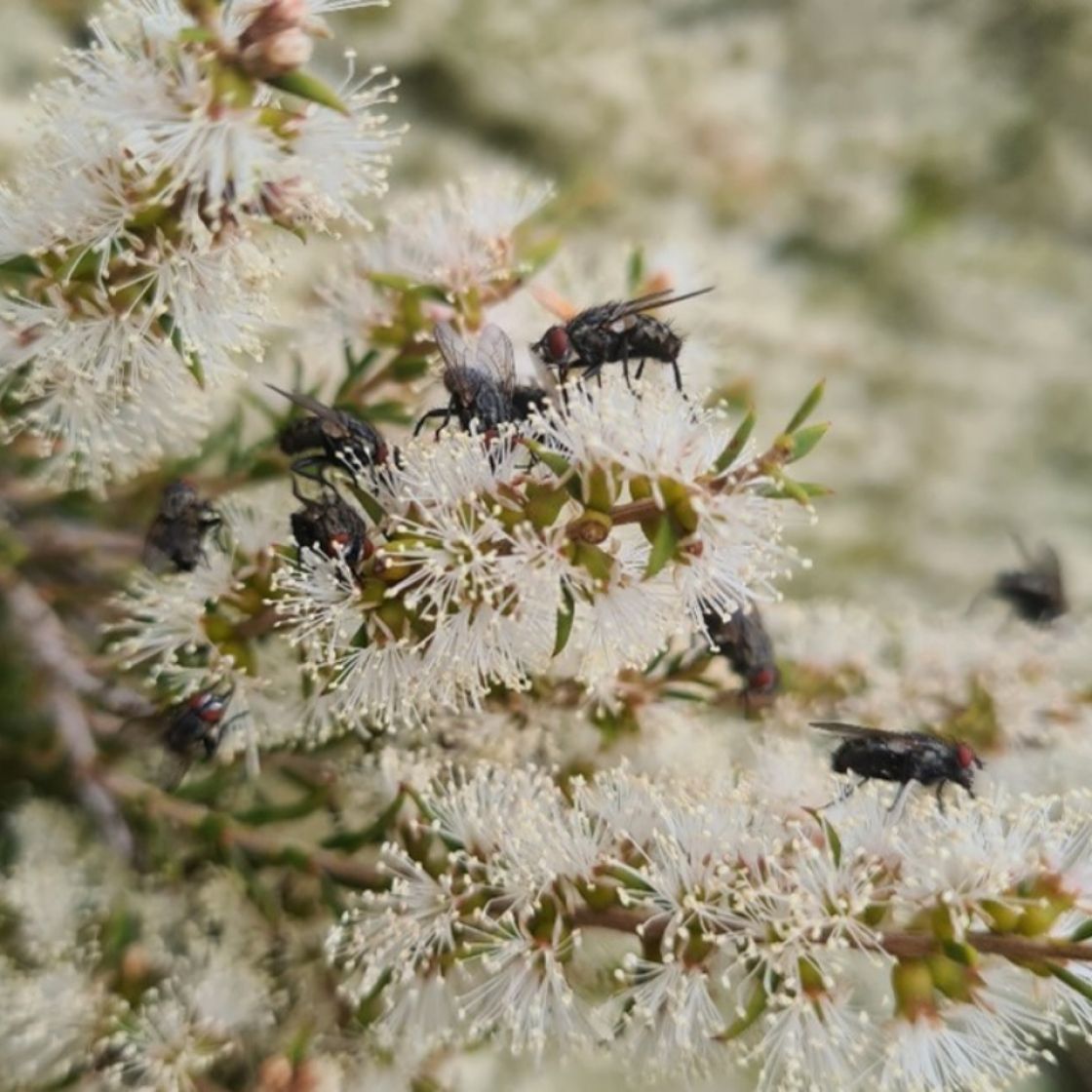
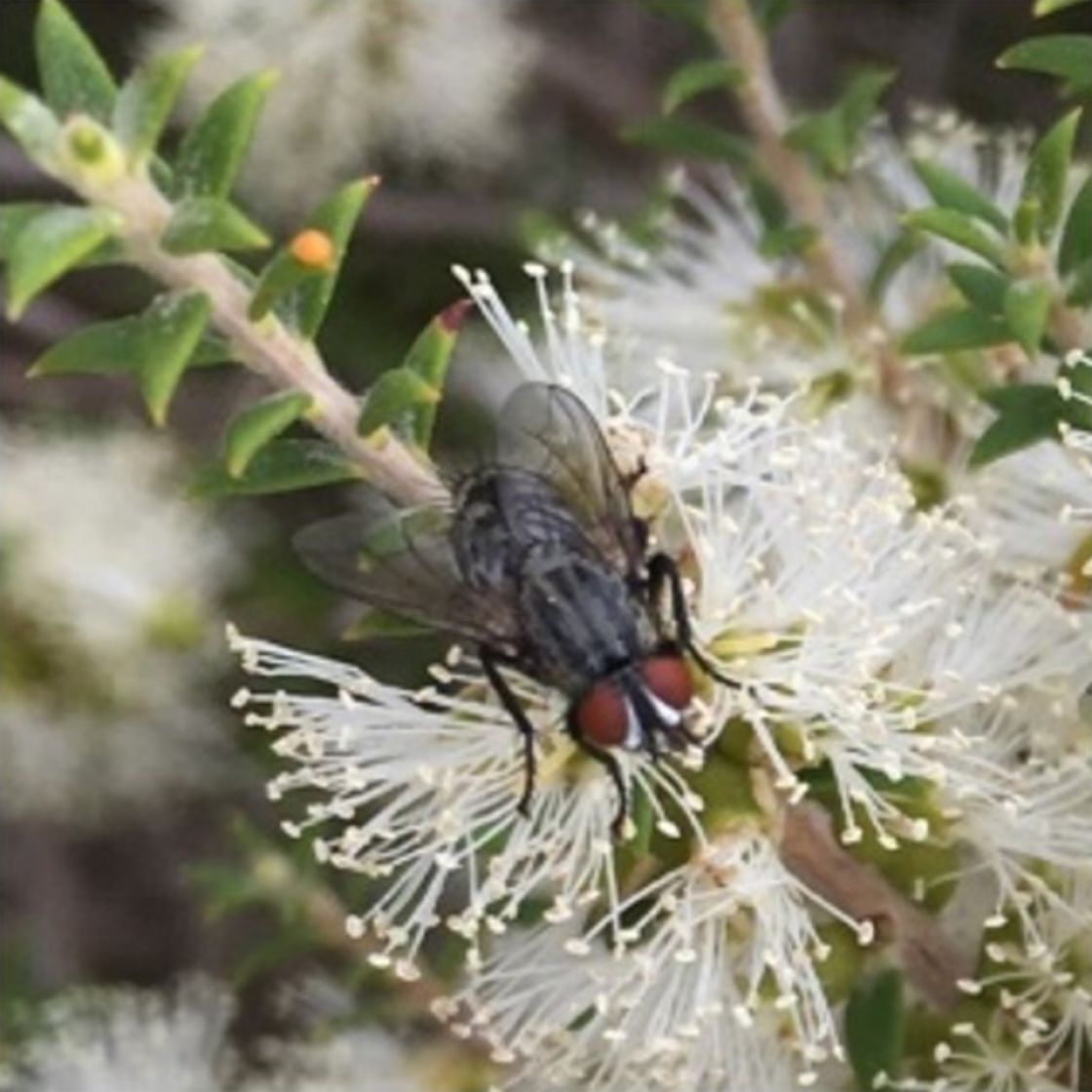
S. villeneuveana flies belong to the flesh fly family (Sarcophagidae) and appear similar to bush flies. They are 5 to 10 mm long, with reddish eyes and grey and white parallel stripes on the thorax between the wings.
The flies are active from spring to early autumn. Females lay a single live larva near the shell opening of an aestivating snail. The larva enters the shell, consumes the snail flesh, and pupates inside. Pupal cases are reddish-brown and can sometimes be visible inside the shell opening of parasitised snails. After about 8 days, a new adult fly emerges. Up to 6 to 8 generations can occur each season.
We don’t yet know how many flies are needed for effective snail suppression, but their presence supports integrated snail control and is a promising sign. Seeing adult flies in snail-infested areas during spring and summer may indicate natural control is underway.
Simple steps to support Sarcophaga villeneuveana
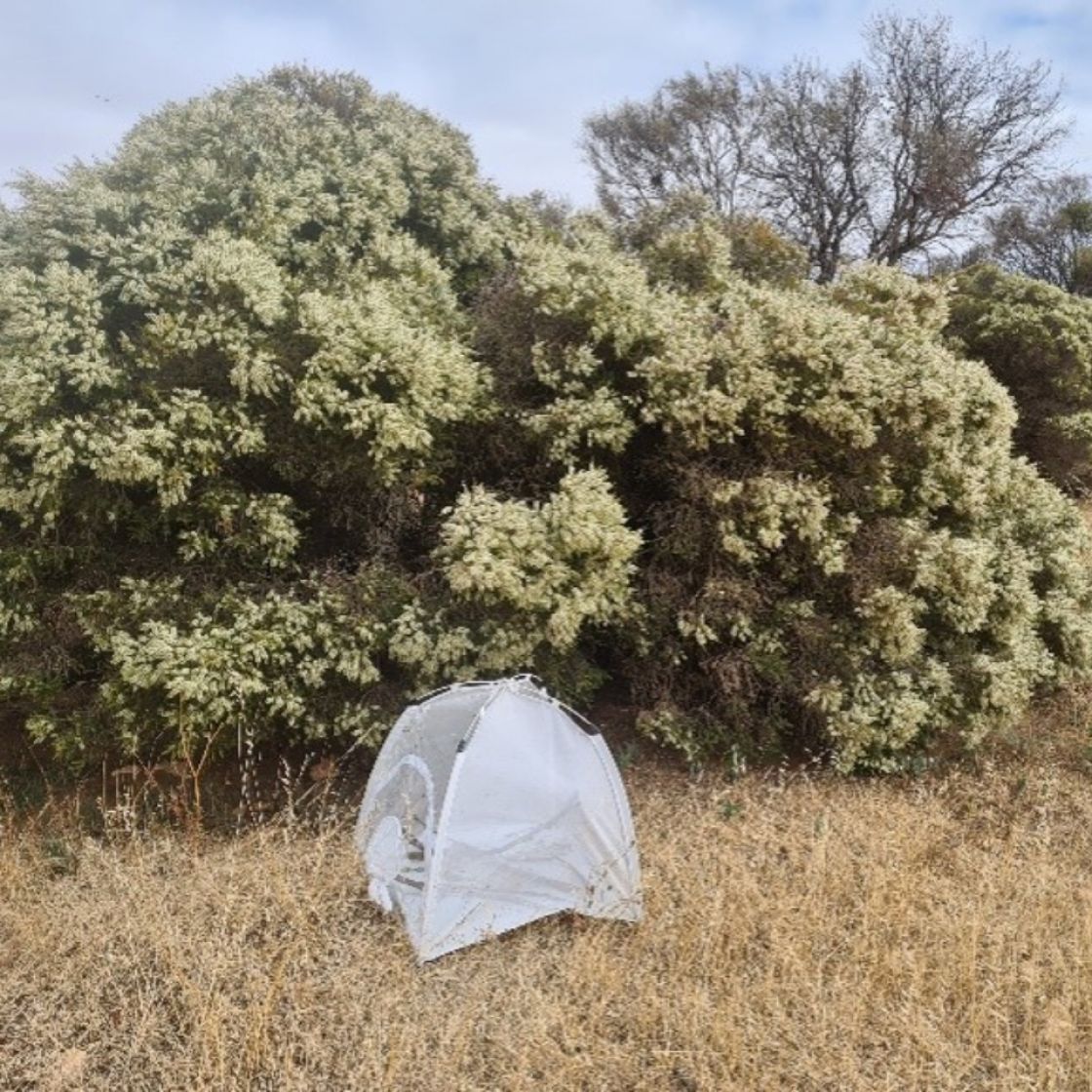
Importantly, adult flies rely on flowering vegetation for food. Nectar and pollen provide carbohydrate and protein that increase adult lifespan and likelihood of offspring. Field surveys have shown that parasitism rates of snails can reach up to 48% near flowering native vegetation, compared to less than 3% in areas without floral resources.
To support fly populations and enhance biocontrol, growers can:
- promote native flowering plants like melaleuca, acacia, or hakea around paddock edges
- minimise broad-spectrum insecticide use during the fly’s active period
- reduce ground-level refuges to encourage snails to climb, making them more vulnerable to attack.
To boost fly populations and improve snail biocontrol, a 2-phase, 6-year revegetation trial is underway at 8 sites on the Yorke Peninsula. Led by SARDI and the University of Adelaide, and supported by SAGIT, GRDC, Viterra, Trees for Life, and Grain Producers SA, the project is planting 18 native flowering species near cropping paddocks and silos.
Article by: Dr Kate Muirhead
Email: kate.muirhead@sa.gov.au