
Assessing the Fisheries Benefits from Seagrass Restoration in Gulf St Vincent, May & October 2024
Date
8th and 9th May; and 28th and 29th October 2024
Background
This voyage aimed to assess the benefits of seagrass protection and restoration in Gulf St Vincent, South Australia. Coastal seagrasses are important ecosystems that provide many benefits, including habitat for fished species, coastal protection, and carbon stores. However, over the last century, extensive seagrass areas have been lost globally, including off Adelaide’s metropolitan coastline. Seagrass restoration is gaining attention, especially as their value as natural climate solutions becomes clearer and Australian environmental policy shifts towards a nature-positive approach. Most seagrass restoration programs in Australia have been small-scale with limited resources to assess their biodiversity and economic benefits. The data collected from the May and October 2024 voyages will help us understand how seagrasses benefit fish and marine invertebrates, and relate these findings to a nearby large-scale (20 ha) seagrass restoration project off Port Gawler in the Gulf St Vincent.
Voyage
The research team, led by Dr. Alice Jones from The University of Adelaide, conducted two voyages in May and October 2024. They sampled fish and invertebrates using a modified trawl net at 37 sites, covering both mature (remnant) seagrass and areas of bare sand where seagrasses have been lost. The team recorded the species and size of all organisms caught in the net, collected samples for biomass and stable isotope analysis, and used video verification to confirm the habitat type sampled at each site. The data collected will be used to compare the biodiversity and economic benefits of seagrass meadows and sand areas impacted by loss of seagrass, with relevance for the benefits that seagrass restoration can deliver.
The voyages were conducted at two different times to capture seasonal variations in the data. The first voyage took place in early May (end of autumn), and the second in late October (spring). This approach allows the researchers to compare the fish and invertebrate communities across different seasons, providing a more comprehensive understanding of how seagrass and sand habitats support biodiversity and harvested fish species throughout the year. Seasonal differences can significantly impact marine ecosystems, so sampling at different times helps ensure the findings are robust and representative of the annual cycle.
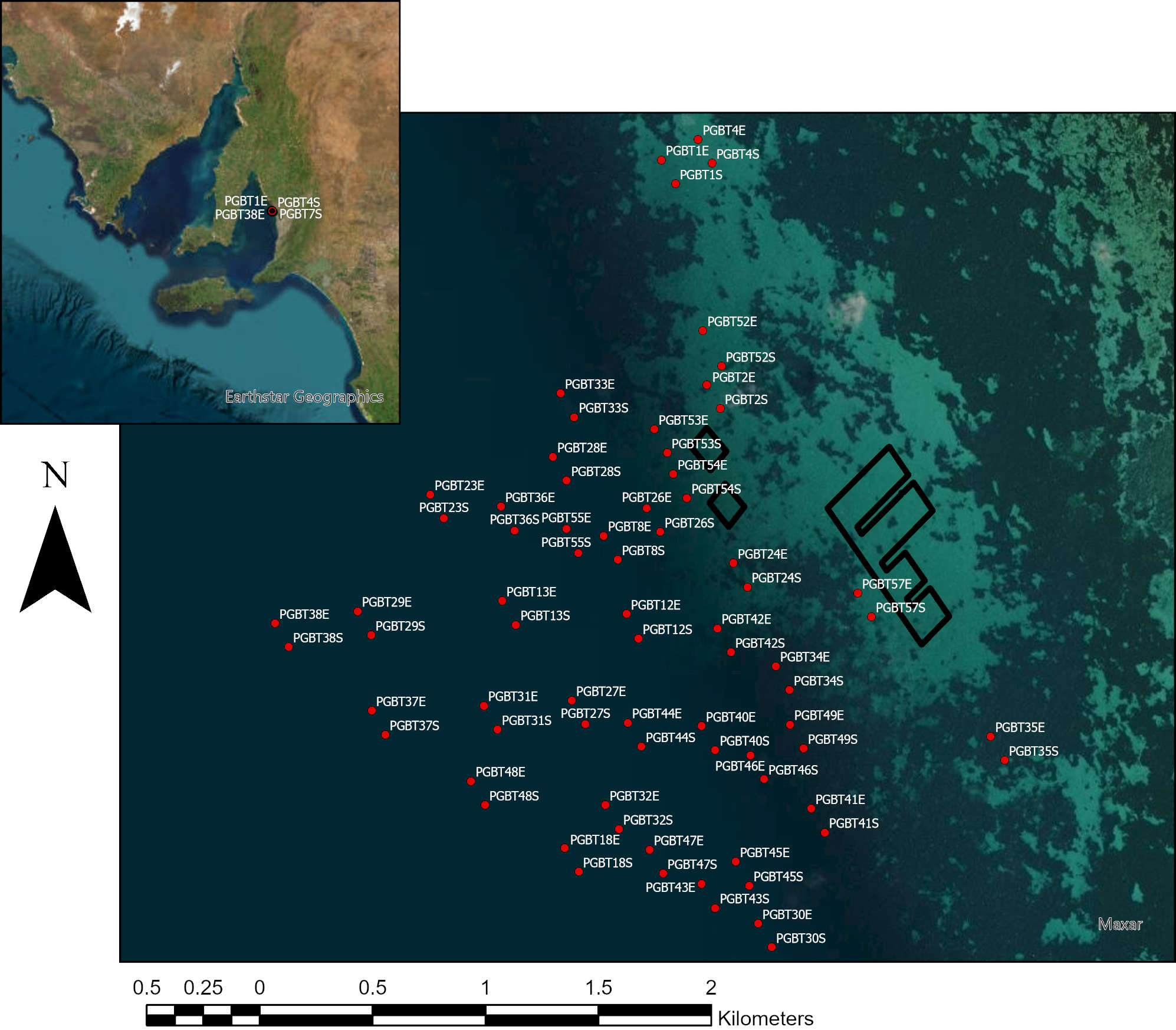
Trawl locations. Inset map (top left) shows the study area, to the north of Adelaide and around 4 km offshore from Port Gawler in SA.
The start and end points of each 100 m trawl are shown on the main map. Each site is labelled.
Outcomes
The voyages provided valuable data on the species composition and size of fish and marine invertebrates found in seagrass and sandy habitats. Key findings include differences in fish communities between the two types of habitats, advancing our understanding of the species found in seagrasses or dependent on seagrasses for food in South Australia (i.e., threatened and endangered species such as pipefish and seahorses), highlighting the need to protect and restore these habitats.
Voyages, such as this contribute scientific evidence for the benefits of seagrass protection and restoration to marine biodiversity and fisheries. The project generates information that links the presence of seagrasses with benefits to nature and people by enhancing habitats for various species and supporting fisheries.
Ongoing analysis of fish samples using chemical tracers in tissues will provide better insights into how reliant different species are on seagrass as a food source. The results will contribute to a broader project funded by the Commonwealth Government, aimed at measuring the benefits of seagrass restoration. This project will also be estimating the monetary value of these benefits, which can attract potential investors in seagrass restoration. The findings will be shared with stakeholders and published in scientific papers and public forums.
Acknowledgements
This research was supported by a grant of sea time from the Southern Coastal Research Vessel Fleet, with funding from the National Collaborative Research Infrastructure Strategy (NCRIS).
This work is linked to the following projects:
- The Gulf St Vincent Seagrass Restoration Project, funded by the Australian Government Department of Agriculture, Water and the Environment
- Ecosystem restoration benefits measurement, verification and accounts for the Gulf St Vincent seagrass restoration project, funded by the Australian Government Department of Climate Change, Energy, the Environment and Water.
Voyage photo credits: Dr. Alice Jones
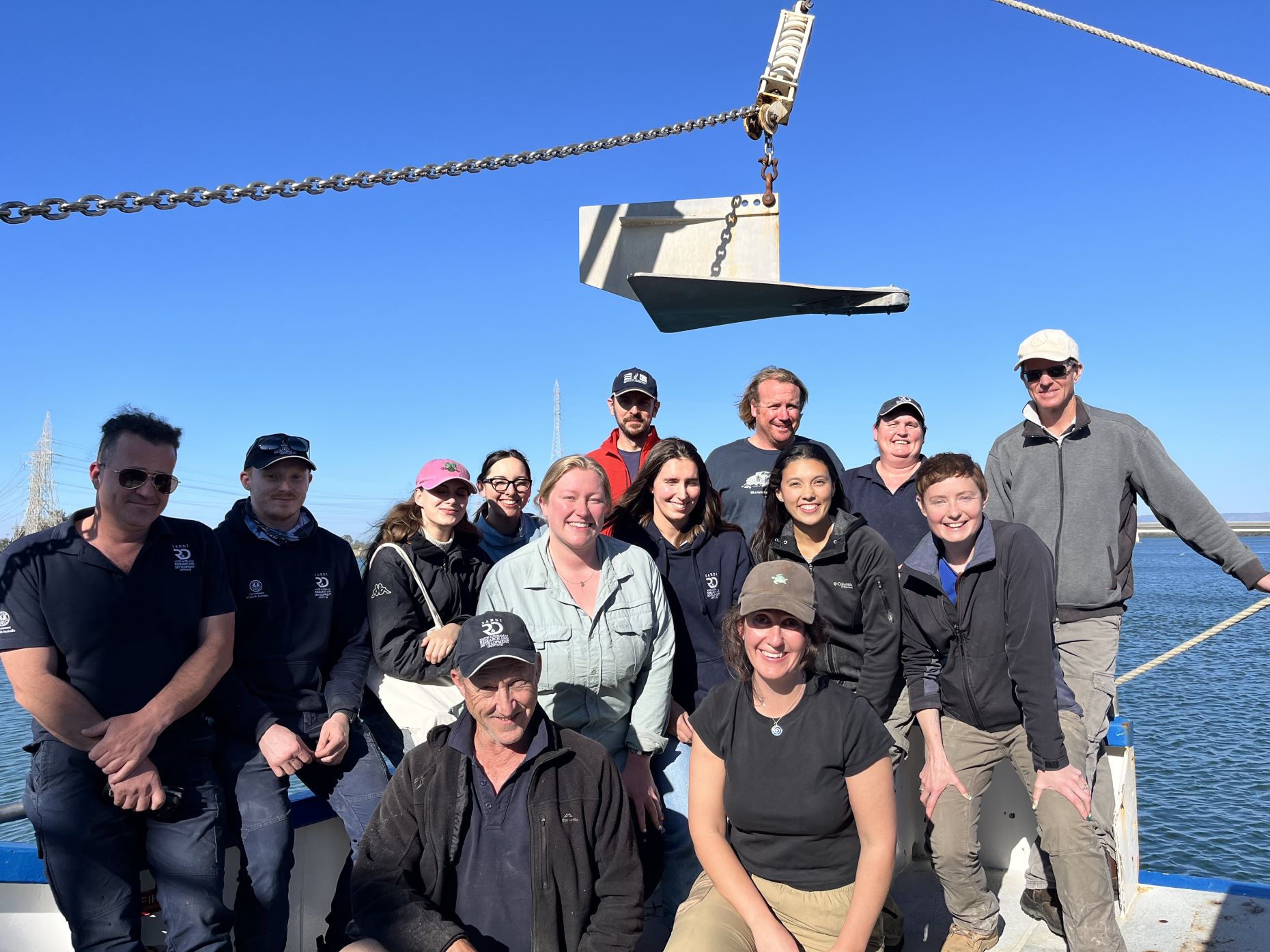
The team onboard on the final day. From left to right (back to front): Jonnie Western, Nathan Cummins, Sophia Reinecke, Lucy Wood, Patrick Reis Santos, Alex Dobrovolskis, Kelly Pearson, Jason Tanner, Sophie Russell, Sunira Reardon, Tess Shrestha, Alice Jones, Dean Eyre, Nina Wootton.

One of the more commonly caught species within seagrass, the blue weed whiting (Haletta semifasciata)
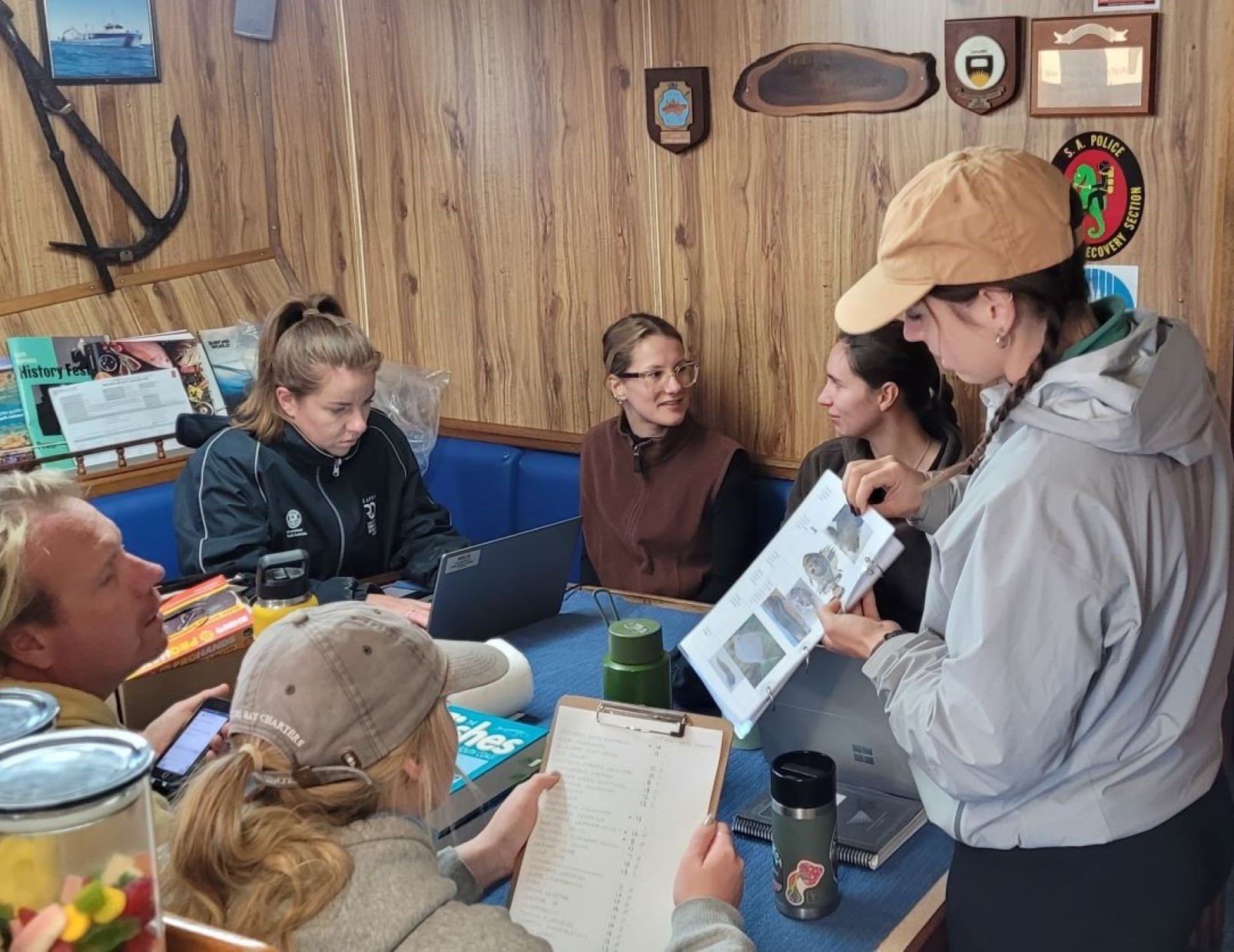
Fish ID briefing by Lucy Wood.
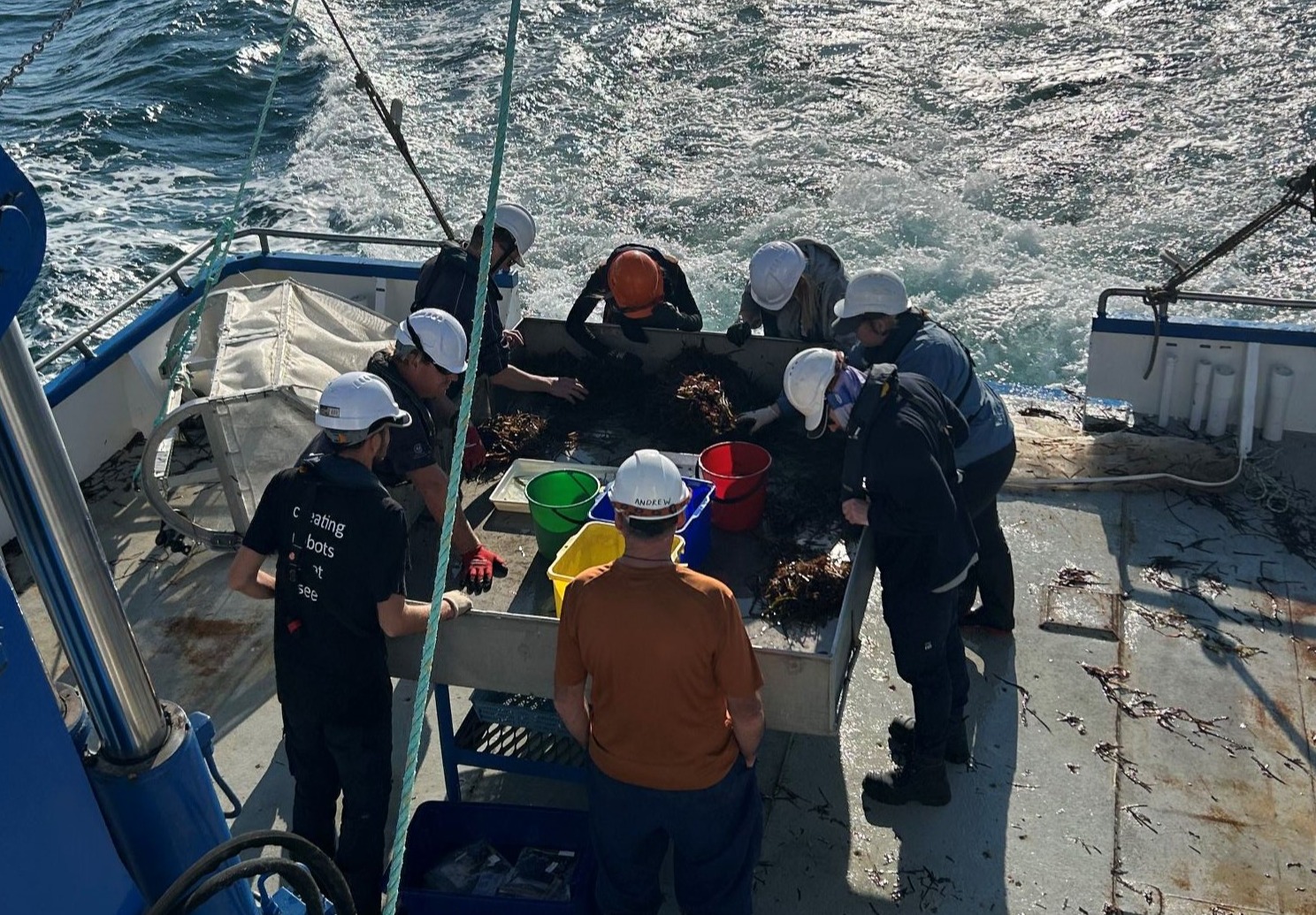
Sorting the catch on the back deck.
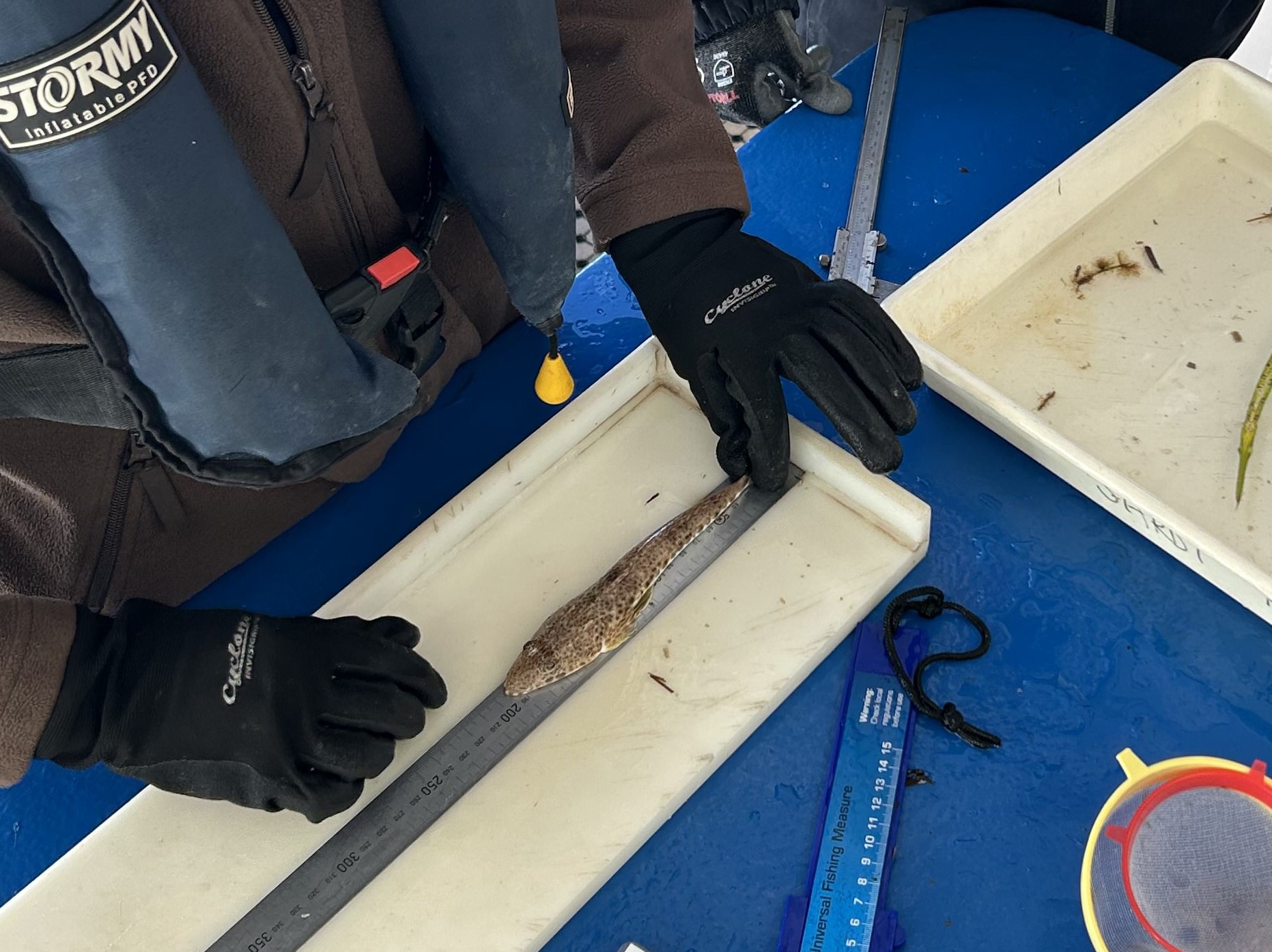
Measuring a fish (a juvenile flathead) caught in one of the trawls before releasing back to the water.
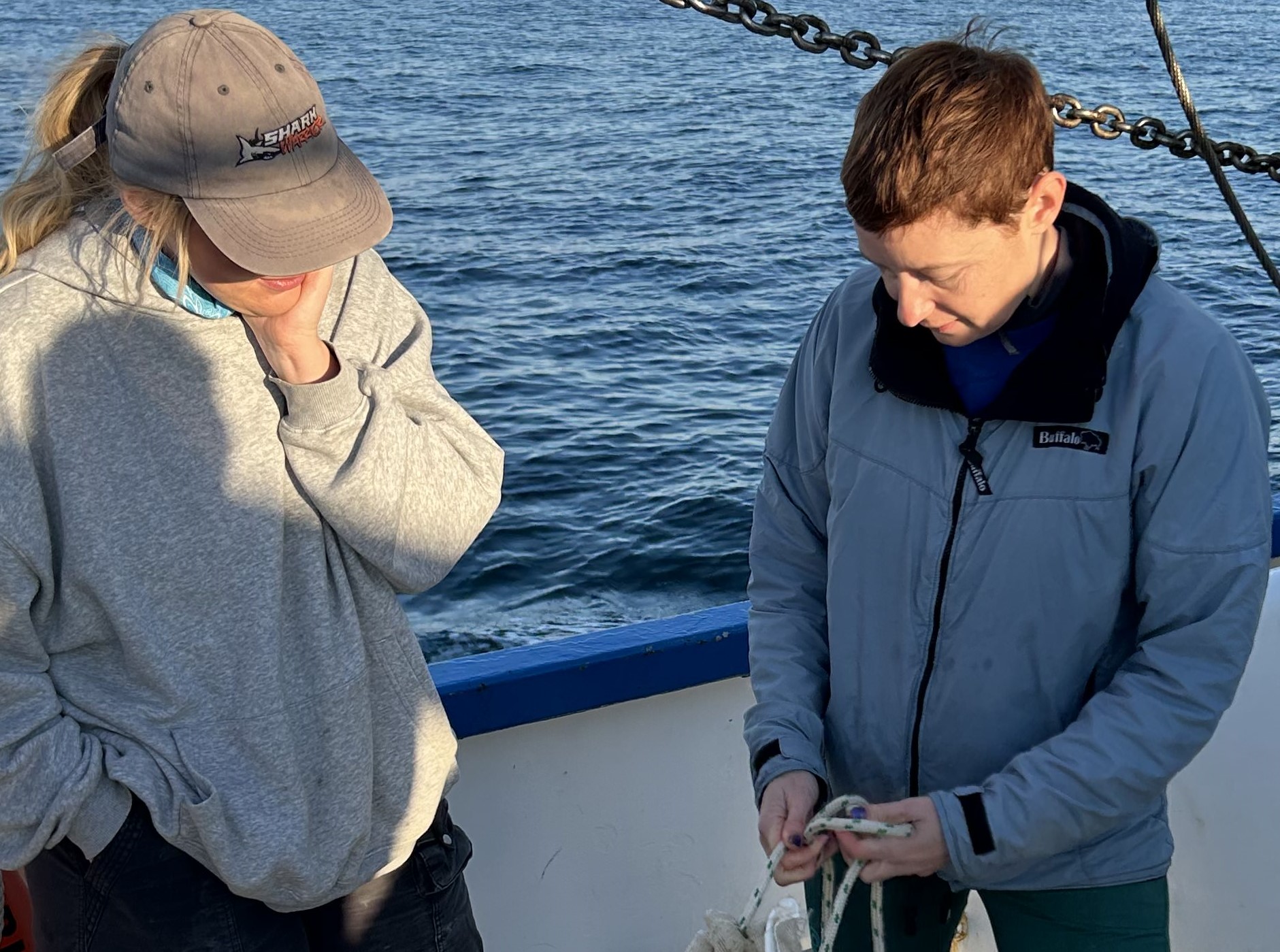
Practicing knots (Laura Holmes and Alice Jones)
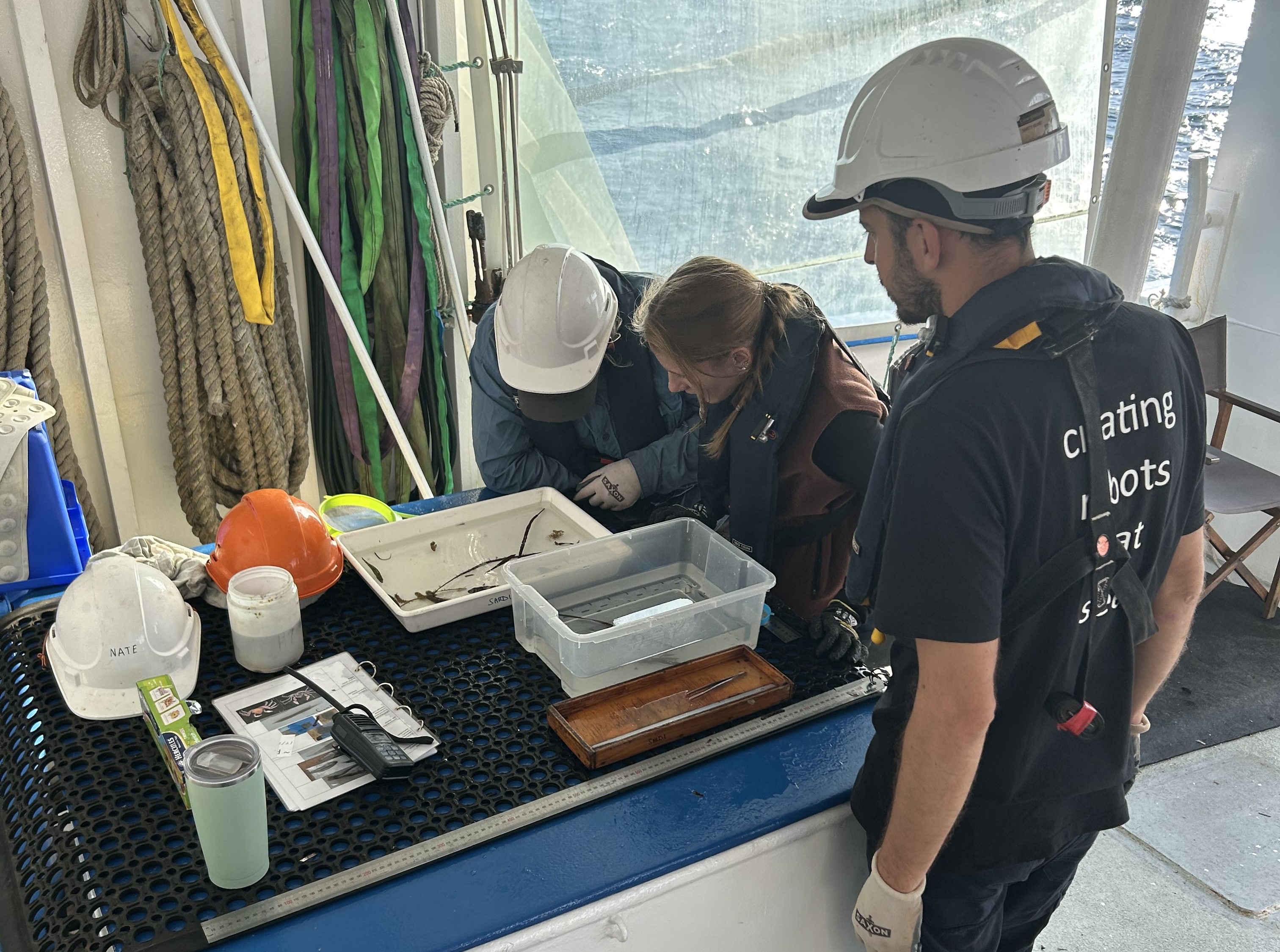
Identifying and measuring the catch.
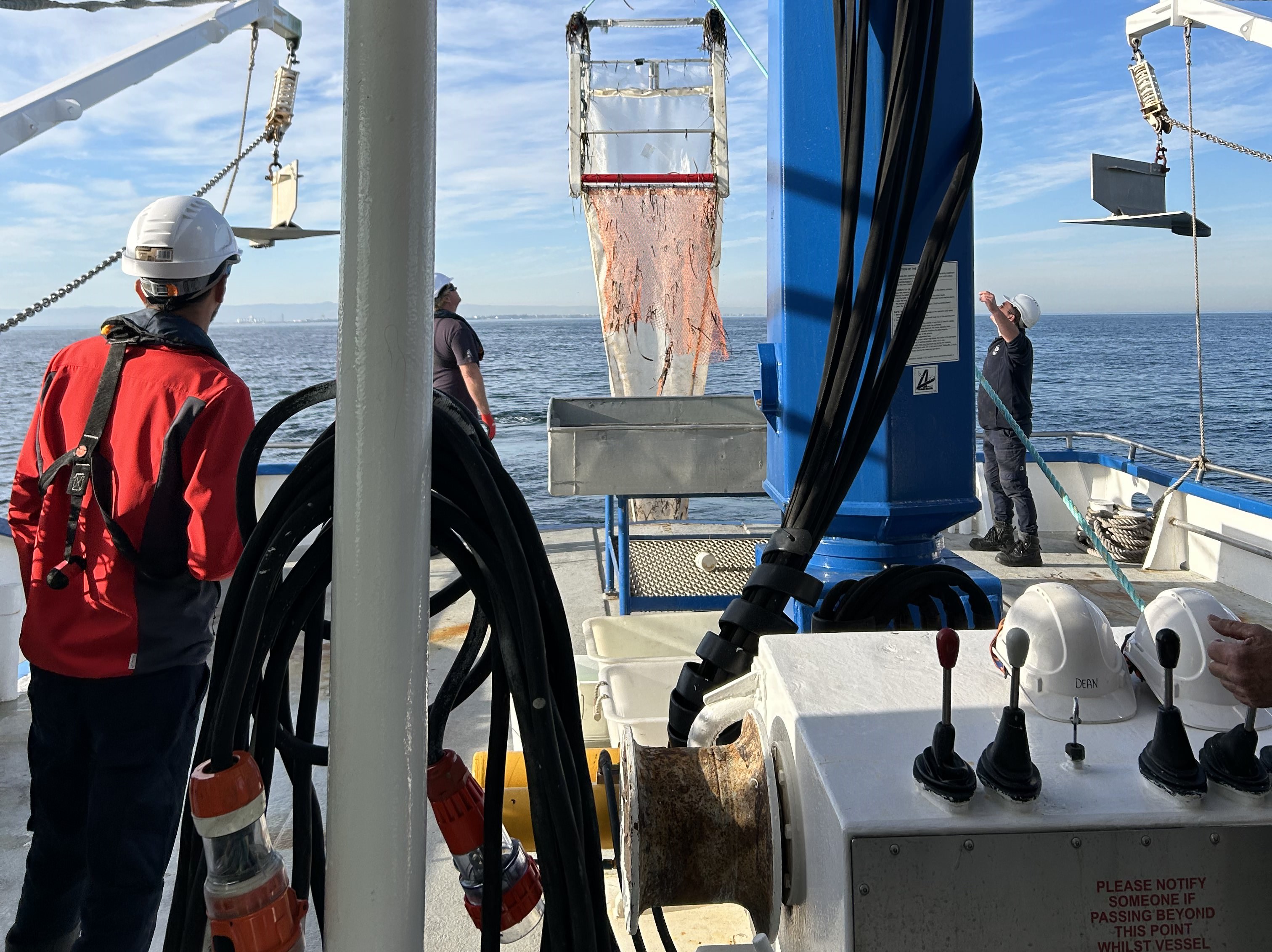
The small, modified trawl net being deployed (note the red foam bumper added to the bottom of the net mouth to reduce damage to the seagrass habitat).