
Biological sampling program
The biological sampling program involves collaboration between industry and researchers to collect Snapper samples from all South Australian waters. This information is used to monitor Snapper populations.
The biological samples, such as otoliths and tissue, are also used in multiple projects of the Snapper Science Program.
Background
Since 2000, SARDI researchers have conducted a weekly market sampling program to provide biological data for the Snapper caught by commercial Marine Scalefish Fishery (MSF) fishers in SA.
Following the closure of the Spencer Gulf/West Coast Stock and Gulf St Vincent Stock in November 2019, a targeted adult Snapper sampling program was implemented. This allowed the annual time series of regional length and age structures to continue.
The program involved contracting commercial MSF fishers to collect samples of Snapper from the:
- West Coast (WC)
- Northern Spencer Gulf (NSG)
- Southern Spencer Gulf (SSG)
- Northern Gulf St Vincent (NGSV)
- Southern Gulf St Vincent (SGSV).
Snapper from the South East region continued to be accessed through the weekly market sampling program.
The biological sampling program was identified as the highest research priority in the most recent Snapper Stock Assessment Report (Drew et al. 2022 ( )).
Objectives
This project will continue the biological sampling program across South Australia throughout the fishery closure. Information collected will be used in the following ways:
- To develop annual length and age structures for each regional population. This is used to monitor the population structures and recruitment to the fishable biomass.
- To use the time series of annual age structures to assess recruitment variability at the regional scale.
- Use regional age structures as input to the stock assessment model (‘SnapEst’).
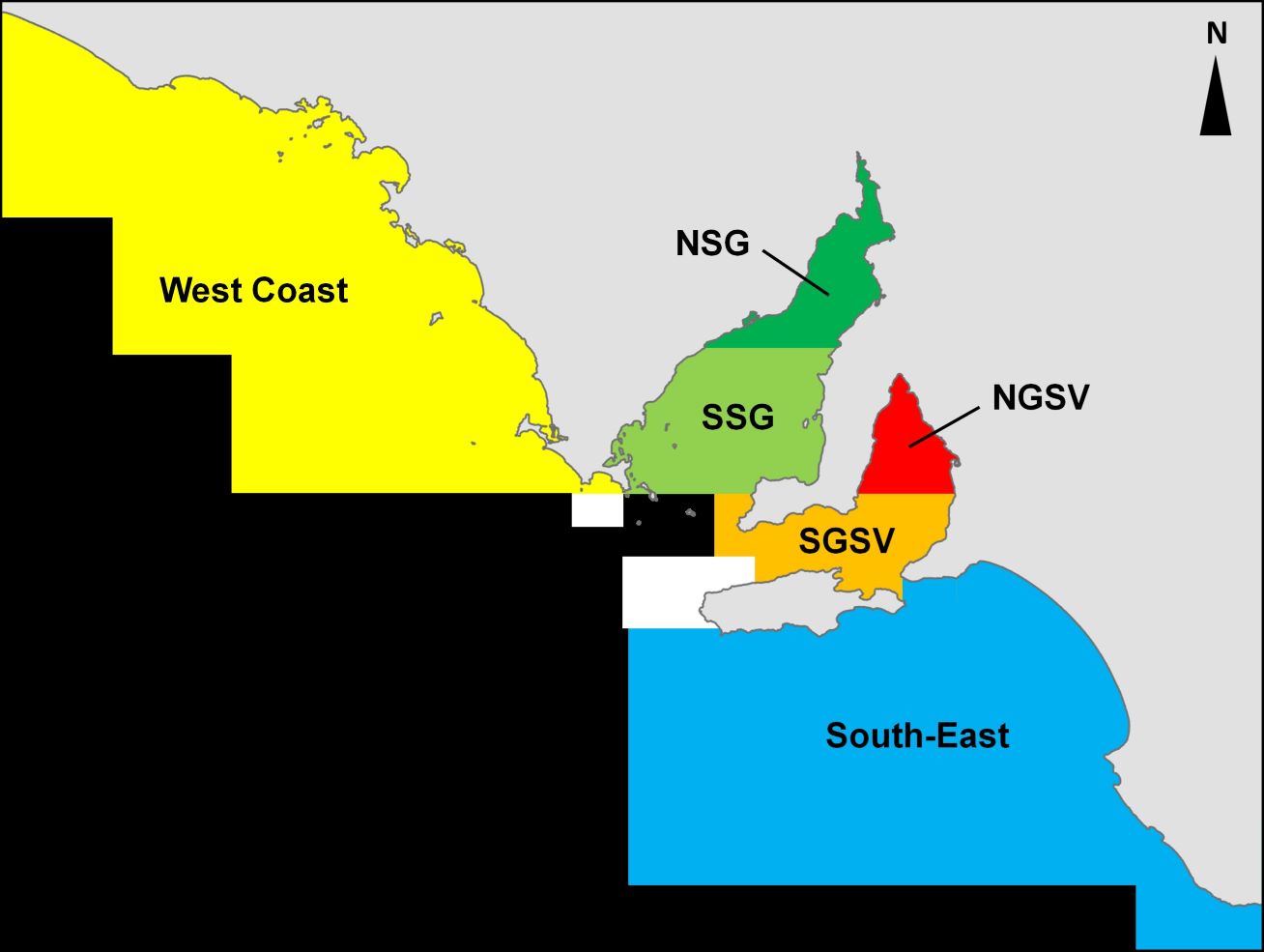
Map showing the 6 regional Snapper populations in South Australia
Project updates
October 2024 – sampling summary comparison
The biological sampling program continued in 2024 through both regular market sampling and collaborations with commercial MSF fishers across South Australia.
The samples are collected by commercial MSF fishers under the direction and presence of a SARDI observer. Regular trips through the SSG, NSG, SGSV, and WC have been conducted across the year, with further sampling planned for the remainder of 2024.
Summary of Snapper sampled – correct as of October 2024 | ||
|---|---|---|
Region | 2023 | 2024 |
West Coast | 209 | 133 |
Northern Spencer Gulf | 357 | 222 |
Southern Spencer Gulf | 149 | 182 |
Northern Gulf St Vincent | 236 | 278 |
Southern Gulf St Vincent | 125 | 214 |
South-East | 447 | 210 |
Total | 1,523 | 1,239 |
January 2024 – sampling process and 2023 summary
The continued Snapper sampling during the fishery closure is essential to monitor trends in the population and detect signs of recovery.
The samples are collected by commercial MSF fishers who operate under a Ministerial Exemption, with direction and presence of a SARDI observer. The fish are then processed by SARDI staff at an accredited local fish processing facility, to collect:
- biological information including length, weight, sex, and reproductive condition
- samples including otoliths to estimate age, and fin clips for genetics.
After biological information is collected, the fish are filleted by the processors and the fillets donated to Foodbank, who distribute them to people in need across South Australia.
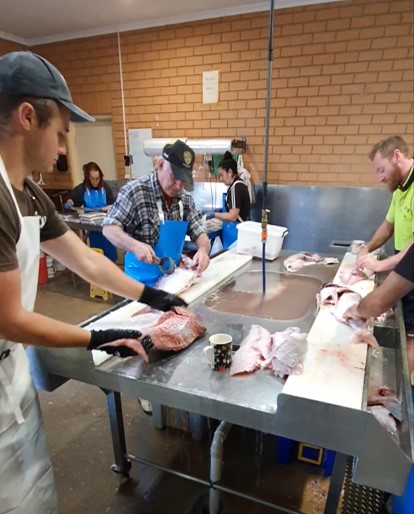 Processing Snapper at Thevenard Fish Processors
Currently, a total of 15 commercial MSF fishers across the West Coast of Eyre Peninsula, Spencer Gulf, and Gulf St Vincent are contracted for this purpose.
Snapper from the South-East region are accessed through a routine sampling program at the SAFCOL fish market.
In 2023, over 1,500 fish were sampled across the state and almost 600 fish have been sampled in January and February 2024.
Summary of Snapper sampled | |
|---|---|
| Region | 2023 |
West Coast | 209 |
Northern Spencer Gulf | 357 |
Southern Spencer Gulf | 149 |
Northern Gulf St Vincent | 236 |
Southern Gulf St Vincent | 125 |
South-East | 447 |
Total | 1,523 |