
Lincoln weed
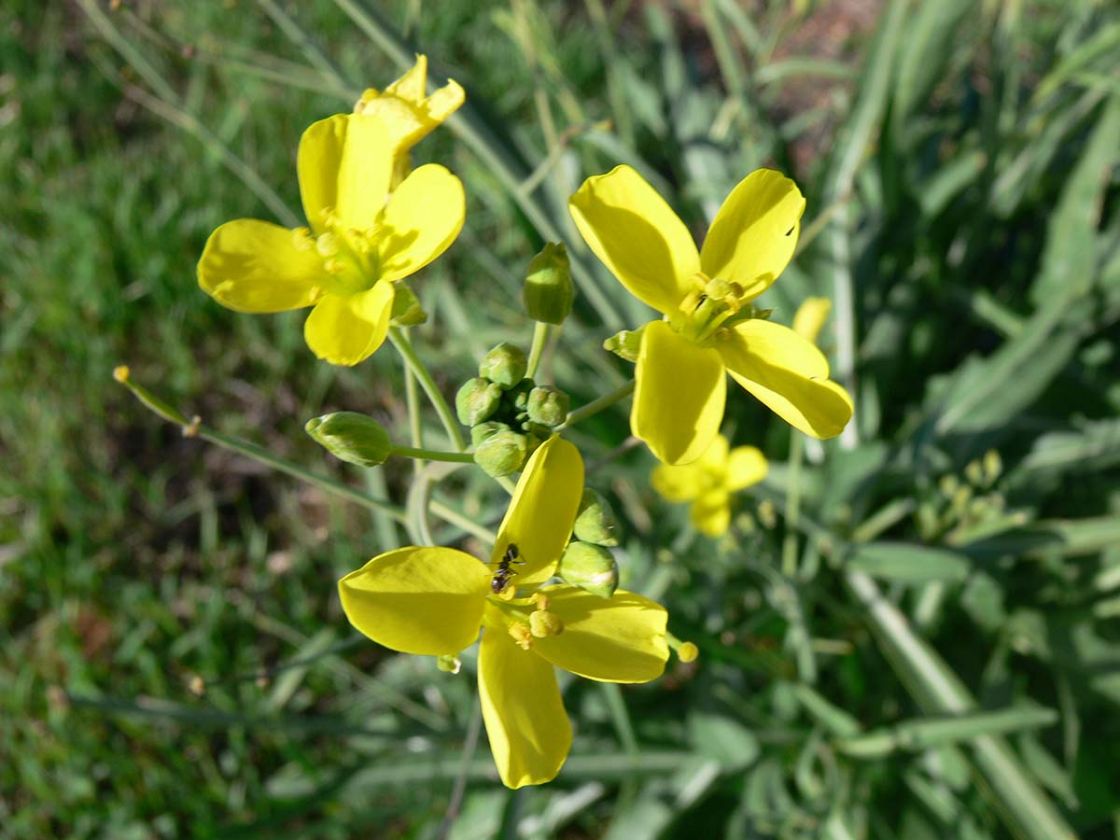
Diplotaxis tenuifolia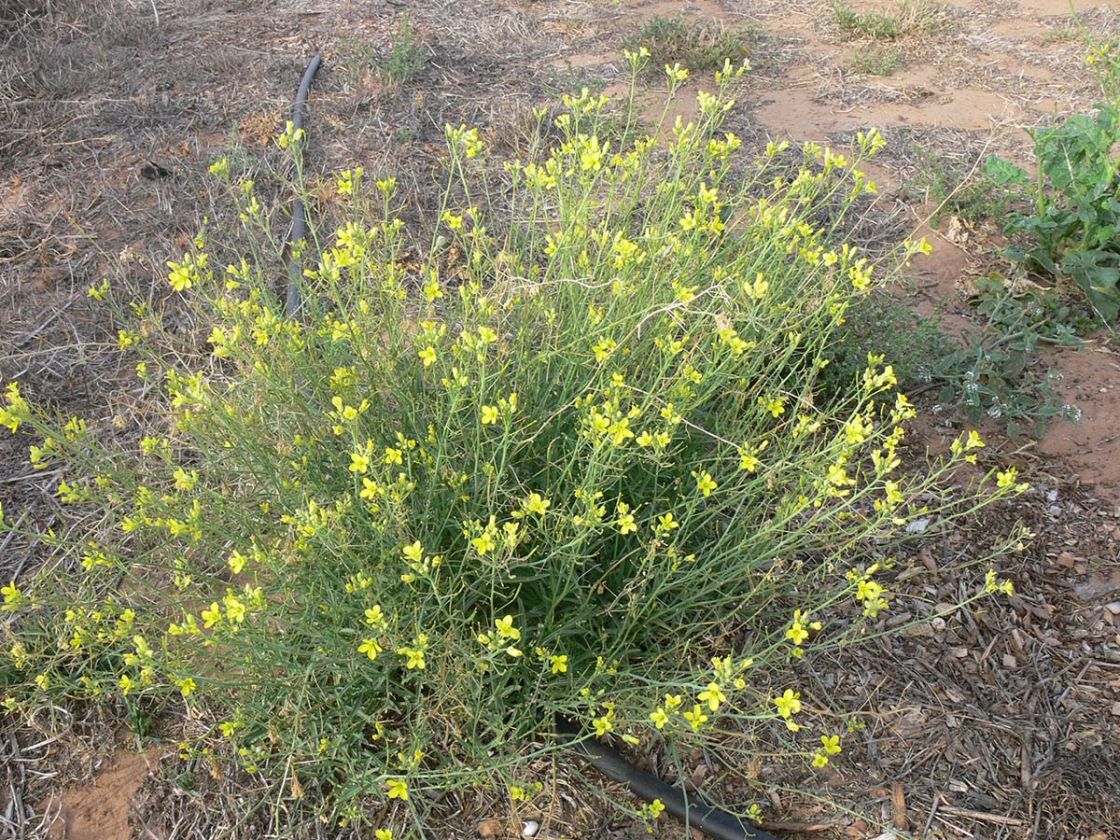
Weed profile
 Perennial
 Herb
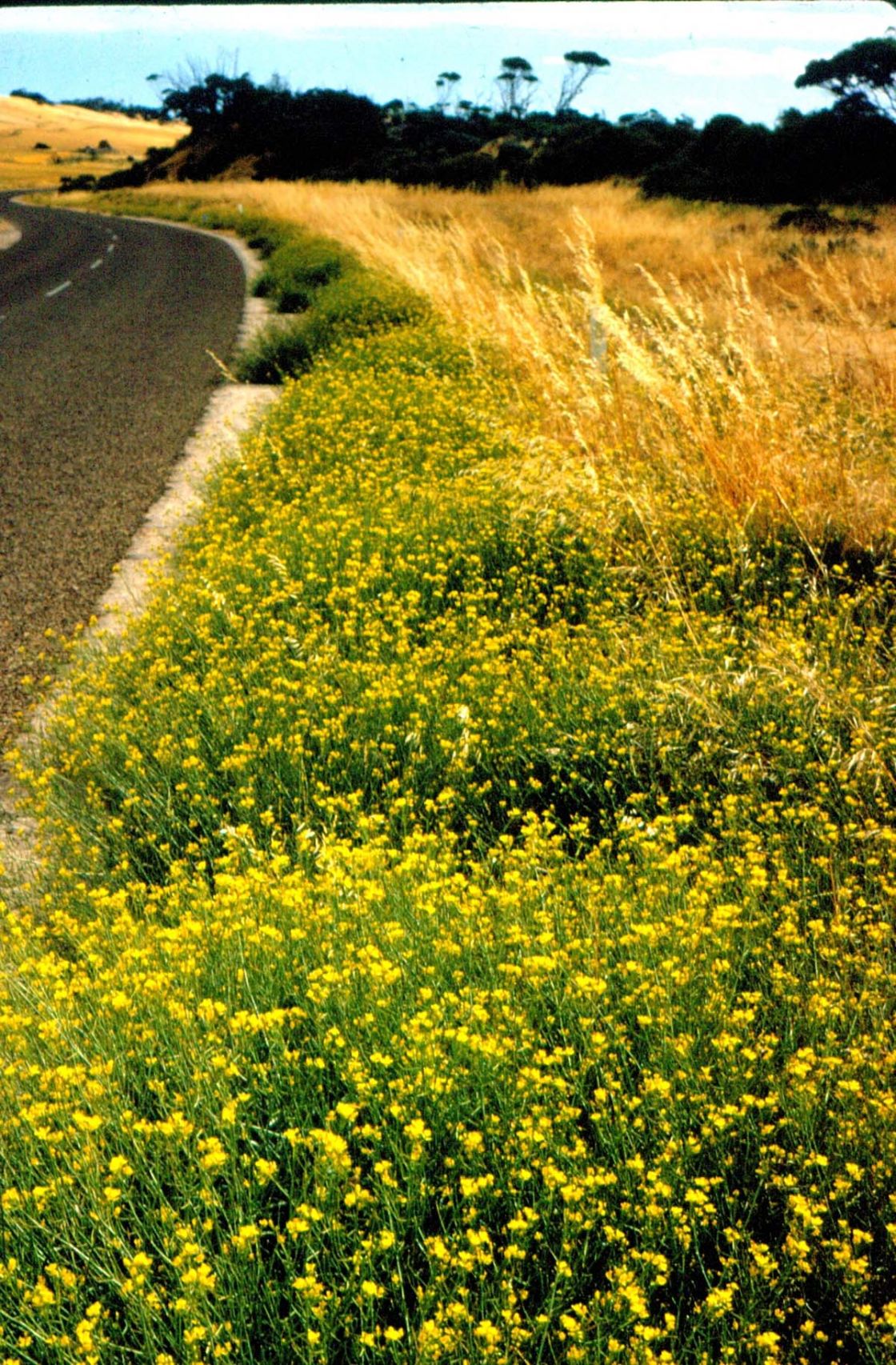
Herb- Habitat: pastures
Impact
Competes with crop and pasture. Unpalatable.
Description
- Deep-rooted perennial herb.
- Leaves alternate, deeply lobed, mostly at base of plant.
- Flowers bright yellow with 4 petals.
- Seed in long narrow pods.
- Strong taste, used in salads as wild rocket.
Control options
metsulfuron-methyl (600g/kg)
Application Method: Boom spray
Application Rate: 7g/ha
Product Name: Ally®
Herbicide Group: 2
Situation: Wheat, barley, triticale and cereal rye crops.
Timing: Boom spray, late winter to spring.
Comments: Weeds emerging after spraying may not be controlled. Soil active herbicide, may damage desirable vegetation.
Legal Status: Registered
chlorsulfuron (750g/kg)
Application Method: Boom spray
Application Rate: 20g/ha
Product Name: Glean®
Herbicide Group: 2
Situation: Wheat, barley, oats, triticale and cereal rye crops.
Timing: Boom spray, post-emergence.
Comments: Do not use near trees and other desirable vegetation.
Legal Status: Registered
chlorsulfuron (750g/kg)
Application Method: Boom spray
Application Rate: 15g/ha
Product Name: Glean®
Herbicide Group: 2
Situation: Wheat or triticale crops.
Timing: Boom spray, pre-sowing
Comments: Herbicide is incorporated in soil by sowing. Do not use near trees and other desirable vegetation.
Legal Status: Registered
MCPA (500g/L)
Application Method: Spot spray
Application Rate: 7mL/10L
Product Name: Spalding MCPA 500®
Herbicide Group: 4
Situation: Crops, pasture and non-crop situations.
Timing: Spot spray, rosette stage.
Comments: Hormone type herbicide - use with caution near sensitive crops. Refer to drift warnings on the label.
Legal Status: Registered
MCPA (500g/L)
Application Method: Boom spray
Application Rate: 700mL/ha
Product Name: Spalding MCPA 500®
Herbicide Group: 4
Situation: Arable land when no crop present.
Timing: Boom spray, rosette stage.
Comments: Hormone type herbicide - use with caution near sensitive crops. Refer to drift warnings on the label.
Legal Status: Registered
2,4-D amine (625g/L)
Application Method: Spot spray
Application Rate: 170mL/150L
Product Name: Conquest Amine 625®
Herbicide Group: 4
Situation: Cereal crops
Timing: Spot spray, early rosette stage.
Comments: Hormone type herbicide - use with caution near sensitive crops. Refer to drift warnings on the label.
Legal Status: Registered
2,4-D amine (625g/L)
Application Method: Boom spray
Application Rate: 1.7L/ha
Product Name: Conquest Amine 625®
Herbicide Group: 4
Situation: Cereal crops
Timing: Boom spray, early rosette stage.
Comments: Hormone type herbicide - use with caution near sensitive crops. Refer to drift warnings on the label.
Legal Status: Registered
2,4-D amine (475g/L)
Application Method: Boom spray
Application Rate: 425mL-1.8L/ha
Product Name: Conquest Amine Plus 475®
Herbicide Group: 4
Situation: Cereal crops
Timing: Boom spray, early rosette stage.
Comments: Hormone type herbicide - use with caution near sensitive crops. Rate depends on stage and species of the crop. Refer to drift warnings on the label.
Legal Status: Registered
2,4-D amine (475g/L)
Application Method: Boom spray
Application Rate: 2.15L/ha
Product Name: Titan Amine 475®
Herbicide Group: 4
Situation: Arable land when no crop present; grass pastures.
Timing: Boom spray, early rosette stage.
Comments: Hormone type herbicide - use with caution near sensitive crops. Refer to drift warnings on the label.
Legal Status: Registered
Legal requirements in each region

Must not be sold or traded in any way, including as a contaminant of anything.

Must not be transported on a public road, including as a contaminant of anything.

Land owners in this region to take reasonable steps to kill plants and prevent their spread. Enforceable by the Eyre Peninsula Landscape Board.
Must not be sold or traded in any way, including as a contaminant of anything.
Must not be transported on a public road, including as a contaminant of anything.
Land owners in this region to take reasonable steps to kill plants and prevent their spread. Enforceable by the Green Adelaide Board.
Must not be sold or traded in any way, including as a contaminant of anything.
Must not be transported on a public road, including as a contaminant of anything.
Land owners in this region to take reasonable steps to kill plants and prevent their spread. Enforceable by the Hills and Fleurieu Landscape Board.
Must not be sold or traded in any way, including as a contaminant of anything.
Must not be transported on a public road, including as a contaminant of anything.
Land owners in this region to take reasonable steps to kill plants and prevent their spread. Enforceable by the Kangaroo Island Landscape Board.
Must not be sold or traded in any way, including as a contaminant of anything.
Must not be transported on a public road, including as a contaminant of anything.
Land owners in this region to take reasonable steps to kill plants and prevent their spread. Enforceable by the Limestone Coast Landscape Board.
Must not be sold or traded in any way, including as a contaminant of anything.
Must not be transported on a public road, including as a contaminant of anything.
Land owners in this region to take reasonable steps to kill plants and prevent their spread. Enforceable by the Murraylands and Riverland Landscape Board.
Must not be sold or traded in any way, including as a contaminant of anything.
Must not be transported on a public road, including as a contaminant of anything.
Land owners in this region to take reasonable steps to kill plants and prevent their spread. Enforceable by the Northern and Yorke Landscape Board.
Must not be sold or traded in any way, including as a contaminant of anything.
Must not be transported on a public road, including as a contaminant of anything.
Must not be sold or traded in any way, including as a contaminant of anything.
Must not be transported on a public road, including as a contaminant of anything.
More Information
Find out how to:
- benefit from the early intervention of new and emerging weeds - handbook
- best manage your use and storage of agricultural and veterinary chemicals.
Control advice
For further help and advice managing this weed contact your regional landscape board: