
Tomato brown rugose fruit virus (ToBRFV)
Background
Tomato brown rugose fruit virus is an exotic plant disease that affects tomatoes, capsicums and chillies. Listed on the National Priority Plant Pest list, it is highly contagious and regarded as a threat to Australia's $5.8 billion vegetable industry.
ToBRFV was first detected in the Middle East in 2014 and has since been reported in Europe, the Middle East, China, Mexico and the USA.
The virus was first detected in Australia at 3 businesses in South Australia’s Northern Adelaide Plains in August 2024.
In November 2024, there was national agreement on a response plan to eradicate ToBRFV. After an eradication effort across 3 states, on 29 May 2025, the National Management Group decided ToBRFV was no longer technically feasible to eradicate from Australia.
On 3 October 2025, the South Australian Government issued an Area Freedom Certificate, providing confidence for interstate markets that South Australia was free of ToBRFV following extensive testing across its tomato-growing regions. Over 200,000 samples were tested across 109 properties, providing strong evidence that the virus was no longer present. All mainland states accept this area freedom.
ToBRFV is not widely distributed in Australia, currently only known to be present in a single property in glasshouse-grown tomatoes in Victoria.
All other states and territories in Australia, and other areas of Victoria, are considered free of the virus, and maintain regulations or programs to maintain this status.
Identification
Symptoms of this virus can look like those of other viruses from the same family and only laboratory tests can confirm it. Different plant varieties can present different symptoms.
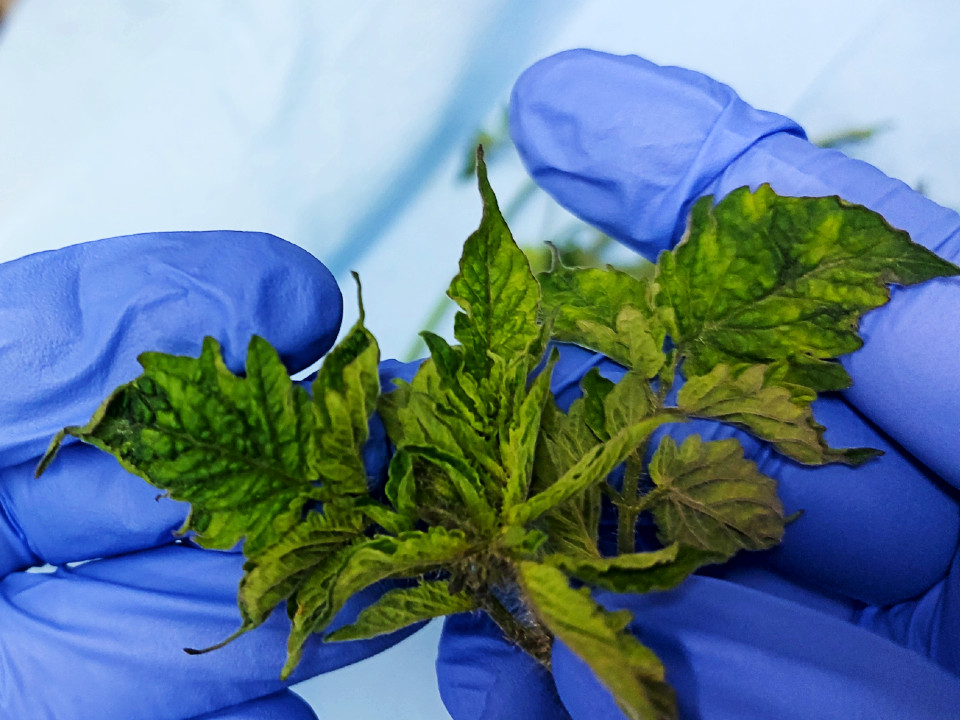
What to look for on leaves:
- mosaic or mottling patterns
- yellowing or discolouration
- blister-like appearance on the top surface of leaves
- deformities, including smaller leaf sizes.
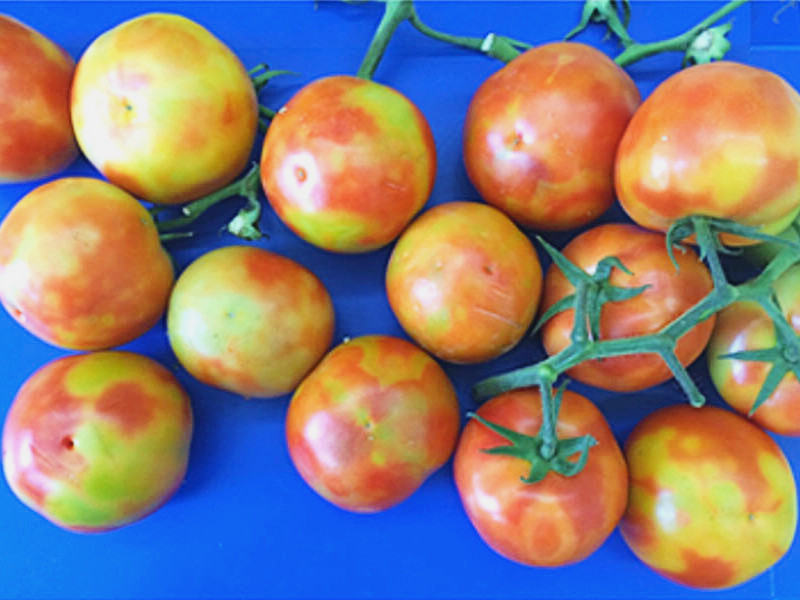
What to look for on fruit:
- yellow patches and marbling
- brown wrinkled spots on fruit
- uneven ripening (including green stripes or blotches)
- deformities.
Impact
ToBRFV could have a significant impact on our vegetable industry, including considerable economic losses due to reduced yield and quality of produce. In tomatoes, ToBRFV can reduce marketable yield by up to 75%.
ToBRFV is easily spread through:
- infected seed, plants for planting, grafts and cuttings
- direct plant to plant contact, including grafting
- touch transmission by handling contaminated tools, gloves, equipment, surfaces, and clothing
- transmission in seeds and irrigation water.
The virus can survive in seeds, plant debris, and contaminated soil for months. Once a crop is infected, the only control action is destroying all affected plants and material.
Some weeds, including black nightshade, silverleaf nightshade, and buffalo bur are regarded as hosts for ToBRFV. Potatoes are not known hosts and eggplant is unlikely to host or be affected by the virus.
The virus poses no threat to human health, and it is not a food safety risk.
Management
ToBRFV spreads easily. To protect your property and produce from ToBRFV, producers, home gardeners and consumers are reminded to practice safe biosecurity measures and report anything suspicious with their plants, crops, or fruit to ensure early detection.
Advice for commercial growers
Producers are advised to:
- practice good sanitation and plant hygiene, and implement this into everyday management
- prevent the entry and movement of pests onto your property by making sure staff, visitors and anyone coming into contact with your crops complies with on-farm biosecurity and hygiene practices, which could include:
- washing clothing and boots
- washing hands
- wearing and changing gloves regularly
- disinfecting tools, propagating material and equipment with sodium hypochlorite (1% solution of a 12% concentrate of pool chlorine – 1 part chlorine to 10 parts water is suitable)
- unless disinfected, do not share equipment, tools and machinery with other growers
- come clean, go clean – if you’ve been to another grower's property, you should disinfect prior to being in contact with your crop, tools or equipment
- source seed, seedlings and graft material that is free of ToBRFV
- remove weeds, wild tomato plants and solanaceous plant material that could act as hosts for the virus such as fat hen (Chenopodium murale), quinoa (Chenopodium quinoa), Petunia hybrids (garden plants) and black nightshade (Solanum nigrum)
- monitor crops regularly for virus disease symptoms.
See Programs on the AusVeg SA website for 'Clean Your Farm' and 'Greenhouse Toolkit' resources in English and Vietnamese.
Go to the Farm Biosecurity website to build your own biosecurity toolkit.
Advice for home gardeners
Home gardeners are advised to:
- keep a regular eye out for unusual pests or disease in your garden including ToBRFV, and report anything unusual immediately to the Exotic Plant Pest Hotline
- source seed, seedlings and graft material that is free of ToBRFV from a reliable supplier or nursery
- understand SA travel rules and quarantine
- disinfect tools, propagating material and equipment with sodium hypochlorite (1% solution of a 12% concentrate of pool chlorine – 1 part chlorine to 10 parts water is suitable)
- remove any weeds, wild tomato plants and other hosts that could act as reservoirs for the virus that you find in your garden.
For further information and advice on establishing good home garden biosecurity and plant hygiene, visit the Urban Plant Health Network.
You can also watch this video in Vietnamese.
Come clean… Go clean. How you can help stop the tomato brown rugose fruit virus spreading.
The tomato brown rugose fruit virus is a plant disease that spreads easily.
It affects tomatoes, capsicums and chillies.
It doesn't affect humans but is a significant threat to our vegetable industry.
Follow these steps to reduce the risk of spreading the virus.
Wash your hands thoroughly before moving to another greenhouse.
Remove your gloves before moving to another greenhouse. Use a fresh pair.
Wash clothes and hats. This helps remove dirt and plant material that can carry disease.
Disinfect your equipment, including tools and propagating material.
You can make a disinfectant by using 1 part chlorine to 10 parts water.
Clean your shoes before moving to another greenhouse.
Remember – Wash your hands.
Use clean gloves between glasshouses.
Wash clothes and hats.
Disinfect your equipment.
And clean your boots and shoes.
Stopping the spread of Tomato Brown Rugose Fruit Virus, helps your business, and the industry in South Australia.
Stay up to date by visiting the PIRSA website - and subscribe to our mailing list to receive regular industry updates.
If you see plants with unusual signs of disease, immediately report it to the Exotic Plant Pest Hotline on 1800 084 881.