Tiny pests, hidden damage: Mealybugs in cereal
Wednesday 8 July 2026 SARDIPestFacts
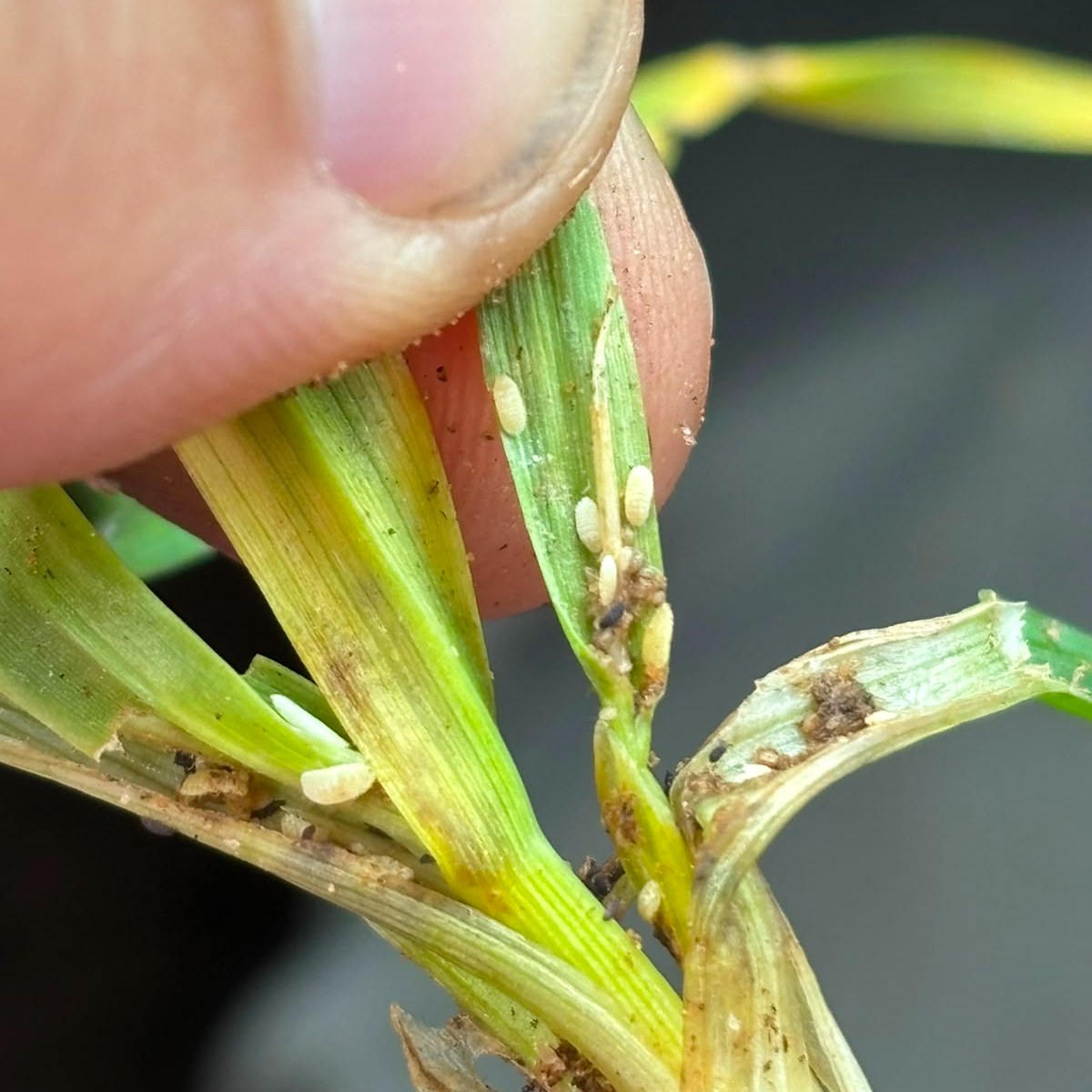
Although mealybugs are not a common or widespread cereal pest in South Australia, we have received several reports of mealybug activity in cereal crops from the Eyre Peninsula, Mid North and Murray Mallee over recent weeks.
Mealybugs are generally a minor pest of cereals. They can survive and build up on grass weeds and volunteer cereals, particularly where the green bridge has not been effectively managed before sowing. As a result, infestations may carry over into emerging cereal crops, although they often go unnoticed until patches of poor crop growth become apparent.
Identifying mealybugs
Mealybugs (Pseudococcus spp.) are small (typically 2–4 mm long), covered in a distinctive white, waxy coating that gives them a cottony or flour-dusted appearance. Depending on the species and life stage, they may appear as individual or as small patches of white fluff tucked away beneath the leaves.
Mealybugs are easy to miss because they spend most of their time hidden beneath leaves, around the base of stems and, in some cases, on the roots. They move very little and are often found clustered together in sheltered parts of the plant. If disturbed, they move slowly and can be distinguished from fungal growth or mould.
Recognising the damage and management
Mealybugs feed by inserting their piercing-sucking mouthparts into cereal plants and removing sap, reducing plant vigour and growth. Damage is often patchy, with affected plants appearing weaker than the surrounding crop. Heavy infestations may result in:
- Weak growth and reduced tillering
- Yellowing and poor plant vigour
- Sticky honeydew that may encourage the growth of sooty mould
- Reduced grain fill in severe infestations
Because mealybugs are usually concealed beneath leaf sheaths or around the base of plants, infestations can become established before symptoms are noticed. Honeydew and sooty mould are often signs that populations have already been present for some time.
As mealybugs are protected by their waxy coating and concealed feeding sites, insecticide coverage can be difficult, reducing the effectiveness of chemical control. Where management is required, good coverage of infested plants is essential, but in many situations careful monitoring and preserving beneficial insects including ladybird beetles may provide sufficient control. Before considering control, assess how widespread the infestation is, whether plant growth is being affected, and look for signs of beneficial activity.