
Refine DEPM methodology
One of the highest research priorities for Snapper is developing reliable indices to monitor population trends and inform stock status (Cartwright et al. 2021).
This project aims to optimise the techniques used to sample Snapper eggs from the water column and the spatial scale of sampling. Adjusting the way that we measure parameters of the daily egg production method (DEPM) will improve estimates of spawning biomass for Snapper.
Background
The DEPM estimates spawning biomass based on the:
- density of eggs in the water column
- reproductive condition of adult spawning fish, per the number of eggs produced.
It is an important part of monitoring SA's Snapper stock, as both a fishery-independent estimate of spawning biomass and an integral input into the stock assessment model.
The DEPM was originally developed to estimate spawning biomass of small pelagic fish species, such as Anchovy and Sardine. As Snapper is a demersal fish species with differences in biology and ecology, this must be accounted for in the design and analysis of DEPM surveys.
The estimate of spawning biomass is calculated from 6 parameters that relate to egg production and adult reproduction. There is uncertainty associated with each parameter, which is combined in the total estimate.
This method can be refined by improving approaches for key parameters – egg production (P0), spawning area (A), and spawning fraction (S).
Objectives
The following components are involved in the project:
- Determine the spatial distribution and dispersion of eggs from a spawning aggregation.
- Evaluate the effectiveness of different methodologies to sample Snapper eggs, such as the Bongo net (vertical and oblique tows) and neuston nets (surface tow).
- Determine the optimal spatial resolution (distribution of sampling stations) and scale for undertaking plankton surveys for Snapper eggs.
- Investigate temporal variations in egg densities and spawning dynamics.
- Investigate the relationship between estimates of spawning area, egg density, and egg production from spawning aggregations.
- Refine estimates of adult parameters including spawning fraction (S) and relative fecundity (F).
Project updates
October 2024 – DEPM refinement study results
Two surveys were completed in December 2023 and January 2024 in Gulf St Vincent, which compared 3 gear types to sample plankton – vertical, oblique, and neuston (surface) tows. Each method was used at 61 stations that were arranged in a grid composed of 3 sampling intensities:
- 4 × 2 nm
- 2 × 2 nm
- 1.4 × 1.4 nm.
The 3 net types sampled vastly different volumes of water. The vertical tow sampled the least, the oblique tow sampled ~3 times the water compared to a vertical tow, and the neuston tow sampled ~12-15 times the water of a vertical tow. Despite these large differences, the overall concentration of Snapper eggs sampled using each gear type was similar.
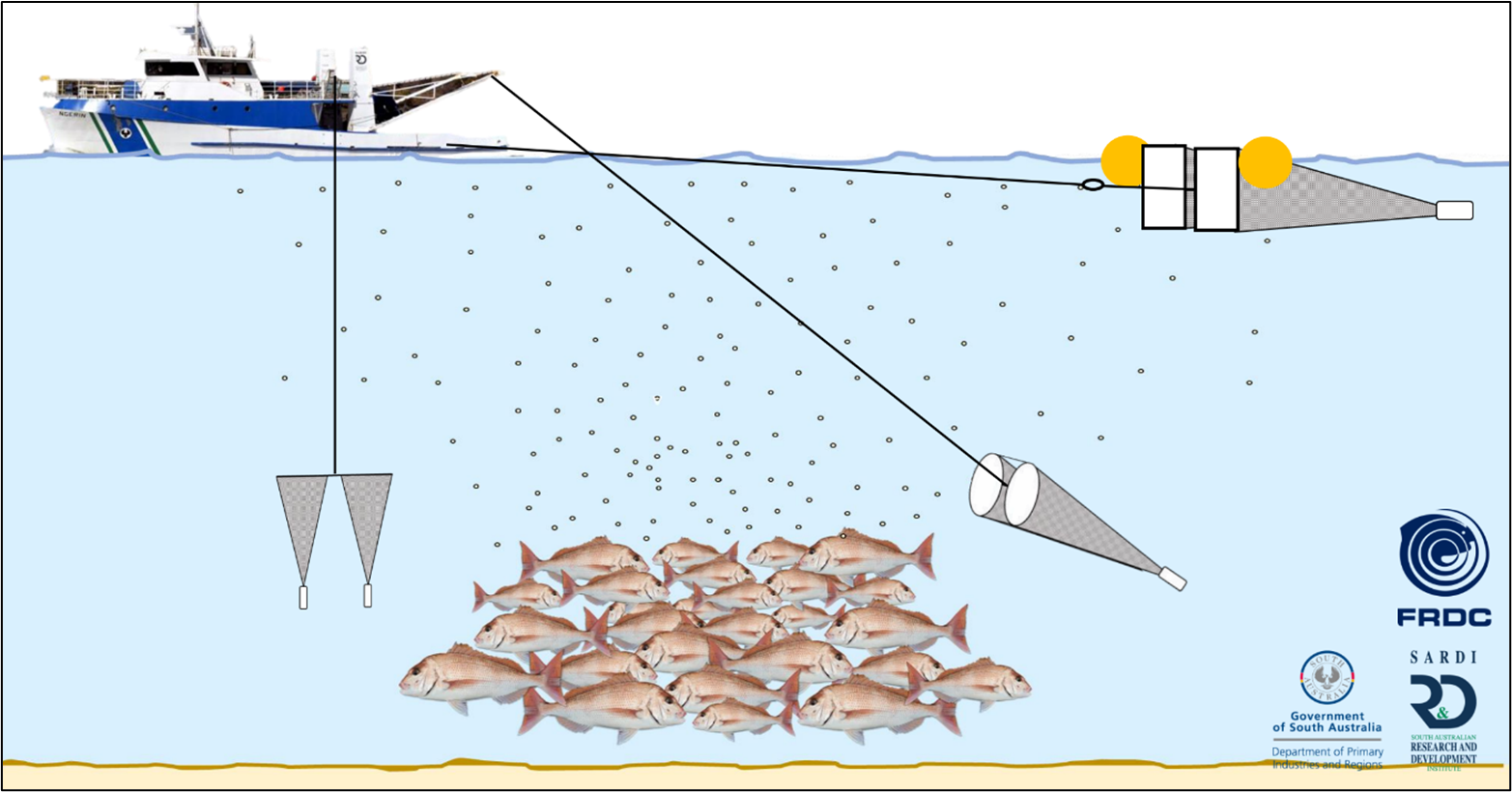
Schematic of the 3 methods used to sample Snapper eggs – vertical (left), oblique (middle), and neuston plankton tows (right).
Across the 2 surveys, just over 1% of the total eggs sampled were identified as Snapper eggs, and there were significantly more eggs sampled in January 2024 than in December 2023.
Comparison of the different spatial scales of sampling showed that a higher sampling intensity refined the estimate of spawning area and provided higher estimates of egg production.
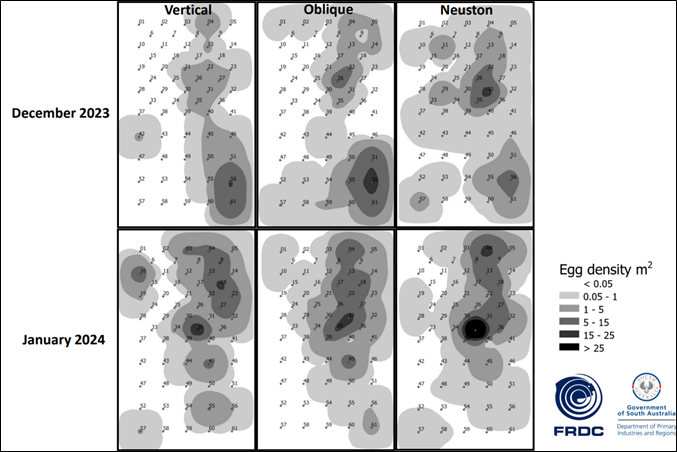
Distributions of Snapper eggs using the three sampling methods over the same area in December 2023 and January 2024.
Based on the results of the study, the following recommendations were developed for future applications of the DEPM for Snapper:
- Both vertical and oblique plankton tows are suitable to sample Snapper eggs and estimate mean daily egg production.
- Plankton sampling at a high spatial intensity appears most appropriate for future surveys.
- The distribution of plankton stations should prioritise areas where spawning aggregations of Snapper are most likely to be located. This can be informed by data sources including previous egg surveys, historic spawning aggregation sites, fishery catch records, and engagement with industry.
- Reducing the survey area through intensive plankton sampling and prioritising key spawning areas is likely to reduce variance in adult parameters, such as spawning fraction.
August 2024 – processing mixed plankton samples
Over 7 months, 415 mixed plankton samples from surveys in Gulf St Vincent were processed by a team of 4 research staff. This processing occurred over multiple stages:
- All eggs within the sample were categorised based upon their size. Eggs with a diameter between 0.75 and 0.90 mm were classed as ‘possible’ Snapper eggs, whilst eggs outside of these bounds were classed as ‘other’ eggs and were kept aside.
- The possible eggs were analysed again looking for key morphological characteristics of Snapper eggs.
- Eggs that were identified within this size range with the correct morphological characteristics were subjected to molecular validation using in situ hybridisation (ISH) (Oxley et al. 2017). This uses a genetic probe that binds specifically to Snapper RNA, generating a blue colour.
The processing time of each sample depended on the plankton net used for collection, with neuston tows generally gathering a denser plankton sample. The mixed plankton sample processing was completed in August, with results expected in late September 2024.
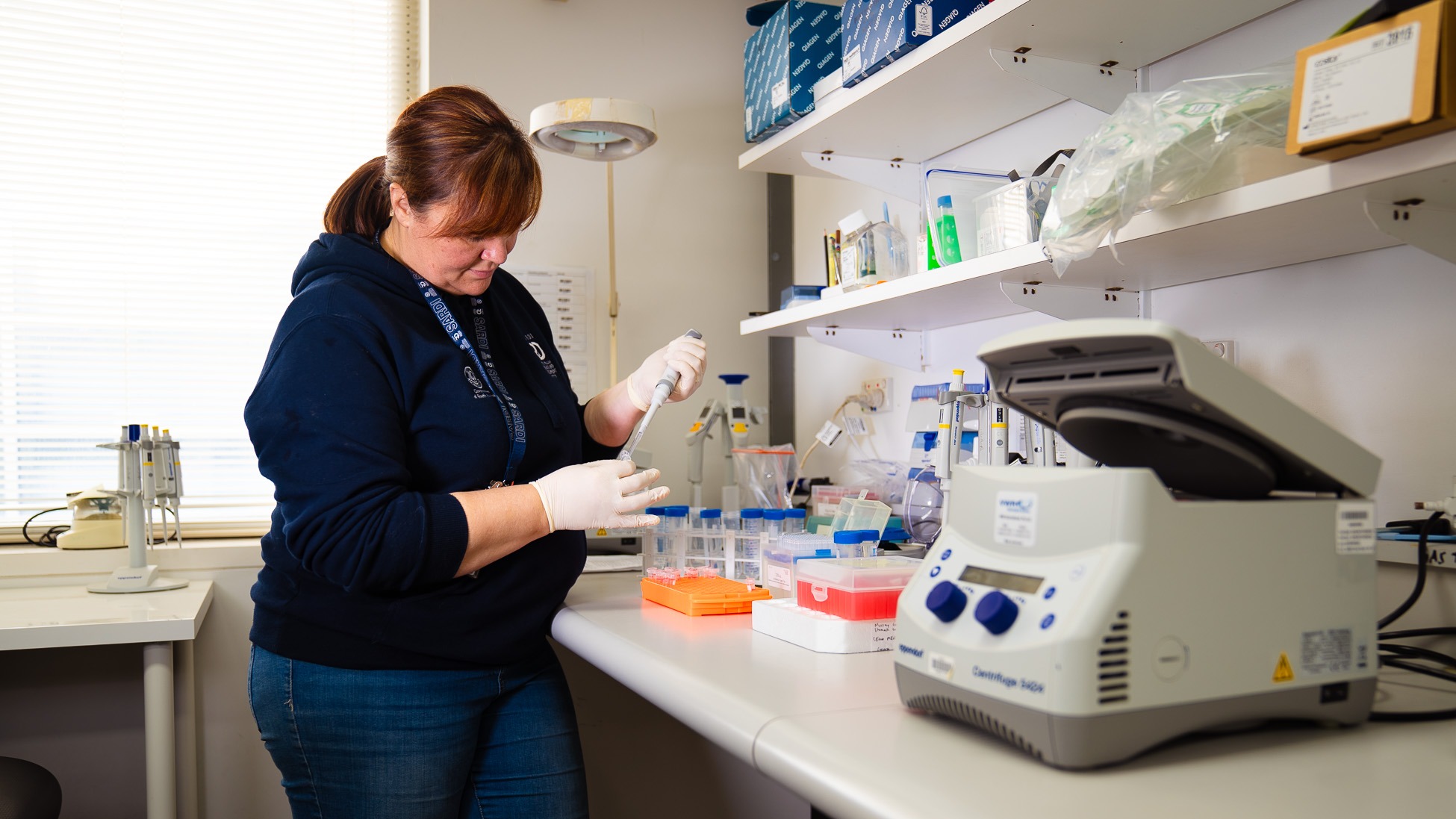
Eggs undergoing molecular validation using ISH.
February 2024 – surveys in Gulf St Vincent completed
Two field surveys to refine the DEPM for Snapper were completed from 13 to 19 December 2023 and 11 to 17 January 2024. These were done in Gulf St Vincent to determine the most appropriate sampling design for future applications of DEPM for Snapper. The 2 main objectives were to:
- Evaluate the spatial scale of sampling (how far apart plankton samples are collected throughout the survey area). This relates to the aggregating behaviour of Snapper.
- Compare the effectiveness of different methods to sample Snapper eggs. This involved comparing 3 types of plankton tow – vertical, oblique, and horizontal.
Sampling was done from MRV Ngerin and involved a team of 5 research staff led by Dr Michael Drew (SARDI). The vessel operated for 24 hours a day and at each sampling station the team completed the 3 sampling methods. Plankton samples were preserved in ethanol and refrigerated in preparation for processing in the laboratory.
Adult Snapper were sampled from multiple sites throughout the survey area. The fish were processed for biological information to estimate the adult parameters of sex ratio (R), spawning fraction (S), batch fecundity (F), and female weight (W).
The mixed plankton samples are being processed in the laboratory by a team of 4 researchers. Snapper eggs are identified from the plankton samples under a microscope following a multi-stage process based on their size and features, validated using a molecular technique.
It is anticipated that the plankton sorting will take several months to complete, with the results expected in September 2024.
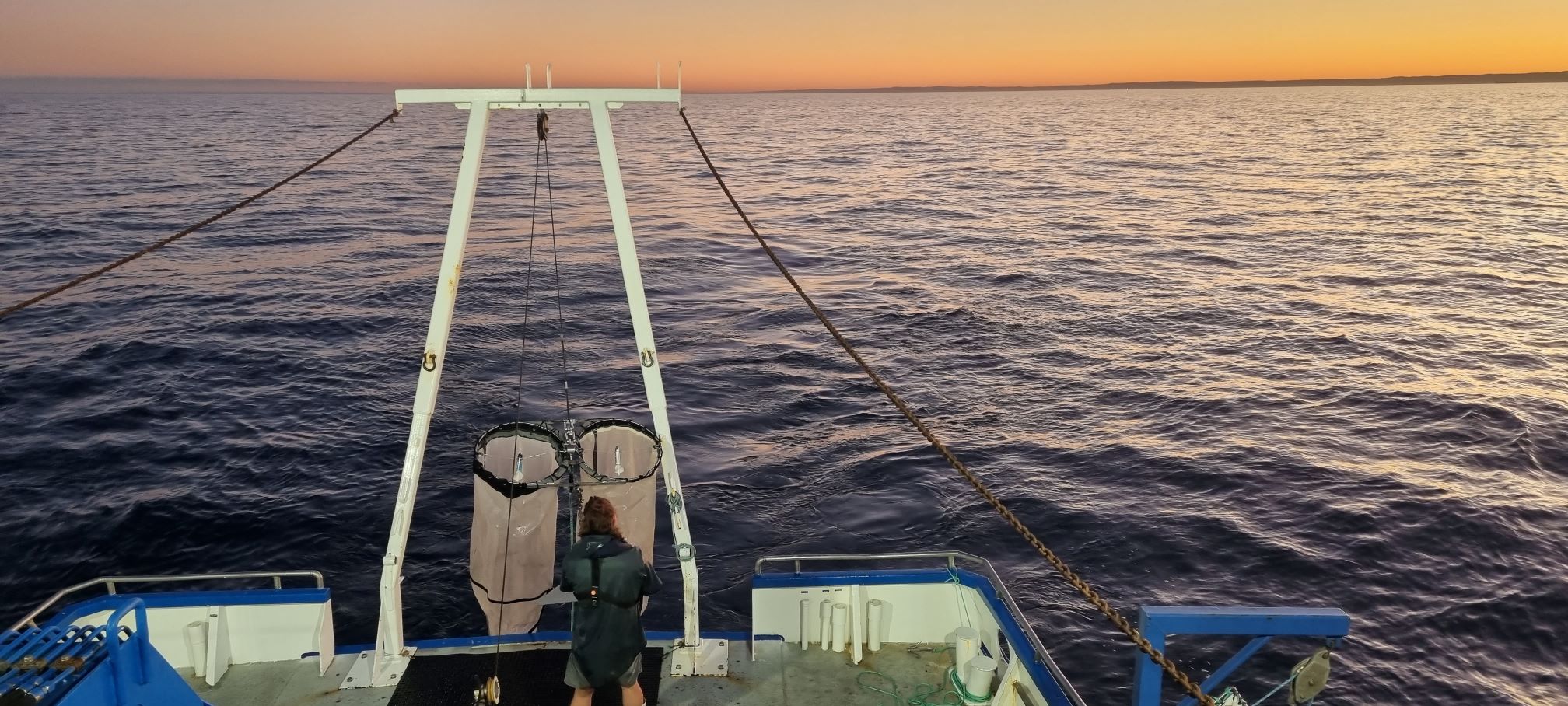
Retrieving the plankton net from an oblique tow.
November 2023 – survey design
There are several considerations to refine the DEPM methodology and reduce uncertainty in the estimates of spawning biomass. This involves evaluating the:
- effectiveness of techniques to sample Snapper eggs (vertical, oblique and surface tows)
- optimal spatial resolution
- extent of sampling stations within the survey area.
Initially, the appropriate survey area will be chosen with the aid of Marine Scalefish Fishery (MSF) fishers, which will involve identifying Snapper aggregations in Gulf St Vincent.
The plankton survey design will then be overlayed on the survey area, with a total of 61 stations that comprises 3 sampling intensities – 4 × 2 nm, 2 × 2 nm, and 1.4 × 1.4 nm.
At each station, the 3 sampling techniques will be done consecutively to compare egg densities. The first survey is scheduled for December 2023 and the second for January 2024.
Sampling adult Snapper will occur throughout the survey area at the same time as the plankton sampling. Adult samples will be used to estimate spawning fraction, sex ratio, female weight, and batch fecundity of the aggregations.
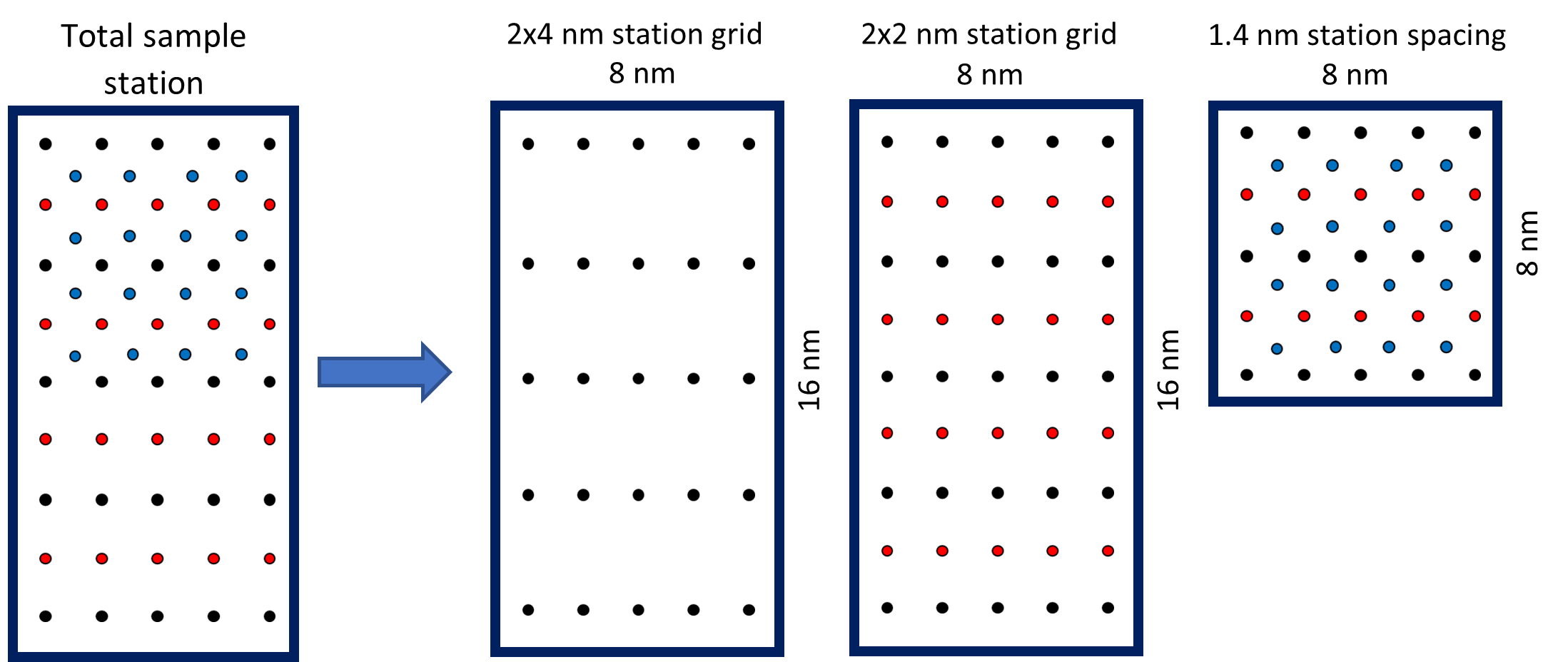
Proposed spatial resolution trials for DEPM refinement study.