
Estimates of biomass
It is critical to develop reliable, fishery-independent methods that monitor trends in Snapper population size and biomass. This need is driven by:
- fishery management changes influencing Snapper statistics, such as daily catch limits and spatial closures
- hyperstability, occurring when catch rates and fish abundance are not connected – this can mask the decline of the population
- absence of fishery-dependent data related to fishery closures.
Projects
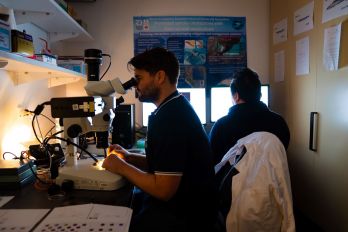
Refine DEPM methodology
Reviewing the daily egg production method (DEPM) to improve confidence in estimating spawning biomass for Snapper.
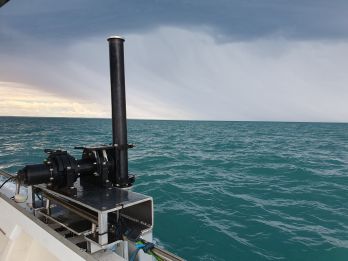
Develop and apply hydroacoustic surveys
Using the active acoustic methodology developed in WA to estimate the biomass of Snapper aggregations in SA’s gulfs.
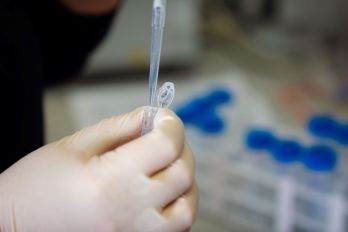
Evaluate CKMR for Snapper
Evaluating the logistical and economic feasibility of close-kin mark-recapture (CKMR) as a method to estimate Snapper biomass.
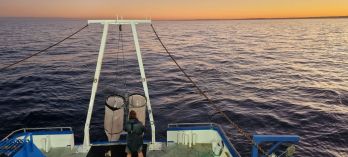
Enhance the Snapper stock assessment model
Integrating new datasets from the Snapper Science Program and developing a projection model to predict future population trends.
Partners
SARDI collaborates with the following research partners for these projects:
- the Department of Primary Industries and Regions
- Fisheries Research and Development Corporation (FRDC)
- Marine Fishers Association (MFA)
- CSIRO
- the University of Tasmania
- Government of Western Australia – Department of Primary Industries and Regional Development.