
PestFacts 12 June 2025
On the radar
Cowpea aphids active early
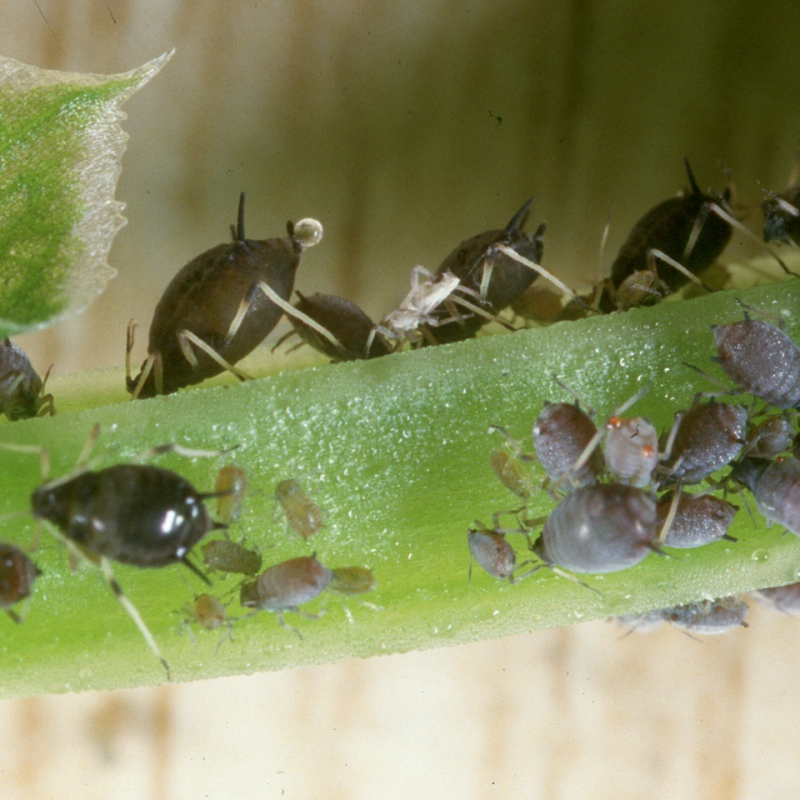
We recently received reports of cowpea aphid (aphis craccivora) activity in the northeast, particularly in paddocks near irrigated crops.
Cowpea aphids are glossy black insects characterised by distinctive black and white legs. They usually infest a range of legume crops, including lentils, faba beans, field peas, lupins, lucerne, clover, and medics. In autumn, these aphids can disperse over large distances to colonise emerging crops and pastures. Importantly, cowpea aphids can transmit several plant viruses, like cucumber mosaic virus, bean yellow mosaic virus, alfalfa mosaic virus, and pea seed-borne mosaic virus.
Cowpea aphids thrive in warm, dry conditions, with populations usually increasing during autumn and early winter. They can survive on a range of plants between seasons, so can persist even when their favoured hosts aren’t present. After rainfall events that promote weed growth, winged aphids may move quickly into newly emerging crops.
This year’s dry conditions prompted cowpea aphids to move from their primary hosts into nearby irrigated crops. When their host begins to germinate, aphids shift again, concentrating on fresh, green seedlings.
Regular monitoring should start at early-season, with particular attention to crop edges, weedy borders, and irrigated areas. Cowpea aphids are naturally regulated by beneficial insects, including ladybird beetles, lacewings, hoverflies, and parasitic wasps. Preserving these natural enemies by minimising the use of broad-spectrum insecticides is essential.
For more detailed identification and management advice, see the following resources:
Dry conditions causes cotton seed bugs activity
We also received reports of cotton seed bugs (Oxycarenus spp.) activity in the southeast.
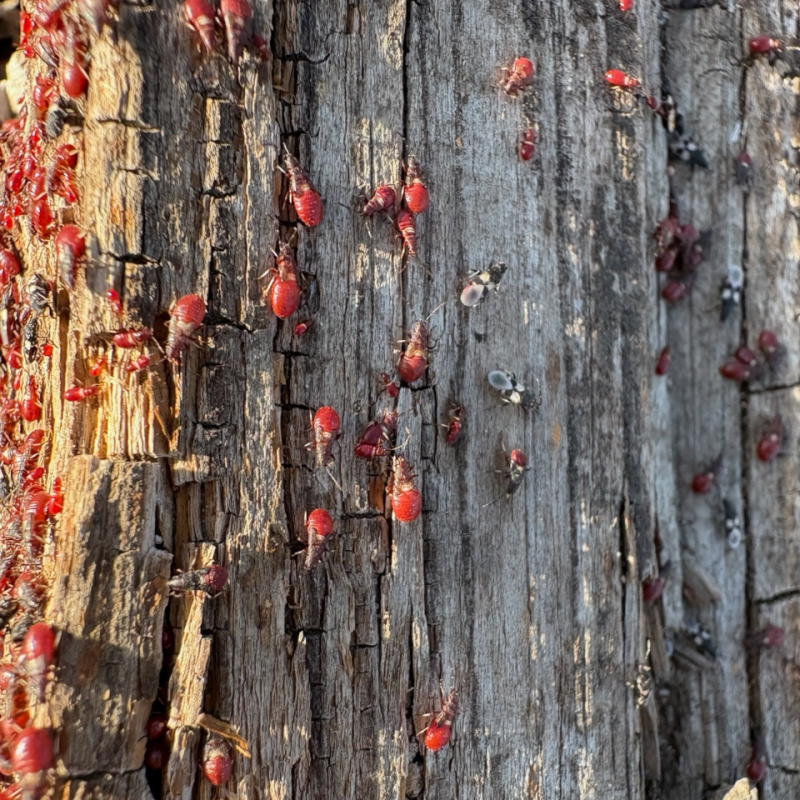
Adult cotton seed bugs (Oxycarenus arctatus) are tiny at only around 3mm long, with a black and white body. The younger nymphs are black with a striking red belly. They’re soft-bodied and easily squashed, often giving off an unpleasant smell when crushed.
Cotton seed bugs usually feed on seeds and fruit and, even though their nymphs often appear in large numbers, they're not considered a pest in broadacre. They’re commonly found on weeds like marshmallow and hibiscus, especially in areas with unmanaged weeds like roadsides and non-crop areas. These bugs prefer warm, dry conditions and tend to become inactive—or die off altogether—if cold and wet weather continues.
Recent rainfall triggered pest activity so it's time to monitor
Following recent rain, we expect several pests to become more active, particularly in newly emerged crops. This is a critical time and you should monitor crops to reduce establishment losses and manage virus risk.
Key pests to watch after rainfall include:
- Green peach aphid (GPA): Common in canola and pulses - monitor closely due to its role in Turnip Yellows Virus transmission
- Snails: Monitor paddocks with known populations, especially in southern regions
- Slaters and millipedes: Can damage canola and pulses after rain, particularly in retained stubble systems
- Earwigs and cutworms: May feed on emerging seedlings during mild, moist nights
- Redlegged earth mite (RLEM): Check paddocks with a pasture history and use the RLEM hatch tool to avoid crop damage
If you notice chemical control failures or suspect insecticide resistance in RLEM, Cesar Australia offers a free testing service for growers in SA, VIC, NSW, and TAS, funded by Grains Research and Development Corporation. This service helps identify resistance and provides tailored management advice. Email Dr Aston Arthur or call 0427875040 for more information.
See the following videos for more information and detailed identification tips:
PestFacts SA webinar
On 15 May 2025, experts from SARDI and the University of Adelaide delivered a webinar covering key pest challenges for the upcoming season.
Topics included:
- Seasonal outlook for grains-establishment pests by Dr Maarten van Helden.
- Snail control in dry conditions by Dr Kym Perry
- Slug control and predictive tools by Dr Kate Muirhead
- Turnip Yellows Virus in South Australian canola by Dr Nicole Thompson
Watch the webinar and download the presentation slides from the PestFacts SA webpage.
Stay tuned, we'll have more webinars throughout the season!
Report to PestFacts
The PestFacts SA team always wants to know what invertebrates you find in your crops and pastures, whether it's a pest, beneficial, or unknown species. We even want to know about the usual pests.
Please send your reports or identification requests via the PestFacts map.
Alternatively, please contact:
Maryam Ehsangar
Phone: 0448 010 339
Email: maryam.ehsangar@sa.gov.au
Maarten van Helden:
Phone: 0481 544 429
Email: maarten.vanhelden@sa.gov.au