

PestFacts 15 Aug 2025
Using the 'degree-day' model to stay ahead of Etiella
The lucerne seed web moth, also known as ‘Etiella’, may appear irregularly but is a serious pest that can cause significant damage to lentil and lucerne crops. They can also impact other legumes, like lupins, field peas, medics, and clovers.
Identification and behaviour
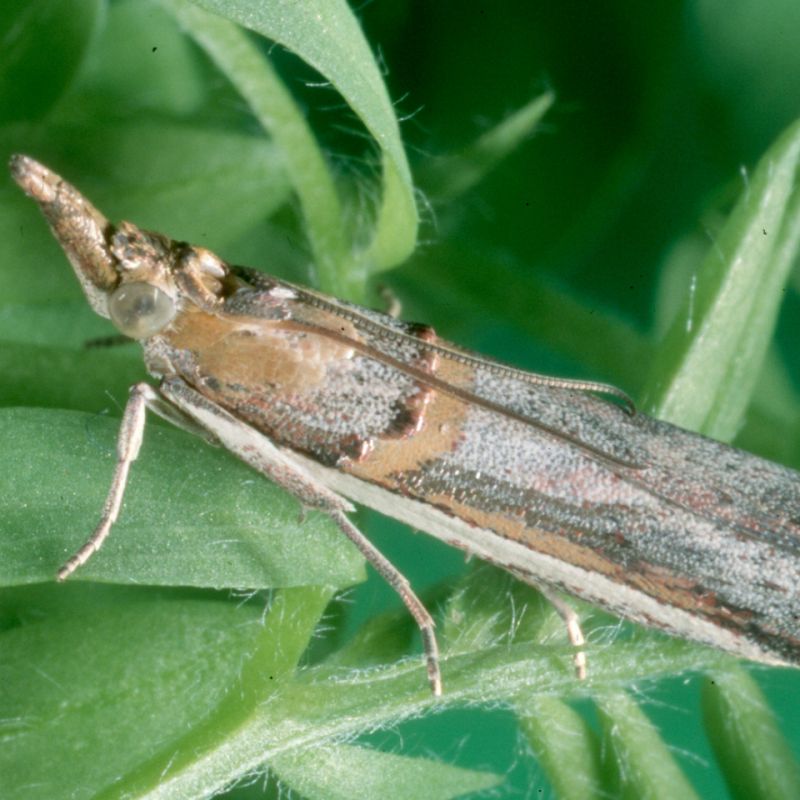
Adult moths are 10 to 15 mm long, greyish-brown, with a slender appearance at rest. They have a tan band across the forewings, a white stripe along the outer edge, and a very distinctive snout-like beak.
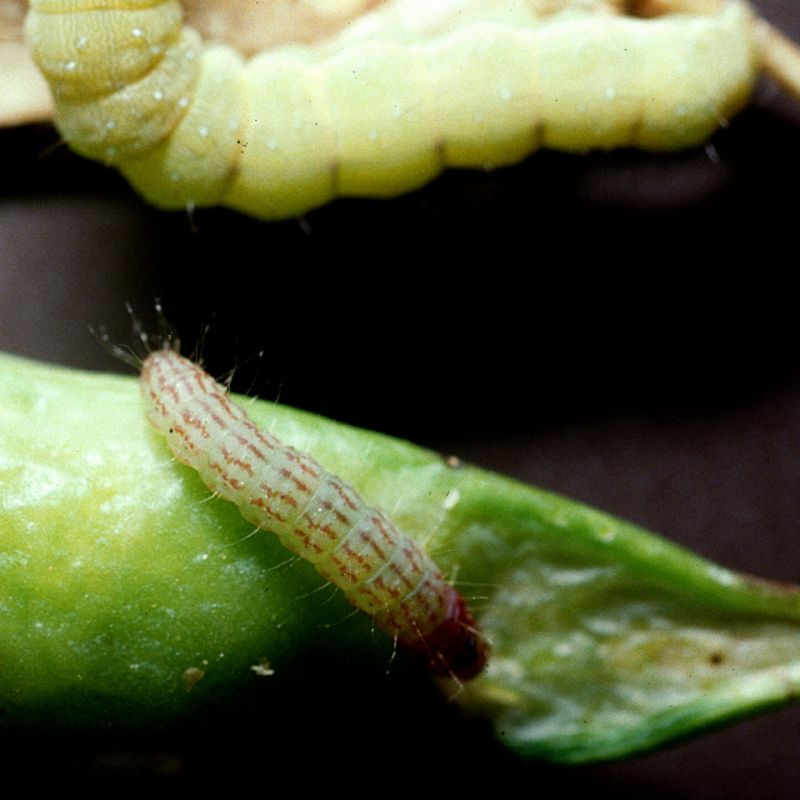
Young larvae are pale green or cream with pink stripes that darken to red as they mature. They grow up to 12 mm long.
Female moths can lay up to 200 eggs, usually on developing pods, stems, and flowers of legume crops. The eggs are initially clear but turn orange before hatching, which typically happens within 1 to 14 days depending on temperature.
Etiella can produce up to 3 generations per year, with larvae overwintering in the soil and adults emerging mid-to-late September. Upon hatching, the larvae bore directly into seedpods to feed, often completing their development within a single pod. They exit by chewing a small hole in the pod wall.
Etiella moths can be confused with similar species like the weed web moth (Achyra affinitalis) and cabbage centre grub (Hellula hydralis), but differ in both behaviour and appearance:
- Weed web moths are lighter in colour and their larvae create webs along plant stems.
- Cabbage centre grubs feed primarily on leaves and cause visible foliar damage, rather than targeting seedpods.
Monitor
Start monitoring crops during early pod development, which typically coincides with the first moth flight in September. There are several monitoring tools to track moth activity and detect larvae.
- Sweep-net monitoring can help track larval activity, and you should visually check seedpods for larvae presence. To accurately assess their activity, conduct a minimum of 3 groups of 20 sweeps randomly across the paddock.
- Use SARDI's Etiella degree-day model, which predicts the timing of initial moth flight activity in spring based on local daily maximum and minimum temperatures, starting from 21 June.
As these moths are strongly attracted to light, you should also check for resting adults in the mornings around outdoor lights.
Crop monitoring should start before the cumulative total of degree-days (base 10°C) reaches 351 (about 10% into peak flights). Ideally, start monitoring 1 to 2 weeks earlier than this figure (around 300). As a guide, daily maximum temperatures of 25°C would see cumulative degree-days increase from 300 to 351 in around 7 days.
The date the model reaches 351 degree-day accumulations corresponds to the predicted date of 10% onset of peak moth-flight activity. We recommend starting in-crop monitoring of lentil crops around 7 to 10 days earlier, at around 300-degree day accumulations.
Current model predictions for degree-day accumulations (to 11th August) in many regions are still below 300-degree days:
- Roseworthy: 130
- Cummins: 142
- Cleve: 132
- Port Pirie: 171
- Keith: 131
- Horsham (Vic): 108
Manage
Here are some ways to manage Etiella presence:
- Biological: Parasitic wasps and flies attack the larvae of lucerne seed web moths, while predatory bugs like glossy shield bugs also prey on them.
- Cultural: Adjusting sowing times can help crops flower and set pods before peak moth activity. Controlling volunteer legumes and other host plants prevents moth population buildup.
- Chemical: Insecticides, when needed, should be applied when moth activity first appears in lentil crops. However, when larvae are inside seedpods, insecticide effectiveness is reduced due to protection within the pods.
Always apply insecticides according to label and APVMA permit instructions. Consider the impact on beneficial insects before making spray decisions.
Pea weevil watch: Monitor now, spray smart
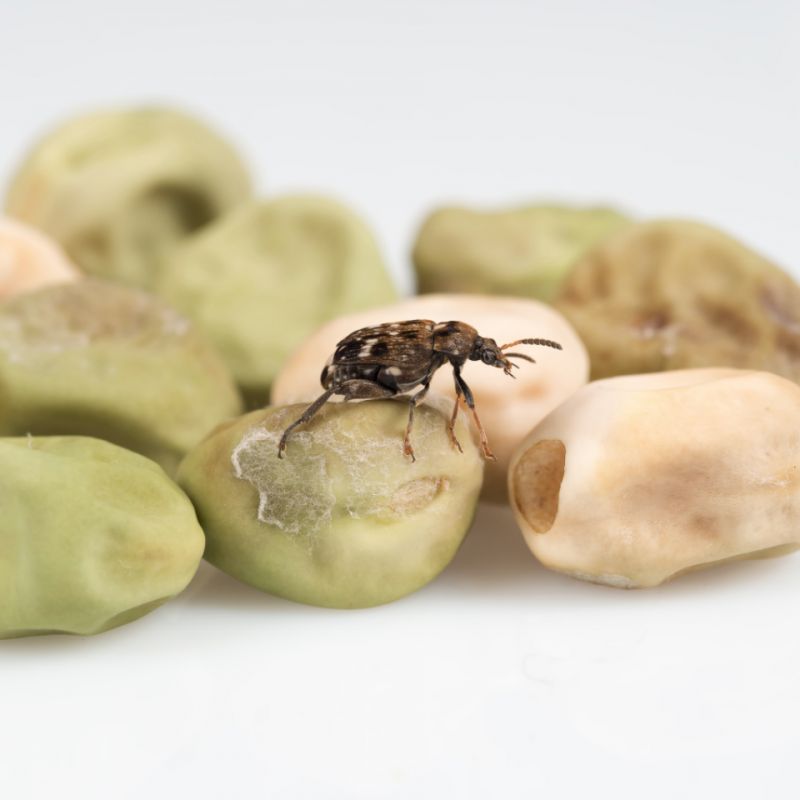
The SARDI pea weevil model predicted adult pea weevil (Bruchus pisorum) began their movement into pea crops in most South Australian regions on 11 August. These pests overwinter outside paddocks and typically enter crops in early spring, usually around flowering, with the highest numbers found along crop edges.
Monitor
Conduct sweep-net monitoring every 5 to 7 days around the edges of pea crops, approximately 2 metres into the crop. Focus on areas near trees and other potential hibernation sites (sheds, for example).
Check the net after every 25 sweeps. The spray threshold is when there is an average of at least 2 adult weevils per 25 sweeps, calculated across 5 to 10 sampling sites. If populations are above threshold only along crop edges, consider applying a border spray.
Manage
To effectively control pea weevil, you must kill adults before egg-laying begins, making spray timing critical for successful management.
Timing, thresholds, and border spraying
As of 11 August, it's estimated that at least 75% of the pea weevil population emerged and moved into crops, with egg-laying expected to begin by the end of August.
This estimate's based on the:
- predicted arrival date of 11 August
- forecasted maximum temperatures in the coming days.
If sweep-net monitoring confirms the reaching of the spray threshold (at least 2 adults per 25 sweeps, averaged across 5 to 10 sites), you should look to apply insecticide around 29 August for podding crops.
For later crops, where pods aren't expected to form until after this date, time spraying for when the first flowers begin to wither.
If thresholds are exceeded, a 20 to 40 metre-wide border spray is the most cost-effective option, as adult pea weevils typically enter from crop edges.
If sweep-net monitoring also shows native budworm (Helicoverpa punctigera) numbers above threshold, a whole-crop spray will effectively control both pests. Continue monitoring and applying threshold-based treatments for native budworm after treating for pea weevil.
Always apply insecticides according to label and APVMA permit instructions. Consider the impact on beneficial insects before making spray decisions.
Early harvest
Harvesting pea crops as soon as seasonal conditions allow is an important part of effective pea weevil management. Harvesting on time ensures the weevil population remains immature, with no adults present to disperse during harvest, and reduces the risk of:
- pod and seed damage from feeding
- shattering losses
- grain rejection at delivery due to infestation
Managing the crop in a timely manner not only protects the current yield and quality, but also helps lower pea weevil pressure in the same area for the following season.
Beneficial allies for your crops: Lacewings
As we approach spring, we expect to see increased invertebrate activity, including pests and beneficials. When it comes to biological pest management, recognising beneficial insects is as important as identifying pests.
Lacewings, particularly green lacewings (Chrysopidae) and brown lacewings (Hemerobiidae), are valuable natural predators. Their adults and larvae are voracious feeders of pest insects including aphids, thrips, mites, caterpillars, and moth eggs.
Green lacewings
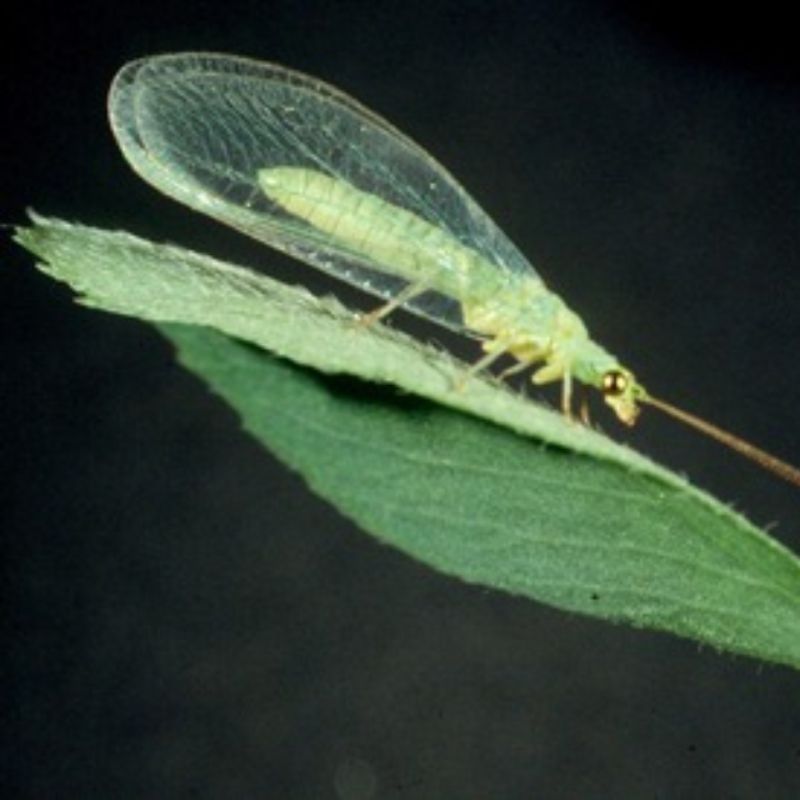
Green lacewings have a diet of pollen and nectar during adulthood, while their larvae are predatory. Adults are approximately 12 mm long and easily recognised by their distinctive green colour.
Larvae range in colour from brown to pinkish and use their sickle-shaped jaws to pierce soft-bodied insects or eggs and suck out the contents. To protect themselves from predators, the larvae camouflage by placing the remains of their prey on their backs. Their pupal cocoons are similarly camouflaged with victim remains.
A single adult female green lacewing can lay up to 600 eggs. The eggs are white and typically laid in groups, each attached to a long, flexible stalk.
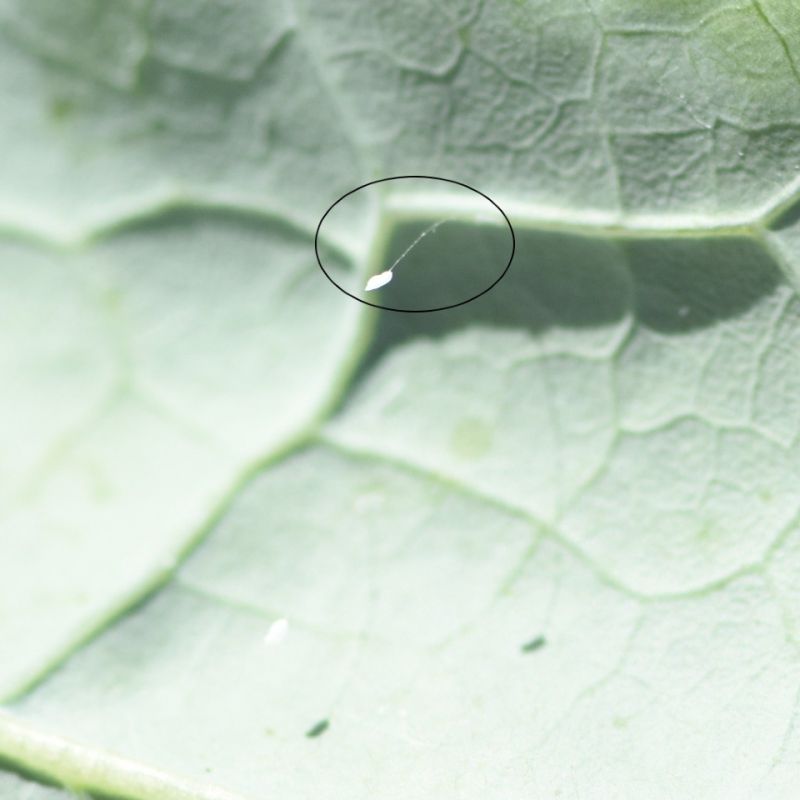
Brown lacewing
Brown lacewings often show large spring migrations into crops. In contrast to green lacewings, both the larvae and adults of brown lacewings are predatory.
Adult brown lacewings are smaller, measuring around 8 mm, and are brownish in colour. Their larvae are elongated, with distinctive brown and cream markings. They're longer and thinner than green lacewing larvae and can consume between 100 and 200 aphids during their lifetime. Unlike green lacewings, they don't use camouflage.
Brown lacewing eggs are cream coloured, laid singly without stalks, and are typically found near areas of dense pest infestation.
For more information about lacewing identification, watch Beatsheet Queenland's video on Green lacewing's feeding habits, which also highlights the differences between green and brown lacewing larvae.
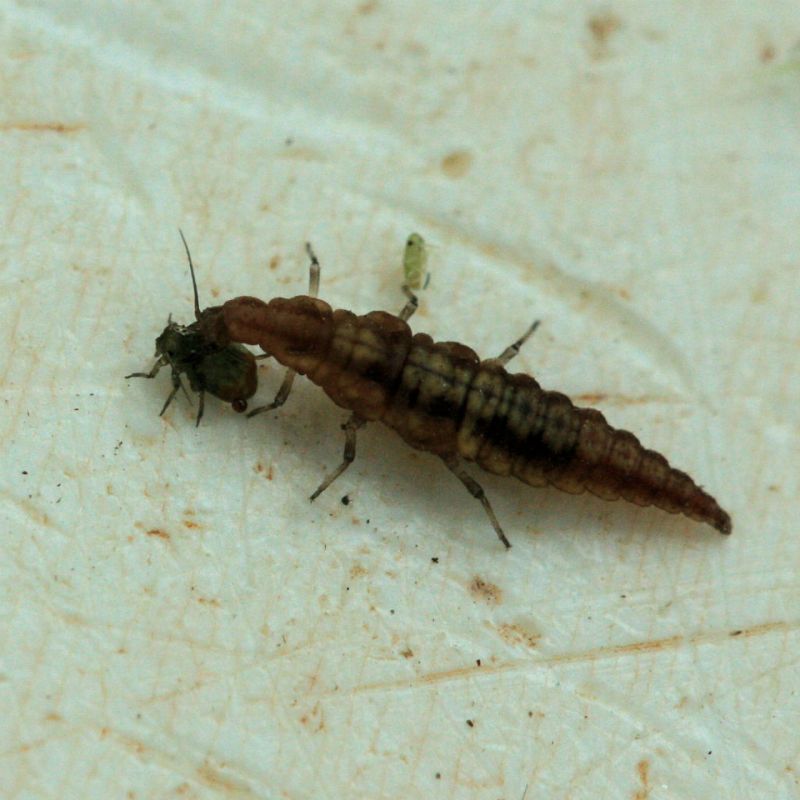
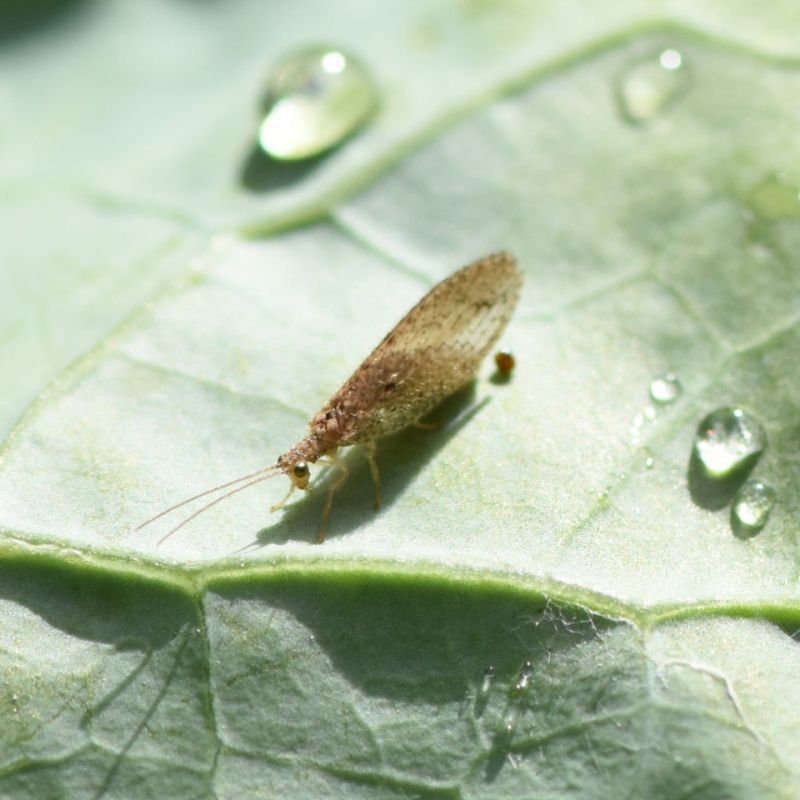
Let lacewings work for you: Simple steps to support pest predators
Establishing diverse habitats like hedgerows, cover crops, and wildflower strips can help support populations of beneficial insects by providing alternative food sources, shelter, and protection from pesticides and extreme weather.
Lacewings, less competitive than many specialist predators, particularly benefit from these habitats during periods of low pest-pressure within the crop.
On the flip side, excessive pesticide can severely impact lacewing numbers and reduce their value as natural pest control agents. We recommend adopting integrated pest management (IPM) practices, which involves using pesticides only when necessary and applying them in a targeted, selective manner.
Avoiding broad-spectrum insecticides and choosing products that are less harmful to non-target organisms helps conserve lacewing populations and maintain ecological balance.
To support informed decision-making, Cesar's beneficials chemical toxicity table, developed specifically for the Australian grains industry, offers guidance on selecting effective pest-control products that minimise harm to beneficial insects. This resource is particularly valuable in situations where chemical intervention is unavoidable.
Acknowledgements
We sourced this information from:
On the radar: More and more caterpillars!
Native budworm (Helicoverpa punctigera) activity
Helicoverpa punctigera, commonly known as native budworm, have been seen in the Eyre Peninsula and the northern region.
Native budworm is a significant pest as it can build large populations on native vegetation, with common sowthistle, fat hen, and marshmallow supporting its early lifecycle stages. As food sources dry in late winter and spring, the moths migrate to cropping regions, often travelling hundreds of kilometres on air currents. This long-distance migration is why it's considered a major pest in broadacre.
When they arrive, Helicoverpa moths lay eggs in crops like wheat, barley, pulses, and canola. Small caterpillars can enter emerging pods and damage developing seeds, while larger caterpillars may devour the pod's entire contents.
Monitor crops for activity by taking a minimum of 5 sets of 10 sweeps and calculating the average number of larvae per 10 sweeps. Each sweep should consist of moving the net through the crop in an arc of approximately 180°.
See Beatsheet Queensland's short video on sweep netting for more information.
2025 native budworm moth trapping update (as of 8 August)
A large flight (50 to 75 moths) of native budworm was recorded at Mudamuckla and Laura Bay. A light flight (fewer than 30 moths) was observed at Penong, Talia, and Rosedale.
Manage native budworm
Caterpillar numbers largely determine potential crop damage. The native budworm spraying threshold provides a more precise measure of potential loss. For example, 1 caterpillar per 10 sweeps equates to 20,000 caterpillars per hectare in pulse crops. (DPIRD)
Read DPIRD's factsheet on the native budworm spraying threshold for more detail on spraying economics.
Always apply insecticides according to label and APVMA permit instructions. Consider the impact on beneficial insects before making spray decisions.
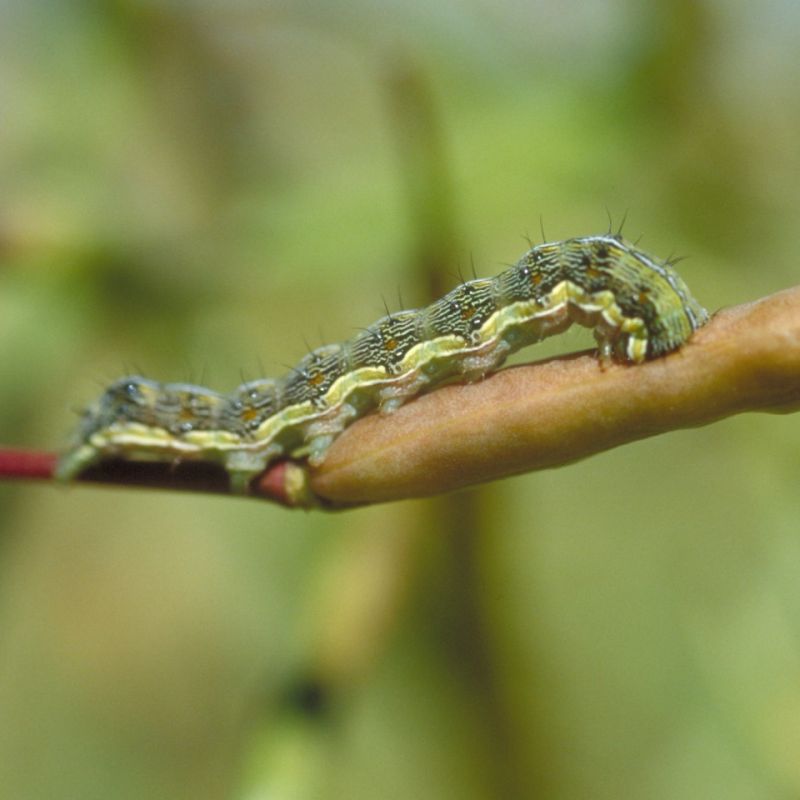
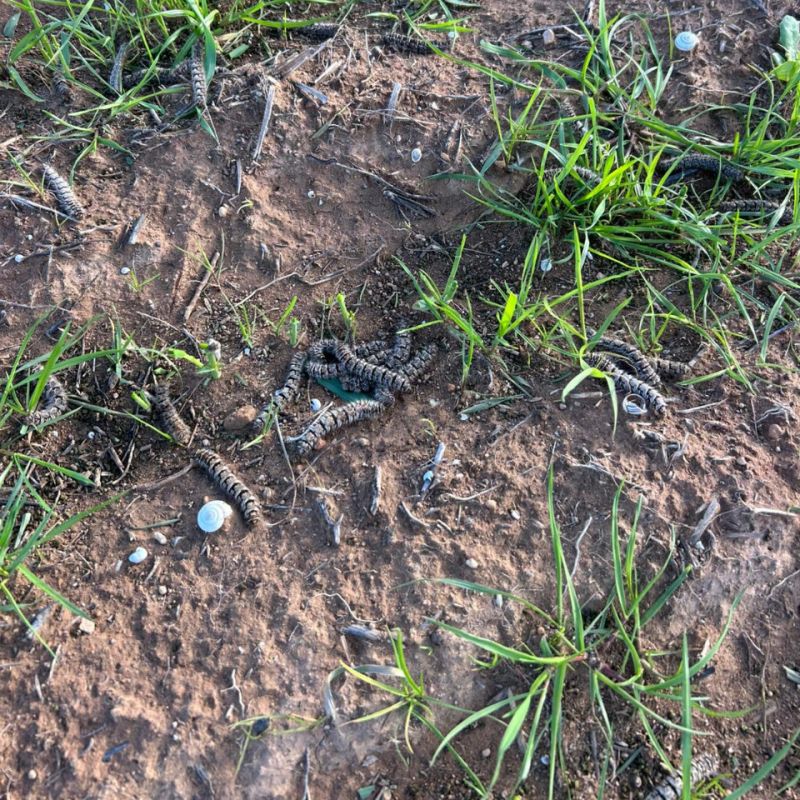
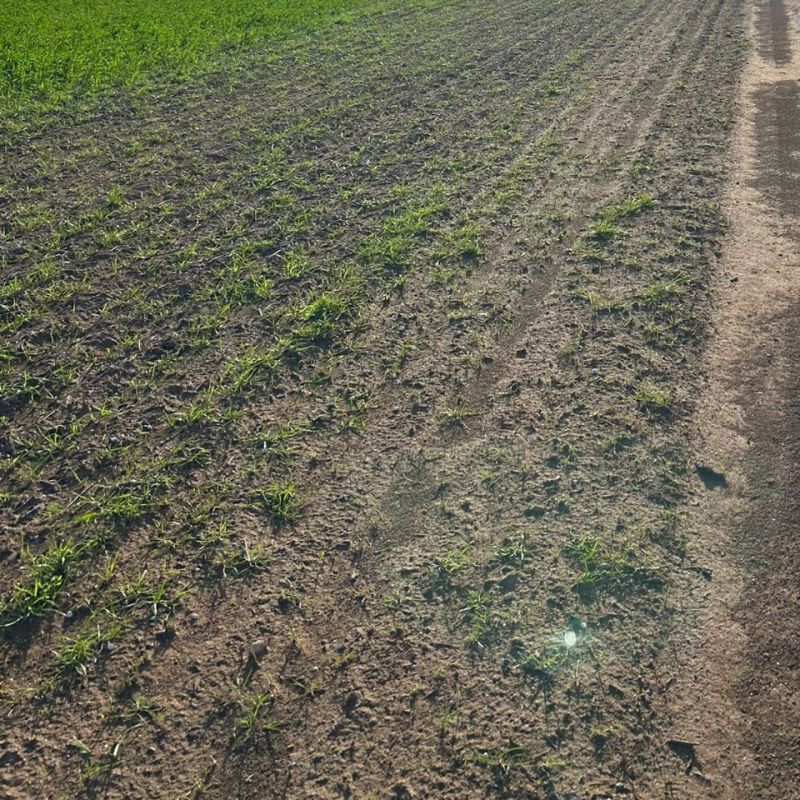
Grass anthelid (Pterolocera spp.)
We've had reports of grass anthelid caterpillars (also known as woolly bear caterpillars) feeding on wheat crops around the west of Eyre Peninsula. In this instance, damage was limited to crop edges. Large caterpillars are probably migrating into the crop when weeds are sprayed. Apply border spray if needed.
Grass anthelids are a subgroup of anthelid caterpillars and are typically considered minor pests. However, they can occasionally build up in pastures or along the edges of cereal crops, particularly where pasture was previously grown.
These caterpillars are brown with black, fawn, and yellow markings, and are easily recognised by their distinctive tufts of stout hairs. These hairs can sometimes cause skin irritation.
More herringbone caterpillar activity
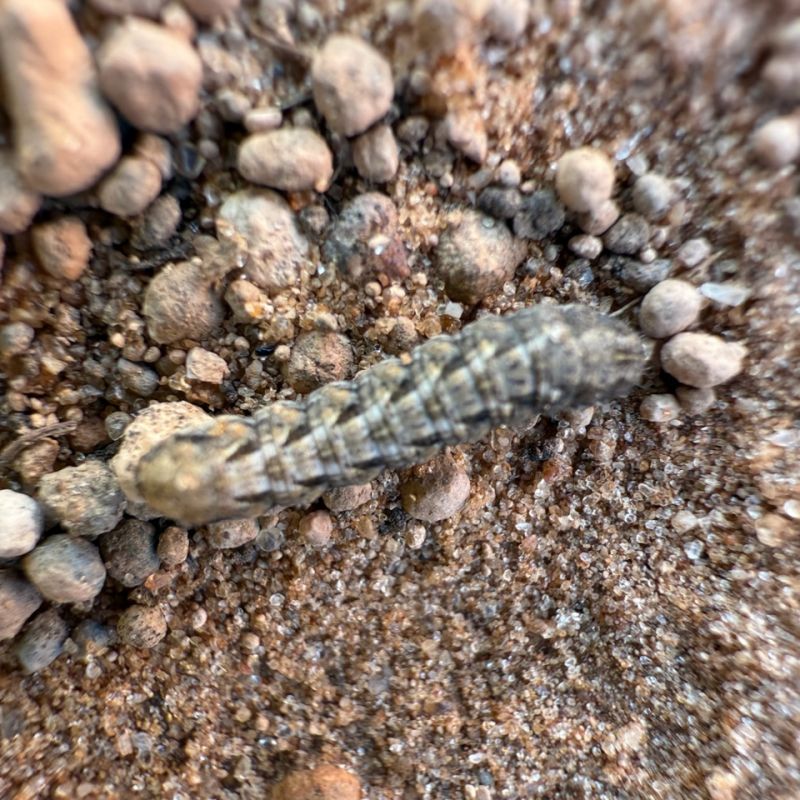
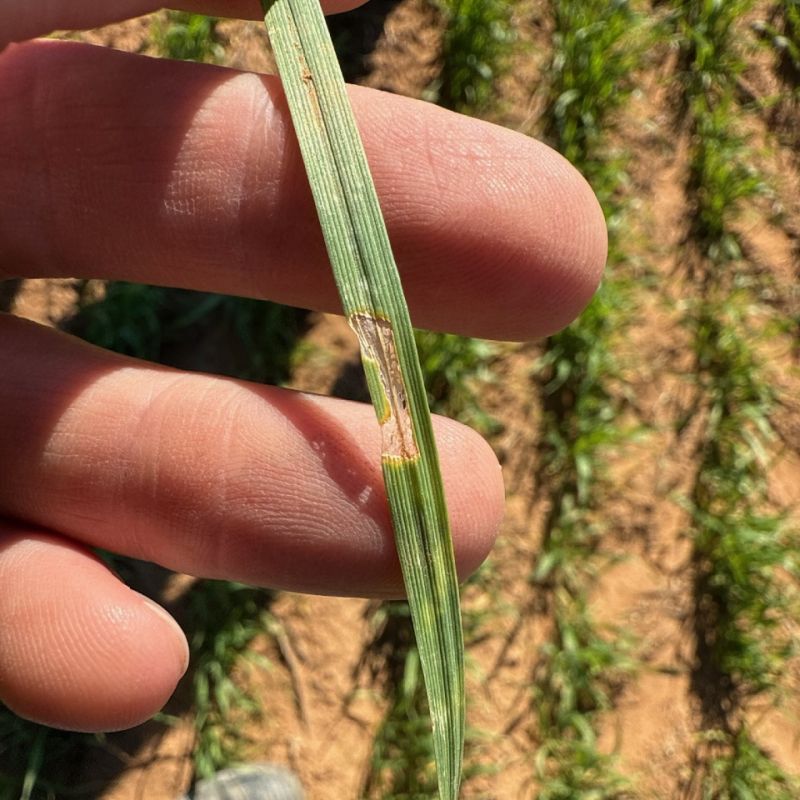
More herringbone caterpillars (Proteuxoa spp.) have been reported feeding on wheat and canola next to a barley paddock in the western and Eyre Peninsula regions.
Herringbone caterpillar feeding typically causes low-to-moderate economic impact and is most common in late autumn and winter. Larvae mainly feed on the lower parts of plants, with damage potentially more significant in later-sown, less advanced crops.
Because they have only one generation, they don't cause the head-lopping damage sometimes associated with armyworm (which has more generations) but both species often coexist.
Regularly inspect crops for signs of caterpillar activity, especially during late autumn and winter. Early detection helps you implement timely control measures. Only spray if severe defoliation happens. There is only one generation of this caterpillar each year and they're no longer a problem once pupated.
Report sources: Maryam Ehsangar (SARDI), Bella Heron (Elders), Jake Hull and Ziek Kay (Kay Ag Consulting)
Report to PestFacts
The PestFacts SA team always wants to know what invertebrates you find in your crops and pastures, whether it's a pest, beneficial, or unknown species. We even want to know about the usual pests.
Please send your reports or identification requests via the PestFacts map.
Alternatively, please contact:
Maryam Ehsangar
Phone: 0448 010 339
Email: maryam.ehsangar@sa.gov.au
Maarten van Helden:
Phone: 0481 544 429
Email: maarten.vanhelden@sa.gov.au